The Implications of Neuralink and Brain Machine Interface Technologies
Citation: W. Armstrong and K. Michael, "The Implications of Neuralink and Brain Machine Interface Technologies," 2020 IEEE International Symposium on Technology and Society (ISTAS), Tempe, AZ, USA, 2020, pp. 201-203, doi: 10.1109/ISTAS50296.2020.9462223.
Abstract:
Brain machine interfaces (BMI) have traditionally been considered for medical prosthetics. They are now being presented as a means to “merge with the AI”. Entrepreneur Elon Musk has begun trialing his Neuralink technology on pigs, and hopes to incorporate human subjects into his clinical trials of a “breakthrough technology” before year end. Independent of the technology's success to continue through the medical innovation process via the US Food and Drug Administration, it is time to be pondering the social implications of this novel technology. This paper points to some of the questions philosophers and practitioners alike are asking about the potential for BMI.
SECTION I.
Introduction
Would you have a surgery to create a direct link between your brain and a computer? Neuralink is a company founded by Elon Musk with the express purpose of creating just such a device. Originally launched in 2017, the company released its design for a brain computer interface in the summer of 2019. Neuralink is designed as a medical technology that works by implanting a series of small computer chips into the brain capable of both interpreting brain waves, and electrically stimulating the brain [1]. In 2019 Musk said that he hoped to implant of the device in a human patient by 2020 [14]. (No such event has been reported so far, but on August 28, 2020, Musk demonstrated Neuralink prototypes that had been implanted in several live pigs [15].)
The basic idea is not new. A variety of medical technologies have operated by electrically stimulating nerve cells or the brain since the invention of cochlear implants in the 1950s [2]. More recently, deep brain stimulation has been used in the treatment of certain severe medical conditions including tremors, Parkinson’s Disease and depression [3].
SECTION II.
Musk’s Neuralink
Efforts to interpret brain waves began a few years ago in places such as Rischard Anderson’s Caltech lab. Anderson’s lab works with patients with severe physical disabilities. The lab’s research found “inserting a few tiny electrode arrays into the brain enabled us to decode much of what a person intends to do” [4].
Musk and his team believe that Neuralink represents a quantum leap in the technology and its potential applications, over cruder methods of the past. They say its significant potential as a medical device will include treatments for conditions ranging from disabled speech, to missing limbs, to more effective and less drastic treatment for medical issues such as seizures [1].
While Neuralink has most often emphasized the medical benefits of its technology, what makes Neuralink unique – and potentially much more controversial – is that Musk and the company have been clear that their aims do not end with medical applications. The ultimate goal of enhancing humans rather than merely treating them has been explicit [5]. This focus on future enhancement awakens the greatest hopes of some, but the greatest fears and a generalized discomfort for many others.
“The quest for a fantastic future” [6] is a succinct expression of Elon Musk’s Brand. In the case of Neuralink, the positive vision includes medical applications but also encompasses additional goals. In interviews Musk has revealed his expectation that in a human the devices will allow for a far greater understanding of the brain simply by allowing a person to communicate what sensations, feelings, or memories are triggered when specific neurons or brain regions are stimulated. The motivation for Musk is to create a future in which humans are more likely to maintain their relevance as artificial intelligence becomes more sophisticated. According to Musk’s logic, once computers can do everything better than humans, the only way humans will be able to keep up will be to have a way to expand our own capabilities [7]. More mundane hopes include the possibility of fully immersive video games and simulations, and the ability to feel what it is like in another creature or person’s body. Some techno-optimists even envision a future in which immortality can be achieved by downloading your mind into the virtual world [8].
SECTION III.
Public Perceptions and the Risk Imaginary
As a result of these ambitions, Neuralink arouses more complicated emotions than Musk’s more famous companies. Tesla and SpaceX are most likely to offend the sensibilities of the incumbent industries those companies are in the process of disrupting. Public perceptions of the possibilities of connecting brains and computers are in a very different place. In Western culture perceptions have been influenced by stories we tell ourselves and the values we hold. These include our strong attachment to individual liberty, and the large body of science fiction that has focused intensely on the disturbing and fearful outcomes of connecting brains to computers. Yet, our instinctual caution has merit. People sense that things they value could be at risk.
The fear of opening up the seat of our minds to a foreign object, physically inserted into our brains, is disturbing, and makes many people squeamish. A more significant fear is that of being manipulated by other individuals, governments, or companies. The idea of others being able to interpret and see our innermost thoughts would be a most extreme case of intrusion on our privacy. Even developing the technology is often enough to activate a primal fear of our privacy and individuality being compromised.
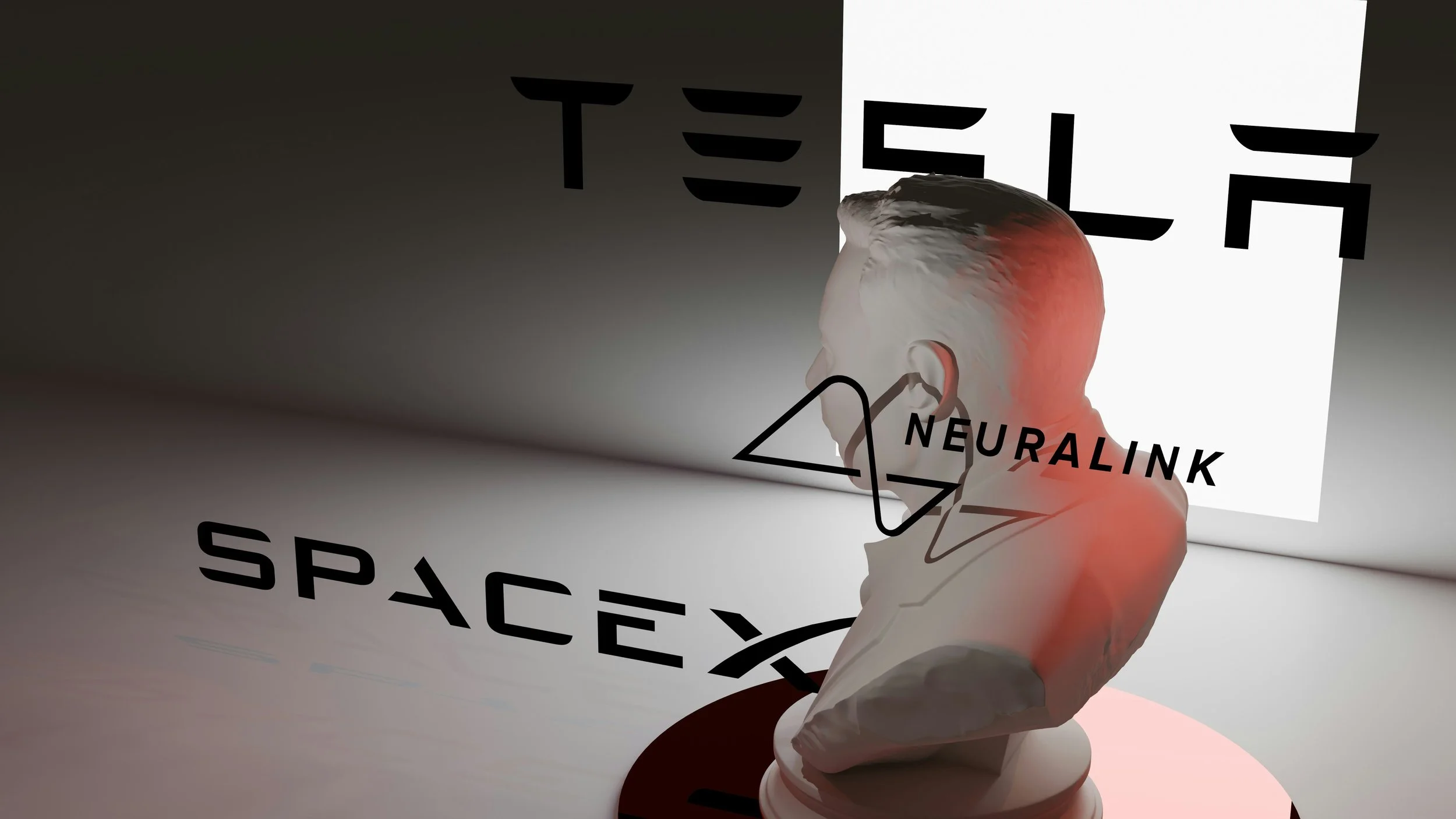
Photo by Brecht Corbeel on Unsplash
The potential for abuse by dictatorial governments is obvious, and to many the potential for abuse by corporate entities, manipulating people for their economic benefit, is even more insidious given our recent experiences with data in the social media space [9]. Greater understanding of how the brain works implies a greater ability for elites to control our brains and thought processes, with those connected to a brain machine interface being even more vulnerable than others. Total understanding of consciousness and the brain implies a complete ability for control and manipulation.
The risks in such a scenario from people with ill intent are obvious. The thorny issue is that the positive implications of the technology and the negative ones are likely intertwined. Human brain to brain communication using computers was demonstrated last year, and networked rat brains have already been demonstrated to solve problems better than individual rats [10].
But this could represent a loss of autonomy. As the pathways in the brain are better understood, that understanding will become both more useful to individuals, and make it easier for human decision making to be manipulated. The better we understand sensation, the easier treatment of certain diseases and the creation of fully immersive virtual worlds would become. But a sophisticated device offering these capabilities could also be a device capable of creating immense amounts of pain, suffering, addiction, and disconnection from society. The more the computer and the brain are able to affect one another, the greater the advantages of having a device are likely to become. But then those with such a device could also become more vulnerable to manipulation from the digital world. After all, no one likes the idea of uploading a computer virus into their brain.
SECTION IV.
The Reality
Of course, many of these ideas are far ahead of today’s technology. One great weakness of the idea of a brain human interface completely understanding the human mind is its basis in the idea that electrical signals completely explain human thought. Even if we assume that the electrical signals from the brain are of primary importance to the human mind and what we might call consciousness (an idea even Musk admitted in a recent interview is uncertain), then the human body will still require more than a simple understanding of electrical signaling to truly comprehend. In computers the hardware and the software of the device are largely separate entities. The physical shell that runs the program is largely irrelevant to the computer programs. However, biology is different. In living organisms, the hardware and software are deeply integrated. Hormones, physical capabilities, and outside factors impact the way the brain reacts and performs in ways that even a near perfect understanding of electrical signaling may struggle to comprehend or explain. In humans, mind states like depression may have as much to do with the state of the physical body as the mind [11].
This leads to a basic question. How easy is it to simulate consciousness? Several projects are currently underway with the goal of simulating a human mind [12]. If the answer is that it is very hard, or that consciousness depends on something that computers alone are not capable of, then we are likely headed for a future in which only a small amount of simulated consciousness will exist in the world controlled by large organizations. If it is very easy, then we are headed for a future in which simulated consciousness is a very common phenomena and full brain downloads will also become common. However, the easier it is to simulate the brain, the greater the potential for truly horrific nightmare scenarios.
SECTION V.
Conclusion
If our society holds the values we say we do, if we truly value individual freedom, autonomy, personal agency, and control over our own lives – we need to develop strong standards and governance around brain machine interfaces. The frameworks of “risk innovation” and “responsible innovation” are particularly critical when dealing with a technology capable of reordering society and the basic human experience so profoundly [13]. The risk innovation framework, for example, advocates deep analysis of a technology’s risks, appropriateness, societal impacts, costs, and equity issues.
But in a world with so many diverging interests and values between and among governments, businesses, investors, and consumers, creating a system that takes into account what the better outcomes are for all interactions between humans in society is an extraordinarily difficult task. Frameworks developed and offered for responsible innovation differ substantially. People differ profoundly on what the goals of such governance should be. However, efforts made with a proper consideration of the risks, ethics, and desirable outcomes are likely to result in better future than failing to consider these issues. Profound consideration of these issues will also benefit those who wish for the technology to quickly produce fruit because the proper consideration of how the technology will impact society is likely to reduce the possibility of a backlash, as possible brain machine interfaces become a reality.
References
1. Musk E., “ Neuralink: An Integrated Brain-Machine Interface Platform With Thousands of Channels,” J Med Internet Res, Oct 2019, 21 ( 10 ).
2. Wilson B.S., Dorman M.F. “Cochlear implants: A remarkable past and a brilliant future,” Hearing Research, August 2008, 242 ( 1-2 ), pp. 3–21.
3. Perlmutter J.S., Mink J.W., “Deep brain stimulation.” Annual Review of Neuroscience, 21 July 2006, Vol. 29, pp. 229–257. DOI: 10.1146/annurev.neuro.29.051605.112824.
4. Anderson, Richard, “The Intention Machine,” Scientific American, April 2019, pp. 25–31.
5. Marsh, Sarah, “Neurotechnology: Elon Musk and the goal of human enhancement ” The Guardian, 1 January 2018.
6. Gertner, Jon, “’Elon Musk,’ by Ashlee Vance,” New York Times, 12 May 2015.
7. Miskiewicz, Julia, “The merger of natural intelligence with artificial intelligence with a focus on Neuralink company ”, Virtual Economics, 2019, Vol. 2, No. 3, pp. 22–29. https://doi.org/10.34021/ve.2019.02.03(2)
8. Wolf, Gary, “Ray Kurzweil Pulls Out All the Stops (and Pills) to Survive to the Singularity,” Wired, 24 March, 2008.
9. Ferrara, Emilio, “Manipulation and abuse on social media,” ACM SIGWEB Newsletter, April 2015, Article 4. https://doi.org/10.1145/2749279.2749283
10. Martone, Robert, “Scientists Demonstrate Direct Brain-to-Brain Communication in Humans,” Scientific American, 29 October, 2019.
11. Bullmore, Edward, M.D, “Seeing Beyond Depression,” Psychology Today, Vol. 52, Issue 1, Jan/Feb 2019, pp. 50–88.
12. Hunter, Philip, “Simulating the human brain. Scientists have started various major projects to simulate and understand the brain but many neuroscientists remain skeptical about their scope and aims,” EMBO Rep., Vol. 16, No. 6, June 2015, pp. 685–688.
13. Maynard, Andrew and Scragg, Marissa, “The Ethical and Responsible Development and Application of Advanced Brain Machine Interfaces,” J Med Internet Res., Vol. 21, No. 10, Oct. 2019, e16321.
14. Stephen Shankland, “Elon Musk says Neuralink plans 2020 test of braincomputer interface,” c|net, 17 July 2019, https://www.cnet.com/news/elon-musk-neuralink-works-monkeyshuman-test-brain-computer-interface-in-2020/
15. L. Ioannou and C. Farr, “Elon Musk demonstrates brain-computer tech Neuralink in live pigs,” CNBC, 28 August, 2020 ; https://www.cnbc.com/2020/08/28/elon-musk-demonstrates-braincomputer-tech-neuralink-in-live-pigs.html
Authors
School for the Future of Innovaiton in Society, Arizona State University, Tempe, AZ, USA
School for the Future of Innovaiton in Society, Arizona State University, Tempe, AZ, USA
Citation: W. Armstrong and K. Michael, "The Implications of Neuralink and Brain Machine Interface Technologies," 2020 IEEE International Symposium on Technology and Society (ISTAS), Tempe, AZ, USA, 2020, pp. 201-203, doi: 10.1109/ISTAS50296.2020.9462223.