Shaping the Digital Future: Inside The University of Sydney’s New MBA
Citation: Ben Ready, 13 March 2026, “Shaping the Digital Future: Inside The University of Sydney’s New MBA”, MBA News, https://www.mbanews.com.au/shaping-digital-future-university-sydney-mba-technology-digital-strategy/

As artificial intelligence becomes a fixture in businesses everywhere, the University of Sydney Business School has launched the MBA (Technology and Digital Strategy) designed to train leaders who don’t just use AI, but understand it, critique it, and help guide its responsible use across society.
The MBA (Technology and Digital Strategy) has welcomed its first cohort of students, with Professor Katina Michael recently commencing as Program Director.
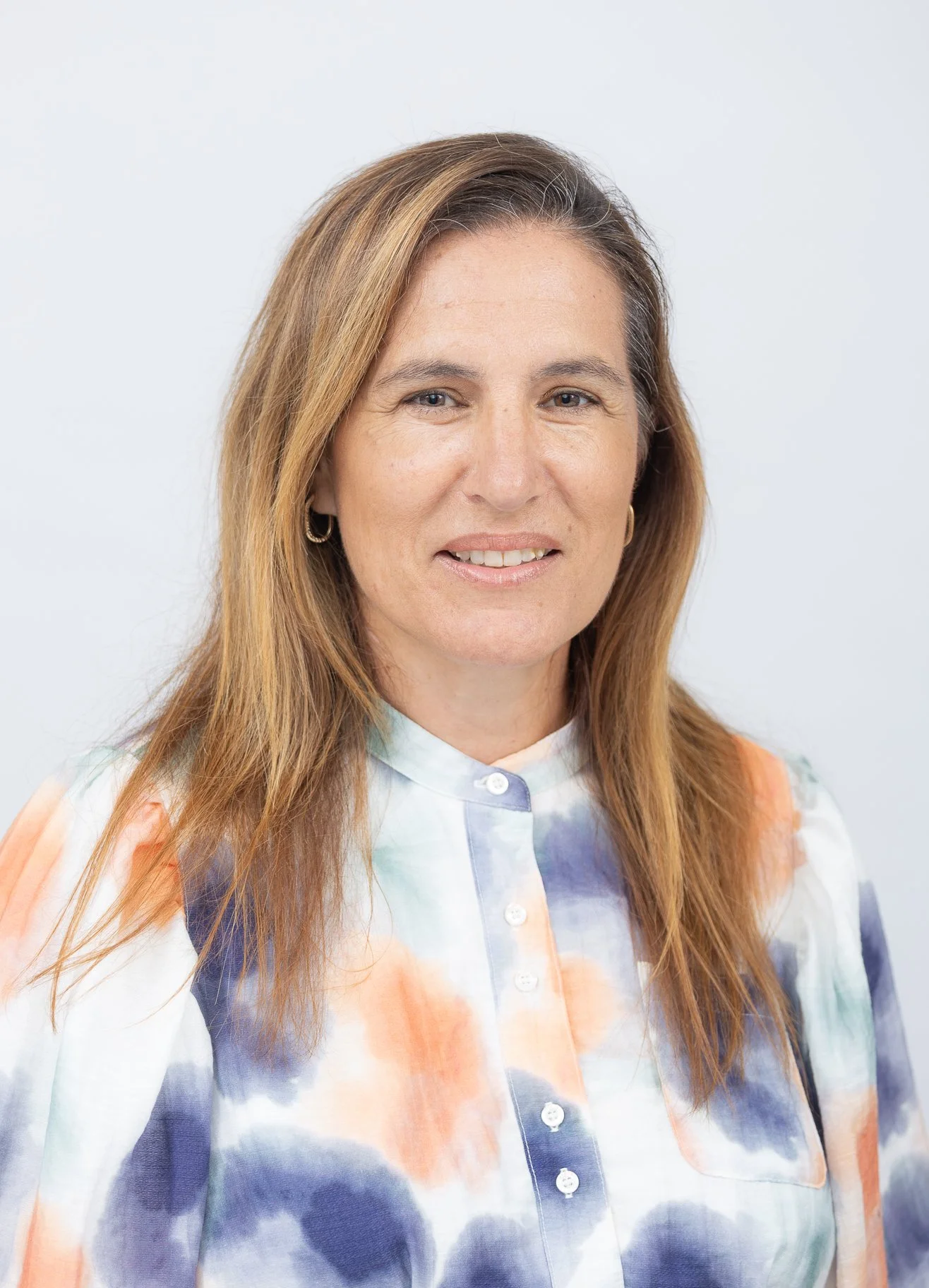
University of Sydney MBA (Technology and Digital Strategy) Program Director Professor Katina Michael
Professor Michael brings a combination of information and communication technology, law, and social sciences to the role. Before moving into academia, she witnessed as a senior network and business planner firsthand several of the biggest technological shifts in recent memory, when the telecommunications industry deregulated and went from narrowband to wireless broadband, analog voice calls to IP-based multimedia traffic, and 2G to 3G in just a few years.
The MBA (Technology and Digital Strategy) is distinctive in both form and function and is delivered through a blend of synchronous live, online, interactive sessions and flexible self-paced learning modules, allowing students to fit their studies around work and life commitments without compromising on quality or engagement. It embeds systems thinking, strategy, innovation, and stakeholder impact into every unit of study using a variety of educational philosophies and pedagogical approaches.
The degree attracts students from diverse backgrounds: information and communication technologies, medicine and healthcare, government and national security, finance and banking, transport and logistics, and design and construction. Digital collaborators need to understand each other’s worlds, and how to meaningfully intersect and integrate them.
The goal is to produce graduates who can bridge the gap between startups, entrepreneurs, designers, engineers, executives, policymakers, the third sector and civil society, helping them to work together effectively. It is about cutting through jargon and silos to get things done together.
Beyond AI hype: values, standards and strategy
Professor Michael is adamant that leadership in emerging technology requires more than technical familiarity.
“Community values, organisational values, local or global challenges are embedded in every subject of the MBA,” she explains. “We teach responsible innovation, technology management, intelligent supply chains, sustainable futures, public interest technology, and AI ethics. It’s about learning how to navigate change.”
“AI isn’t siloed. It permeates an organisation like water through soil; leaders need to understand how it seeps into every layer, every function, every decision.”
Rather than chasing quick wins, students are encouraged to think long-term, looking five, ten, even twenty years ahead to explore how today’s decisions could ripple through workplaces, regions, and governments.
“AI can help inform decisions of when to go to market with a new service offering,” she says, “but the responsibility still sits with humans.”
Principled innovation: purpose before profit
At the heart of the MBA (Technology and Digital Strategy) is the concept of principled innovation. It begins with purpose rather than revenue targets.
“Don’t start with ‘I want to earn $50 million in profit,’” Professor Michael argues. “Start with ‘I want to improve food security’ or ‘I want to strengthen employment opportunities in regional communities.’ Then ask: how do we design a business model for that? It won’t look like a traditional model that is focused on revenue generation, cost optimisation or compliance alone. This is where creativity kicks in for organisational success.”
Students engage with real-world systemic challenges in their geographic context like that of the Murray-Darling Basin, from climate resilience to sustainable river systems using Australia’s critical technologies in the hope of reducing the Basin’s exposure to climate, water and environmental threats.
This approach integrates what she describes as a socio-technical-environmental and ecological lens, meaning that people, technology, and regulatory ecosystems are considered together with ecology.
“It’s not just about the tech,” she says. “It’s about people, governance, culture and sustainability. A humanity-centred approach is always at the heart of innovation.”
In an era of generative AI content saturation, she also emphasises evidence-based decision-making and primary data collection. “The questions you ask are more important than the answers you generate,” she tells students. “Higher-order critical thinking matters.”
MBA
The University of Sydney MBA (Technology and Digital Strategy)
Developed in close consultation with industry leaders and academic experts, the program is designed to equip professionals to lead at the intersection of technology and business strategy for productivity and value creation.
Fluency and foresight
The MBA (Technology and Digital Strategy) attracts two distinct types of professionals: those seeking digital fluency and those already technically fluent but seeking strategic leadership capacity.
“The first group wants AI literacy,” Professor Michael explains. “The second group knows the technology, but managing portfolios with significant budgets, building strategy and exercising foresight are where the complexity lies.”
The University of Sydney’s MBA (Technology and Digital Strategy) responds to both. It combines rigorous innovation management theory which remains enduring, with constantly updated application in emerging technologies, all the while ensuring primary data collection through stakeholder consultation.
For aspiring executives, that distinction is critical. In a world where AI can generate outputs from synthetic data, competitive advantage increasingly lies in judgement: the kind that comes from understanding the interplay between people and technology through advanced data analytics. These kinds of business processes may include sensors that monitor the environment, feedback loops that inform decisions, and evidence-based mechanisms that turn data into meaningful action.
As organisations consider replacement rather than augmentation in digital transformation, leaders must anticipate the unintended consequences, including cybersecurity risks, workforce migration, and governance fragmentation.
“The future won’t be sustainable if we only chase short-term wins,” she warns. “We need long-term strategic thinking where we can continue to build our respective region’s capabilities. It is recognising that our digital ecosystems are highly entangled and meshed; those who were once our traditional competitors may well be our future collaborative partners. This is the new disruptive environment we live in today; it’s a system of innovation.”
A new kind of MBA leader
For future leaders considering their next career move, the message is clear. Technological fluency is no longer optional. Neither is ethical reasoning, systems thinking or the ability to bridge disciplines.
In Professor Michael’s words, tomorrow’s leaders must be transdisciplinary translators, capable of aligning planet, people, profit and purpose through new business models.
At the University of Sydney Business School, the MBA (Technology and Digital Strategy) is cultivating a generation of executives prepared to shape the digital age, not just react to it.
Citation: Ben Ready, 13 March 2026, “Shaping the Digital Future: Inside The University of Sydney’s New MBA”, MBA News, https://www.mbanews.com.au/shaping-digital-future-university-sydney-mba-technology-digital-strategy/