A Substance Use Disorder Virtual Treatment and Research Platform: A Proof of Concept
Citation: T. S. Oesterle, N. L. Bormann, M. A. Lifson and K. Michael, "A Substance Use Disorder Virtual Treatment and Research Platform: A Proof of Concept," in IEEE Pulse, vol. 16, no. 6, pp. 53-63, Nov.-Dec. 2025, doi: 10.1109/MPULS.2025.3640837.
Abstract:
Substance use disorders (SUDs) remain a major public health challenge, exacerbated by limited access to care, low treatment engagement, and the disruption of services during the COVID-19 pandemic. Mobile phone applications (MPAs) offer a scalable mechanism for delivering behavioral health interventions; however, existing apps suffer from low engagement, limited methodological rigor, and inflexibility for research and clinical adaptation. This article presents Senyo, a proof-of-concept virtual treatment and research platform designed to support individuals with SUD while enabling systematic evaluation of mobile therapeutic strategies. The platform integrates an extensible mobile application with secure web-based portals for providers and researchers, enabling the delivery of asynchronous cognitive behavioral therapy (CBT) content, activity-based goals, and a token-economy–based contingency management (CM) reward system. Social reinforcement is incorporated through clinician messaging and tele-support, enhancing engagement and adherence. The researcher interface allows for real-time modification of modules, surveys, goals, and incentives without additional app development, facilitating blinded, randomized, and comparative studies within a single platform. The system is designed to be HIPAA compliant and aligned with emerging regulatory frameworks for software as a medical device. This work demonstrates the feasibility of a flexible, research-ready digital therapeutic infrastructure and outlines its potential to improve engagement, support evidence-based care, and advance rigorous evaluation of mobile interventions for SUD and related behavioral health conditions.
This Article Presents a proof-of-concept mobile app for substance use disorder (SUD) called Senyo. The app is an assistive telehealth service for those living with an addiction to drugs or alcohol. A token economy-based contingency management (CM) strategy is used to encourage engagement within app modules and activities. This approach is augmented by providing social bonding in the form of in-app messages and calls from human support. The Senyo platform is meant to drive behavior change through positive intentionality. The value proposition of this platform is in its flexibility to study many evidence-based mobile phone app strategies within a single platform. This article provides a detailed description of the various interfaces of the operational high-fidelity prototype that is available for download and discusses the researcher capabilities. Among other areas of interest, the article also describes the importance of privacy and security features within apps for SUD treatment and introduces the emergence of the FDA “software as a medical device” process, and the pros and cons around certification and commercial product development.
SUDs in America and Assistive Telehealth Services
In 2014, life expectancy in America began to decline after decades of improvement. This tragedy was attributable primarily to “deaths of despair” caused by undertreated SUD and mental health conditions [1]. In 2023, approximately 48 million Americans had SUD, with 40 million receiving no intervention [2], [3, p. 29]. SUD rates increased during the COVID-19 pandemic while treatment programs closed or were restricted [4]. The National Institutes of Health (NIH) has described the compounding effects of the opioid epidemic and COVID-19 pandemic as a national emergency [5]. In response to this emergency, in 2022, the White House Office of National Drug Control Policy (ONDCP) recommended “[i]ncrease[d] funding for mobile app and assistive telehealth services” [6]. Our own published review demonstrated that the “synchronous” delivery of care by providers via video visits, commonly known as telehealth, had robust research showing safety and efficacy [4]. However, research on mobile phone applications (MPAs) that deliver “asynchronous” content shows considerable promise but remains underutilized, with notable gaps in the existing research [4], [7].
The proliferation of cell phones worldwide has led to unprecedented access to the internet and MPAs. A 2023 Pew Research Center survey reported that 90% of Americans own a smartphone with internet access capability [8]. Over half of the smartphone users have downloaded health-related MPAs [9], [10]. There is increasing recognition of the potential for integrating Health Insurance Portability and Accountability Act (HIPAA)-compliant technologies, such as smartphone apps and wearable sensor-rich devices, directly into current care models to provide greater access or augment conventional SUD care [11]. Indeed, survey studies show that most individuals with SUDs are interested in using MPAs for relapse prevention [12].
State of Play of Mental Health Mobile Apps
Limited App Engagement, Poor Randomization, and Blinding
Unfortunately, engagement in health-related MPAs is relatively low. A review of individual user data from over 100,000 participants in health app studies found that the average engagement period was 5.5 days after download [13]. An examination of engagement with popular mental health apps from commercial marketplaces found that only 4% of users who downloaded a mental health app opened it again after 15 days [14]. This sharp decline in engagement may be partially attributed to the novelty effect, where initial interest in using a new app diminishes as the novelty wears off [15]. The popularity of an app (i.e., number of downloads) and esthetics have not been found to be reliable measurements of engagement [14], [16].
Published reviews of mental health MPAs have found wide variation in quality and little to no blinding, which has limited the reviewers’ ability to perform efficacy analysis [17]. Goldberg et al. [18] conducted a comprehensive systematic meta-review of 14 meta-analyses evaluating trials of MPAs for mental health. Their findings highlighted significant methodological limitations, including the lack of assessments for publication bias, the presence of small sample size bias, and insufficient evidence to conclusively support the efficacy of MPAs for mental health [18].
SUD-focused meta-analyses of evidence-based apps found that limited participant engagement, inadequate blinding, and insufficient randomization contributed to a lack of evidence supporting MPA interventions for SUDs [19]. A 2020 Institute for Clinical and Economic Review (ICER) study [20], [21] attempted to identify the cost/benefit to the insurer of three MPAs seeking insurance reimbursement for the treatment of opioid use disorder (OUD) (ReSET-O [22], Connections [23], and DynamiCare [24]). They primarily focused on ReSET-O, which has Food and Drug Administration (FDA) approval as a digital therapeutic, and the others did not have trial data available [46]. ICER noted that the ReSET-O trial, which supported FDA approval, was an open-label trial, meaning that both participants and researchers knew which intervention was being used. The trial also did not include a sham intervention as a control. In the context of app-based interventions, a sham intervention could involve participants interacting with an app designed to appear therapeutic but lacking active therapeutic components, allowing researchers to better isolate the app’s specific effects. Without such a control, it is challenging to differentiate the app’s true efficacy from placebo effects or other nonspecific benefits of using a digital tool. Based on these limitations, ICER determined that “current evidence was inadequate to demonstrate a net health benefit [of MPAs]” [25]. Incorporating blinding and using sham controls are essential to reduce bias, evaluate potential placebo effects, and improve comparability across studies.
Fda and Co-Evolving Commercial Products
Drug companies test new drugs in stages, evaluating safety and initial efficacy in early trials before confirming efficacy and safety in larger trials involving the target population. A desktop experience in a controlled environment differs from an MPA experience but can be viewed as the “bench” stage of the development process, analogous to basic science research. The FDA-approved infrastructure and current standards for developing digital therapeutics are still evolving, driven partly by collaboration with companies that have already launched commercial products. The fluidity of standards has led to FDA approval of MPAs with limited real-world data. This fluidity can also encourage MPAs to skip the FDA process and go straight to consumer/insurers, later seeking FDA certification through postmarket data after the company is well established. This inconsistency in approach can be challenging to navigate.
New MPAs purporting to assist individuals with SUDs appear regularly in the Google and Apple app stores. Unfortunately, not all available MPAs are safe and effective. Several reviews of commercial MPAs have shown that most available SUD MPAs do not integrate evidence-based approaches [26]. In addition, many popular MPAs promote unhealthy approaches, such as the use of other addictive substances or unproven ideas [27]. To counteract this, the FDA began a process to certify MPAs that intend to treat, diagnose, cure, mitigate, or prevent disease or other conditions as software as medical device(s) (SaMD) under federal status [28]. Some of the first digital therapeutics approved by the FDA were for treating SUDs [29], [30]. ReSET and ReSET-O are FDA-approved prescription digital therapeutics for addiction treatment. ReSET is designed to support patients with SUD broadly, while ReSET-O is intended for individuals with an OUD participating in medication for addiction treatment (e.g., buprenorphine). These MPAs use cognitive behavioral therapy (CBT) principles and contingency management (CM), both of which are described in detail below. Patients complete interactive therapy modules and are rewarded for this. Clinicians can monitor patient progress through a secure dashboard. Limitations of these have included limited user personalization, limited in-app social engagement, fixed content due to their FDA approval status, and cost and reimbursement challenges.
While FDA certification is valuable for validating an MPA’s claims, it can also hinder the typical iterative development process. If a company develops an MPA with features that prove ineffective or less effective than anticipated, making changes after FDA certification becomes challenging. Each new feature requires additional FDA review, programming time, and, subsequently, more money. This lengthy, costly process often results in MPAs retaining features based on desktop-delivered research, even as they transition from small studies to commercial sale.
Methodological Approach
Delivering Asynchronous Behavioral Health Content
MPAs allow for asynchronous delivery of therapeutic content that participants can use at any time. Current research has focused on delivering asynchronous content through modules and/or activities. Psychotherapeutic modules within MPAs contain brief text-based content, videos, and related questions that patients can experience on their own whenever convenient. CBT is the most researched content type in asynchronous modules [29], [30], [31] and helps individuals to identify and challenge negative thought patterns that may contribute to ongoing substance use. Activities within MPAs typically involve active participation, such as completing surveys, practicing mindfulness exercises, or engaging in physical activities [32].
Contingency Management
CM is a behavioral intervention that provides monetary or prize-based incentives for verified evidence of drug abstinence or engagement in behaviors that support recovery [33]. Unlike interventions that focus on teaching concepts or delivering educational content, CM operates as a motivational tool to reinforce positive actions. Decades of research, including hundreds of controlled trials, have validated CM’s safety and effectiveness in supporting traditional, in-person treatment [33], [34]. It is considered one of the most effective therapeutic approaches available, however, implementation in standard in-person settings remains challenging [35]. The ReSET and ReSET-O MPAs utilize CM to encourage the completion of in-app CBT modules [29], [30]. In 2024, our group published a meta-analysis of 17 trials with a comparison group, derived from an umbrella review of MPAs for SUD treatment. CBT and CM were both significant for reducing substance use-related outcomes, with CM having a large effect size (i.e., Cohen’s d > 0.8). This indicates a substantial and clinically meaningful difference in substance use outcomes between individuals receiving CM and those in the comparison group [35].
Token Economy as CM
CM typically provides a direct reward for a specific behavior, while “token economy” systems expand on this concept by using tokens as a medium of exchange to purchase goods, services, or privileges [36]. Unlike traditional CM, token economies reinforce target behaviors within a specific ecosystem, such as MPAs, where tokens are used to encourage engagement with the app and promote sustained participation. This approach not only incentivizes desired behaviors but also fosters a sense of achievement and progression, as users accumulate tokens and redeem them within the MPA environment.
New Opportunity in Existing MPA Development
Understanding MPA development can assist in understanding why studies of MPAs consistently have limited randomization and poor blinding. Building an MPA from scratch is incredibly expensive. Blinding and placebo (or sham) control issues result from the cost and time associated with MPA development. An MPA is hardcoded with its desired feature set during creation, making it difficult to modify without essentially creating a new, identical sham MPA. Subsequently, researchers compare most MPAs to “treatment as usual” (i.e., no MPA), waitlist, or some generally similar approach like a desktop-based version. Many available studies are pilot or feasibility-based and therefore do not randomize.
Proof of Concept: An Extensible App for SUD
In 2019, the Mayo Clinic began developing the concepts for a unique virtual research laboratory built around a first-of-its-kind tool to test MPA content systematically as therapeutic modalities. Senyo Health, which is described in detail in the Section “Reward architecture: Encouraging motivation,” was specifically designed to address critical research gaps in the MPA delivery of SUD care. Drawing on a review of existing evidence-based apps, the development process was guided by the question: “If these features were to be tested in a double-blind, placebo-controlled study, what tools would be necessary?” This inquiry led to the creation of a virtual care platform comprising two desktop-based web portals (researcher portal and provider portal) integrated with an MPA. The researcher portal includes: 1) a module creation tool; 2) a goals or activities creation tool; 3) a rewards creation tool; and 4) an interface for evaluating participation and organizing participants into study cohorts. The provider portal has: 1) an interface for observing participants’ app-based activities and 2) a communication system enabling direct interaction between providers and participants. Participants utilize the same MPA, but the content is tailored to their assigned study cohort. In addition, CM concepts can be dynamically added or removed by the researcher for any MPA component. All features can be modified in real-time through the researcher portal without incurring additional app development costs or requiring further programming.
Senyo SUDs MPA
About the Senyo MPA product
On the Apple App Store and on Google Play, the Senyo MPA is described as a medical app, with a further descriptor of “personalized therapy from home.” The following is the description that a user is presented with upon browsing the Apple App Store.
“Senyo is a professional tool that allows you to get personalized help from a coach wherever you go and whenever you need.
This mobile application pairs you with a coach who will guide you through a series of modules and weekly or daily tasks to aid in your recovery journey.
Modules and tasks may include the following.
Mood surveys: To help the coach to understand your health condition in a better way.
Exercise goals: Go for a walk and track your goals. You can share health data from Senyo to the Apple Health app.
Meeting with your coach: Maintain communication with your coach via chat.
Completing a task will earn you reward points that convert to real prizes” [38].
Senyo has an 18+ age rating as a result of:
Mature or suggestive themes;
Medical treatment information;
Alcohol, tobacco, drug use references.
The Senyo mobile app is presently only available in English. It is compatible with anything higher or equal to iOS 12.4 for Apple smartphones, and for the Mac requires an M1 chip or later, and macOS 11.0 or later.
From High-Fidelity Prototype to Senyo Product Launch
The researcher and provider portals are in operation and launched simultaneously with the MPA. The MPA v1.0 represented a Beta product that was available on the app stores for Google and Apple in October of 2022 [37]. The version history on the Apple App Store can be found in Table 1
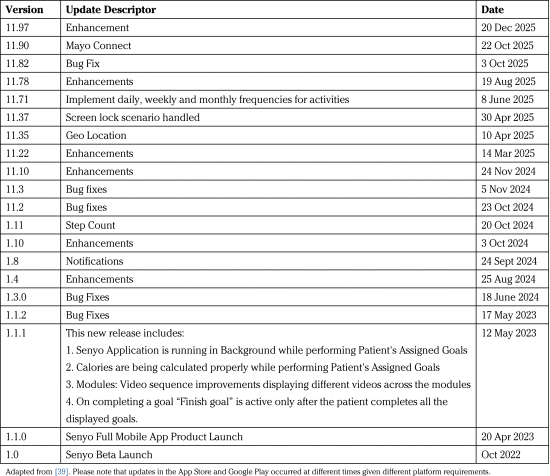
Table 1 Senyo App Version History on the Apple App Store
Senyo Mobile App Product Screenshots
Figures 1 and 2 are a small sampling of the operational high-fidelity prototype platform. The MPA experience was designed to be simple, appealing, and user-friendly for a broad and diverse audience with varying levels of education. Figure 1(a) displays the active To-do list of surveys, modules, or questionnaires that have been assigned to the participant. Figure 1(b) shows the “My Modules” tab open, with a module on “Addictive Thinking” ready to be started. Figure 1(c) shows a behavioral activation goal (walking), with the 10 points awarded for its completion in Figure 1 (d). Figure 2(a) displays the total points the participant has accumulated. These can then be redeemed in a Mystery Bowl drawing [see Figure 2 (b)]. Figure 2(c) showcases the data feature between the patient’s counselor and the patient. Through Senyo, participants can also complete digital consent for research purposes, such as study enrolment, or for allowing the tracking of data from wearable technology (e.g., heart rate, movement, and oxygen saturation).
Figure 1.
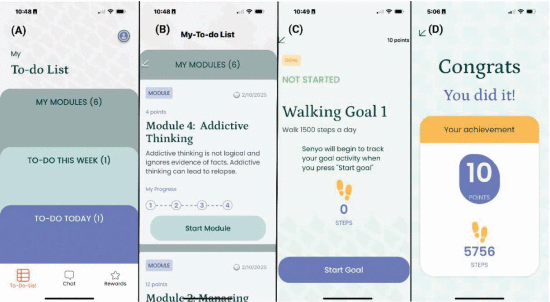
Screenshots from the Senyo Health app. (a) Displays the active to-do list of surveys, modules, or questionnaires that have been assigned to the participant. (b) My Modules tab open, with a module on Addictive Thinking. (c) Behavioral activation goal of walking. (d) Displays 10 points awarded for completion of the set goal. (Images courtesy of Mayo Clinic Addiction Services.)
Figure 2.
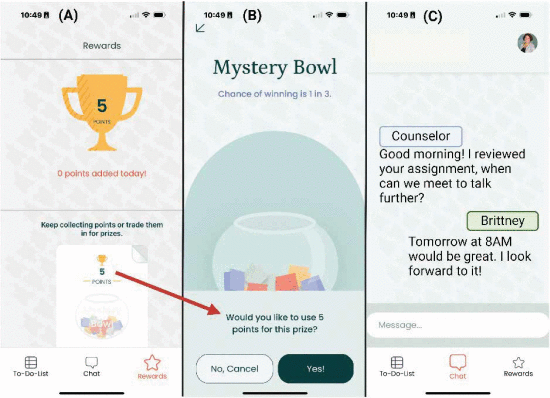
Screenshots from the Senyo Health app. (a) Displays the total points the participant has accumulated. (b) Redeeming points gained from completing goals in a Mystery Bowl. (c) Showcases provider-to-participant chat functionality. (Images courtesy of Mayo Clinic Addiction Services.)
Data Protection and Security
The app system ensures secure data transfer by employing industry-standard encryption protocols to transmit information to backend services, hosted on Mayo Clinic servers protected by a HIPAA-compliant firewall. This cloud-based architecture facilitates communication between the app and its users while securely managing all data and analytics specific to participants, researchers, and providers. Importantly, no protected health information is stored directly on the app itself, and no data emanating from the app is shared with third parties. All data processed by the app adheres to internationally recognized security frameworks, such as the National Institute of Standards and Technology (NIST) SP800-53 guidelines and HIPAA regulations. Patient information is encrypted at the point of entry, enabling secure transmission from user devices to the provider interface and subsequent storage.
Reward Architecture: Encouraging Motivation
Encouraging Desired Behaviors Through Social Bonds
In traditional psychotherapeutic interventions between patient and their provider, engagement is often contingent on the strength of the therapeutic relationship. Social bonds can be rewarding and lead to continual engagement even when the therapeutic work is difficult. Several reward types, such as food, money, engaging challenges, and social status, have been linked similar to activation of the reward centers in the brain and can encourage desired behaviors [40]. CM relies on this reward architecture to encourage engagement with SUD treatment. There is evidence to suggest that delivering CM virtually through an MPA can enhance engagement levels similar to in-person CM [13]. The approach used in Senyo’s CM is a token economy structure [36], where points are awarded for achieving in-app goals, such as completing surveys, modules, or activities. The points per action are customizable through the researcher interface, allowing for the adjustment of relative incentives associated with each task. Points can then be directly redeemed for monetary rewards, or there is an integrated “mystery bowl” that incorporates chance (see Figure 2 b). The mystery bowl is a virtual random prize generator where participants draw for rewards of varying value. Each prize has assigned odds, adding an element of unpredictability to the process. For example, participants might have a higher likelihood of receiving a small reward, such as US$ 5, but still retain the chance to win larger prizes, like US$ 25 or US$ 50. This variability in rewards, combined with the excitement of chance, can increase engagement and motivation among participants.
Social Rewards in Human Telesupport
MPAs that incorporate social rewards, such as support from clinicians or peers via messaging or phone calls, tend to foster greater engagement compared to fully automated apps [13]. These interactions are often designed to encourage adherence, track progress through regular symptom check-ins, provide guidance on therapeutic concepts or skills, and identify patients who may need additional interventions beyond the app [41]. The provider interface grants some of this reinforcement, and peer-to-peer interactions are being considered as a possible incremental feature. Many commercial products contain gamification strategies—making a game of task completion—to keep participants engaged. The points system will assist in testing this approach, but it is hoped that additional options are introduced for enhanced gamification.
Stakeholder Multiperspectival Views
Provider Web Portal Interface
A web-based portal allows health care providers to interact with MPA users through a secure, HIPAA-compliant messaging system and video (Zoom-based) visits. The web portal tracks patient activity within the app, including completed modules, surveys, activities, and earned points. Providers can review this information during secure video appointments to discuss the patient’s overall progress and app utilization. As with every feature, the provider portal can be enabled or disabled for specific cohorts as needed.
Researcher Web Portal Interface
At the core of Senyo is its researcher interface, a web-based portal optimized to streamline the study of MPAs. Researchers can create and organize unique research cohorts, referred to as workgroups, to monitor participant engagement and progress effectively. The portal also enables the development and deployment of modules, surveys, and activities tailored to these cohorts. A built-in rewards creation tool lets researchers assign point values to incentives such as gift cards or a randomized prizes generator (e.g., a mystery bowl), fostering participant motivation [Figure 2(a) and (b)]. This dynamic platform supports the iterative process of MPA research by allowing real-time updates to modules, surveys, goals, activities, and CM rewards—all without requiring coding expertise. Additionally, this interface facilitates the seamless integration or removal of synchronous interactions with health care providers, ensuring researchers can adapt studies to varying participant and research needs.
Researcher Capabilities: Room For Expansion
Researcher Creating a Goal/Activity
Wearable devices, such as the Samsung Galaxy and Apple watches, offer unobtrusive, continuous monitoring of physiological activity, making them well-suited for integration into SUD treatment [11]. These may be considered technotherapeutic products for care [43], [44]. They are advantageous in that data can be collected passively, removing the burden from the patient. Parameters that can be monitored include heart rate, blood pressure, skin temperature, oxygen saturation, respiration rate, electrocardiogram, and electrodermal activation. In addition, some wearables can analyze chemicals excreted in sweat, providing insights into stress levels or substance use patterns. By capturing real-time physiological data, wearable devices hold promise for enhancing remote monitoring and tailoring interventions in SUD care [29], [31], [45].
Through the researcher interface, researchers can create and track goals or activities connected to sensor data collected by the phone or wearable devices to measure the goal’s completion objectively. The app was built from the ground up to work with the Apple Research Kit and Google Health Kit wearable platforms to gather data from wearable device sensors, but it can be configured to work with a broad range of Bluetooth-enabled devices, such as the Fitbit. For example, a researcher interested in understanding whether 100 steps could enhance the efficacy of SUD CBT modules could add the 100-step goal tracked by a wearable device plus CBT to one group and compare that to CBT only. Both groups would use the same app but be assigned to different cohorts within the app, thus receiving different content. Point values can also be incorporated to test how incentives improve outcomes.
Researcher Creating a Module
Researchers can develop MPA modules via a user-friendly web portal, incorporating text, video, and interactive questions embedded within the content. Each module can also be assigned a point value for CM. Researchers and providers can track engagement—such as completion or noncompletion—through their respective portals. Given the robust evidence supporting CBT in MPAs [29], [31], the team created a series of CBT-focused modules. These modules draw on years of Mayo Clinic patient education material, including videos, and have been validated in the Senyo MPA. Moving forward, these modules will serve as a control intervention. Once a module is created through the portal, it is instantly available to the assigned cohorts (i.e., workgroups) via the app. This functionality allows for testing different content types across user groups. For example, a researcher could design a series of acceptance and commitment therapy modules tailored for individuals with SUD, upload text and videos through the interface, assign them to a cohort, and compare their impact to the validated CBT modules.
Researcher Creating a Survey
Surveys within the app can be created as easily as modules or goals. The survey creation tool enables the development of custom surveys tailored to specific needs or the integration of previously validated surveys with the appropriate permissions. Similar to modules and activities, surveys can be assigned to specific cohorts (i.e., workgroups) and are immediately available for use within the mobile platform for addiction upon creation.
Evaluating Preliminary Results
In December 2024, focus group testing was conducted with individuals in treatment for SUDs to evaluate the mobile application. In addition, licensed alcohol and drug counselors provided input through interviews after reviewing both the mobile and desktop versions of the application. Feedback from these sessions informed refinements to the user interface, design enhancements, and the resolution of technical issues, ensuring readiness for future study enrolment. Recruitment goals included enrolling 30 participants from the patient population and 20 licensed counselors. This data is forthcoming.
This article introduced a proof of concept for a therapeutic behavioral intervention targeting SUDs through the development of an MPA. We outlined the rationale for a CBT approach incorporating CM with social rewards. Support for the development of a mobile app of this kind was presented alongside a high-fidelity prototype that became operational in 2022 on several mobile store platforms. Future research will continue to investigate the multiperspectival stakeholder portal views, in addition to the flexibility offered by the researcher portal to continue to build modules and activities, allowing for expansion. Future work will also consider the efficacy of this mobile app in other contexts, such as co-occurring disorders and gambling addiction [47].
ACKNOWLEDGMENT
Internal Review Board approval for this study has been granted by the Mayo Clinic under ID: 24-007758.
References
1. S. H. Woolf and H. Schoomaker, “Life expectancy and mortality rates in the United States, 1959–2017,” JAMA, vol. 322, no. 20, p. 1996, Nov. 2019, doi: 10.1001/jama.2019.16932.
2. E. Sahker, “Evaluating the substance use disorder treatment gap in the United States, 2016–2019: A population health observational study,” Amer. J. Addictions, vol. 33, no. 1, pp. 36–47, Jan. 2024, doi: 10.1111/ajad.13465.
3. SAMHSA. ( 2023 ). Results from the 2023 National Survey on Drug Use and Health: Graphics from the Key Substance Use and Mental Health Indicators Report. Center for Behavioral Health Statistics and Quality, Substance Abuse and Mental Health Services Administration, U.S. Department of Health and Human Services. Accessed: Jul. 17, 2025. [Online]. Available: https://www.samhsa.gov/data/sites/default/files/reports/rpt47095/2023-nsduh-nnr-figure-slides.pdf
4. T. S. Oesterle, “Substance use disorders and telehealth in the COVID-19 pandemic era: A new outlook,” Mayo Clinic Proc., vol. 95, no. 12, pp. 2709–2718, Dec. 2020, doi: 10.1016/j.mayocp.2020.10.011.
5. C. Blanco, M. M. Wall, and M. Olfson, “Psychological aspects of the COVID-19 pandemic,” J. Gen. Internal Med., vol. 35, no. 9, pp. 2757–2759, Sep. 2020, doi: 10.1007/s11606-020-05955-3.
6. (2022 ). The White House Office of National Drug Control Policy, National Drug Control Strategy. Accessed: Jan. 5, 2025. [Online]. Available: https://bidenwhitehouse.archives.gov/wp-content/uploads/2022/04/National-Drug-Control-2022Strategy.pdf
7. S. Hamdoun, “AI-based and digital mental health apps: Balancing need and risk,” IEEE Technol. Soc. Mag., vol. 42, no. 1, pp. 25–36, Mar. 2023, doi: 10.1109/MTS.2023.3241309.
8. R. Gelles-Watnick, “Americans’ use of mobile technology and home broadband,” Pew Research, Jan. 31, 2024. Accessed: Jan. 5, 2025. [Online]. Available: https://www.pewresearch.org/internet/2024/01/31/americans-use-of-mobile-technology-and-home-broadband/
9. P. Krebs and D. T. Duncan, “Health app use among U.S. mobile phone owners: A national survey,” JMIR mHealth uHealth, vol. 3, no. 4, p. e101, Nov. 2015, doi: 10.2196/mhealth.4924.
10. K. Michael, “Are you addicted to your smartphone, social media, and more: The new AntiSocial app could help,” IEEE Consum. Electron. Mag., vol. 6, no. 4, pp. 116–121, Oct. 2017, doi: 10.1109/MCE.2017.2714421.
11. T. S. Oesterle, “Systematic review: Wearable remote monitoring to detect nonalcohol/nonnicotine-related substance use disorder symptoms,” Amer. J. Addictions, vol. 31, no. 6, pp. 535–545, Nov. 2022, doi: 10.1111/ajad.13341.
12. R. D. Ashford, K. Lynch, and B. Curtis, “Technology and social media use among patients enrolled in outpatient addiction treatment programs: Cross-sectional survey study,” J. Med. Internet Res., vol. 20, no. 3, p. e84, Mar. 2018, doi: 10.2196/jmir.9172.
13. A. Pratap, “Indicators of retention in remote digital health studies: A cross-study evaluation of 100,000 participants,” npj Digit. Med., vol. 3, no. 21, p. 17, Feb. 2020, doi: 10.1038/s41746-020-0224-8.
14. A. Baumel, “Objective user engagement with mental health apps: Systematic search and panel-based usage analysis,” J. Med. Internet Res., vol. 21, no. 9, Sep. 2019, Art. no. e14567, doi: 10.2196/14567.
15. K. Michael and M. G. Michael, “Apple watch temptation: Just visit the app store,” IEEE Consum. Electron. Mag., vol. 4, no. 4, pp. 120–122, Oct. 2015, doi: 10.1109/MCE.2015.2463391.
16. R. Abbas and K. Michael, “COVID-19 contact trace app deployments: Learnings from Australia and Singapore,” IEEE Consum. Electron. Mag., vol. 9, no. 5, pp. 65–70, Sep. 2020, doi: 10.1109/MCE.2020.3002490.
17. T. Lecomte, “Mobile apps for mental health issues: Meta-review of meta-analyses,” JMIR Mhealth Uhealth, vol. 8, no. 5, 2020, Art. no. e17458, doi: 10.2196/174584.
18. S. B. Goldberg, “Mobile phone-based interventions for mental health: A systematic meta-review of 14 meta-analyses of randomized controlled trials,” PLOS Digit. Health, vol. 1, no. 1, Jan. 2022, Art. no. e0000002, doi: 10.1371/journal.pdig.0000002.
19. R. Bahadoor, “Inventory and analysis of controlled trials of mobile phone applications targeting substance use disorders: A systematic review,” Frontiers Psychiatry, vol. 12, Feb. 2021, Art. no. 622394, doi: 10.3389/fpsyt.2021.622394.
20. ICER, ICER Publishes Evidence Report on Digital Therapeutics for Opioid Use Disorder, 2020. Accessed: Jul. 13, 2025. [Online]. Available: https://icer.org/news-insights/press-releases/icer-publishes-evidence-report-on-digital-therapeutics-for-opioid-use-disorder/
21. ICER. ( 2020 ). Digital Health Technologies as an Adjunct to Medication Assisted Therapy for Opioid Use Disorder: Evidence Report. Accessed: Jan. 13, 2025. Institute for Clinical and Economic Review. [Online]. Available: https://icer.org/wp-content/uploads/2020/08/ICER_Digital_Therapeutics_for_OUD_Evidence_Report.pdf
22. PursueCare Digital Therapeutics. 2025. Evidence-Based Treatment for SUD and OUD on a Smartphone. Accessed: Jan. 13, 2025. [Online]. Available: https://www.pursuecare.com/digital-therapeutics/
23. Chess Health. ( 2025 ). Connections App. Accessed: Jan. 13, 2025. [Online]. Available: https://www.chess.health/erecovery/connections-app/
24. Dynamicare Health. ( 2025 ). Digital Therapeutics + Coaching for Addiction. Accessed: Jan. 13, 2025. [Online]. Available: https://www.dynamicarehealth.com/
25. J. A. Tice, “The effectiveness and value of digital health technologies as an adjunct to medication-assisted therapy for opioid use disorder: A summary from the institute for clinical and economic review’s midwest comparative effectiveness public advisory council,” J. Managed Care Specialty Pharmacy, vol. 27, no. 4, pp. 528–532, Apr. 2021, doi: 10.18553/jmcp.2021.27.4.528.
26. B. B. Hoeppner, “There is an app for that—or is there? A content analysis of publicly available smartphone apps for managing alcohol use,” J. Substance Abuse Treatment, vol. 82, pp. 67–73, Nov. 2017, doi: 10.1016/j.jsat.2017.09.006.
27. B. Tofighi, “Smartphone apps targeting alcohol and illicit substance use: Systematic search in commercial app stores and critical content analysis,” JMIR mHealth uHealth, vol. 7, no. 4, Apr. 2019, Art. no. e11831, doi: 10.2196/11831.
28. J. Shuren, B. Patel, and S. Gottlieb, “FDA regulation of mobile medical apps,” JAMA, vol. 320, no. 4, p. 337, Jul. 2018, doi: 10.1001/jama.2018.8832.
29. A. N. C. Campbell, “Internet-delivered treatment for substance abuse: A multisite randomized controlled trial,” Amer. J. Psychiatry, vol. 171, no. 6, pp. 683–690, Jun. 2014, doi: 10.1176/appi.ajp.2014.13081055.
30. D. R. Christensen, “Adding an internet-delivered treatment to an efficacious treatment package for opioid dependence,” J. Consulting Clin. Psychol., vol. 82, no. 6, pp. 964–972, Dec. 2014, doi: 10.1037/a0037496.
Authors
Mayo Clinic Addiction Services, Rochester, MN, USA
Tyler S. Oesterle (Oesterle.Tyler@mayo.edu) is the director of the Mayo Clinic Addiction Services, Rochester, MN, USA, where he is also an assistant professor of psychiatry and psychology.
Mayo Clinic Addiction Services, Rochester, MN, USA
Nicholas L. Bormann (Bormann.Nicholas@mayo.edu) joined the Mayo Clinic, Rochester, MN, USA, in 2023, where he is an assistant professor of psychiatry and serves as the medical director of the Fountain Centers Substance Use Disorder Treatment Program.
Systems Engineering AI for Mayo Clinic’s Center for Digital Health, Rochester, MN, USA
Mark A. Lifson (Lifson.Mark@mayo.edu) is the director of Systems Engineering AI for Mayo Clinic’s Center for Digital Health, Rochester, MN, USA.
The University of Sydney Business School, The University of Sydney, Sydney, NSW, Australia
Katina Michael (katina.michael@sydney.edu.au) is a professor and the MBA (Technology and Digital Strategy) program director with The University of Sydney Business School, The University of Sydney, Sydney, NSW, Australia.
Citation: T. S. Oesterle, N. L. Bormann, M. A. Lifson and K. Michael, "A Substance Use Disorder Virtual Treatment and Research Platform: A Proof of Concept," in IEEE Pulse, vol. 16, no. 6, pp. 53-63, Nov.-Dec. 2025, doi: 10.1109/MPULS.2025.3640837.