Pride and Jealousy in Academia
Citation: P. F. Ribeiro and K. Michael, "Editorial: Pride and Jealousy in Academia," in IEEE Transactions on Technology and Society, vol. 6, no. 2, pp. 120-128, June 2025, doi: 10.1109/TTS.2025.3553212.
SECTION I.
Introduction
Pride, arrogance, and jealousy are complex emotions that can shape human interactions, particularly in professional and academic environments. While pride can be a positive force, forwarding self-esteem and motivation for excellence, it can also become destructive when it evolves into an inflated sense of superiority and privilege. Arrogance leads individuals to disregard others’ perspectives and resist acknowledging personal flaws or shared responsibility. Similarly, jealousy stems from insecurity and fear of loss, often manifesting as resentment towards others’ achievements. It can result in competitiveness, undermining relationships, and even workplace sabotage. These emotions are not uncommon and, if unchecked, can erode collaboration and intellectual integrity. Acknowledging and managing these tendencies is fundamental for encouraging a healthier and more ethical academic culture. This editorial will examine and address these issues, in the context of academia.
SECTION II.
Of Pride and Jealousy
A. Pride and Arrogance
Pride and arrogance typically arise from a sense of satisfaction or fulfillment in one’s accomplishments. It often involves feelings of self-worth based on personal achievements in comparison to others. In simple terms, it is to be puffed up. It is to believe inwardly that one’s gifts and strengths are all of their own making. And perhaps most disturbingly, the prideful person believes they are better than everyone else; that they can do no wrong, that they have no weaknesses or shortcomings, and that they cannot hurt others by their actions. They also are unable to apologize for a wrongdoing or bring themselves to acknowledge shared responsibility in a conflict.
Pride of its own can be a positive emotion when it reflects healthy self-esteem. From a young age, children are taught to love their reflection. Before one can truly love another, they must learn to love themselves. Pride motivates individuals to take care in their work because one’s work is like a mirror pointing to one’s values. Healthy pride can provide a purposeful direction in one’s life, in the pursuit of excellence. However, pride can become negative when it progresses into arrogance or excessive self-importance, leading to a disregard for others’ perspectives. Pride of this negative kind, can take a wholly inward view of the world, and not outward perspective, to consider the other with empathy. The inward view is about how I feel, how I have been treated, how my workload is more than everyone else’s, how I have had an article rejected, how I was not promoted, and how that academic ignored me or treated me badly. It is not about how we are sharing in an experience, nor about how we are together making headway into our research area (see tension 3 in [1, p. 212]), how we might support our students, what contribution we can make to society; and how we can develop our team to become even stronger.
Pride is competitive by its very nature. And gets no pleasure out of having something, because that something is never enough. In this way pride is related to avarice, greed and gluttony. Pride dictates that one will cease their requirement for more, only when they have more of something (anything) than someone else. But pride knows no boundaries; it has no limits. It cannot be satisfied, quenched, nor made content. A prideful person compares themselves to others and believes they are more deserved than everyone else: “of course my paper was accepted into the elite journal because of my brilliance”; or “of course I got the promotion because I exceeded the performance metrics, but that person over there, I can see why the Committee turned them down.” It is said that pride is the root of all evil, that brings with it many griefs (1 Timothy 6:10).
B. Jealousy and Envy
Otherwise, jealousy branches from a fear of loss or a sense of insecurity in response to perceived threats to one’s relationships, possessions, or achievements. It often involves feelings of envy, resentment, or insecurity triggered by the success, esteem, knowledge or accolades of others. Jealousy can be a destructive emotion, leading to negative behaviors such as hyper-competitiveness, antipathy, or even sabotage. It can lead to ill feelings between the closest of friends; at the very point that the other should be celebrating with their mate, they are instead harboring feelings of hurt all the while diminishing the other’s success, if not claiming that it should have been them receiving the honors.
The jealous one will attempt to outdo the other; they may hide opportunities, hoarding things for themselves that would be beneficial for others; concealing information; or by resisting to acknowledge the other’s contribution, seeing only what they have provided as important to a given activity. The jealous person may also feign their praise for the other offering congratulations only because that is the “right thing” to be seen to do, without meaningfully feeling joy for the other in their heart. If you are unsure whether or not you have harbored such feelings, you need only check your heart; it will tell you in earnest if you have betrayed another. While your mind can play mental tricks, it is your heart that will act as your conscience- it cannot betray itself.
The chances are we have all been the target of such behaviors, and all hurt another at some time in our life- whether we realize it or not- by our own actions or inactions. No one is immune to such emotions and feelings, and no one can ever declare absolute immunity. We all share in the human condition: the positives and negatives of what makes us human. There is no immunity except for the awareness of our vulnerabilities and our genuine effort to control the darker side of the ego. Carl Jung, the famous Swiss psychiatrist and founder of the school of analytical psychology, said the ego was the center of consciousness and the mediator between the inner and outer worlds [2]. Life experience should teach us how to detect these feelings, openly admit to them and the situation we are grappling with, and attempt to settle the emotions before they rage. The academic environment is not automatically conducive to building community. It is as if “knowledge” is supposed to make us more human by default, but instead, knowledge can be that which makes us inhuman. As it is said: “And if anyone thinks that he knows anything, he knows nothing yet as he ought to know” (1 Corinthians 8:2). These references are of course not unique to the Bible, they can be found throughout the tradition of the world’s wisdom literature in one form or another. For example: “The superior man has a dignified ease without pride. The mean man has pride without a dignified ease” [3]. Knowledge seemingly is about “knowing”; but knowing has deeper connotations- it is about discernment.
SECTION III.
Academia: A Competitive Arena
A. The Academic System
Pride and jealousy can manifest in academia in various ways, often intertwined with the pursuit of knowledge, recognition, and success. Academic arrogance, status, elitism, and resistance to feedback or criticism, are among the principal causes of pride. The prideful person will say inwardly, “I do not need correction, my work is perfect as it stands, the other does not know what they are talking about, what could they possibly say that might improve any aspect of the work?”.
In many ways, the modern academic system has been set up to drive more output from the humans that are a part of it. Instead of being in search of the honor of the primary stakeholder we serve- society through our students- we are in pursuit of global rankings and prestige. The collateral damage to this race to the top, of course, is academicians and higher degree research students who are burnt out in search of the untenable goals in a university’s action plan. But this creates tensions in several sectors as they relate to academia.
As a result, pride and jealousy in academia are not surprising. The competition for the highest recognition can foster feelings of envy among colleagues. Threats of redundancy, university restructures, reduced resources, battles for leadership opportunities, securing promotion and tenure, intellectual property disputes, institutional politics, a reduction in grant and conference travel funding opportunities, research fund freezes, ad hoc transactional author team formations, author ordering disputes, project hoarding, intermittent academic secrecy, relationship problems (e.g., personal disagreements), financial hardship, mental health issues, even sleep deprivation, are among the sources of academic misbehavior.
Academic pride and arrogance can manifest in various forms. Some believe their expertise in a particular field makes them superior to others (e.g., STEM vs non-STEM, or even Computing versus Informatics); but one’s knowledgeableness does not equate to the state of the inner self. Others think their publication record shows a sense of superiority over colleagues with fewer publications or in less prestigious journals. Bibliometrics, defined as the quantitative study of research outputs using statistical methods, is often used to measure the impact of research, but the real impact is qualitative; it is the impact we have on each other, our stakeholders (e.g., taxpayers), our research participants, our students, ourselves, fauna and flora, and the planet which we occupy. While we are being asked to chase the metrics; that which is unquantifiable- spending time with the other, sharing and learning together- may fall by the wayside. We need to get our priorities in order. Metrics will not save the world, nor will they save us. Talking up an h-index no matter how big it is, is a recipe for disaster, especially if the message begins with being “honored and humbled” at the sheer “size” of the success. But what does success actually mean in academia? And how should humans really be measuring their success [1]?
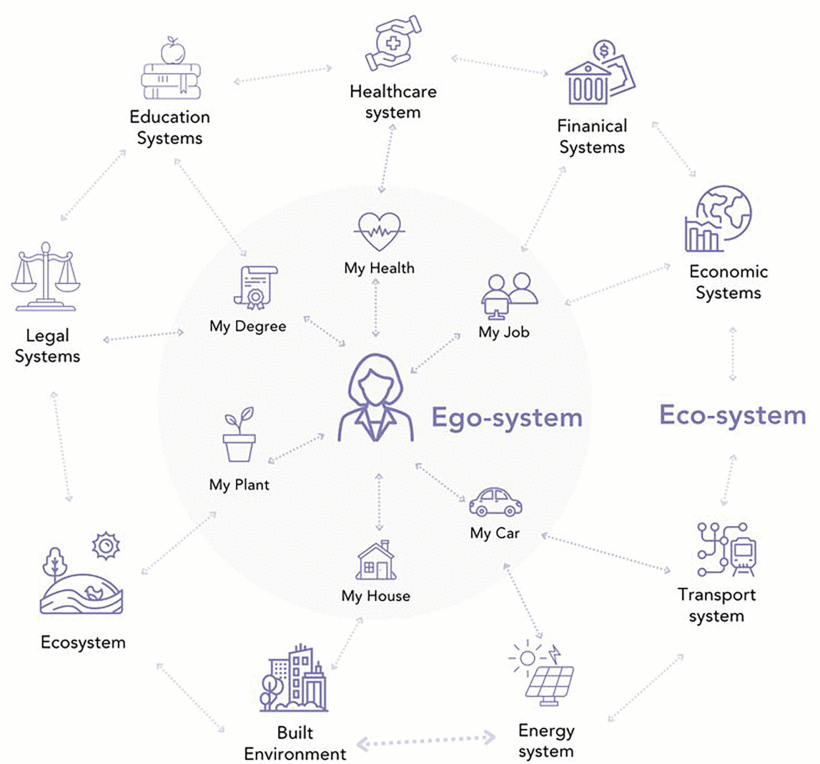
Fig. 1. The Ego-System and Eco-System Relationship [4].
Some academics believe their teaching methods are superior to those of their colleagues, and yet have never stepped foot into another person’s classroom, nor have they asked for their teaching to be peer-reviewed. Chronological snobbery is another source of pride and arrogance. Furthermore, favoritism, cliques, and power struggles can aggravate reactions of jealousy when individuals perceive others as receiving favored treatment or advancing their careers through non-traditional means. It is easy to discredit mechanisms of contribution, if we ourselves are not laboring over their production. We should not be quick to judge the fruits of another; they have given their time to a cause. All meaningful endeavors will contribute in a different way and be impactful to society.
More than seeing this as competition, we should consider the idea of interdependency- everyone is needed to contribute their part, to support the growth of the community. Jeff Colchester, a systems innovation expert, recently described the importance of not presenting the ‘eco-system’ perspective and ‘ego-system’ perspective as a dichotomy, but rather as co-existing realities. As one person’s world relates to another, they naturally contribute to the composition of an ecosystem by their very existence and inter-actions (Figure 1). An ecosystem depends on the confluence of two or more social actors working together toward a common aim; the provision of energy, health, education, housing, finance, legal, transport, etc. Societal members require infrastructure, processes, and technologies to be established in order to satisfy their fundamental needs, but without individuals these services cannot be developed, continue to operate or be maintained. Most individuals serve in one or more capacities in their communities. For example, they can be a parent who also is working as an engineer and studying toward a higher degree qualification and volunteering at their local not-for-profit. Thus, individuals have one or more roles in the ecosystem, whether they are remunerated or not. The same goes in the academic setting; roles and responsibilities of individuals vary based on designated workloads to teaching, research, governance, and other defined areas. The academic ecosystem requires all its members, in order to exist.
B. The Academic Stampede
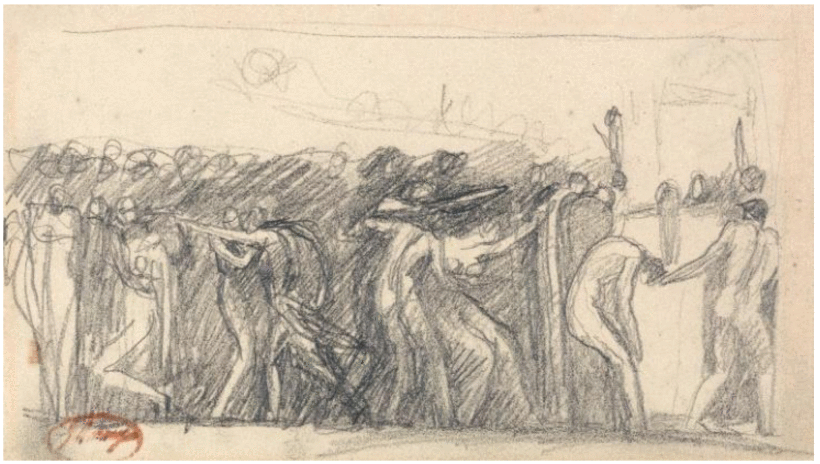
Fig. 2. “Hell” by artist George Romney (1734–1802) [6].
Points, ranks, indexes, likes, all of these contribute to the current climate we live and work within; but what will change the status quo? And why does it seem so out of control? How might we reverse this trend of what might be considered an academic stampede? A stampede is defined as a “sudden panicked rush of a number of horses, cattle, or other animals”, to which we might now add the category of humans. The end result of a stampede can be fatal, but otherwise at least very dangerous (Figure 2). So, what is the rush all about? We will not all make it into A* journals; and that’s a fact. And with even more academics vying for the same limited real estate in a publication’s total page count, it is guaranteed that there will be increasingly even more casualties. Some of these processes are cruel- authors strung along for years- only to be told finally “your paper is publishable but there is no room”; or “we are sorry we held onto your manuscript for so long, still it is an outright reject.” It is no wonder why some members of the academy are so desperate and have lived with ongoing anxiety. Just one of these articles, can turn an academic into “someone”; an overnight sensation. But really? A paper defines someone’s worth? No, it does not!
Bodily injury may not be incurred in an academic stampede (though the sitting disease prevails), but the mental health of academics today, has taken a battering. Pressure to publish. Pressure to write grants. Pressure to make tenure or promotion. And then comes the back-biting, the lashing out, and the breaking point, when things don’t turn out as expected. More often than not it ends up in chronic illness, a divorce, or even suicide. We hope this editorial will state the things that many academics are thinking about but have no avenue to deeply ponder because they are too busy producing or do not trust those around them to confide for fear of retribution. These matters are real. The clock is ticking. But our articles, our research, our accumulations of points, the number of our outputs and products, they will not make us more human; the danger is they will make us less than human: “sub-human” [5, p. 23]. If we do not love the other–our colleague, our friend, our students, each other–then what is the point of it all?
C. A Life Worth Living
Our tombstones will not have the words engraved: “here lies the Professor with an h-index of 50”. Pity the academy that has their focus solely on metrics; these things only really matter if we are contributing to humanity. For what purpose are we toiling? There is our reward. It is often said, “it is the journey that counts”; we restate this to all young early career researchers and educators. Good things take time. They are ultimately fulfilled when we do not become overly preoccupied with attaining this or that. Suddenly one day you will get up to go about your business like any other day; and you will look back at your life/ your journey at varying intervals, and be proud of all you have achieved because of the way in which you attained it. Not in a prideful way, but in a way that says, “this could only have happened because of the intellect I was given at birth, of the time I spent in dedicated study throughout the years, and because of all those I came into contact with and who supported me in my journey, including my family, friends, teachers and colleagues. Moreover, this was only possible because of the collective effort”.
So yes, we can personally reflect on our journey, but we need to be community minded- how are we going to contribute together in a way that matters to society, to the generations that are to come. What kind of legacy shall we leave? If we continue to focus exclusively on the I, the next generation will continue to suffer the burdens we too have lived through. Change takes time. Change takes collective action; it must be coordinated and co-designed. Systemic flaws in our everyday structures need to be addressed but this requires leadership that has the foresight and the fortitude to take small steps, trusting in their decisions to consult with academic stakeholders among others, and earnestly act on feedback.
Academia needs people who believe in education, as that mechanism that will not only raise innovation, but raise a people to be principled, responsible, and create and diffuse technologies into society that will be useful, and help address real problems, not just those that will fuel profits. Rather than being polemical, leaders require our support to make these necessary changes happen. Many people in positions of power are faced with a dysfunctional system within which they need to operate to enact change. It is not easy. However, enough gradual movements toward this change, by enough people, will inevitably cause structural movements for the better. Patience is paramount. Yet it will come as no surprise, that dysfunctional systems propagate dysfunctional teams, making it even harder to work toward positive change in organizational culture.
SECTION IV.
Self-Awareness
A. An Outward Mindset
Professor C.S. Lewis worked at the University of Oxford for 30 years and was never promoted to full professor there due to the jealousy of his department colleagues [7]; he had become very famous with the publication of his books. Familiarity produces contempt. Cambridge University, however, did see his exceptional scholarly contributions and created a chair and made him a Professor of Medieval and Renaissance English [8]. This sort of discrimination happens all the time in the academic environment and elsewhere in industry and the business world. It stems from jealousy in hiring Committees or Committees in charge of promotion and tenure. How many people do we each know who have suffered at the plight of tyrannical systems, tyrannical heads and deans, and have been stranded in the role of Senior Lecturer or Reader?
In a private letter to a budding scholar, Prof. Lewis (who struggled with pride himself) wrote: “Yes, I know one doesn’t even want to be cured of one’s pride because it gives pleasure. But the pleasure of pride is like the pleasure of scratching. If there is an itch one does want to scratch: but it is much nicer to have neither the itch nor the scratch. As long as we have the itch of self-regard, we shall want the pleasure of self-approval: but the happiest moments are those when we forget our precious selves and have neither but have everything else instead” [9, p. 477].
When haughtiness prevails, and one delights at having their name publicly mentioned in place of another, it is time to reassess one’s position. In fact, it is likely time to flee the situation, but working through this awareness and addressing it as early as it might present in one’s dealings is a positive way forward. The aim should always be to recognize the contribution of others in the context of the whole system. By having an outward mindset, complementary thoughts solely about oneself will be replaced, by thoughts about one’s role in the context of the ecosystem to which they belong [10]. These tendencies come more natural to some, than others; and they are highly dependent on factors related to the environmental context where someone was raised; cultural roots and religious beliefs; historical experiences such as inner and outer conflicts; and more. One thing is certain, the more one practices the art of placing another before themselves, the less they will be plagued by any scenario that may prevail in the academic setting.
B. The Consequences of Jealousy
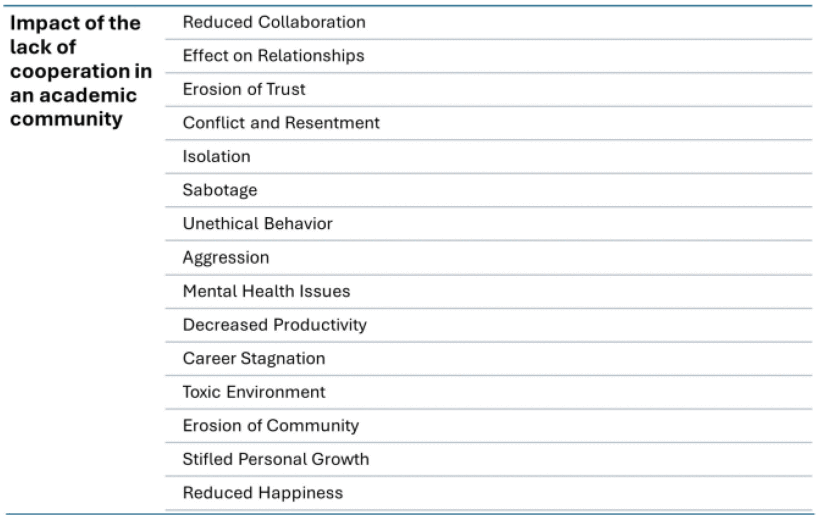
TABLE I Impacts of a Lack of Cooperation in Academia
Envy and jealousy, while common emotions, can have significant negative consequences for individuals, their relationships, and communities. Among them we could cite the impact on mental health, effect on relationships, erosion of trust, conflict and resentment, isolation, sabotage and undermining, unethical behavior, aggression, reduced collaboration, decreased productivity, career stagnation, toxic environment, erosion of community, stifled personal growth, and reduced happiness (Table I).
C. Socio-Emotional Regulation
Socio-emotional regulation is paramount, but underlying all of these circumstances within academia has to do with one’s moral compass. Our compass may have worked for 5, 10 or even 20 years or more, and then one day broken by a series of unexpected events that converged in an intensified manner. Take some time out and breathe freely. Try to get the dangling needle on the gauge of the compass to point magnetic North, again. This process is called re-magnetizing. Reconcile first with yourself within the context of your belief system; then seek to reconcile with the other. Consider what went wrong, and grow from the experience. Do not keep looking back. Do not be bitter or hold grudges. Forgive yourself and the other, and keep looking forward. We are all human.
Understanding the relationship between pride and jealousy can help individuals navigate their emotions and interpersonal dynamics more effectively. Collaboration in academia serves as a powerful antidote to both pride and jealousy, promoting a culture of communal respect, shared learning, and collective achievement, to reach the ideal when we can forget all proprietorship in our own works and can enjoy it as if it were someone else’s: without pride or modesty. And if indeed, it does happen to be someone else’s work, we should be able to celebrate it as if it were our own.
If you have felt feelings of jealousy or envy, the change must come from within. Say something positive about the other’s research; when you might wish to say something about your own achievements, remain silent; or choose to lift the other even if they have made it clear that they feel you are insignificant to the project. With time you will find it will bother you less what anyone else achieves, particularly if it is a collective achievement in which everyone can be recognized. This does not mean one neglects the self, deprecating one’s own contributions to a project; it is rather to give space to allow your efforts and works to speak for themselves.
SECTION V.
The Role of Collaboration
A. At the Heart of Collaboration Is Love
Although it is essential to recognize that pride, arrogance, and jealousy exist among academics, many scholars approach their work with humility, recognizing the limitations of their knowledge and remaining open to dialogue and collaboration with others. At the heart of any collaboration is love: love for the subject matter being researched, love for oneself in offering oneself to a given cause, love for others with whom we work in a team, and love for society and the world around us for which we will leave our findings and outcomes. All of these interactions will act to transform us. It must be underscored, that the academic who works alone is not necessarily prideful or arrogant, but we argue in this piece that by collaborating, feelings of pride and jealousy dissolve, because the gains are shared among a group of people, all exchanging ideas together openly and without reservation. But only if the collaboration is conducted in the right spirit, and everyone present is there for the right reason. The motivation matters. Academics often refer to the transactional nature of dealings between one another in writing up research. We believe while these dealings can be successful for short-term endeavors, they lack depth and the fullness that might have otherwise been experienced if two or more people decided in earnest to mindfully come together to explore addressing a societal problem jointly.
Collaboration can play a fundamental role in reducing academic conflicts by fostering a culture of mutual respect, understanding, and cooperation. Shared goals, complementary knowledge, peer review and feedback, drafting and re-drafting, conflict resolution mechanisms, improved communication, collegiality, and better accountability can encourage faculty to act with integrity, professionalism, and transparency, reducing overall conflicts in the academic setting. Overall, collaboration encourages academics to focus on cooperation rather than competition, promoting a culture of teamwork, and that minimizes academic disputes. A best paper won by a team of academics produces different feelings, for example, to a best paper awarded to a single academic, though in reality the achievement is the same to a department, i.e., a best paper.
The following words are adapted from An Experiment in Criticism[11], applying it to the suitable and expected behavior of a true academic scholar:
“The wise scholar can see the importance of the work of others and appreciates their experiences rather than only his own. Those who have been true scholars fully realize the enormous contribution of others to their work. They realize it best when they talk with a proud and isolated colleague. He may be full of goodness and good sense, but he inhabits a tiny world. In that one should be suffocated. The scholar who is content to be only himself, and therefore less a self, is in prison.”
“Cooperating with others will make us more and still remain ourselves. Like the night sky in the Greek poem, we see with a myriad of eyes, but it is still we who see. Here, as in worship, in love, in moral action, and in knowing, we transcend ourselves; and are never more ourselves than when we do.”
We should also never allow disagreement to become personal. We need to always distinguish the person from the opinion, and know the difference between an argument and a quarrel. Truth is ultimately at stake, and the truth is what matters to a scholar.
B. Forms of Academic Cooperation
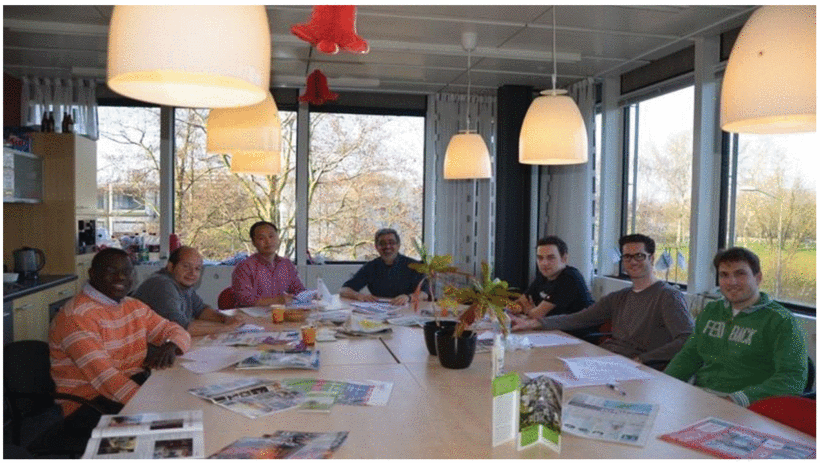
Fig. 3. The figure illustrates a tutorial style meeting with researchers at the Technological University of Eindhoven to discuss the drafts of their papers.
Academic cooperation takes various forms: research collaboration, interdisciplinary initiatives, joint publications, conferences and workshops, research networks, international exchange programs, communities of practice, and community engagement. These are among the different forms of cooperation that can bring life to, and enhance the workplace. This kind of cooperation leverages the strength of the team, to create a dynamic that invites even greater participation and growth of the existing network or fueling a brand new one. However, cooperation may also involve a group of researchers criticizing each other’s publication drafts (Figure 2). When Paulo was teaching at the Technological University of Eindhoven in the Netherlands, every fortnight he would meet with all his Masters and PhD students. The drafts of papers in preparation would be criticized by all. As a result, great improvement on final manuscripts was achieved besides providing a tremendous time of social interaction. When meeting with team members becomes less a departmental duty and more a meeting of minds that everyone looks forward to, one knows they have something very special happening. At this point, people seek to be in one another’s company because they look forward to the stimulating academic interaction that will bear fruit, rather than the paper being published which is secondary but inevitable if the group maintains its regular contact.
Cooperation may come in the form of an informal group of scholars who meet to criticize each other’s work. The Inklings [12] were an informal literary discussion group associated with J.R.R. Tolkien and C.S. Lewis at the University of Oxford for nearly two decades between the early 1930s and late 1949. The Inklings were literary enthusiasts who praised the value of narrative in fiction and encouraged the writing of fantasy. The best-known, apart from Tolkien and Lewis, were Charles Williams and Owen Barfield. Among the works criticized by the Inklings were The Lord of the Rings[13] and the Chronicles of Narnia[14]. In this case, a special cooperation took place over the longer-term, though the authors remained as individual writers. This is a beautiful model of the possibilities. One could only imagine with what intrigue, joy and deep reflection these meetings took place; and the sheer love and respect these writers would have had for one another.
C. The Antidote for Jealousy: Collaboration - Cooperation
Jealousy or envy is a complex emotion that can cause feelings of dissatisfaction and resentment toward the achievements or possessions of others. Although there is no single, definitive “antidote” for envy, several strategies can help deal with this emotion in a healthy and constructive way. Figure 4 shows the different ways that collaboration/ cooperation can minimize jealousy in an academic community. Trust, commitment, respect, shared goals, resource sharing, accountability, and conflict resolution are among the initiatives that help in the attainment of harmony.
SECTION VI.
Discussion
While academic cooperation offers numerous benefits, several factors can act as barriers to resisting to work collaboratively within the academic community. Among these barriers are: competition for resources; intellectual property concerns; disciplinary boundaries; ego and prestige; time and workload pressures; communication and trust; personal and family circumstances; geographic and institutional barriers; resistance to change, etc. Addressing these barriers to academic cooperation requires proactive efforts to cultivate a culture of collaboration. If the culture does not exist in a School, it will take some time to institute which is when an experienced mentor or academic research leader can be instrumental at affecting change from within. Programs for collaboration can be incentivized by heads and deans, to bring small groups together to work on common research strengths and interests. These can be discipline-specific or inter/trans-disciplinary, or domain-specific or related to global/local challenges or government designated research priority areas.
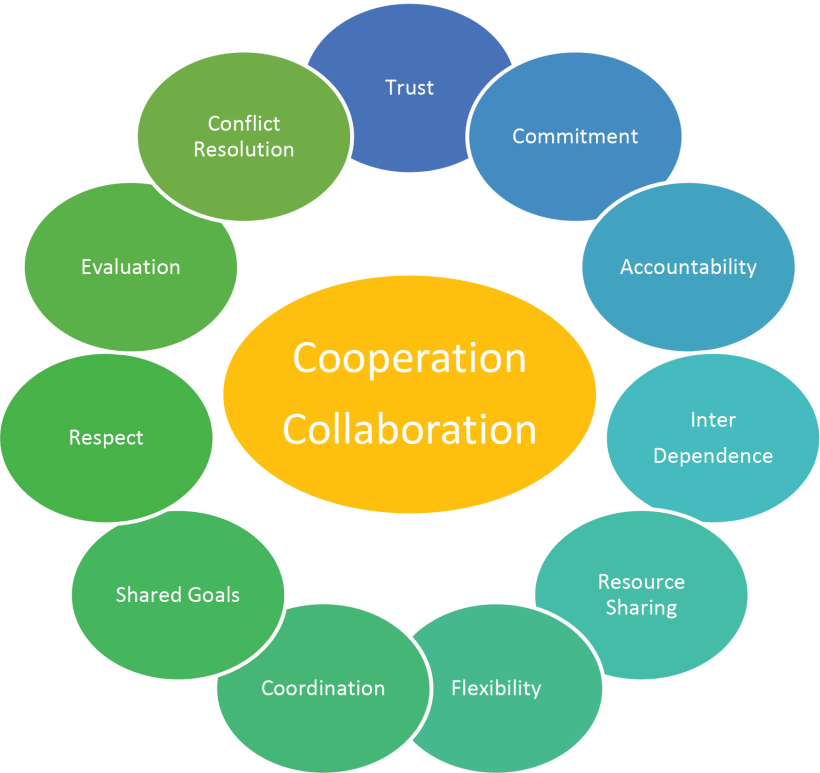
Fig. 4. Successful Cooperation and Collaboration Values.
The impact that collaboration can have on individual academics is substantial, with the ability to raise job satisfaction for all group participants, in addition to reaching new heights as a research/ author team. This is particularly true when collaborators are of differing academic ranks, from diverse backgrounds, and make contributions related to novelty both by their lived and professional expertise, and also their unique ways of being in the world. The multiplicity of strengths that can come together in a group, are propelled by multiple layers of difference, all leading to creativity, curiosity and innovation. When one knows that another is waiting for their work, and will with care make revisions and suggestions towards the betterment of the research grant or research paper, there is an impetus to lift one’s commitment to a project through natural enthusiasm. The joy is not so much in what one has added to the grant or the article, it is in the other’s discourse about the work that has been presented to them for discussion.
Consider how this practice might feel at the end of a single project; several projects; several years; several decades; or if one attains the ultimate fortune, for a whole lifetime. This is what we call true partnerships: when collaborator’s call for a meeting- whether in the flesh or online- and this is the absolute highlight of your work day or week. The blessings will flourish; as will the research. But most of all? You will grow as a human being. And you will know, your collaborator as the poet Rumi once wrote, will be your mirror. We hope for each of you, to encounter a group or even a single peer like this in your lifetime, and to stay and foster that beautiful relationship between people who are not only intelligent but wise.
This relationship can be described using several metaphors: as a coil that can be stretched and returned to its normal position; or in the playing of a piano accordion, through the bellows (the heart of the instrument); or even the ocean tide, as it ebbs and flows. It is in many ways a dance between two or more people that join hands, who hold on to one another until the music stops. In our groups, we must feel safe to admit when we do not have all the answers in front of our collaborators, or when we only have part of the research design but not all of it without the other. Before too long, you will be finishing one another’s sentences, and a feeling of accomplishment will herald over you, not because of the research heights you attain, but for the long-lasting friendships you will make in your work life. This is why retirement for so many academics is so difficult. Because after a dozen articles co-written with your team; and after 20 joint presentations, feelings of jealousy will be completely foreign to you, because you will forget who wrote which part of the last article or slide, as you would have coalesced to such an extent that your contributions will have become indistinguishable.
SECTION VII.
Conclusion
Finally, to minimize the risk of pride, by loving our knowledge more than the thing known, and of taking pleasure not in the exercise of our capacities, we must remain vigilant in all our relationships, both within the academic world and elsewhere.
We conclude this article with an excellent example of cooperation from the final letter in a long exchange between two professors who strongly disagreed on a particular subject. This seems to exemplify the ideal attitude that should guide and permeate all of our academic interactions and minimize pride and jealousy:
“And with this, my case is ended. As I glance through the letter again I notice that I have not been able, in the heat of the argument, to express as clearly or continuously as I could have wished my sense that I am engaged with ‘an older and a better soldier’. But I have little fear that you will misunderstand me. We have both learnt our dialectic in the rough academic arena where knocks that would frighten the London literary coteries are given and taken in good part; and even where you may think me something too pert you will not suspect me of malice” [15, p. 69].
In This General Issue
Article [A1] was co-authored by the American Association of Geographers (AAG) Organizing Committee on “Locational Information and the Public Interest,” held at a summit in Santa Barbara, California in June 2022. The authors of the paper include: Michael Goodchild of the University of California at Santa Barbara, executive director of the AAG Gary M. Langham and AAG professional staff Lisa Schamess, Jeremy Crampton of George Washington University, William A. Herbert of City University of New York, Krzysztof Janowicz of the University of Vienna, Mei-Po Kwan of The Chinese University of Hong Kong, and Katina Michael of Arizona State University. Together with 18 Summit participants, the paper addresses the four goals the Committee set including to: (1) develop a research agenda extending across disciplines, (2) outline educational resources and strategies to guide ethical practice, (3) devise a pathway to increase public understanding, and (4) create a path to increased dialogue with non-traditional and indirect stakeholders in GIS, as well as increased collaboration between academic, public, and private sectors on the use of locational information.
Article [A2] is written by James of Pace University and Luca of the University of Trento. The Internet of Musical Things (IoMusT) is an emerging field of academic and industrial research that extends the Internet of Things to the musical domain. The authors present a framework that seeks to be accessible for information engineers, musicians, and the wider circle of participants in the IoMusT. The purpose of the framework is to facilitate the process of ethically designing and evaluating work at the intersection of network-based technology and musical creativity. Following on the theme of the Internet of Music, [A3] is a paper on the Internet of Sounds by Leonardo and Emanuele Principi from Università Politecnica delle Marche and L. Turchet from the Universita degli Studi di Trento. The paper is about the Internet of Sounds (IoS) which is considered an emerging field, promoted by a large network of research institutions and companies. The aim of this network is to foster research and new industrial and civil applications in domains such as audio processing, music performance, entertainment and environmental monitoring.
Article [A4] is written by a large cross-sector research grant team under the European Union’s Horizon Europe Research and Innovation Programme on the theme of “Ceasefire”, written by diverse academicians and practitioners. The lead author is Mademlis et al. of Harokopio University of Athens. Other authors include: Marina Mancuso and Caterina Paternoster with Università Cattolica del Sacro Cuore, Spyridon Evangelatos with Netcompany-Intrasoft and the Hellenic Mediterranean University, Emma Finlay and Joshua Hughes at Trilateral Research, Panagiotis Radoglou-Grammatikis and Panagiotis Sarigiannidis with the University of Western Macedonia, Georgios Stavropoulos and Konstantinos Votis with the Centre for Research and Technologies Hellas, and Georgios Th. Papadopoulos who is with Harokopio University of Athens. The paper addresses recent trends in the modus operandi of technologically-aware criminal groups engaged in illicit goods trafficking (e.g., firearms, drugs, cultural artifacts, etc.) which have introduced security challenges. As criminals have sought to use available information, so the commensurate response by policing and security stakeholders to utilize artificial intelligence (AI), machine learning, and data mining methods that can automate large-scale information analysis. But with the application of data-driven activities for deep neural networks (DNNs) and graph analytics to automatically monitor and analyze the digital activities of criminal networks, have also come practices that unavoidably give rise to ethical and legal questions that need to be adequately addressed.
Online hate speech has been topical particularly since the advent of social media. In the fifth paper in this issue, Bermudez-Villalva et al. address [A5]. This paper focuses on analyzing and measuring the prevalence of online hate on 4chan’s politically incorrect board (/pol/) using state-of-the art natural language processing (NLP) models, specifically transformer-based models such as RoBERTa and Detoxify. This paper addresses the issue of the volatile nature of “detection in the wild”, providing an in-depth analysis of hate speech dynamics and quantifying the extent to which online hate speech can be found on non-moderated platforms. This research was supported by the U.K. Research and Innovation (UKRI), through the Strategic Priority Fund as part of the Protecting Citizens Online programme (Grant: AGENCY: Assuring Citizen Agency in a World with Complex Online Harms). Adrian and Maryam are with the Information Security Department, Royal Holloway University of London, Egham, U.K. and Ehsan with the School of Computing, Surrey University, Surrey, U.K.
Article [A6] is written by Armin from the School of Law at the University of Wollongong Australia. The empirical paper examines the outcomes of integrating Generative AI (GenAI) into a single law assignment. Despite receiving instructions on the importance of verifying GenAI outputs and feedback on their attempts to use these tools effectively, a notable portion of students included fabricated or inaccurate information that had been generated by AI in their assignments. The question posed by the author is whether essential skills, such as critical thinking and the ability to independently evaluate the accuracy and credibility of sources, are compromised through the use of GenAI. Alimardani addresses the overreliance on GenAI that will require developing robust strategies that should be implemented for the entire duration of a student’s university degree to ensure they engage with AI tools responsibly.
Article [A7] is written by Corey of Kudu Dynamics in Texas and Bhaskar is with at the University of Idaho. Their article explores the high incidence of malware infection with malicious Microsoft Office documents (Word and Excel). While many techniques are proposed and are effective in the detection of malicious documents through the utilization of machine learning (ML) algorithms, bias in the datasets and the lack of insight into the decision as to why a document was flagged as malicious are problematic. The authors utilize the SHAP algorithm (SHapley Additive exPlanation) in an innovative manner that allows for a more robust ML model for predicting malicious Office documents.
Appendix: Related Articles
M. Goodchild et al., “On locational information and the public interest,” Am. Assoc. Geograph., Santa Barbara, CA, USA, White Paper, Jun. 2022.
J. Brusseau and L. Turchet, “An ethics framework for the Internet of Musical Things,” IEEE Trans. Technol. Soc., early access, May 23, 2024, doi: 10.1109/TTS.2024.3398423.
L. Gabrielli, E. Principi, and L. Turchet, “Sustainability and the Internet of Sounds: Case studies,” IEEE Trans. Technol. Soc., early access, Dec. 24, 2024, doi: 10.1109/TTS.2024.3513777.
I. Mademlis et al., “The invisible arms race: Digital trends in illicit goods trafficking and AI-enabled responses,” IEEE Trans. Technol. Soc., early access, Dec. 24, 2024, doi: 10.1109/TTS.2024.3514683.
A. Bermudez-Villalva, M. Mehrnezhad, and E. Toreini, “Measuring online hate on 4chan using pretrained deep learning models,” IEEE Trans. Technol. Soc., to be published.
A. Alimardani, “Borderline disaster: An empirical study on student usage of GenAI in a law assignment,” IEEE Trans. Technol. Soc., early access, Feb. 25, 2025, doi: 10.1109/TTS.2025.3540978.
C. M. Hartman and B. P. Rimal, “Interpretable machine learning for mitigating feature-driven attacks,” IEEE Trans. Technol. Soc., early access, Feb. 3, 2025, doi: 10.1109/TTS.2025.3531780.
References
1. R. Abbas et al., “Publishing for impact: Interdisciplinary reflections,” IEEE Trans. Technol. Soc., vol. 4, no. 3, pp. 201–217, Sep. 2023, doi: 10.1109/TTS.2023.3318396.
2. C. G. Jung, Collected Works of C. G. Jung, Volume 7: Two Essays in Analytical Psychology, G. Adler and R. F. C. Hull, Ed., Princeton, NJ, USA : Princeton Univ. Press, 1966, http://www.jstor.org/stable/j.ctt5hhr7s
3. R. T. Ames and H. Rosemont Jr, The Analects of Confucius: A Philosophical Translation. New York, NY, USA : Ballantine Books, 1999.
4. J. Colchester. “Egosystem and Ecosystem are not a dichotomy.,” Mar. 2025, https://www.linkedin.com/posts/josscolchester_i-worked-on-this-graphic-last-week-while-activity-7302259443528810497-56Vv
5. K. Ware, M. G. Michael, and K. Michael, “Religion, science, and technology: An interview with metropolitan Kallistos ware,” IEEE Technol. Soc. Mag., vol. 36, no. 1, pp. 20–26, Mar. 2017, doi: 10.1109/MTS.2017.2654283.
6. G. Romney. “Hell.,” 2013. [Online]. Available: https://commons.wikimedia.org/wiki/File:George_Romney_-_Hell_-_Google_Art_Projec%28HAEwD0GgRomY%29.jpg

7. R. Stroud, “C. S. Lewis and the academics.,” Dec. 2018. [Online]. Available: https://mereinkling.net/2018/12/19/c-s-lewis-and-the-academics/
8. C. S. Lewis. “Wade center.,” 2025. [Online]. Available: https://www.wheaton.edu/academics/academic-centers/wadecenter/authors/cs-lewis/
9. C. S. Lewis, The Collected Letters of C. S. Lewis, Volume III, Narnia, Cambridge, and Joy, 1950-1963. New York, NY, USA : HarperCollins, 2004.
10. (Arbinger Inst., Farmington UT, USA). What is an Outward Mindset? 2025. [Online]. Available: https://arbinger.com/blog/what-is-an-outward-mindset/
11. C. S. Lewis, An Experiment in Criticism. Cambridge, U.K. : Cambridge Univ. Press, 1992.
12. H. Carpenter, The Inklings: C.S. Lewis, J.R.R. Tolkien, Charles Williams, and Their Friends. London, U.K. : George Allen & Unwin, 1978.
13. J. R. R. Tolkien, The Lord of the Rings. New York, NY, USA : HarperCollins, 1991.
Show in ContextGoogle Scholar
14. C. S. Lewis, The Chronicles of Narnia. New York, NY, USA : HarperCollins, 1956.
15. C. S. Lewis and E. M. W. Tillyard, The Personal Heresy: A Controversy. Oxford, U.K. : Oxford Univ. Press, 1939.
Authors
Electric Energy Institute, Federal University of Itajubá, Itajubá, Brazil
Paulo F. Ribeiro (Life Fellow, IEEE) received the B.S.E.E. degree from the Federal University of Pernambuco, Brazil, the Ph.D. degree from the University of Manchester, Manchester, U.K., in 1985, and the M.B.A. degree from the University of Lynchburg, VA, USA. He was a Research Fellow with the NASA Glenn Research Centers, Cleveland, OH, USA, and also with Electric Power Research Institute, USA, and a Erskine Fellow with the University of Canterbury, New Zealand, and also with the Brazilian Institute of Electric Energy, Brazil. He taught full-time and worked in the industry in USA for over 25 years. He also taught with the Technological University of Eindhoven, The Netherlands. He is currently a Full Professor of Electrical Engineering with the Federal University of Itajubá. He has authored or co-authored more than 350 papers, book chapters, and eight books. His current research interests include power electronics, power quality, transmission and distribution systems, renewable and distributed generation, energy storage, smart grids, engineering education, and philosophy of technology.
School of Business, Newcastle University, Tyne, U.K.
School for the Future of Innovation in Society and School of Computing and Augmented Intelligence, Arizona State University, Tempe, USA
Katina Michael (Senior Member, IEEE) received the B.S. degree in information technology from the School of Mathematical and Computing Science, University of Technology, Sydney, NSW, Australia, in 1996, the Doctor of Philosophy degree in information and communication technology from the Faculty of Informatics, University of Wollongong, Wollongong, NSW, Australia, in 2003, and the Master of Transnational Crime Prevention degree (with Distinction) from the Faculty of Law, University of Wollongong in 2009. She has held visiting academic appointments with Newcastle University Business School, U.K., Nanjing University, Nanjing, China, and the University of Southampton, Southampton, U.K. From 1996 to 2001, she was a Senior Network Engineer with Nortel Networks, Wollongong. She was also a Systems Analyst with Andersen Consulting, North Sydney, NSW, Australia, and also with OTIS Elevator Company, Minto, NSW, Australia. From 2002 to 2018, she was a Professor with the School of Computing and Information Technology, as well as the Associate Dean International with the Faculty of Engineering and Information Sciences, University of Wollongong. Most recently, she was a Tenured Professor with the School for the Future of Innovation in Society and the School of Computing and Augmented Intelligence, Arizona State University, Tempe, AZ, USA, from 2018 to 2024, where she was also the Director of the Society Policy Engineering Collective and a Senior Global Futures Scientist. In 2017, she was a recipient of the Brian M. O’Connell Distinguished Service Award in the Society for the Social Implications of Technology. During her academic career, she has held editorial responsibilities as the editor-in-chief, a senior editor, an editor, and an associate editor for a number of publications.
Citation: P. F. Ribeiro and K. Michael, "Editorial: Pride and Jealousy in Academia," in IEEE Transactions on Technology and Society, vol. 6, no. 2, pp. 120-128, June 2025, doi: 10.1109/TTS.2025.3553212.