Characteristics of Social Robots: A Framework for Development
Citation: J. Tschida, K. Michael and T. McDaniel, "Characteristics of social robots: A framework for development," in IEEE Potentials, vol. 44, no. 1, pp. 18-22, Jan.-Feb. 2025, doi: 10.1109/MPOT.2025.3542980.
Social robots hold great promise for assisting both older adults with dementia and those in good health. Yet, little is known about how people want to interact with these robots. This article introduces a framework for the key features social robots should have, based on insights from a four-month study of how seniors engage with robots through conversation and interaction. We have broken these features down into principles of robot behavior, verbal communication, and nonverbal communication, while also considering factors that affect a person’s likelihood to adopt such technology. Our findings offer a starting point for refining social robots and invite further exploration into developing features that truly resonate with users.
Introduction to an aging society
As our society ages, the world faces the challenge of supporting a growing number of seniors. For the first time, there are more seniors than young children. Humans are living longer, thanks to advances in medicine and technology. However, there are not enough medical professionals to meet the increasing demand for geriatric care, not to mention the increasing number of people who are socially isolated and living with loneliness. One solution is to leverage technology that allows seniors to age comfortably at home, reducing the strain on healthcare systems and to encourage greater connectedness through robots.
The “smart home” movement is transforming homes with devices like the Nest Thermostat, Roomba vacuum, and Ring Doorbell, enabling people to manage household tasks through smartphone apps. Beyond these, robots are being developed to assist seniors with daily activities, offer companionship to those with dementia, and keep older people mentally engaged.
As the global population ages, more people will live with dementia. While the technology that assists these individuals is crucial, current solutions often fall short. Conversational therapy can help reduce isolation, improve mood, and enhance communication skills, yet most robotic solutions provide one-sided interactions or simple question-and-answer capabilities. The need for robots that engage in meaningful, two-way bidirectional conversations is vital, not just for those with dementia but for all seniors who might face isolation due to mobility issues or outliving friends and family. Researchers should explore how seniors want to interact with social robots to ensure these devices truly meet their needs.
Our work addresses the question, How do healthy older adults want to interact with a social robot? We have identified key design features and communication styles that should be incorporated into social robots. We present these as a framework for future research in human–robot interaction. This framework aims to guide the development of robots that can enhance the lives of older adults, fostering better engagement and support as they age.
Context and foundations
Our framework is built on insights from a study where sixteen healthy older adults interacted with Misty the Robot (seen in Fig. 1) over eight sessions, totaling 128 separate interactions. These sessions revealed key themes about the robot’s persona and what features seniors desire in social robots. We explored both verbal and nonverbal communication styles to determine how to keep the individuals engaged.
Fig1
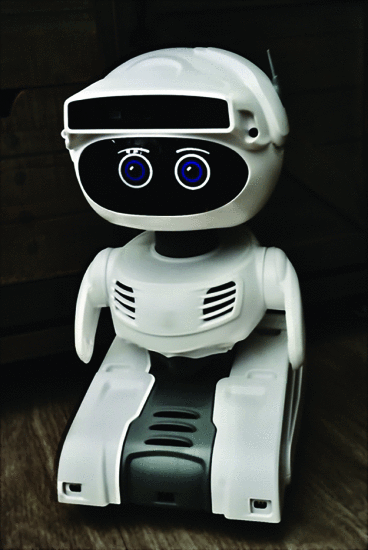
Misty the Robot from Misty Robotics. This photo was taken by team members.
Participants, recruited from a local senior living facility, interacted with the robot for 30–60 min in each session, discussing any topic they wished to cover (Fig. 2). This study was approved by Arizona State University’s Institutional Review Board, and participants received US$25 per session. Instead of presenting technical details, this article highlights the features that the participants found most impactful during their conversations.
Fig2
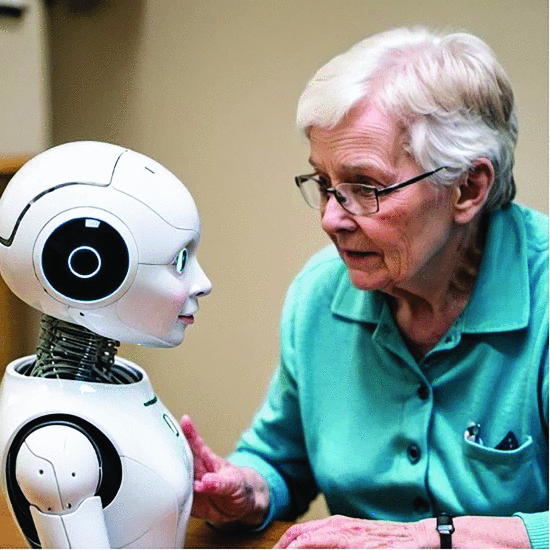
An AI-generated image using OpenAI’s Dall-E 2, with the following prompt: “Misty robot talking to an older person with dementia.”
We identified aspects of the robot’s persona that impacted participants’ trust and acceptance. Unlike typical studies that gauge acceptance based on intent to use, our study involved repeated interactions, providing insights into long-term use and changing perceptions.
Trust was a significant factor with many participants sharing personal information they initially intended to keep private. This growing trust highlights essential features for future studies and robot development. Our findings offer a framework for developing better companion robots. The results serve as a foundation upon which future research can build, emphasizing the needs of healthy older adults.
Influencing factors
When designing social robots, several external factors influence their success:
Living situation: Whether a person lives alone or with others affects their need for a social robot. Those living alone but with financial difficulties might not prioritize a robot, while those in assisted living might face stigma.
Finances: Financial constraints affect where a person lives and the support they can access. Lowering the cost of social robots is crucial for widespread adoption and benefit, making them affordable through a variety of access schemes, inclusive of the robot-as-a-service model.
Isolation level: Isolation can prevent healthy older adults from recognizing the benefits of a robot companion. Initially recruited through friends, participants later valued the interactions, recalling life events and reliving memories. However, none would purchase a robot but would interact with one if available.
These factors (living situation, finances, and level of end-user isolation) are interconnected and must be considered by researchers to ensure the successful adoption of social robots.
Principles of robot behavior
We explored the features of a social robot that influenced participants’ perceptions, trust, and acceptance. The following are key features that participants desired.
Privacy first
Confidentiality is crucial for building trust between humans and robots. Participants need to feel safe sharing personal information without fear of repercussions. They must be assured that the robot will not repeat what it hears.
Without confidentiality, there is a risk that repeated information could harm the user. To prevent this, personal profiles should be created and only accessible to the individual user. However, there is an exception. If a user discloses that they are a danger to themselves or others, the robot should alert authorities to ensure safety.
Easygoing interactions
The robot should engage in topics that the user finds enjoyable, reinforcing the sense that the robot is a “friend.” If the robot is unfamiliar with a topic, it should ask the user to explain, fostering deeper connections. When asked if a topic is interesting, the robot should always respond positively to avoid discouraging the user or appearing rude, which could hinder long-term adoption.
User: “Do you find this topic interesting?”
Robot: “Yes, I do.”
Intelligent interactions
The robot must appear intelligent in form to avoid users feeling patronized or belittled. The perception of intelligence can vary based on the robot’s design, whether it looks like a toy or has a more sophisticated appearance or is merely embodied in an app in software alone.
Recall and relate
A good friend remembers details, and so should the robot. This ability helps develop a sense of friendship. When the robot recalls past conversations, it shows the user that their discussions are valued, even if the user forgets having told the robot in the past. If the robot fails to remember details, the user might feel their interactions are unimportant, ultimately discouraging use and long-term adoption.
User: “Do you remember me telling you about my upcoming vacation?”
Robot: “Yes, you were going to visit your family in a different state.”
User: “Yes! We just got back…”
Principles of verbal communication
As natural language processing advances, social robots will evolve past simple, one-sided conversations. The following principles will help ensure users continue to engage with robots over time.
To-the-point queries
To show understanding, robots should ask direct questions relevant to the conversation. This keeps users engaged and helps them recall forgotten details.
An example of a direct question is as follows:
User: “I went golfing this weekend.”
Robot: “Did you shoot even?”
User: “I was two over! I made a bogey on hole…”
Your conversation, your rules
Users should always feel in control of the conversation, especially when discussing emotional topics. The robot should recognize when to continue or change the topic based on user cues.
An example of continuing the conversation may include the following:
Robot: “Would you like to tell me more?”
User: “Yes.”
Robot: “I would like to hear more then.”
An example of changing the conversation may include the following:
Robot: “Would you like to tell me more?”
User: “No.”
Robot: “Would you like me to offer another topic of conversation?”
Conversation starters
While user control is essential, robots should also have preloaded prompts about current events, news, sports, and politics. Personalized conversations based on user preferences can be added over time, reducing the pressure on users to initiate topics, for instance, as follows:
“Have you seen the recent breaking news?”
“Did you watch the (sports team) game last night?”
“Your birthday is coming up this week, do you have any plans to celebrate?”
Willingness to learn
Older adults enjoyed teaching the robot new skills and concepts, like games and colloquialisms. Allowing users to teach the robot enhances cognitive engagement and conversation. We found participants enjoyed when the robot gave a “close second” (i.e., an answer that could make sense but is wrong). An example of a “close second” sentence is as follows:
User: “What is the largest state in the United States?”
Robot: “Texas.”
User: “Actually, it is Alaska. Alaska is one place on my bucket list I have always wanted to visit…”
Advanced understanding
While robots do not need infinite knowledge, they should have a deep understanding of specific topics to facilitate meaningful conversations.
An example of deep knowledge includes the following:
User: “We visited France in 2015 to celebrate our 50th wedding anniversary.”
Robot: “Congratulations on 50 years of marriage. Did you visit the Eiffel Tower while in France?”
User: “Well, we got to visit the Eiffel Tower and…
Principles of nonverbal communication
Nonverbal communication, such as facial expressions and body language, is universal. Robots should mimic these cues to enhance user understanding and connection.
Emotional reactions
Robots should display recognizable human emotions to show engagement and understanding. Expressing emotions can create a more natural interaction, fostering user comfort and connection. These nonverbal cues help users interpret the robot’s responses, ultimately improving communication and usability. Examples of the emotions include the following:
smile
frown
amazement (large eyes)
anger
laugh
confused/thinking.
Body language
Gestures like nodding, shaking the head, waving, and moving the arms while speaking can express interest and emotions. Balance is key to avoid distracting the user. Examples of gestures include the following:
nod head: yes
shake head: no
wave: hello or goodbye
shrug: unsure
moving arms/hands while speaking: emphasis.
Touch and feel
Customizable haptic features, such as high fives or hugs, can enhance interaction. The robot should ask for permission before initiating physical contact to respect personal space.
The user
After eight interactions/sessions, seven participants felt the robot was a “friend.” Others needed more time to reach this level of association. Six participants felt more comfortable talking to the robot than longtime friends, and thirteen felt equally comfortable talking to the robot as a friend. Users appreciated recalling aspects of their lives through interactions with the robot.
Privacy concerns are critical. Users must feel in control and not monitored or spied on. An off switch can help users maintain this control.
Steps to succeed
Friendship through familiarity
Repeated interactions build trust and familiarity with the robot. By the eighth session, most participants felt a sense of “friendship.” More interactions could strengthen this bond. Trust was evident as users shared personal details, indicating growing comfort with the robot.
Older adults as codesigners of social robots
To create social robots that benefit users, involving those users in the design process is essential. Researchers must prioritize a codesign approach, ensuring the needs and desires of the end users are at the forefront. This means bringing in diverse voices and different genders, cultures, and socioeconomic backgrounds. Such diversity prevents the technology from becoming an exclusive luxury and enriches the design.
For older adults, specific considerations are necessary. As hearing and vision naturally decline with age, robots should speak clearly and offer visual aids like large-font captions. These thoughtful design choices make the technology more welcoming and less intimidating.
The power of interdisciplinary teams
Creating effective social robots is not just about technology. It requires insights from health and medical professionals, social scientists, and psychologists. These interdisciplinary teams can develop comprehensive guidelines and principles, ensuring the technology is both ethical and effective. By continuing these collaborative efforts, we can integrate social robots responsibly into society.
Setting realistic user expectations
Users need to understand what robots can and cannot do to avoid frustration. If a robot’s conversational abilities are limited, users should be aware to prevent disappointment. Clear communication about the robot’s capabilities will foster a better user experience.
Design matters
The design of the robot significantly affects user perception. In our study, participants found that the toylike Misty robot is “friendly” and approachable, but a nonhumanlike appearance can enhance user comfort.
Making technology affordable
High costs can be a barrier to accessing social robots, especially for seniors. To make these robots a viable solution for aging in place, affordability measures need to be considered. One potential solution is the robots-as-a-service model, where third-party affiliates can provide these technologies at a fraction of the cost.
Key takeaways
We have provided a framework for developing social robots that prioritize the user experience and address the unique needs of older adults. By adopting a codesign process; involving interdisciplinary teams; setting realistic user expectations; and ensuring thoughtful, user-friendly designs, we can create robots that are both effective and approachable. Affordability remains a critical factor, and exploring models like robots-as-a-service could make this technology accessible to a broader range of users. Advances in generative artificial intelligence have the propensity to change the landscape of social robotics markedly. The smartphone may well be the form factor for those who cannot afford high-end embodied machines and may demonstrate efficacy and effectiveness.
As we continue to advance in this field, we must keep the end users, both seniors that are healthy and those living with dementia, at the forefront of our co-designs. This framework serves as a starting point for future research and development, aiming to make social robots a valuable and accepted part of our society. By focusing on the features that truly matter to users, we can ensure that social robots will be welcomed, trusted, and utilized effectively to enhance the lives of older adults.
References
1. K. E. Skouby, A. Kivimäki, L. Haukiputo, P. Lynggaard, and I. M. Windekilde, “Smart cities and the ageing population,” presented at the 32nd Meeting WWRF, 2014. [Online]. Available: https://ubicomp.oulu.fi/files/wwrf13.pdf
2. A. K. Ostrowski, C. Breazeal, and H. W. Park, “Long-term co-design guidelines: Empowering older adults as co-designers of social robots,” in Proc. 30th IEEE Int. Conf. Robot Human Interactive Commun., Aug. 2021. [Online]. Available: https://www.media.mit.edu/publications/long-term-co-design-guidelines-empowering-older-adults-as-co-designers-of-social-robots/
3. P. Kavilanz, “The US can’t keep up with demand for health aides, nurses and doctors,” CNN Business, May 4, 2018. [Online]. Available: https://money.cnn.com/2018/05/04/news/economy/health-care-workers-shortage/index.html
4. R. Khosla, M.-T. Chu, S. M. S. Khaksar, K. Nguyen, and T. Nishida, “Engagement and experience of older people with socially assistive robots in home care,” Assistive Technol., vol. 33, no. 2, pp. 1–15, 2019, doi: 10.1080/10400435.2019.1588805.
5. H. Abdollahi, A. Mollahosseini, J. T. Lane, and M. H. Mahoor, “A pilot study on using an intelligent life-like robot as a companion for elderly individuals with dementia and depression,” in Proc. IEEE-RAS 17th Int. Conf. Humanoid Robot. (Humanoids), 2017, pp. 541–546, doi: 10.1109/HUMANOIDS.2017.8246925.
6. D. Cruz-Sandoval and J. Favela, “A conversational robot to conduct therapeutic interventions for dementia,” IEEE Pervasive Comput., vol. 18, no. 2, pp. 10–19, Apr./Jun. 2019, doi: 10.1109/MPRV.2019.2907020.
7. L. Paletta et al., “AMIGO: Towards social robot based motivation for playful multimodal intervention in dementia,” in Proc. 11th Pervasive Technol. Related Assistive Environ. Conf., 2018, pp. 421–427, doi: 10.1145/3197768.3203182.
8. K. Pollmann, and C. Ruff, and K. Vetter, and G. Zimmermann, “Robot vs. voice assistant: Is playing with pepper more fun than playing with alexa? ” in Proc. Companion ACM/IEEE Int. Conf. Human-Robot Interact., 2020, pp. 395–397, doi: 10.1145/3371382.337825.
9. J. Miller, T. McDaniel, and M. J. Bernstein, “Aging in smart environments for independence,” in Proc. IEEE Int. Symp. Technol. Soc. (ISTAS), 2020, pp. 115–123, doi: 10.1109/ISTAS50296.2020.9462211.
10. A. F. Winfield, K. Michael, J. Pitt, and V. Evers, “Machine ethics: The design and governance of ethical AI and autonomous systems [Scanning the Issue],” Proc. IEEE, vol. 107, no. 3, pp. 509–517, Mar. 2019, doi: 10.1109/JPROC.2019.2900622.
11. M. Anderson, S. L. Anderson, and V. Berenz, “A value-driven eldercare robot: Virtual and physical instantiations of a case-supported principle-based behavior paradigm,” Proc. IEEE, vol. 107, no. 3, pp. 526–540, Mar. 2019, doi: 10.1109/JPROC.2018.2840045.
12. J. Tschida, K. Michael, and T. McDaniel, “Exploring social robots for healthy older adults: Aging with companionship,” IEEE Trans. Technol. Soc., early access, Jan. 2025, doi: 10.1109/TTS.2024.3521341.
ACKNOWLEDGMENT
The authors would like to thank the Zimin Institute at Arizona State University and the National Science Foundation (NSF) (Grant 1828010) for their funding support. The views expressed are those of the authors and do not necessarily reflect the Zimin Institute or NSF. This work involved human subjects in its research. Approval of all ethical and experimental procedures and protocols was granted by Arizona State University’s Institutional Review Board.
Authors
Oak Ridge National Laboratory, Oak Ridge, TN, USA
Jordan Tschida (tschidajl@ornl.gov) was with the School of Computing and Augmented Intelligence, Arizona State University, Tempe, AZ, USA, and is currently at Oak Ridge National Laboratory, Oak Ridge, TN 37830 USA.
Future of Innovation, Arizona State University, Tempe, AZ, USA
Katina Michael (katina.michael@asu.edu) is with the School for the Future of Innovation, Arizona State University, Tempe, AZ 85281 USA. They are a Senior Member of IEEE.
The Polytechnic School, Arizona State University, Mesa, AZ, USA
Troy McDaniel (troy.mcdaniel@asu.edu) is with The Polytechnic School, Arizona State University, Mesa, AZ 85212 USA.
Citation: J. Tschida, K. Michael and T. McDaniel, "Characteristics of social robots: A framework for development," in IEEE Potentials, vol. 44, no. 1, pp. 18-22, Jan.-Feb. 2025, doi: 10.1109/MPOT.2025.3542980.