When Brain Computer Interfaces Pose an Existential Risk
Citation: M. Demko, K. Michael, K. Wagner and T. Bookman, "When Brain Computer Interfaces Pose an Existential Risk," 2020 IEEE International Symposium on Technology and Society (ISTAS), Tempe, AZ, USA, 2020, pp. 112-114, doi: 10.1109/ISTAS50296.2020.9462244.
Abstract:
This paper explores the prospect of brain implants as related to human activity and functioning. The researchers present information compiled through popular data collection using specific keywords related to brain implantation. The study calls into question and discusses the harm that could result if a negligent populace receives brain implants to “merge” with artificial intelligence through brain computer interfaces. Its intent is to raise awareness of the risks that brain implantation imposes on an individual's health, wellbeing and livelihood.
SECTION I.
Introduction
Brain computer interfaces are included in a category of Artificial Intelligence (AI) and are controversial due to their purpose to interact with the user’s brain as a digital tool. The researchers find this new technology to be alarming, due to its ability to be invasive. This brings about the purpose of the researchers’ investigation which is to question this new technology that is heralded as imminent into society.
The populace, as to date, has become increasingly reliant to technology, and while this has provided several benefits to individuals, there should be boundaries on how much the populace should bind themselves to Artificial Intelligence. While robots, machines, and phones can be useful tools, individuals can maintain their own personal liberties and have their own autonomy. Technology has the ability to crash and carries the risk of hacking which are not currently issues that individuals’ brains possess. The researchers investigate these questions to bring awareness to the shortcomings of brain implantation and how it can negatively impact the populace.
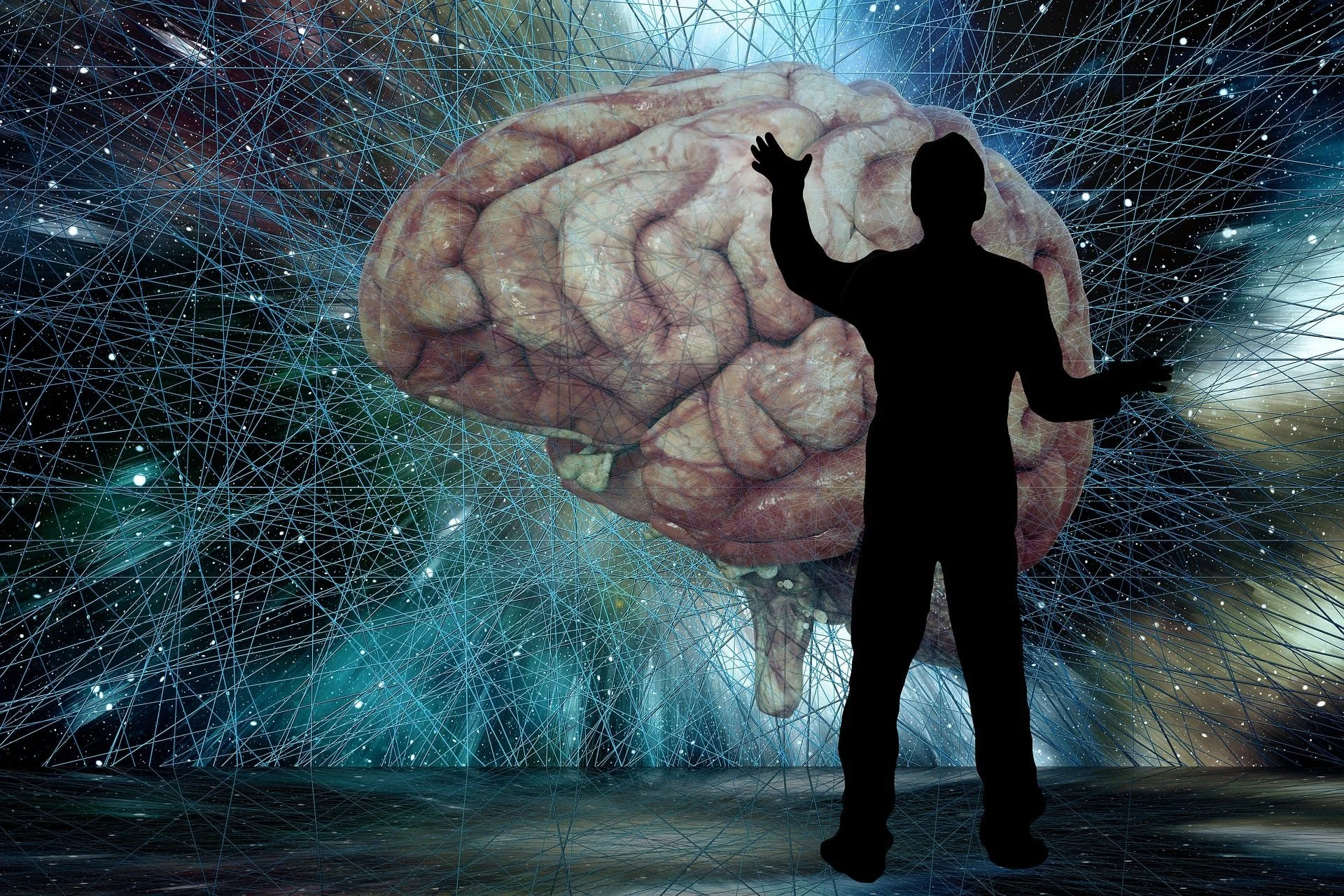
Image by Gerd Altmann from Pixabay
September 2020 introduced Elon Musk’s Neuralink demonstrations on pigs to the world, to further encourage the public to merge itself with Artificial Intelligence. The researchers find this to be troubling since the advancement of brain computer interfaces and the populace’s current relationship with technology could create a catastrophic disaster to envelop if users do not heed warning or educate themselves on the risks that they welcome by allowing Artificial Intelligence to become too invasive in their lives.
Aside from the invasiveness executed by computer brain interfaces, the risks the populace faces from inserting a foreign apparatus into their brains can result in experiencing breaches in privacy and security and the possibility of interfering with thought cognitivity. This is not necessarily alluding to the ‘reading’ of thoughts, but rather the disruption of natural brain signals firing between neurons.
The current advancement associated with the narrative of “Artificial Intelligence in the brain” has migrated its concern from prosthesis to now direct itself toward human enhancement. Brain computer interfaces are becoming more familiar and desirable by the populace for the purpose of convenience and novelty rather than as a useful tool for people who might require them for basic functionality.
SECTION II.
Methodology
To explore the questions the researchers had concerning Artificial Intelligence and brain computer interfaces, they performed data collection to find credited sources based on the keywords mentioned in abstracts until December 2018. The researchers then compiled quotations from the data collection and analyzed these concepts to address the following dangers associated with brain computer interfaces identified as the four dominant themes of concern:
Damage Infliction
Privacy Threats
Loss of Personal Autonomy
Memory Manipulation.
SECTION III.
Damage Infliction
Brain implants will be applied via invasive means, since they require being physically inserted into brain tissue, which can cause potential risks of brain damage. Notably, brain implants will function “through tiny electrical signals… that allows one to ‘feel’ what the device’s input is” [1]. This creates motor function connections forged between the brain and movement, allowing thoughts to develop and command the body to function. Some of these “devices are vulnerable to security breaches that could be used to inflict pain and even alter behavior… this ability to control the brain remotely creates a ‘backdoor’ entry for hackers where patients could be forced to carry out impulsive acts or induce excruciating pain by malicious brain stimulation” [2, p. 3]. Human choice and free will could be threatened with brain implants. So much is unknown, but scenarios can easily be envisioned where hackers could gain control over the operation of a brain implant, and cause actions, behaviors, or experiences that are not under the sole control of the patient.
Patients have a variety of side effects and altercations they can experience as a result of receiving brain computer interfaces. Other examples of possible effects include that brain implants can alter people’s recognition and association with location and where they are. Hackers could create “possible attacks [that] include altering stimulation settings so that patients with chronic pain are caused to be in even greater pain. A sophisticated hacker could potentially even induce behavioral changes such as hypersexuality or pathological gambling” [1].
Brain implants have the ability to correlate with dopamine levels, influencing people to crave the “feel good” vibes more than they should, making them vulnerable and susceptible to addiction, potentially putting themselves at risk. For patients suffering severely, “brain implants could prevent [them] from ‘speaking or moving, cause irreversible damage to their brain, or even worse, be life-threatening”’ [3].
Therefore, the physical health of potential brain implant recipients is pertinent. With the associated health and physical dangers, the populace should be cautious with their monetary consumption in relation to brain computer interfaces. Negligence could result in the inability to reverse the changes they have initiated upon themselves.
SECTION IV.
Privacy Threats
Personal thoughts could be threatened or even cease to exist as a result of brain computer interfaces being hacked. Basic freedoms would be at risk. Related to brain implants, researchers “identify four new rights that may become of great relevance in the coming decades: the right to cognitive liberty, the right to mental privacy, the right to mental integrity, and the right to psychological continuity” [4, p. 5]. The populaces’ livelihood would be more concerned about protecting their personal thoughts. Before brain computer interfaces were brought into questioning, “the ultimate realm of privacy has been our unspoken thoughts” [5].
Individuals may require caution that results in paranoia. Restrictions on speech could be applied to more specific extremes such as thought processes of individuals which would threaten mental health. Privacy of individual ideas and thoughts has been a central value that has consistently been maintained throughout history. It would be necessary to consider individuals’ rights to privacy when considering the danger that brain implants might impose on society.
SECTION V.
Loss of Personal Autonomy
With brain computer interfaces, the relationship between doctors, manufacturers, and consumers of advanced technology will change. Doctors and manufacturers could collect more data and information about consumers’ thoughts and feelings. Trusting manufacturers and doctors could risk the populace’s personal freedoms, leaving them defenseless, exposed, and susceptible to harm. If individuals receive brain computer interfaces, they would be volunteering intellectual and emotional information in their brains to be suspect to potential data collection.
T. Prescott comments on the loss of freedom due to brain implants, that “brain-computer interfaces would create new tools for government surveillance and control, and new kinds of crime such as ‘mind-jacking’- the remote control of another’s thoughts and actions” [6]. The government would have the ability to interfere closely with personal autonomy so the populace would behave in their interest.
In the military, “spies might well also try to eavesdrop on such a soldier’s brain, and hackers might want to hijack it. Security will be paramount, encryption de riguer” [7]. National Security could also be threatened by brain computer interfaces, since the populace’s secrets would cease the security they currently hold. The populace would have a higher chance of mental oppression and could lose their sense of self as a result.
SECTION VI.
Memory Manipulation
As brain implants are currently conceived, it is easy to see how hackers, delving into people’s intellects, could manipulate a victim’s memory, causing them to remember or forget various ideas or events. D. Galov notes that in 2050, the populace would be “vulnerable to exploitation and cyber-abuse. New threats that have appeared in the last decade include the mass manipulation of groups through implanted or erased memories of political events or conflicts, and even the creation of “human botnets” [8]. The populace could have an increase or decrease in their own memories, thus causing them to believe fallacies and lies. Memories would lose their value across the populace’s standards.
Brain implants could provide online criminals with the ability “to exploit memory implants to steal, spy on, alter, or control human memories” [8]. Memories would be susceptible to the dictation of hackers. Some researchers fear that “neurostimulators may lead to dystopian scenarios whereby hackers create false memories and implant them in people’s brains” [9]. Loss of memory is loss of self.
A person’s fundamental being relies on memory to conceive time and reality. By taking away this sense of self, corporations manufacturing brain computer interfaces are delving into new, uncharted territory without a proper sense of caution. If a hacker intervenes with memory systems of an individual, they have destroyed the person’s psyche. The populace should be cautious with such implant technologies, especially any that could interfere with a recipient’s memory system.
SECTION VII.
Results and Discussion
It is pertinent to consider one’s safety before receiving a brain computer implantation. Donovan [10], reporting on another Kaspersky report [11], warns the populace that, “Neurostimulators have cybersecurity vulnerabilities that could be exploited by hackers to get access to the devices, manipulate them, and steal data transmitted by them.” The purchase of brain computer interfaces could result in the populace being manipulated by an array of hackers, including governments.
In society, it is evident that the populace will begin to “see four main threats: the loss of individual privacy, identity and autonomy, and the potential for social inequalities to widen, as corporations, governments, and hackers gain added power to exploit and manipulate people.” [12], [13]. If the populace’s most intimate thoughts are monitored, their individuality could become collectivity while being naive to the malicious activity in their brain.
The populace should assess brain computer interfaces with skepticism, and initiate efforts to protect personal intellect. Brain implants should not be surgically affixed to people’s bodies until the integrity of the product and its encryption is ensured indefinitely.
SECTION VIII.
Conclusion
The paper discussed the dangers that brain computer interfaces can impose on the populace and heeded against negligence if an individual decided to perform such an invasive surgery. The topics of damage infliction, privacy threats, loss of personal autonomy, and memory manipulation were emphasized in an effort to highlight the cautions that the populace should take concerning brain implantation. The researchers conclude that the risks should be a sufficient deterrent to the populace wishing to merge themselves with Artificial Intelligence via brain implantation.
References
1. L. Pycroft, “Hackers may soon target your BRAIN: Criminals could control your thoughts and feelings by attacking implants,” Mail Online, 24 August 2016.
2. K. Gibbons, “'Brainjacking' is new cybersecurity risk,” The Times, 26 August 2016, https://www.thetimes.co.uk/article/brainjacking-is-newcybersecurity-risk-hn6d28c63
3. N. Bernal, “Brain implants used to treat Parkinson's can be hacked and used to control people, scientists warn,” The Telegraph, 31 October 2018.
4. M. Ienca and R. Andorno, “Towards new human rights in the age of neuroscience and neurotechnology,” Life Sciences, Society, and Policy, Vol. 13, No. 1, pp. 1–27, 2017.
5. R. Bailey, “Transhumanism is inevitable. And that’s a good thing,” Reason.com, December 2016, https://reason.com/2016/11/25/transhumanism-is-inevitable/
6. T. Prescott, “Ghost in the Shells thrills, but ducks the philosophical questions posed by a cyborg future,” The Conversation, 3 April 2017, https://theconversation.com/ghost-in-the-shellthrills-but-ducks-thephilosophical-questions-posed-by-a-cyborg-future-75565
7. Ryan Francis, “Medical devices that could put you at security risk,” CSO (Online), 27 April 2017, https://www.csoonline.com/article/3192357/medical-devicesthat-could-put-you-atsecurity-risk.html
8. D. Galov, “From human implant to botnet,” Earth 2050 by Kaspersky, 6 December 2018, https://2050.earth/predictions/from-brain-implant-tohuman-botnet
9. A. Cuthbertson, “Hackers will soon be able to manipulate people's memory through brain implants, researchers warn,” independent.co.uk, 2018, https://www.independent.co.uk/lifestyle/gadgets-andtech/news/brain-implants-hackers-memory-neurostimulators-cybersecurityprivacy-manipulate-memories-kaspersky-black-mirrora8611361.html
10. F. Donovan, “Cybersecurity vulnerabilities lurk in brain stimulation devices,” healthitsecurity.com, 1 November 2018, https://healthitsecurity.com/news/cybersecurityvulnerabilities-lurk-in-brain-stimulation-devices
11. Staff, “The memory market: Preparing for a future where cyberthreats target your memories,” Kaspersky Lab, October 2018, https://media.kasperskycontenthub.com/wpcontent/uploads/sites/43/2018/10/29094959/The-Memory-Market-2018_ENG_final.pdf
12. Columbia University, “Experts call for ethics rules to protect privacy, free will, as brain implants advance,” ScienceDaily, 13 November 2017, https://www.sciencedaily.com/releases/2017/11/171113111058.htm
13. R. Yuste, S. Goering et al., “Four ethical priorities for neurotechnologies and AI ”, Nature, Vol. 551, pp. 159–163, 9 November 2017, https://www.nature.com/articles/551159a
Authors
Department of English, Arizona State University, Tempe, AZ, USA
School for the Future of Innovation in Society, Arizona State University, Tempe, AZ, USA
School of Life Sciences, Arizona State University, Tempe, AZ, USA
School of Life Sciences, Arizona State University, Tempe, AZ, USA
Citation: M. Demko, K. Michael, K. Wagner and T. Bookman, "When Brain Computer Interfaces Pose an Existential Risk,"2020 IEEE International Symposium on Technology and Society (ISTAS), Tempe, AZ, USA, 2020, pp. 112-114, doi: 10.1109/ISTAS50296.2020.9462244.