The Social Implications of XR: Promises, Perils, and Potential
Citation: K. Michael, R. Abbas and S. Papagiannidis, "The Social Implications of XR: Promises, Perils, and Potential," in IEEE Technology and Society Magazine, vol. 43, no. 1, pp. 91-108, March 2024, doi: 10.1109/MTS.2024.3370023.K. Michael, R. Abbas and S. Papagiannidis, "The Social Implications of XR: Promises, Perils, and Potential," in IEEE Technology and Society Magazine, vol. 43, no. 1, pp. 91-108, March 2024, doi: 10.1109/MTS.2024.3370023.

Photo by Emre Bilgiç
In 1992, Stephenson[1] described a type of metaverse in his science fiction novel Snow Crash. Through his imagination, Stephenson is said to have directly influenced the makers of Google Earth, and, more recently, Silicon Valley’s “Metaverse” [2]. In addition, there was a spate of literature published 15–20 years ago, related to metaverse concepts with the introduction of Second Life in June 2003 by Linden Labs. Many users experienced virtual spaces, shopped with virtual currency (Linden dollar, L$ ), and even frequented virtual storefronts [3].
The Oxford Reference[4] defines metaverse as “a virtual reality space in which users can interact with a computer-generated environment and other users.” The metaverse industry chain is extensive and complicated [5]. The term “metaverse” has been appropriated by Meta Platforms since 2021, after which it has has proliferated in the literature as “Metaverse.” In this article, the broader and all-encompassing universal umbrella term extended reality (XR) will be used to ensure that a wider scope is captured beyond reference to the Metaverse by Meta Platforms to encompass other types of metaverses and related applications.
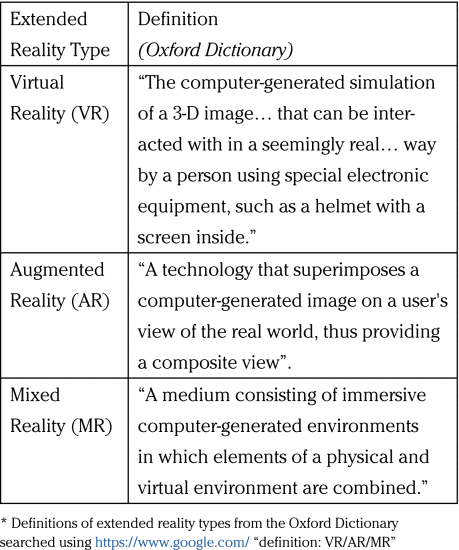
Table 1 XR = VR/AR/MR
XR brings together the virtual (V), the physical (P), and the social (S) within an immersive context to offer unique virtual–physical–social applications for organizations and other members of society. According to IxDF, the term XR “does not refer to any specific technology; it includes any existing or new technologies that may be created in the future that alter reality, either by blending the digital and the physical world or by creating an entirely virtual environment” [6].
KPMG and several other technology vendors maintain that XR is a new suite of converging technologies that are shaping the metaverse through participative and interconnected experiences [7]. XR is, therefore, a universal term that brings together virtual reality (VR), augmented reality (AR), mixed reality (MR) [8], [9], generative artificial intelligence (GenAI) and machine learning, 3-D and spatial computing, cameras and computer vision, wearable technology (e.g., headsets), 5G mobile and smart cars, cloud computing, Internet of Things (IoT), motion tracking (depth perception and eye tracking), biometrics, blockchain, and cryptocurrencies, among other technologies [10], [11], [12], [13]. Table 1 defines the different XR types.
Figure 1 provides a network schematic of the different XR components beginning from the enduser devices that are worn (e.g., goggles), to the typical access types required to enter the cloud, to the XR platforms that are critical to the facilitation of apps enabling a metaverse experience. While devices are getting smaller, they still require significant battery power, with varying performance when different power management options are available. Examples of XR middleware capabilities include massive twinning, immersive telepresence, collaborative robots, specialized local networks of trust, educational training platforms, and hyperreal entertainment services. These take advantage of hardware/software and developer-specific platforms. However, these will only be successful at delivering XR applications, with the availability of high-speed internet for continuous data streaming and significant storage capacity for caching and recording user transactions of all kinds.
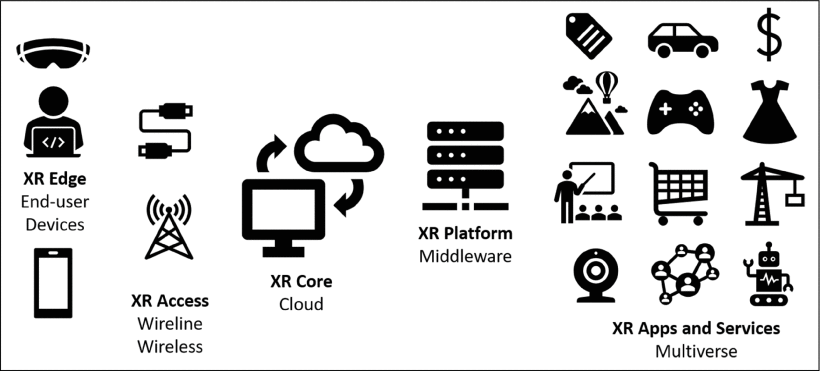
Figure 1. XR and the multiverse.
In terms of XR applications, some of the more demonstrative examples include e-commerce (e.g., retail), medical education (e.g., the use of VR in studies of anatomy), AR/MR gaming (e.g., geolocation-based games such as Pokémon Go), health solutions (e.g., triggering memory through visualization for those living with dementia), selling property in real estate (e.g., rental 3-D walkthroughs), civil construction and engineering (e.g., building stages, simulation, and interior design), venue ticketing (e.g., seat allocation view), and more. Given the multimedia-based complexity of XR, many points of failure might present with very little warning.
GenAI: A key driving force of XR
More recently, GenAI (e.g., ChatGPT and DALL-E) has emerged as particularly pertinent to XR as it has reignited interest in the concept of the metaverse after the initial hype and is considered by the industry as integral to the means by which text-based and visual content may be generated and replenished based on user requirements and large language models (LLMs). Specifically, GenAI is considered the key element that will drive XR environments [14]. For instance, in what has been labeled “GenAI-driven realities” [15], there is the potential for the continuous refreshing of online spaces, places, environments, personas, structures, contexts, situations, and scenarios. Fueled by real-world conceptions, GenAI provides endless opportunities for the learner, to a degree gamifying experiences and making them interactive while also being fun, different, unpredictable, anticipatory, and spontaneous. According to James Hutson of Lindenwood University, it is quite possible that “profound pedagogical strategies capable of bridging the chasm between theoretical knowledge and experiential learning” will be achieved by the fusion of GenAI and XR [16]. This example demonstrates the potential of converging GenAI and XR.
LLMs will ensure a constant stream of engaging and diverse dialog in languages of choice, while text-to-image models will provide visualizations that are dependent on sociological factors: gender, culture, place, ethnicity, tradition, religion, and more. Customized experiences and real-time responses from end-users facilitated by GenAI capabilities will mean heightened engagement by participants. However, AI and XR companies may well try to shrug off the link to the metaverse before too long, preferring, instead, to be considered technology enablers by businesses and the government. Some of the biggest consulting companies are retaining traditional terms in their online marketing by describing XR in the context of business transformation and “enabling technologies.” In the manufacturing world, for instance, the potential to “automatically make real-time adjustments and self-optimize based on data” in closed-loop systems using AI will herald advancements in four areas: 1) predictive insights; 2) task automation; 3) human–machine engagement; and 4) content generation [17]
From Technical to Social Implications
Tim Bajarin, writing in Forbes[18], outlines the technical implications related to Metaverse development among the largest tech firms pointing to the big four in the space: Apple, Microsoft, Google, and Meta. The race is on to provide the operating system (OS) of choice for what many are promoting as Internet 3.0. While Apple and Meta are taking a proprietary route to build a Metaverse around their platforms and products (e.g., headsets), Microsoft and Google have gone down an open standards approach with the aim of greater interoperability [18]. Whether open source or proprietary software, the big players are pouring billions into research and development in the hope that they will gain the first mover advantage toward a burgeoning new revenue stream. It is not just about the services, however, but also about new VR–AR processors, companion mobile wireless chipsets, and new edge devices [18]. The big technical questions, however, stem around whether or not there is enough network capacity to allow for continuous streaming, particularly in mission-critical XR systems, the amount of storage that will be required (cache and long-term), and whether the offered services to users will be affordable, inclusive of XR goggles and monthly usage costs. Just as the leap from text to multimedia occurred in the 1990s, heralding an explosion of full-color web sites, the industry is banking on the next internet leap from multimedia to XR [18]
Within the context of these developments, numerous initiatives have emerged relating to the social implications of XR beyond simply the technical implications and resulting competitive landscape. One such initiative is the IEEE’s Ad Hoc Committee on Multimedia-Based Digital Reality Technologies (MBDRT), which contains a Social Implications Subcommittee assembled for the purpose of delivering guidance on the IEEE’s position with respect to MBDRT. The purpose of this article is to report on the select, preliminary outcomes from this Subcommittee.
As such, this article explores the social implications of XR in anticipation of what might become possible, with a call to action toward the design and development of converging technologies. The social implications of XR relate to those desirable and undesirable consequences that the suite of technologies is having and will continue to have on society. Social implications also incorporate aspects of ethics and the law, inclusive of the moral principles that govern a person’s behavior during an activity, and the system of rules that a particular community recognizes as regulating the actions of its members [19]. More broadly, we can say that social implications are defined here as the effects of XR “on the wider context and actors” [20]. Ethical, legal, and social implications (ELSIs) have usually been considered together in the last three decades, particularly in assessing technological breakthroughs [21]
When studying the technical and social implications of XR in all its manifestations (VR/AR/MR), we need to consider the breadth of possibility. An end-user may find themselves predominantly in one of three types of modalities: 1) entirely virtual in the case of VR, commonly in the context of a first-person point of view (POV) where “VR tends to replace the real world up to total immersion” [22]; 2) in the physical space with superimposed virtual projections of digital information in the case of AR, for example, visual prompts in a driver’s field of vision (FOV) to keep them in the middle of the lane, “where users are partially immersed into action” [22]; and 3) in the merging of virtual and physical locative spaces in the case of MR, where the lines between virtual and real are blended. The sociality component is predominant in VR/MR, while AR lends itself to human–robot teaming or human-to-environment cooperation. Aug-“mediated” reality, a special type of augmentation, where certain artifacts are removed from one’s physical FOV (e.g., advertisements) to declutter the real world around them, has also been previously defined [23], [24]. XR is sometimes interpreted as being the complete set of “reality” modalities that “merges all digital and physical and combines human–machine interactions through the use of wearables such as headsets and devices” [22]
The implications between the “reality” modalities also differ. When an end-user experiences a purely virtual phenomenon, the ethics, legalities, and social implications are different, from when an end-user is immersed fully in an interconnected and interactive experience. AR, to a greater extent, has educational, retail, and industrial uses as an overlay. Repercussions of MR have been dire in some circumstances. For example, deaths were reported in the playing of Niantic’s Pokémon Go [25]. We can surmise from the evidence that the greater the element of mixed immersion, the greater the risk of injury or accident in the event someone finds themselves in a scenario where the real and virtual are indistinguishable (e.g., the feeling that someone is really being shot at in a game, leading one to maneuver onto oncoming traffic). Additionally, in the case of a VR game, avatars might collide virtually, but in the context of MR, there might actually be a physical real-world collision where direct contact has been made between two people.
This article is framed in terms of the promises, perils, and potential of XR [26]. The article has a secondary emphasis on the role of GenAI in the context of XR. Although there are many examples in which XR applications have already taken root with demonstrable outcomes, the field is still considered to be in its nascent stages. This article will list and describe the opportunities, challenges, and possibilities associated with XR and identify stakeholders and their roles and needs, with a view to proposing mechanisms of response by stakeholders in the XR ecosystem.
The subsequent Section will outline the method employed, comprising an online literature search and corresponding thematic analysis. This is followed by sections dedicated to a definition and overview of the promises, perils, and potential of XR. Where relevant, GenAI is described in light of XR developments. The next Section will present the findings of the thematic analysis, after which recommendations and conclusions will be offered.
Online Literature Search
Data Collection
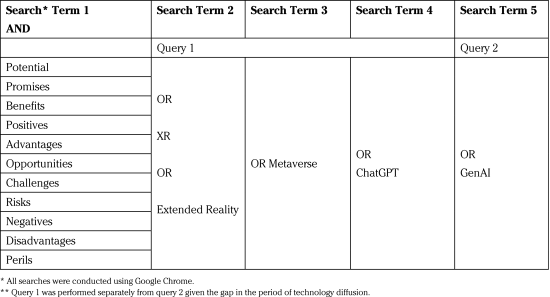
Table 2 Online Literature Search Terms
This article is informed by an online literature review of non-peer reviewed sources. The main motivation for this approach was to provide an alternate perspective to academic literature given the role of the Institute of Electrical and Electronics Engineers (IEEE) and the Society on the Social Implications of Technology (SSIT) as a not-for-profit entity that engages with diverse stakeholders. The intention is, therefore, not to reproduce a literature search using academic sources, but instead, to look to industry sources and industry online media with the purpose of informing future directions with respect to XR by capturing the perspectives of the proponents of XR and clustering these perspectives within the broad theme of social implications.
The specific search terms (see Table 2) used included coverage of the three P’s (“promises,” “perils,” and “potential”), discussed in detail in the following sections, in addition to synonymous terms, such as “benefits,” “positives,” “advantages,” “opportunities,” “challenges,” “risks,” “negatives,” and “disadvantages.” The specific thematic application searched was: “XR,” “extended reality,” “metaverse,” or “ChatGPT. ” By far, the term that was the most popular in the online literature was “metaverse.” A secondary query was performed using the same above-mentioned parameters of the three P’s but solely with an emphasis on “GenAI” to identify the interplay between GenAI and XR and to distill the overlapping social implications.
The steps in the codification process included: 1) search for the online literature; 2) scan for promises, perils, or potential; 3) summarize the themes and subthemes; 4) align each theme and subtheme from the identified sources into a spreadsheet; 5) find dominant themes; 6) create a mind map showing the interrelationships represented in tabular form as social implications summaries relevant to XR and GenAI; and 7) refine where subthemes might appear with respect to the dominant themes.
These sources of evidence (see Appendices A and B in the Supplementary Material) are often not incorporated into peer reviewed literature. However, they represent key insights into stakeholder perspectives, opportunities, challenges, and interrelationships when an innovation, product, or process is diffused into the global market. The sources of evidence include ranked lists from trade media, reports, and blog posts from the Big 4/other consulting companies and industry bodies focused on digital transformation through XR- and GenAI-related initiatives, and expert reflections from think tanks. This article thus offers a unique perspective, filling a gap in the academic literature by capturing an industry-based perspective that would otherwise be overlooked.
Data Analysis
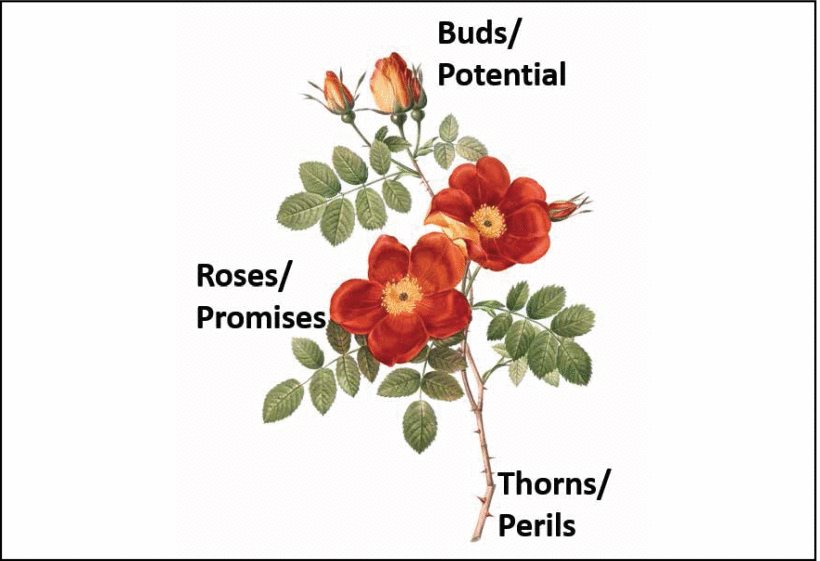
Figure 2. Promises, perils, and potential depicted in the form of roses, thorns, and buds.
The data analysis took the form of the clustering of key themes and subthemes from the online literature, organized under the categories of promises, perils, and potential (3P’s). In some respect, the 3P’s may be represented using the design thinking reflective exercise of “rose,” “thorn,” and “bud,” respectively (Figure 2), where a success, a challenge, or a new opportunity arises [27]. In this article, we consider the 3P’s in the context of XR. GenAI was a secondary emphasis of this article and appears in the narrative where relevant in relation to XR. The narrative is characterized by thick descriptions and direct quotations, with additional evidence from secondary sources, informing the findings of this article.
Promises
Defining “Promises”
Emerging technologies almost always “give ground for the expectation of success, improvement, or excellence” [28]. At times, promises are reflected and represented as “hype” by the media as they are suggestive, a pledge to provide something beneficial, and typically, to provide those benefits imminently. Often promises can be framed as value propositions that contribute to bettering a current state. As a promise is anticipatory, an important concept is how an individual or entity will advance from the present mode of operation (PMO) to the future mode of operation (FMO) through the adoption of a given technology.
Examples of Promising XR
The following presents a list of examples of promising XR applications.
Facilitate immersive e-commerce, online shopping, and retail opportunities.
Support novel collaborative spaces.
Empower student learning experience.
Provide better training: simulators for all craft types and medical training.
Allow for as good as “in-person” meetings: build diverse virtual teams with top international talent.
Create fun interactive spaces, bringing a new dimension to entertainment services.
Gamify many aspects of life in ways that are unique.
Provide innovative solutions that may aid in varied health contexts, such as assisting those living with dementia by having memory triggered through short story reel replays or aiding individuals to overcome fears and phobias.
Establish a virtual tourism market: delivering virtual experiences for people unable to travel.
Create greater cultural awareness through immersive experiences.
Make languages more accessible to a greater population, through multilingual GPTs.
Bring scenarios to life, allowing storyboards to be played back using GenAI creative in 3-D.
Recreate crash scenes for evidence gathering in a variety of insurance contexts, accidents, and courts of law.
Direction
Advocates predict that the promises of the metaverse will fully emerge and be realized [29]. Examples of these promises include: “rich learning experiences; remote medical procedures; disaster–response flexibility; creation of new kinds of communities; expanded venues for commercial exchanges; a flowering of creativity in the arts and fashion; fully automated encounters with smart agents handling things such as accounting … ” [29, p. 7]. However, some of the promises being made by the industry are questionable and will require significant investment and mobilization of resources, if they are to be achieved. It will also require purpose-driven stakeholder engagement [30]. Ernst and Young believe that any business hoping for success in the metaverse context must focus on 7 key areas: 1) positioning; 2) talent; 3) customer experience design; 4) organizational agility; 5) ecosystem building; 6) regulatory compliance; and (7) monetization [31].
Perils
Defining “Perils”
A peril is defined as “an exposure to the risk of being injured, destroyed, or lost” and is often described as an imposing “danger” [32]. When someone is in a perilous situation, they are often exposed to varying degrees of risk. In the context of this article, the development and diffusion of XR applications may cause some members of the community direct or indirect danger or harm.
Examples of Perilous XR
The following presents a list of examples of perilous XR scenarios in diverse contexts.
Exploitation of minors and other vulnerable groups, with potentially lasting psychological and other impacts.
Culturally inappropriate conduct.
Politically motivated aggression/unacceptable conduct.
Corporations seeking centralized control over subscriber behaviors and customer lock-in.
Data management issues pertaining to biometrics and knowledge of individual patterns of behavior (behavioral engineering).
Physical side effects from wearing technological apparatus over a sustained period, especially in children and the elderly, and wearers physical effects that may include heat spots, excessive sweat, and itchiness.
Sleep deprivation, anxiety, headaches, agitation, and anger.
Widening digital divide due to affordability issues and knowledge acquisition.
Forgetting about the real world and nature.
Social inclusion and/or social exclusion.
Breakdown of the existing social fabric that knits society together.
Inability to communicate with others using current techniques of speaking, listening, and reciprocating.
Inability to detect truth due to deep-fakes.
Cyberbullying becoming more difficult to identify due to the “multimedia” nature of the virtual world/interactions.
Decay of the body due to lack of movement.
Competing power demands, which will place pressure on the energy sector and corresponding availability.
Prohibitively expensive and unreliable fiber to the home (FTTH) or fiber to the curb (FTTC) government-funded initiatives to ensure continuous connectivity.
Spontaneity and mystery of everyday life removed due to online access to on-demand experiences (i.e., loss of real experience value).
Difficulty in detecting and certifying the origins of authentic data.
Direction
It appears that XR will not fully satisfy the hopes that the industry originally anticipated [29]. The risks will be too great, and the financial investment losses irrecoverable. For example, one headline read: “Meta lost $ 13.7 billion on Reality Labs in 2022 as Zuckerberg’s metaverse bet gets pricier” [33]. Companies who have invested much in the metaverse concept and have much to lose by potential perils have had to acknowledge they need to do more to de-risk their service offerings. Antigone Davis of Meta at the beginning of 2022 said: “We are investing in controls that allow users to manage and report problematic content and conduct as well as safety tooling designed for immersive experiences. But we cannot do this alone. To address safety in a comprehensive way as the metaverse emerges, we need to partner with others in government, industry, academia, and civil society” [34]
The notion of partnering with diverse stakeholders is an entirely valid approach to harm minimization, but individual stakeholders must also take responsibility and be accountable for unethical content on their platform, with full accountability for design decisions in the metaverse. An example is the alleged design and development of social media platforms that deliberately seek to generate repeat visits, extend user engagement, and spur addictive behaviors in children [35]
According to a detailed study by the PEW Research Center in 2022, there are numerous uses of XR that place users and members of society in a vulnerable position, some of which are threatening contexts and harmful. These include: 1) reductions in autonomy and people’s ability to control their lives; 2) worsening digital divides; 3) amplified discrimination; 4) new forms of harassment, bullying, and hate; 5) new menaces to public safety; 6) more avenues for misinformation; 7) deeper levels of addiction to metaverse activities; 8) distractions that disassociate people from real life and induce loneliness (or worse); 9) new threats to users’ personal data; and 10) further commercialization and monetization of basic human activities [29]
Potential
Defining “Potential”
Potential can be defined as “existing in possibility” with the long-term capability to develop something into “actuality” [36]. For decades, XR was considered a possibility, but the size of the headsets prohibited a positive user experience. More recently, XR has been fueled by GenAI, which has provided a unique integrated possibility. A slightly different take on “potential” also relates to expressing “liberty, or power” with “something that can develop or become actual” [37], providing a vehicle for a voice to be heard or a space for congregating through technology in the public interest. The potential of XR is not always positive, insofar as people describe the lost or foregone potential. Negative potential, however, can have a gravitational pull that is considered attractive.
Examples of the Potential of XR
The following presents a list of examples of the potential of XR.
Increased productivity due to XR applications and capabilities.
Flow-on effect of adopting breakthrough technologies in XR (e.g., photographic chronicles) and the benefits that may ensue.
Utilization of newfound capabilities for use cases (i.e., deliberate design toward positive applications).
Emergence of new technological components and materials as enablers of new use cases.
XR is a vehicle for calm technology necessary so that the user experience between the physical and virtual (within/external to the metaverse) happens seamlessly.
Development of body area networks, relying on wearable technologies or implantables.
Behavioral biometrics toward customization and emotion detection through XR and environmental sensors.
Interactive internet in 3-D.
Greater number of cybersecurity and crime vectors, especially with respect to electronic payment systems.
Implications for families, such as declining birth rates as people prefer indirect contact online, potentially resulting in long-term impacts on the labor force among other impacts.
People becoming disconnected socially, emotionally, and physically, due to a lack of (physical) interaction in a real-world context.
Shifts in ergonomics, especially form factors.
Loss of contact with the local setting/space.
Cultural enrichment and preservation of language and traditions.
Cultural decay in cases where the metaverse provides a virtual culture that overrides the real world.
Direction
The metaverse will emerge but nowhere near as quickly as the hype bubble suggests. In the interim, XR will be steered mainly by electronic business and electronic commerce (e.g., online shopping) probably using existing XR goggles used for gaming [38]. For now, the overselling of the metaverse has been, to an extent, self-defeating [39]. GenAI (e.g., ChatGPT and DALL-E) have worked to reignite future prospects. Although several companies seem to be monopolizing the conversation on Facebook and OpenAI, competitors such as Microsoft, Google, and Apple are playing a significant role. Concepts such as “interconnected virtual worlds” are now being presented in the context of virtual–physical–social realities [40]. Large consulting firms are seeking to incorporate XR initiatives into their traditional digital transformation portfolios. For example, Accenture describes the metaverse as a “continuum, a spectrum of digitally enhanced worlds, realities, and business models,” where XR will allow “collaboration in virtual spaces, augmented physical places, and a blend of both. And it will create new lines of business and transform interactions between customers and companies” [41]
XR initiatives not only provide a wealth of opportunity, but also commensurate challenges and risks. One thing is clear, XR is not just about digital headsets and spatial computing, but about a suite of technologies, inclusive of GenAI technologies, which will be integrated into platforms to provide users with a very different experience. The potential for XR is clear but will it be applied in the way that stakeholders have envisaged with real-world use cases driving deployment? BT believes, “the Metaverse has the potential to change life as we know it—and it’s getting closer to becoming a reality. But what exactly are we aiming to create? What can we expect?” [42]. Only time will tell.
Findings
Figure 3. Social and technical implications of XR word cloud.
There are prevalent themes that can be identified in the online non-peer reviewed literature. These pertain to technology, privacy, security; human-centric issues and ethics; individual health and well-being; community and societal considerations; legal issues and industry and government contexts. Figure 3 presents a word cloud generated from the online search data, highlighting the prominent themes, described in detail below.
Technology, Privacy, and Security
Billions of dollars are backing the potential of XR through the platform and personal device providers such as Meta, Microsoft, Apple, Sony, Amazon AWS, Google, NVIDIA Omniverse, and Epic Games [43]. Yet, the privacy and security challenges that have been identified, especially within the 3-D world context, are causing hesitation. Some of the perils of the metaverse and GenAI are consistent with those in the social media landscape: “phishing, pharming, impersonation, disinformation, and inroads for ransomware. There will also be new impacts on consumer privacy because the amount of rich and detailed data collected by these apps are juicy targets for criminals and marketers” [43]
Information and Communications Technology (ICT) infrastructure will come under increasing traffic bottlenecks if demand for services grows exponentially. Network access and availability may initially plague service providers, as well as connectivity and hardware issues, systems outages, and downtime, given bandwidth capacity constraints. Security threats will also increase in scope and severity and will likely include AI-based threats via bots, cyber fraud, in-game scams, and miscellaneous threats via both known and unknown sources. According to PWC, the four major metaverse risks are: 1) security; 2) identity; 3) data and privacy; and 4) content moderation [44].
Privacy-enhancing technology (PET) will offer a means with which to respond to some of the potential privacy and security issues raised by XR. One main aim of PETs is to “help de-identify data and mitigate privacy-related risks, including in AI systems and the context of the metaverse” [45, p. 33]. An IEEE Standards Association report, authored by Mark McGill in 2021, addressed the very important matter of the erosion of privacy and anonymity with respect to XR [46], looking at the suitability of existing legislation in response to mental privacy [47], identity and privacy of bystanders [48], worldscraping of live maps, personal surveillance, and more. The Future of Privacy Forum has identified the risks as including sensitive inferences, digital fingerprinting, and bystander data collection [49]. Among their key mitigation strategies were: 1) on-device processing and storage versus the cloud server; 2) purpose limitation and data minimization, ensuring the collection of data to only what was required to carry out a task/transaction; 3) bystander protections, ensuring that all additional data is deleted or blurred in real-time; and 4) PETs. Of this final category of response, the authors wrote: “advances in encryption and differential privacy can allow for privacy-preserving data analysis and sharing, and the use of synthetic data sets can alleviate concerns about data sharing or secondary data use.” Failing this approach, users may be given the option of controlling what data is collected about them, though this may have a direct impact on the user experience. Recognizing that the issues raised by XR are quite different from traditional computing systems, Meta has moved to create TTC Labs, dedicated to addressing privacy and security matters through the application of PETs that use cryptographic and statistical techniques [50].
Human-centric Issues and Ethics
There is the potential for widespread human-centric issues stemming from XR. For example, there may be a neglect of human-centered support services in the metaverse, causing individuals to become more reliant on machine responses that may be biased, or lacking in sensitivity. Increasingly, humans are becoming dependent on GenAI, and their own ability to think independently is diminishing. This may affect people’s ability to make decisions in an integrated XR and GenAI context. In general, any kind of GenAI could produce unethical content, leading people astray or providing inaccurate answers that have real-world repercussions. There is also the very real controversy of major players pointing the finger at problematic content, absolving themselves of any direct responsibility, and blaming third-party developers whom allegedly they cannot control. Most service providers will say that “policing how users speak and behave at any meaningful scale is practically impossible” [51], but this does not mean that we should not espouse a high standard when it comes to content moderation.
Additionally, the role of parents and parental consent for children are entering the discussion as companies continue to lower the age of service entry to a recommended age as young as 10 for XR headsets, without assuming any responsibility with respect to prevalent medical conditions (e.g., eye strain, or addictive behaviors) that may impact the health of users. According to Rosenblat, “while there is no solution that would eradicate all online harm, there is room for platforms to take more responsible approaches, especially in how they vet the VR experiences they sell” [51]. Additionally, while XR may provide exciting new opportunities for the workforce, it may simultaneously pose challenges in the same context, such as job displacement resulting from convergent technologies (e.g., GenAI).
Health and Well-Being
Health and well-being with respect to XR relates to the physical, mental, emotional, financial, and social dimensions that affect human beings, all of which are interrelated. There are personal health and well-being challenges that have been alluded to, but more research is needed to specifically tie these to potential mental health concerns. Some of the conditions identified include digital addiction, anxiety, escapism through simulated reality, and eye and neck strains. Sociality is a key characteristic of the metaverse but may well create the opposite effect in humans leading to social exclusion and even loneliness. A loss of connection with the real world is especially related to a loss of physical experience that can have both mental and physical repercussions.
Community and Society
Community groups with differing functions have some concerns over how culture may be embedded into the metaverse, how it may be misappropriated or misrepresented, and how universal style metaverse(s) might have an impact on real-world culture. One of the most significant problems identified in the literature is that “the culture embedded into the Metaverse may be different than the one from the user’s geographical location,” which can create cognitive dissonances [52]. Governments are also concerned about this possibility as it may lead to local unrest in a variety of ways (e.g., cultural revolutions that may be politically driven) or to super-powers pushing their values on the rest of society at the global level, placing smaller countries under cultural or political pressures [52].
Law and Jurisdiction
A significant question around the metaverse from a legal perspective is jurisdiction [43]. Knowing where a user is physically located through “precise location data” and then checking to see if a company is adhering to local laws is not straightforward [43]. This could also “trigger a violation if appropriate compliance measures (such as securing appropriate consent) are not taken” [43]. This is particularly the case with respect to children, and the age appropriateness of the digital service offerings [53]. Similarly, the same can be said about other vulnerable individuals regarding consent.
According to British Telecom, “clear, strong governance and an ethics code must sit at the center of the Metaverse’s development, ready to be the driving force behind unification and interoperability” [42]. BT believes that the structure governing the Metaverse should be like that of our existing Internet; decentralized and open to anyone who wishes to own a part of it. By holding a position of “net neutrality” and “self-government,” BT believes that access rights will be protected, rather than the metaverse being taken over by a small number of very powerful organizations who want to maintain control over it for economic gain. Standards and other forms of soft law are expected to support the positive application of XR.
Industry and Government Contexts
It is anticipated that all sectors of society will be impacted by the changes resulting from the integration of XR and GenAI. Apart from centralization by organizations to lock global customers into a given metaverse, there will be impacts on national security, supply chains, and economies more broadly. These will be potentially harmful to some existing business models, posing challenges for both the industry and the government, while having a flow-on effect on customers and citizens. For example, there will be growing challenges to education and educational models, which governments will need to address in consultation with relevant stakeholders. Similarly, the health sector is likely to be impacted in how medical results are communicated to patients possibly in the metaverse and by monitoring XR technology use for biometric vital signs and characteristics. Additionally, some workplaces will be revolutionized by the changes that have been proposed using XR, and it will be up to company policies in the organizational setting to ensure acceptable use while reaping the benefits and minimizing worker harm and adverse workplace behaviors. Beyond policies, standards will need to be developed at the international and national levels. Existing laws around surveillance devices, privacy laws, and criminal codes may also need to be updated given changing capabilities. For a detailed summary of all the issues found in the online literature review, see Tables 3 and 4
Table 3 XR Social Implications Summary
Table 4 GenAI Social Implications Summary
Recommendations
There are four key recommendations derived from the online literature search. First, entities in the XR ecosystem need to practice responsible and ethical design. Second, inclusion and accessibility considerations must be embedded in metaverses. Third, multidisciplinary and multistakeholder engagement is paramount, and fourth, regulatory reform is necessary. PWC complementarily advises: “Embed trust from the start. Rather than first building an application, then identifying and mitigating risks, design your approach to metaverse data, transactions, experiences and more with trust built in—that is, by addressing data security and privacy risks head-on” [54]. They are not alone in emphasizing the need for better design, especially with respect to trust, data rights, privacy, and security.
Responsible and Ethical Design
Designers will have to play a key part in the success of the XR. How trust might be embedded from the very beginning is likely to contribute to consumer acceptance and investment confidence. Identifying risks and categorizing them means that companies are not selling hype but being realistic about the challenges that are known, and acknowledging that there are unknown risks. This will enable a proactive approach to risk management. Another prominent recommendation from the online literature is that key players need a seat at the table. This is not just about BigTech but government, civil society, the third sector, financial companies, health practitioners, and educators among other stakeholders [54]
One veteran designer noted that “designerly behavior” was not only restricted to enthusiasm about technological innovation and advancements, but also encompasses the need to “balance that enthusiasm with care for the users” [55]. While there is still an overarching sentiment among designers that they are “designing and building for” users, there is an acknowledgment that designers should consider engaging in responsible design “with users” [55]. Some of the principles identified by Lyndon Cerejo include: 1) design ethically, not for addiction, and advocate for users; 2) prioritize users’ privacy, security, equity, and physical and mental well-being; and 3) safeguard your users against bullying and harassment, building on the measures being put into place by virtual worlds [55]
Inclusion and Accessibility
The European Parliament at a bloc level recognizes complexities with respect to the metaverse and stipulates that inclusion and accessibility considerations will be embedded within voluntary codes of conduct. In this way, organizations offering these services cannot be held accountable for exclusion and inaccessibility. The European Parliament has sent a clear message to developers that the metaverse must incorporate a “diversity aspect, equality, and inclusion” and has at least alluded to the importance of co-creation where companies should try to “involve a diverse range of people not only as customers, but also as developers of the metaverse” [56]
Multidisciplinary and Multistakeholder Engagement
Multidisciplinary perspectives are necessary [57], as is multistakeholder consultation. Andi Lucian Cristea (Romania, SOC) rapporteur noted that it was appropriate to form committees to investigate different parts of the metaverse. Cristea listed the following 13 areas of concern: 1) digital territoriality; 2) jurisdiction; 3) policing and justice; 4) political participation and fundamental freedoms; 5) safety concerns; 6) sexual assault and harassment; 7) nondiscrimination; 8) children’s rights; 9) organized crime; 10) money laundering; 11) fraud; 12) data protection; and 13) cybersecurity aspects [58]. Furthermore, Cristea emphasized the importance of a multistakeholder approach that brought together varied stakeholders, inclusive of governments, the private sector, civil society, and international organizations including not-for-profit and nongovernment entities. She said: “[i]t is important to ensure that the benefits of technological advances are distributed fairly across society and that the negative impacts are mitigated, especially for the most vulnerable groups” [59].
While it is easy to legitimately call out the innovators of XR and GenAI to raise their game with respect to known pitfalls, “we all have a role to play” [60] to positively influence developments in this space [61]. However, the broad recommendations for technology companies offering products and services are to invest more time in developing them with users and in consultation with other stakeholders. Technology and service providers must not be quick to market with metaverse-related technologies and services that may carry significant social, cultural, and ethical implications. This means that technologies and services that are diffused into the market need to be tested and proven not to cause harm and for privacy and security challenges not merely to be anticipated but to be directly addressed [62]
Regulatory Reform
There is no doubt that the metaverse will bring a myriad of opportunities to the world but with those will also come commensurate risks, the scale of which are presently unknown. The European Parliament points to policy issues that need to be addressed and possible socio-technical and legal implications. These include: “competition, data protection, liabilities, financial transactions, cybersecurity, health, accessibility, and inclusiveness” [56], with direct links to emergent artificial intelligence legislation. Additionally, there are widespread consequences of XR in other areas also, particularly with respect to the environment and the future of work.
Finally, some broad recommendations for regulators and policymakers, especially mindful of children and vulnerable community members but with equal validity to the mass market, are to review existing regulations and regulatory frameworks with respect to XR and to ensure that they do not violate human rights (e.g., the rights of children) and that XR service offerings promote the inclusion of all people enabling the benefits to be reaped by all, through better planning, design, and research from the outset [62].
“The metaverse could be both, offering the potential for enormous good alongside great harm. It all depends on the architecture we create to enable and govern it” [63]. At present, technology continues to outpace our ability to develop commensurate changes to regulation and legislation to ensure consumer protection mechanisms are in place. This is not a new challenge in the emerging technologies domain but is increasingly demanding urgent attention. Soft law initiatives seem to be one of the purposeful responses to ensure accountability from diverse stakeholders.
Toward an XR Ecosystem
As with all emerging technologies and services, seeing through the hype, and identifying the potentialities through value propositions takes time. Dealing with complexity is essential over the longer term as is compatibility and interoperability. No company is an island, and stakeholders must work together. One subheadline read: “Technology is Ready, But Stakeholders Need to Link Up” [64]. This is a clear call to recognize diverse stakeholders in the XR ecosystem and to work together toward a shared vision. This can only succeed if the real benefits of XR are considered by people who will willingly adopt the new technologies and services. While the touted benefits of the metaverse are very desirable and eagerly anticipated by some, the metaverse still needs to demonstrate its potential for generating value to the end-user. In the end, we cannot yet truly know where all this is headed. In a Harvard Business Review article from May 2023, Piscione and Drean wrote: “The truth is that no one knows exactly the overarching potential of the metaverse and its impact on our lives. It all depends on the power of computing and networking abilities, and the adoption rates of users, which will look different than the adoption rates of the internet of the past” [65]
Seeing Through the Hype
There have been many hollow promises made about the metaverse, but no clear articulation of its real value in diverse contexts and application areas. Do we really hope for the metaverse that service providers today are trying to push, or something else? If something else, what could it be? What is created will change the way we interact in the digital world, and these will be reflected in the likely rise of the next-generation Internet: Web 3.0, AR, VR, MR, and XR. The article entitled “Companies Are Spending Billions on a Metaverse That Makes No Sense” notes: “Imagine being able to live in a virtual world. You can go there anytime, create a digital persona, and hang out with your friends. You can collect gear and develop new skills. You can get married and battle powerful computer-controlled monsters. You can participate in a community and build relationships with people whose real first names you might never know. Best of all, there are no limitations—you can inhabit a land of fantasy, sci-fi, or anything in between” [66]. But is this our collective future? Although many gamers might well be backing what comes after their PS5 or XBOX X, what might it mean for one’s personal identity?
The Hype Bubble surrounding the metaverse burst in early 2022. While this did not stop the major losses of BigTech companies, many stakeholders remained faithful to the notion that the meta/multiverse was integral to business in the future. A second wave of interest came with the introduction of applied LLMs, such as Open AI’s ChatGPT. Initially, many did not draw a direct connection between the metaverse and generative AI, but as scenarios proliferated, the function of GenAI became evident. According to some of the more recent announcements, digital transformation through AI [67] seems to be a future business proposition that will provide a springboard for XR, the metaverse, and more. For now, the market seems to be more comfortable with hedging its bets on AI than with a single spin-off suite of technologies in XR. If this is to be the case, greater engagement and consultation is required between stakeholders with a focus on real needs and not just speculation.
ACKNOWLEDGMENTS
At the beginning of 2023, the IEEE President established the Ad Hoc Committee on MBDRT by bringing a group of experts together to guide with respect to IEEE’s global position on MBDRT. The Chair of the Ad Hoc Committee was Dr. Stefan Mozar, a Fellow of the IEEE. We thank him for his leadership and the opportunity to serve on the Social Implications Subcommittee. This article is derived from a briefing report produced by the Subcommittee to inform a follow-up design workshop with expert participants. The outcomes of the design workshop are not contained in this article.
References
1. N. Stephensen, Snow Crash. New York, NY, USA : Bantam Books, 1992.
2. P. Kafka, “Snow Crash author Neal Stephenson predicted the metaverse. What does he see next? ” Vox, Mar. 6, 2023. [Online]. Available: https://www.vox.com/technology/2023/3/6/23627351/neal-stephenson-snow-crash-metaverse-goggles-movies-games-tv-podcast-peter-kafka-media-column
3. S. Papagiannidis, M. Bourlakis, and F. Li, “Making real money in virtual worlds: MMORPGs and emerging business opportunities, challenges and ethical implications in metaverses,” Technolog. Forecasting Social Change, vol. 75, no. 5, pp. 610–622, Jun. 2008, doi: 10.1016/j.techfore.2007.04.007.
4. D. Ince, “Metaverse,” in A Dictionary of the Internet, The Oxford Reference, 2019, doi: 10.1093/acref/9780191884276.001.0001.[Online]. Available: https://www.oxfordreference.com/display/10.1093/oi/authority.20110803100153307
5. Q. L. Pu, “The future of the metaverse: Unlocking imagination and embracing reality,” Deloitte China. Accessed: Jun. 4, 2023. [Online]. Available: https://www2.deloitte.com/xe/en/pages/technology/articles/future-of-the-metaverse-unlocking-imagination-and-embracing-reality.html
6. IxDF, “What is extended reality (XR)? ” Interaction Design, Jan. 24, 2022. [Online]. Available: https://www.interaction-design.org/literature/topics/extended-reality-xr
7. KPMG, “The future of the metaverse and extended reality,” KPMG Phoomchai Holdings Co., Apr. 2022. [Online]. Available: https://kpmg.com/th/en/home/insights/2022/04/the-future-of-the-metaverse.html
8. A. Glotzer, “What is extended reality? Everything you need to know,” Roundtable Learning, Jul. 24, 2023. [Online]. Available: https://roundtablelearning.com/what-is-extended-reality-everything-you-need-to-know/
9. B. Kilic, “Extended reality promises great potential- and risk,” Centre for International Governance Innovation (CIGI), Aug. 17, 2023. [Online]. Available: https://www.cigionline.org/articles/extended-reality-promises-great-potential-and-risk
10. Qualcomm, “XR,” QualComm Technologies, 2023. [Online]. Available: https://www.qualcomm.com/research/extended-reality
11. D. Weinstein, “What is extended reality? ” NVIDIA, May 20, 2022. [Online]. Available: https://blogs.nvidia.com/blog/2022/05/20/what-is-extended-reality/
12. S. Likens, “The XR factor: The incredible potential of extended reality,” PWC, Apr. 8, 2019. [Online]. Available: https://www.pwc.com.au/digitalpulse/extended-reality-xr-essentials-101.html
13. M. Sullivan, “Augmented reality when? We asked Magic Leap, Facebook, Google, and more,” FastCompany, Mar. 19, 2019. [Online]. Available: https://www.fastcompany.com/90315733/augmented-reality-when-we-asked-magic-leap-facebook-google-and-more
14. R. Greener, “GenAI will drive smartglasses adoption, says Zuckerberg,” XR Today, Sep. 28, 2023. [Online]. Available: https://www.xrtoday.com/augmented-reality/genai-will-drive-smartglasses-adoption-says-zuckerberg/
5. M. Middlemiss, “The dawn of GenAI-driven realities: ENGAGE XR and Lenovo redefine interactive learning,” XR Today, Jan. 17, 2024. [Online]. Available: https://www.xrtoday.com/mixed-reality/the-dawn-of-genai-driven-realities-engage-xr-and-lenovo-redefine-interactive-learning/
16. OAG, “Bridging realities: Dr. James Hutson on XR, GenAI, and gamification,” Open Access Government, Jan. 24, 2024, doi: 10.56367/OAG-041-11252. [Online]. Available: https://www.openaccessgovernment.org/article/bridging-realities-dr-james-hutson-on-xr-genai-and-gamification/169850/
7. D. Scimeca, “AI, XR and data: Manufacturing technology predictions for 2024,” Industry Week, Jan. 3, 2024. [Online]. Available: https://www.industryweek.com/technology-and-iiot/article/21279764/ai-xr-and-data-manufacturing-technology-predictions-for-2024
18. T. Bajarin, “The four major players battling to own the metaverse OS,” Forbes, Nov. 18, 2022. [Online]. Available: https://www.forbes.com/sites/timbajarin/2022/11/18/the-four-major-players-battling-to-own-the-metaverse-os/?sh=341326551e60
19. K. Michael, “DARPA’s ADAPTER program: Applying the ELSI approach to a semi-autonomous complex socio-technical system,” in Proc. 3rd 21st Century Wiener Conf., Chennai, India, Jul. 2021, pp. 1–10, doi: 10.1109/21CW48944.2021.9532581.
20. R. McLean, “The myth of the e-commerce serf to sovereign powershift,” in Handbook of Research on Socio-Technical Design and Social Networking Systems. Hershey, PA, USA : IGI Global, 2009. [Online]. Available: https://www.igi-global.com/dictionary/social-implications/27359
21. D. D. Dolan, S. S.-J. Lee, and M. K. Cho, “Three decades of ethical, legal, and social implications research: Looking back to chart a path forward,” Cell Genomics, vol. 2, no. 7, 2022, Art. no. 100150, doi: 10.1016/j.xgen.2022.100150.
22. CT Staff, “Augmented reality vs. virtual reality: Key differences,” Coin Telegraph, 2024. [Online]. Available: https://cointelegraph.com/learn/augmented-reality-vs-virtual-reality-key-differences
23. K. Michael Ed., “Social implications of wearable computing and augmediated reality in every day life,” in Proc. IEEE Symp. Technol. Soc. (ISTAS), Jun. 2013, pages 132. [Online]. Available: https://archive.org/details/istas13_proceedings
24. S. Mann, “All reality: Virtual, augmented, mixed (X), mediated (X,Y), and multimediated reality,” 2018, arXiv:1804.08386.
25. T. Revell, “Did Pokémon Go really kill 250 people in traffic accidents? ” NewScientist, Nov. 28, 2017. [Online]. Available: https://www.newscientist.com/article/2154881-did-pokemon-go-really-kill-250-people-in-traffic-accidents/
26. C. Livingston, L. Varghese, and A. Weishaupl, “The promise, peril, and potential of the metaverse,” CIO, May 9, 2023. [Online]. Available: https://www.cio.com/article/479367/the-promise-peril-and-potential-of-the-metaverse.html
27. K. Crawford, “Design thinking toolkit, activity 9—Rose, Bud, Thorn,” Atomic Object, Apr. 3, 2018. [Online]. Available: https://spin.atomicobject.com/design-thinking-rose-bud-thorn/
28. Accessed: Jun. 4, 2023. [Online]. Available: https://www.merriam-webster.com/dictionary/promise
29. PEW, “The Metaverse in 2040,” Pew Research Center, Jun. 30, 2022. [Online]. Available: https://www.pewresearch.org/internet/2022/06/30/the-metaverse-in-2040/
30. J. Francis, “World economic forum establishes purpose-driven metaverse to tackle world’s most pressing challenges,” Accenture, Jan. 17, 2023. [Online]. Available: https://newsroom.accenture.com/news/world-economic-forum-establishes-purpose-driven-metaverse-to-tackle-worlds-most-pressing-challenges.htm
31. T. Miura, “Seven keys to success in the metaverse,” EY, Nov. 25, 2022. [Online]. Available: https://www.ey.com/en_jp/tmt/seven-key-elements-for-companies-to-develop-metaverse-business
32. Accessed: Jun. 4, 2023. [Online]. Available: https://www.merriam-webster.com/dictionary/peril
33. J. Vanian and A. Levy, “Meta lost \$13.7 billion on Reality Labs in 2022 as Zuckerberg’s metaverse bet gets pricier,” CNBC, Feb. 1, 2023. [Online]. Available: https://www.cnbc.com/2023/02/01/meta-lost-13point7-billion-on-reality-labs-in-2022-after-metaverse-pivot.html
34. C. Li and F. Lalani, “How to address digital safety in the metaverse,” World Economic Forum, Jan. 14, 2022. [Online]. Available: https://www.weforum.org/agenda/2022/01/metaverse-risks-challenges-digital-safety/
5. C. Lima, N. Nix, “41 states sue Meta, claiming Instagram, Facebook are addictive, harm kids,” The Washington Post, Oct. 24, 2023. [Online]. Available: https://www.washingtonpost.com/technology/2023/10/24/meta-lawsuit-facebook-instagram-children-mental-health/
36. Accessed: Jun. 4, 2023. [Online]. Available: https://www.merriam-webster.com/dictionary/potential
37. Accessed: Jun. 4, 2023. [Online]. Available: https://www.merriam-webster.com/dictionary/potential
38. K. Rapoza, “The Metaverse is failing, but this is one investment that will not die,” Forbes, Oct. 21, 2022. [Online]. Available: https://www.forbes.com/sites/kenrapoza/2022/10/21/the-metaverse-is-failing-but-this-is-one-investment-that-will-not-die/
39. H. McCracken, “Is the metaverse already dead? ” Fast Company, Feb. 8, 2023. [Online]. Available: https://www.fastcompany.com/90843767/is-the-metaverse-already-dead
40. M. Finnegan, “The metaverse: Not dead yet,” Computerworld, May 31, 2023. [Online]. Available: https://www.computerworld.com/article/3697812/metaverse-not-dead-yet.html
41. Accenture, “Metaverse continuum: Enter a new era of digital change,” Accenture, 2023. [Online]. Available: https://www.accenture.com/au-en/services/metaverse-index
42. BT, “The essential factor for a successful Metaverse,” British Telecom, Jan. 17, 2023. [Online]. Available: https://www.globalservices.bt.com/en/insights/blogs/the-essential-factor-for-a-successful-metaverse
43. D. Radcliff, “The metaverse brings a new breed of threats to challenge privacy and security gatekeepers,” CSO, Jan. 23, 2023. [Online]. Available: https://www.csoonline.com/article/574383/the-metaverse-brings-a-new-breed-of-threats-to-challenge-privacy-and-security-gatekeepers.html
44. PWC, “4 metaverse risks to address today—Even if you’re just getting started,” PriceWaterhouseCoopers, Jun. 1, 2023. [Online]. Available: https://www.pwc.com/us/en/tech-effect/emerging-tech/metaverse-risks.html
45. Emerging Privacy-Enhancing Technologies: Current Regulatory and Policy Approaches, document OECD-351, OECD Digit. Economy, Paris, France, 2023, doi: 10.1787/bf121be4-en.
46. M. McGill, “Extended reality (XR) and the erosion of anonymity and privacy,” IEEE SA, 2021. [Online]. Available: https://standards.ieee.org/wp-content/uploads/import/governance/iccom/extended-reality-anonymity-privacy.pdf
47. D. Berrick and J. Spivak, “Unpacking the privacy implications of extended reality,” TechPolicy.Press, Apr. 3, 2023. [Online]. Available: https://www.techpolicy.press/unpacking-the-privacy-implications-of-extended-reality/
48. J. O’Hagan, “Privacy-enhancing technology and everyday augmented reality: Understanding Bystanders’ varying needs for awareness and consent,” Proc. ACM Interact., Mobile, Wearable Ubiquitous Technol., vol. 6, no. 4, pp. 1–35, Dec. 2022, doi: 10.1145/3569501.
49. D. Berrick and J. Spivak, “Understanding extended reality technology & data flows: Privacy and data protection risks and mitigation strategies,” Future of Privacy Forum, Nov. 17, 2022. [Online]. Available: https://fpf.org/blog/understanding-extended-reality-technology-data-flows-privacy-and-data-protection-risks-and-mitigation-strategies/
50. TTC Labs. Privacy Enhancing Technologies. Meta. Accessed: Feb. 2, 2024. [Online]. Available: https://www.ttclabs.net/theme/privacy-enhancing-technologies
51. M. O. Rosenblat, Reality Check: How to Protect Human Rights in the 3D Immersive Web. New York, NY, USA : NYU Stern Center for Business and Human Rights, Sep. 2023, p. 14. [Online]. Available: https://bhr.stern.nyu.edu/tech-immersiveweb-report
52. P. Henz, “The societal impact of the metaverse,” Discover Artif. Intell., vol. 2, no. 1, Oct. 2022, Art. no. 19, doi: 10.1007/s44163-022-00032-6.
53. IEEE Standard for an Age Appropriate Digital Services Framework Based on the 5Rights Principles for Children, IEEE Standard 2089–2021, IEEE Standards Assoc., Nov. 30, 2021. [Online]. Available: https://standards.ieee.org/ieee/2089/7633/
54. R. Hernandez, “4 ways to build a sustainable, successful metaverse strategy,” Forbes, Aug. 30, 2022. [Online]. Available: https://www.forbes.com/sites/pwc-cloud-and-digital-transformation/2022/08/30/4-ways-to-build-a-sustainable-successful-metaverse-strategy/?sh=5ef4752d6234
55. L. Cerejo, “A five-step approach to the Metaverse,” Smashing Magazine, Jul. 8, 2022. [Online]. Available: https://www.smashingmagazine.com/2022/07/five-step-approach-metaverse/
6. T. Madiega, “Briefing: Metaverse opportunities, risks and policy implications,” European Parliament, Jun. 1, 2022. [Online]. Available: https://www.europarl.europa.eu/cmsdata/268589/eprs-briefing-metaverse_EN.pdf
57. Y. K. Dwivedi, “Metaverse beyond the hype: Multidisciplinary perspectives on emerging challenges, opportunities, and agenda for research, practice and policy,” Int. J. Inf. Manage., vol. 66, Oct. 2022, Art. no. 102542. [Online]. Available: https://www.sciencedirect.com/science/article/pii/S0268401222000767
58. Parliamentary Assembly, “The risks and opportunities of the Metaverse,” Council of Europe, Mar. 23, 2023. [Online]. Available: https://pace.coe.int/en/news/9028/the-risks-and-opportunities-of-the-metaverse
59. Parliamentary Assembly, “The risks and opportunities of the Metaverse,” Council of Europe, Mar. 23, 2023. [Online]. Available: https://pace.coe.int/en/news/9028/the-risks-and-opportunities-of-the-metaverse
60. A. Phippen, “Protecting children in the Metaverse: It’s easy to blame big tech, but we all have a role to play,” LSE, Mar. 23, 2022. [Online]. Available: https://blogs.lse.ac.uk/parenting4digitalfuture/2022/03/23/metaverse/
61. K. Michael, R. Abbas, and J. Pitt, “Maintaining control over AI,” Issues in Science and Technol., vol. 37, no. 3, Spring 2021. [Online]. Available: https://issues.org/debating-human-control-over-artificial-intelligence-forum-shneiderman/
62. S. Vosloo, “The Metaverse, extended reality and children,” UNICEF and Diplo, May 2023. [Online]. Available: https://www.unicef.org/globalinsight/reports/metaverse-extended-reality-and-children
63. J. I. Grant, “Will the peril outweigh the promise of the Metaverse? ” Australian Government: eSafety Commissioner, Jul. 21, 2022. [Online]. Available: https://www.esafety.gov.au/newsroom/blogs/will-peril-outweigh-promise-metaverse
64. O. Staff, “Journey through the metaverse: Technology is ready, but stakeholders need to link up,” Orange: Hello Future, Jun. 22, 2022. [Online]. Available: https://hellofuture.orange.com/en/journey-through-the-metaverse-technology-is-ready-but-stakeholders-need-to-link-up/
65. D. P. Piscione and J. Drean, “Yes, the metaverse is still happening,” Harvard Business Review, May 12, 2023. [Online]. Available: https://hbr.org/2023/05/yes-the-metaverse-is-still-happening
66. J. Schreier, “Companies are spending billions on a Metaverse that makes no sense,” Bloomberg, Feb. 11, 2022. [Online]. Available: https://www.bloomberg.com/news/newsletters/2022-02-11/the-metaverse-makes-no-sense-and-here-s-why
67. A. Counts and S. Frier, “How AI replaced the metaverse as Zuckerberg’s top priority,” Bloomberg, Jan. 11, 2024. [Online]. Available: https://www.bloomberg.com/news/features/2024-01-11/mark-zuckerberg-pivots-to-ai-from-metaverse-to-further-his-legacy
Authors
Arizona State University, Tempe, AZ, USA
Katina Michael is with the School for the Future of Innovation in Society and the School of Computing and Augmented Intelligence, Arizona State University, Tempe, AZ 85287 USA. She is a Senior Member of IEEE.
University of Wollongong, Wollongong, NSW, Australia
Roba Abbas is with the School of Business, University of Wollongong, Wollongong, NSW 2522, Australia. She is a Member of IEEE.
Newcastle University, Newcastle upon Tyne, U.K
Savvas Papagiannidis is the David Goldman professor of innovation and enterprise at the Newcastle Business School, Newcastle University, NE1 7RU Newcastle upon Tyne, U.K.
Citation: K. Michael, R. Abbas and S. Papagiannidis, "The Social Implications of XR: Promises, Perils, and Potential," in IEEE Technology and Society Magazine, vol. 43, no. 1, pp. 91-108, March 2024, doi: 10.1109/MTS.2024.3370023.K. Michael, R. Abbas and S. Papagiannidis, "The Social Implications of XR: Promises, Perils, and Potential," in IEEE Technology and Society Magazine, vol. 43, no. 1, pp. 91-108, March 2024, doi: 10.1109/MTS.2024.3370023.