The Implications of Iris-Recognition Technologies
Citation: A. Aloudat, K. Michael and R. Abbas, "The Implications of Iris-Recognition Technologies: Will our eyes be our keys?," in IEEE Consumer Electronics Magazine, vol. 5, no. 3, pp. 95-102, July 2016, doi: 10.1109/MCE.2016.2556901.
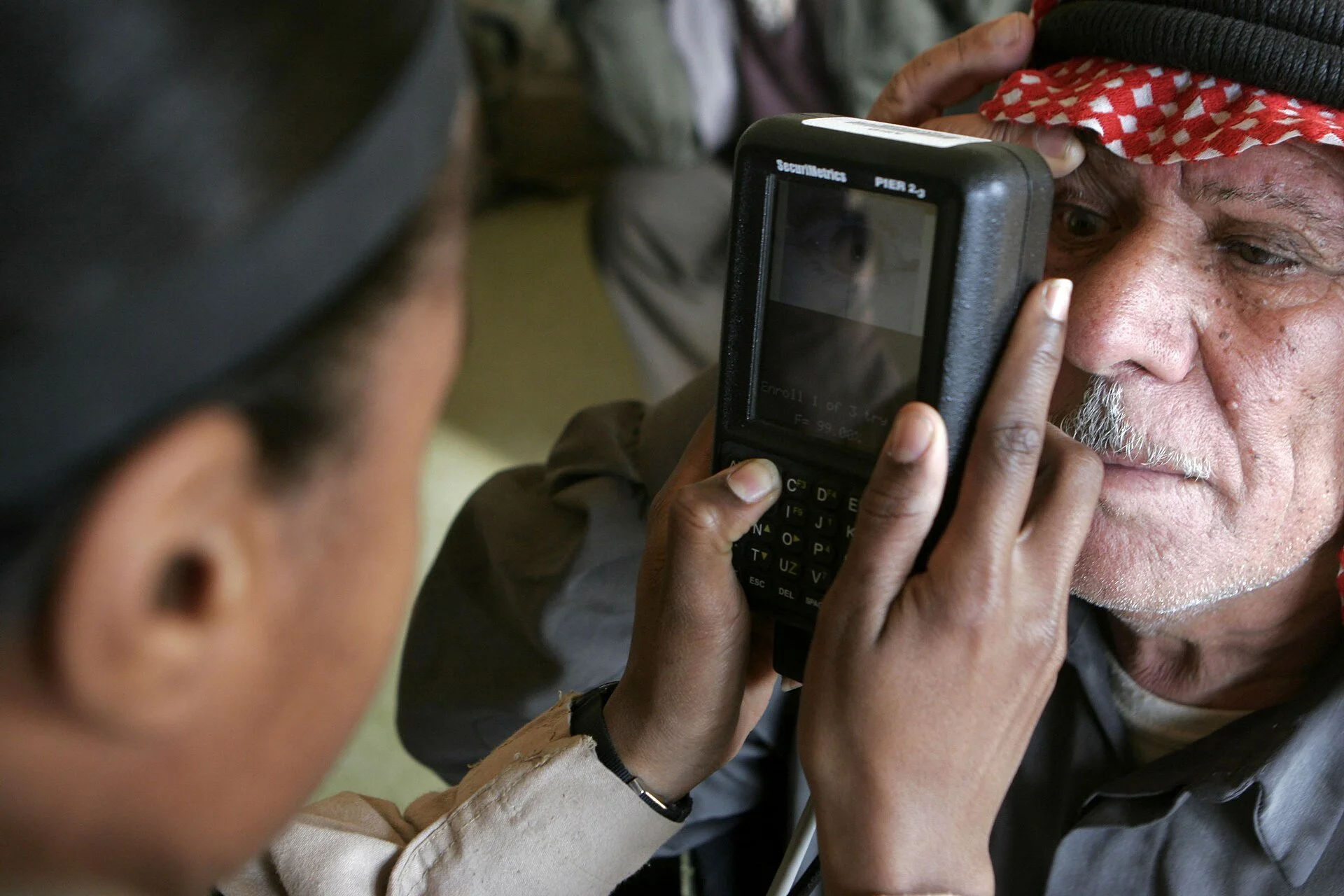
Abstract
Biometrics are the unique characteristics of the individual that differentiate him or her from any other person. Down and Sands explained that the physiological characteristics refer to the inherited traits that are shaped in the early embryonic stages of the human development. Physical biometrics include, among other things, DNA, fingerprints, hand geometry, vein patterns, face structure, skin luminescence, palm prints, iris patterns, periocular features, retina patterns, ear shape, lip prints, heartbeats, tongue prints, and body odor/scent. Behavioral characteristics are not inherited but acquired and learned throughout the life of the individual . These include, but also are not limited to, signature, handwriting, vocal prints, keystroke dynamics, and gait-body motion. As a result, the biometrics of a person cannot be stolen, forgotten, or forged. It is what we are.
Biometrics are the Unique Characteristics of the individual that differentiate him or her from any other person. Down and Sands [1] explained that the physiological characteristics refer to the inherited traits that are shaped in the early embryonic stages of the human development. Physical biometrics include, among other things, DNA, fingerprints, hand geometry, vein patterns, face structure, skin luminescence, palm prints, iris patterns, periocular features, retina patterns, ear shape, lip prints, heartbeats, tongue prints, and body odor/scent [2]–[8]. Behavioral characteristics are not inherited but acquired and learned throughout the life of the individual [1]. These include, but also are not limited to, signature, handwriting, vocal prints, keystroke dynamics, and gait—body motion [3]. As a result, the biometrics of a person cannot be stolen, forgotten, or forged. It is what we are [2].
Biometric Systems Overview
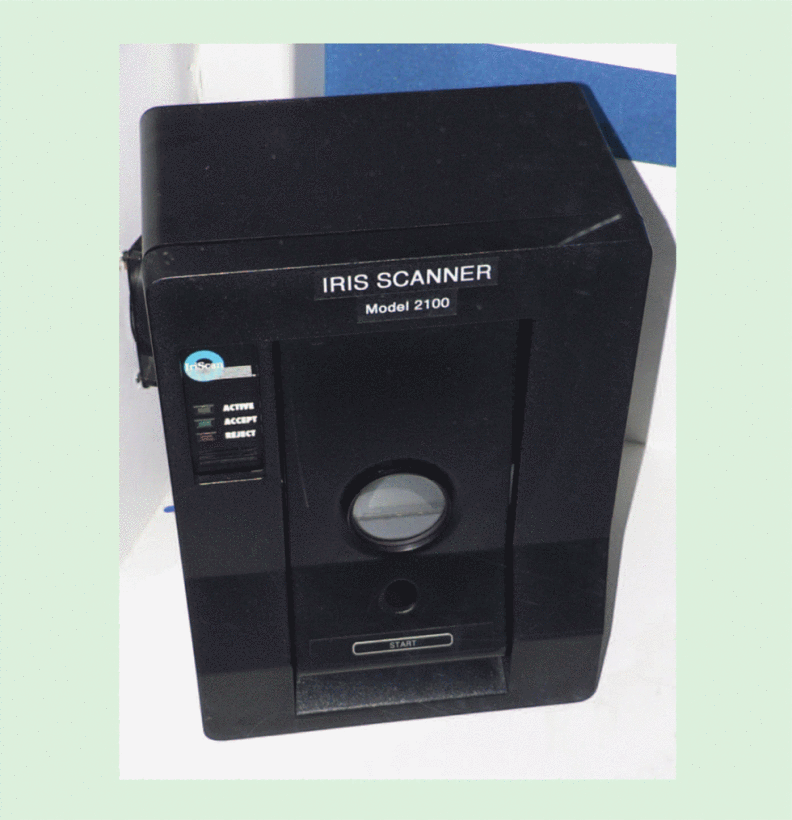
Figure 1. An iris scanner. An LED light flashes on the scanner if the biometric is accepted or rejected. (The photo was taken at the U.S. National Cryptologic Museum. Courtesy of mark pellegrini, 2007.)
Independent of which biometric identifiers are under consideration for a given application, they are all viewed as automated pattern recognition systems. Typically, a biometric system includes a biometric reader, feature extractor, and feature matcher. Biometric readers act as sensors, feature extractors take the input signals and compute those special attributes that are unique, and feature matchers compare biometric features, attempting to find a match. A biometric authentication system consists of an enrolment subsystem, an authentication subsystem, and a database.
For a biometric system to work, an individual must be enrolled, at which point the person's basic measurements of one or more biometrics are taken by the feature extractor and stored in the database. Relevant associated details may be stored alongside the biometric, such as the enrollee's name and unique ID. If the method of authentication uses verification, then typically a type of card is also linked to a person's biometric feature. A subject provides an identifier, like a smart card, and places his or her biometric on a reader. The reader senses the biometric measurements, extracts the features, and compares the input features with what is stored in the database (Figure 1). The system either accepts or rejects the subject from the given application. In the case of straightforward identification during authentication, a biometric sample from the subject is taken and the entire database is searched for matches [9, p. 7]. In practice, two separate steps occur: First an authentication mechanism will verify the identity of the subject, and second, an authorization mechanism ties the appropriate actions to someone's identity [10].
Simply put, identification is a declaration of who we are. This may include who we claim to be as a person or who a computer claims to be over a network [11]. The process of identification itself does not involve any sort of authentication, verification, or validation of the identity. That part of the process is referred to as verification, and it is usually processed as a separate transaction [11]. Recognition, on the other hand, is a notion that generally includes both identification and verification [12]. There are three modes of authentication: 1) possessions (e.g., using a smart card), 2) knowledge (e.g., recollecting a password), and 3) biometrics (e.g., using a physiological characteristic of an individual to distinguish them from others). Smith [10] describes these modes as 1) something you have, 2) something you know, and 3) something you are. During automated authentication in biometrics, two methods are common: 1) verification and 2) identification. Verification is based on a unique ID that singles out a person and that person's biometrics, while identification is based only on biometric measurements that are compared to a whole database of enrolled individuals [9, p. 5]. Depending on the manner in which biometrics are used, the process of authentication differs. Today, multifactor authentication is prevalent in most biometric systems [e.g., the use of personal identification numbers (PINs), automatic teller machine (ATM) cards, and a biometric for withdrawing cash from a biometric-enabled ATM].
There are four steps that typically take place when using a biometric system. First, data are acquired from the subject. The digital image captured of the biometric is transferred to the signal processing function (also known as image processing). Usually the data acquisition apparatus is collocated with the signal processor, but if it is not, the image is encrypted prior to transmission taking place. Second, the transmission channel that acts as the link between the primary components will transfer the data. It can transfer internal to the device or over a distributed system, usually over a private network. On occasion, data may be acquired remotely at branch locations and data stored centrally. Third, the signal processor takes the raw biometric image and begins the process for matching. The process of segmentation occurs, resulting in a feature extraction and a quality score. The matching algorithm attempts to find a record that is identical, producing a match score. Finally, a decision is made based on the resultant scores, and an acceptance or rejection is determined [13, p. 29f].
Iris Recognition Technologies
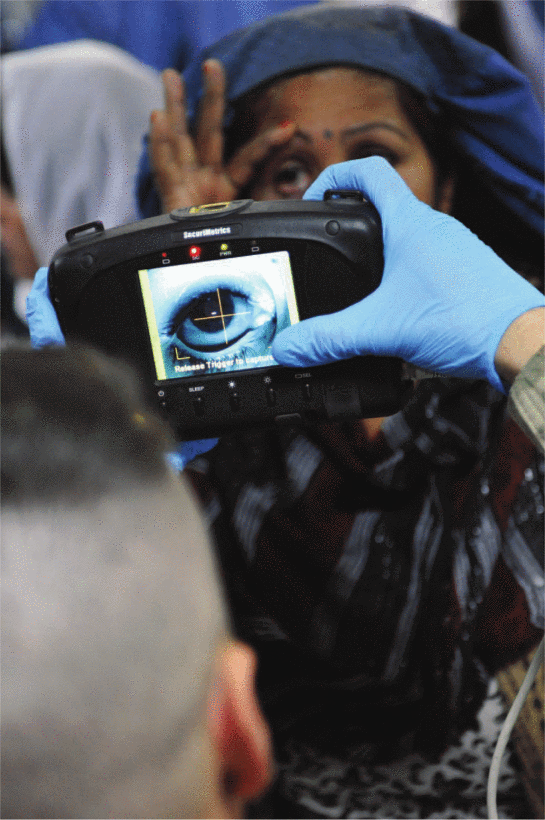
Figure 2. Staff Sgt. John Silvia, 45th Expeditionary Security Forces Group entry control point, scans an Afghan woman's iris in the waiting area of the korean hospital at bagram airfield, afghanistan, 2 December 2012. Medical teams use biometrics to identify and track the records for all incoming patients by scanning their iris and fingerprints and then inputting the information into a database. (Courtesy of U.S. Air Force/Senior Airman Chris Willis.)
The iris is the colored part in the middle of the eye, just in front of the lens. The iris is “a thin diaphragm stretching across the anterior portion of the eye and supported by the lens” [25, p. 1,344]. The main function of the iris is to control the amount of light going into the eye, and it is the only internal organ of the human body that is externally visible [14]. Unlike other biometrics, such as fingerprints, the iris does not wear off and is not affected easily by surgeries or diseases, as it is physically protected by the eyelid and the cornea [15]. Supposedly, the iris remains stable over time and permanent from the age of 18 months and throughout the person's entire life [16].
The iris has gained much attention because of a set of qualities it enjoys. Technologies that scan or read the iris are noninvasive and contactless with the human body. Therefore, no communicable diseases can be transmitted from one individual to another, and thus, the technology is considered quite hygienic compared to others, such as touch screens for fingerprint readers that require direct contact. Technologies built on iris recognition have also gained cultural acceptance, specifically in Islamic countries where the burqa is common and women are usually prohibited from physical contact with strangers or to unveil any part of their body except the eyes.
Other significant qualities of the iris include uniqueness, universality, longevity, collectability, and antitampering, which all ensure accurate identification of the individual that is not subject to duping using an impostor's qualities [17]. Universality refers to the existence of the iris characteristics in each person, whereas uniqueness refers to the ability to distinctly identify each individual from his or her iris characteristics. The subtle textures shaping the iris have completely distinctive patterns that differentiate each person from another, far more than most of the other biometrics [17]. This means that no two people in the world would have the same iris eye print, even the left and right eyes of an individual and those between twins are different [18]. An artificial duplication of the iris is virtually impossible because of its unique properties. In addition, because the iris is closely connected to the human brain, it is one of the first parts of the body to degenerate after death, and therefore, it is impossible to forge an artificial iris or to use a dead person's iris to fraudulently bypass a security system [19].
Iris-based technologies are supposed to be 100% accurate, the most accurate among other biometric solutions and the fastest among all available biometric security solutions [20]. To be recognized, the individual needs only to look at a scanner/reader that takes a high-resolution picture of the eye, and a match is performed between the “live” digital image of the iris and a previously recorded image or template of the individual's iris [21].
The spatial patterns of the iris are highly distinctive. According to Williams [22, p. 24], the possibility that two irises would be identical by random chance is approximately 1 in 1,052. Each iris is unique (like the retina). Some have reckoned automated iris recognition as second only to fingerprints, while others claim that it is the most accurate biometric identifier available today [23]. According to [24, p. 1,349], these claims can be substantiated from clinical observations and developmental biology. While some manufacturers claim to be able to capture a digital iris image at even 10 m, commercial systems have a focal distance typically not more than an arm's-length away (e.g., ATMs based on iris recognition). See Figure 2.
IRT is increasingly being considered and applied in banking, e-commerce, border control, national security, and other security application areas.
Since iris recognition systems are noninvasive/noncontact, some extra protections have been invented to combat the instance that a still image is used to fool the system. For this reason, scientists have developed a method to monitor the constant oscillation of the diameter of the pupil, thus declaring a live specimen is being captured [24, p. 1,349]. A transaction time of between 4 and 10 s is required for iris recognition, although most of that time is spent aligning the subject for the digital image capture.
Applications
Since 2007, biometric technologies, especially iris-recognition technologies (IRTs), together with fingerprint recognition systems, have become the preferred multimodal techniques in the security domain, especially with respect to citizen identification by government. IRT is increasingly being considered and applied in banking, e-commerce, border control, national security, and other security application areas.
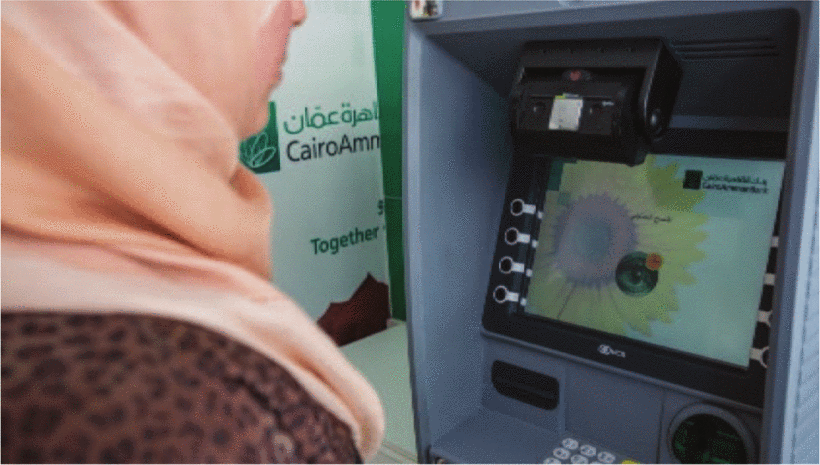
Figure 3. IRT in action at one of Cairo Amman Bank's ATMs. (Courtesy of anas aloudat.)
One of the most prominent examples is in border security and control in several countries around the world, including the United Arab Emirates (UAE), Canada, the United States, and the United Kingdom [26]. IRTs are used for different purposes within border security. Passengers can enjoy speedy access, entering or leaving a state without the need to use a passport or any other document assertion if they have been preregistered in an iris database. Airline crew members and airport employees can use iris recognition to gain access to secure air-sides or to restricted areas. Arrivals can be screened against a watch-list database, recording the irises of persons considered dangerous, illegally returning immigrants, or of expellees excluded from entering the country [26]. IRTs in the UAE, for example, are used to identify each passenger. The process takes about 2 s against a database of over 2 million expelled foreigner records. By the beginning of 2016, the technology was able to scan up to 42 million people, with an average of 30 individuals caught every day and denied entry [20].
Another application of IRTs is within law enforcement. The technologies have been used in Jordan, as an example, for narcotics control to keep track of drug dealers and suspected drug traffickers. IRTs are also utilized for prison control in the United States. These technologies are used when booking and releasing inmates to make sure that no mistakes happen when releasing a prisoner [20], [27].
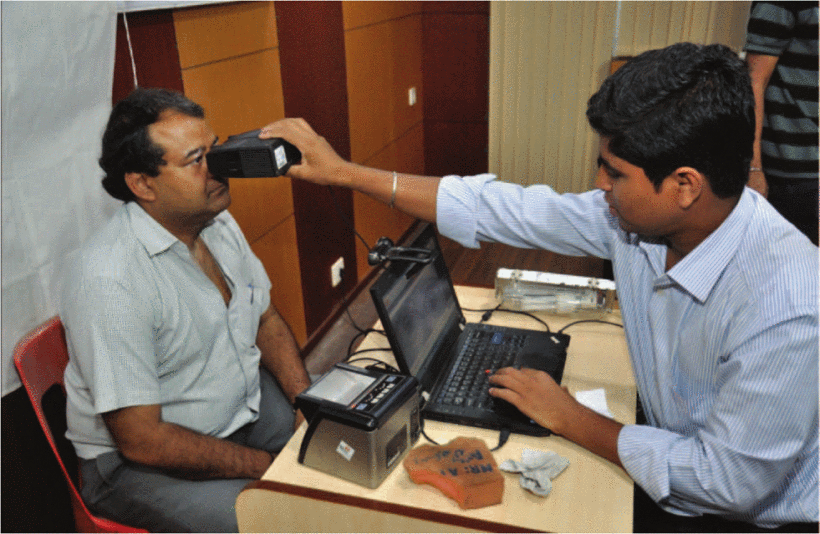
Figure 4. A biometric data collection camp of the aadhaar project of the Unique Identification Authority of India (UDAI), Government of India, Salt Lake, Kolkata. (Courtesy of Biswarup Ganguly.)
IRTs are currently used by several banks around the world as a fast and convenient method to verify clients. In 2008, the Cairo Amman Bank of Jordan was the first commercial bank in the world to integrate an iris security scanning technology into its core banking systems [28], [29]. The technology enables the bank to register its client through a dedicated iris imager, fitted next to the desk of each customer service officer. The iris print is then stored into a central database, where it is later securely retrieved, almost instantly, for recognition purposes. The client can then enjoy an easy-to-use and secured banking experience either through an iris-reader-enabled ATM or at a teller desk, eliminating the need to use a bankcard, a PIN, or even a personal identity card. See Figure 3.
Another domain that found an application for IRTs is in humanitarian relief functions. The United Nations Higher Commission for Refugees (UNHCR) has begun a financial inclusion project to deliver micropayments to Syrian refugees living in Jordan using their irises at ATMs without the need of bankcards or PINs, enabling cash-dispensing transactions discreetly and in limited amounts [30]. Solutions based on IRTs are also being expanded to include other services for refugees, such as medical care, food, and other financial subsidies as well, like providing vans inside refugee camps fitted with iris-reader-enabled ATMs inside [31].
IRTs were also trialed to create safe school zones. In New Jersey, the technology was exploited as an entry access control system that identifies the individual seeking to enter the school, makes a decision about whether to grant entry, and unlocks the entrance if the person is approved. A second application of the technology was as an identification system for parents who wanted to pick up their children before the end of the school day. Parents voluntarily participated to have their irises scanned rather than signing in and showing identification to the school staff [32].
Perhaps the most notable application of iris-based technologies is in national identity programs, such as the Unique Identification Authority of India (UIDAI) project. Tens of millions of Indian nationals have presented their irises for processing and registration in thousands of centers throughout India, making the project the world's largest biometric national ID of its kind [33]. But how far can these technologies actually permeate into our personal lives before they incur scope creep? Already, for instance, the national ID system in India, known as Aadhaar, is being extended for use as an employee ID by the private sector, and there are even calls now to link it to private bank accounts (Figure 4).
In the next section, we present a closer look at the social and ethical issues raised by IRT use relating to the ownership of individual iris data by government and business. With the apparent benefits of IRTs that have been presented in this article, there are commensurate concerns for their acceptable use. There are some significant issues about the role of IRTs that cannot be ignored, for example, the intangible adverse impacts of these technologies on individuals beyond the realms of individual recognition for security purposes. In the following section, the ethical and social implications of IRTs are presented.
Social Implications
First, we should point out that the IRT does not uniquely identify a person; the technology uniquely identifies an iris by matching it against templates of irises stored in a database and then mapping a name to the match. If that database has been altered or tampered with, the match will not yield the person's true identity. But the following discussion leaves this fundamental problem to the side and makes the assumption that the databases and systems built on iris-related information are almost impossible to tamper with since they continuously adhere to strict control procedures and rigorous protection by governments and businesses.
There is a general lack of awareness that the iris itself reveals more than just information that is used in the process of identifying an individual. Information derived from the individual's iris can tell us a lot about what the person is, not necessarily who the person is. A striking example is that information taken from an iris scan will, in the future, provide medical information related to an individual [34]. This information could subsequently be used to discriminate against a prospective employee in an unethical way to deny employment or other benefits owed, deriving that the individual is unfit for a given position.
Another serious pitfall related to IRTs in the literature is a taken-for-granted fact that iris patterns do not change over time. However, Rankin et al. [35] have proved that changes in iris texture appearance occur with age, disease, and medication. In their study, the researchers noted iris recognition failure rates up to 20% over six-month intervals. Any technology is undoubtedly vulnerable to faults, but in some situations, faults may have severe consequences on individuals, such as outright exclusion and physical access. In border-control environments, high error rates may potentially produce false positives or false negatives, affecting individuals in harmful ways and causing limitations on their travel, denying them entry to the country, leading them to detention or even being charged with criminal mischief based on misinterpreted iris data.
With the continuing reduction in the cost of iris scanners, we are most likely to witness applications of IRTs in environments that were not previously possible.
It is a fact that most refugees live in miserable conditions. Take, for example, refugees in Jordan who, despite of all the support and assistance provided by the Jordanian government and people, live year round in poor sanitary and housing and in extreme weather conditions year round [36]. This has a serious toll on their health status, including the condition of the iris. A refugee can be denied a payment when it is needed most because the iris-enabled ATM cannot read his or her iris. Unfortunately, using IRTs for refugees also does not eradicate the opportunities for corruption. Refugees reported that some locals demanded a commission from families in exchange for providing transportation to an ATM to redeem their payments. Another risk is the danger of retaliation by the country of origin should they obtain, somehow, the iris data for their own nationals [21].
Technologies built on scanning and reading the human iris also do not solve the problem of registering very young people. As stated earlier, iris patterns do fully stabilize until about 18 months of age, so it may be difficult to record an iris scan before this age, and as a result, IRTs cannot solely be used as the only technology in current or even future national identity programs.
There are several substances, such as alcohol, cocaine, or marijuana, that affect the condition of the iris. In an experiment carried out by Arora et al. [37], the researchers matched iris images captured before and after alcohol consumption. The consumption of alcohol causes the pupil to dilate, which causes deformation in the iris patterns and, in turn, significantly affects the matching performance of iris scanners. With the continuing reduction in the cost of iris scanners, we are most likely to witness applications of IRTs in environments that were not previously possible. As an example, a work environment where the manager can notice changes over time on employees' irises because of issues with alcohol or other substances can cause a serious invasion of privacy. Decisions might be taken that impact the career of an individual or his or her ability to socially function with such personal issues brought out into public view.
The variety of social and ethical issues involved in IRTs is considerable.
British Telecom developed a high-speed iris scanner that can capture the iris print of a person in a car driving at 50 mi/h [38]. As this technology advances and falls in price, it is likely that IRTs will find their way to law enforcement sectors in a plethora of applications, such as to screen wanted suspects out from a distance, determine individuals who drive under the influence of some illegal drug, or to serve as evidence in support of a criminal investigation, if required.
Empirical evidence by Xianchao et al. [39] and Lagree and Bowyer [40] suggests that ethnicity prediction and gender prediction are possible from iris textures. Some people have secrets to hide, sometimes even their true ethnicity, to avoid social isolation. Ahn [41], for example, reported that many Korean-Japanese with Korean ethnic origin and Japanese nationality still try to hide their ethnicity and pretend to be 100% Japanese because of the fear of discrimination and insufficient academic support given by schools and teachers to non-Japanese students, as is the case at present.
A large number of migrated individuals change their original names into names that can be easily integrated with their new societies. Attempts to hide their ethnicity, for example, at job interviews, with the potential future use of IRTs in work environments can largely damage their efforts for integration.
There is a significant population who does not wish to disclose its gender. In a world where, someday, you can shop using your iris-reader-enabled webcam instead of your credit card, the potential for targeted marketing and customer profiling becomes more invasive than ever before.
Research by Larsson et al. [42] explored the associations between personality and iris characteristics and found that people with different iris configurations tend to develop along different personality trajectories and that the characteristics of the iris are significantly associated with several approach-related behaviors, including feelings, tender-mind-edness, warmth, trust, positive emotions, and impulsiveness. Although no other study has reinforced these results, the implications are still profound. It opens the door to use iris data as a future method for genetic personality research and provide a tool to understand an individual's personality just from an iris scan.
Another issue is that iris data can be analyzed for additional information, and there is no requirement that individuals will ever be notified. To illustrate, a bank using an IRT enabled with an iris scanner can process the physiological characteristics of a lady who performs an IRT transaction, and the system denotes changes that are indicative that a female customer is actually pregnant. Indeed, as previous research has suggested, it might be possible to use an iris scan to determine not only that a woman is pregnant but also the gender of the unborn child [43], [44]. Haag and Cummings [44] provided an interesting example of how IRTs can be used for smarter customer profiling in the future. Consider the possibility that an IRT system derives a customer who is expecting a baby girl and then proceeds to provide a pink-colored printed receipt with an attached coupon for 10% off any purchase on girls' clothes at specific stores. The bank might even go further to offer financing for a minivan, offer a special second mortgage so a room for the baby can be added, or establish a tuition account for the child. The point here is that IRTs of the future will capture and process the physiological characteristics of the person performing the transaction and reveal information that the individual does not know yet know about or does not want to know about. Many parents choose not to test the gender for their unborn child, and iris scanning has the potential to dramatically disrupt that natural process.
The analysis of the physiological characteristics can also extend not only to pregnancy but may include, as stated previously, the presence of alcohol, illegal drugs, and even hair loss, low blood sugar, and vitamin deficiencies [44]. It is worrisome to think about governments and businesses using such depth of analytics. The level of invasion into individuals' privacy will be remarkably unprecedented, especially with the lack of policies and laws protecting iris information today and most of other biometrics information, both in the public and private sectors [11].
Conclusion
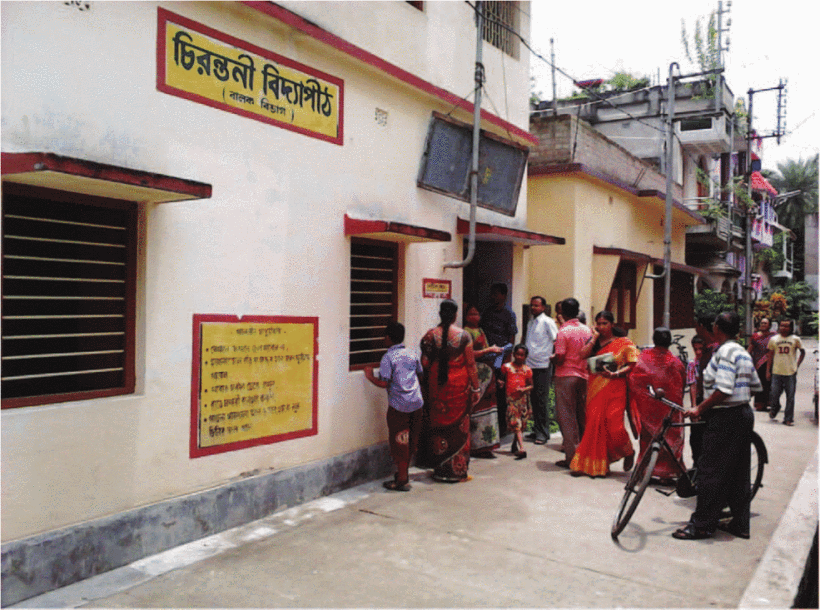

Figure 5. The aadhaar biometric data collection camp, chirantani vidyapith-Howrah, 10 August 2012. (Courtesy of Biswarup Ganguly.)
Biometrics, specifically iris recognition, is gaining much interest today from governments and businesses, mainly for security enforcement and intelligent customer profiling. In this article, we touched upon the concepts of biometrics that are based on the unique physiological features and behavioral patterns of the human body, explained the iris and its unparalleled characteristics that single it out from other biometrics, and presented a range of applications where IRTs were successfully utilized worldwide. We then started a discussion about the social implications of IRTs in relation to privacy, iris recognition failure, and concerns related to the ability of these technologies to reveal information, from the iris data of an individual, that is beyond the purposes of security and profiling, such as predicting pregnancy, gender, ethnicity, personality, alcohol and other substance consumption, and medical information, such as low blood sugar and vitamin deficiencies,
The variety of social and ethical issues involved in IRTs is considerable. It is imperative that the use of IRTs always adhere to strict policies and guidelines that ensure the ethical conduct of the people who can access such technologies and its related stored data.
One of the guidelines, as Alterman [21] correctly argued, is based on the fact that the ethics of biometrics, including the iris, cannot rest on the assumption that its related data are absolutely secure. Threats to privacy in the form of uncontrolled collection of personal data and unauthorized access to personal information are all possible with iris data as with any other. Privacy policies should be in place and publically posted and clearly state when, how, and why iris information is collected and used. Limited access points and high encryption security measures should be implemented to audit official access to iris data and totally eliminate those that are unofficial.
The lack of general awareness is a further problem. A transparent mapping between the ethical and governance aspects of IRTs in a way that include informing and involving the public is important to create and sustain public support for such technologies.
Another guideline that should be taken into account is to seriously consider personal decisions when it comes to IRTs. Several countries started to establish their national iris-ID systems—India and Jordan to mention a few—in which citizens are obligated to scan and store their iris eye prints in national biometric databases (Figure 5). For ethical reasons, and to alleviate any personal concerns, the person should be free to choose whether or not his or her iris information can be used by governments or businesses. The person's own decision of how, when, and for how long his or her iris-related information is used and kept should also be taken into account. After all, the iris is not the only method of identification and recognition; the person should be free to select from a set of choices when it comes to registering his or her details with a government or business database. The potential for retrospective use without the enrollee's permission is another major problem. Users have no idea where their data are being stored and who has access to it for particular further investigation (Figure 5).
Advocates of IRTs would strongly argue that the substantial problems these technologies solve and benefits they bring far outweigh any “Orwellian concerns” there might be about privacy, burdens of technology failures, or technology outstripping our ability to understand the intended or the unintended consequences of its uses. Nonetheless, it is still important to bear in mind that investigating the social implications of IRTs, such as the current research, is strongly required before a world where iris-based technologies, coupled perhaps with other potential surveillance technologies, such as GPS-enabled devices [45], location-based tracking and monitoring [46]–[49], Internet of Things [50]–[52], and big data [53]–[55], become pervasive in all aspects of our daily life. A final creepy reminder of the possibilities is illustrated in Minority Report, where each and every individual on earth is instantaneously and remotely identified via a scan of his or her iris. We are speaking of fundamental human rights here that may well be impinged, heralding in an age of uberveillance.
References
1. M. P. Down and R. Sands, “Biometrics: An overview of the technology, challenges and control considerations,” Information Systems Control Journal, vol. 4, pp. 53–56, 2004.
2. S. Liu and M. Silverman, “A practical guide to biometric security technology,” IT Professional, vol. 3, no. 1, pp. 27–32, 2001.
3. K. Havenetidis, “Encryption and biometrics: Context, methodologies and perspectives of biological data,” Journal of Applied Mathematics and Bioinformatics, vol. 3, no. 4, pp. 141–161, 2013.
4. D. Woodard and A. K. Jain, “Periocular-based biometrics,” in Encyclopedia of Biometrics, Springer, 2015, pp. 1244–1250.
5. S. Islam, “Heartbeat biometrics for remote authentication using sensor-embedded computing devices,” International Journal of Distributed Sensor Networks, vol. 2015, pp. 1–7, 2015.
6. S. Jeyanthi, “Human identification using dental biometrics,” International Journal of Advanced Engineering and Global Technology, vol. 1, 2013.
7. E. Mordini and S. Massari, “Body, biometrics and identity,” Bioethics, vol. 22, pp. 488–498, Nov. 2008.
8. L. Zhi et al., “A tongue-print image database for recognition,” Proceedings of the International Conference on Machine Learning and Cybernetics, 2007, pp. 2235–2238.
9. R. M. Bolle, J. Connell, S. Pankanti, N. K. Ratha, and A. W. Senior, Guide to Biometrics. Springer, 2003.
10. R. E. Smith, N. M. Orlans, and P. T. Higgins, “How authentication technologies work,” in Biometrics, Wiley, 2002, pp. 3–23.
11. J. Andress, The Basics of Information Security, 2nd ed. Elsevier, 2014.
12. J. L. Wayman, “Federal biometrics technology legislation,” Computer, vol. 33, no. 2, pp. 76–80, 2000.
13. K. Raina, J. D. Woodward, and N. Orlans, “How biometrics work,” in Biometrics, Wiley, 2002, pp. 25–44.
14. R. Arun, “Iris recognition: The path forward,” Computer, vol. 43, no. 2, pp. 30–35, Feb. 2010.
15. M. Negin, T. A. Chmielewski, M. Salganicoff, T. A. Camus, U. M. Cahn von Seelen, P. L. Venetianer, and G. G. Zhang, “An iris biometric system for public and personal use,” Computer, vol. 33, no. 2, pp. 70–75, 2000.
16. K. Delac and M. Grgic, “A survey of biometric recognition methods,” Proceedings of the 46th International Symposium Electronics in Marine (ELMAR), 2004, pp. 184–193.
17. K. Saminathan, “Iris recognition based on kernels of support vector machine,” ICTACT Journal on Soft Computing, vol. 5, no. 5, pp. 889–895, 2015.
18. S. Venkatraman and I. Delpachitra, “Biometrics in banking security: A case study,” Information Management & Computer Security, vol. 16, no. 4, pp. 415–430, 2008.
19. S. M. S. Ahmad, B. M. Ali, and W. A. W. Adnan, “Technical issues and challenges of biometric applications as access control tools of information security,” International Journal of Innovative Computing, Information and Control, vol. 8, no. 11, pp. 7983–7999, 2012.
20. IrisGuard, “EyeSecure solution: Just blink!” Available: http://www.irisguard.com/index.php/news
21. A. Alterman, “A piece of yourself: Ethical issues in biometric identification,” Ethics and Information Technology, vol. 5, no. 3, pp. 139–150, 2003.
22. G. O. Williams, “Iris recognition technology,” IEEE Aerospace and Electronic Systems Magazine, vol. 12, no. 4, pp. 23–29, Apr. 1997.
23. J. Daugman, “Probing the uniqueness and randomness of IrisCodes: Results from 200 billion iris pair comparisons,” Proceedings of the IEEE, vol. 94, no. 11, pp. 1927–1935, 2006.
24. R. P. Wildes, “Iris recognition: An emerging biometric technology,” Proceedings of the IEEE, vol. 85, no. 9, pp. 1348–1363, 1997.
25. W. Shen and R. Khanna, “Prolog to evaluation of automated biometrics-based identification and verification systems,” Proceedings of the IEEE, vol. 85, no. 9, p. 1463, 1997.
26. J. Daugman, “Iris recognition at airports and border-crossings,” in Encyclopedia of Biometrics, A. K. Jain, Ed. Springer, 2009, pp. 819–825.
27. S. V. Sheela and P. A. Vijaya, “Iris recognition methods—Survey,” International Journal of Computer Applications, vol. 3, no. 5, pp. 19–25, 2010.
28. K. Stier, “IrisGuard makes inroads, from Mideast banks to U.S. prisons,” Bloomberg, May 4, 2011. Available: http://www.bloomberg.com/news/articles/2011-05-04/irisguard-makes-inroads-from-mideast-banks-to-u-s-prisons
29. Cairo Amman Bank, “Profile of Cairo Amman Bank,” Jan. 8, 2016. Available: http://www.cab.jo/profile
30. C. Dunmore, “Iris scan system provides cash lifeline to Syrian refugees in Jordan,” UNHCR, Dec. 28, 2015. Available: http://www.unhcr.org/550fe6ab9.html
31. UNHCR, “Biometric cash assistance: Leveraging biometric technology to ensure cash assistance reaches the refugees who need it the most,” Dec. 28, 2015. Available: http://innovation.unhcr.org/labs_post/cash-assistance/
32. C. D. Uchida, E. R. Maguire, S. E. Solomon, and M. Gantley, Safe Kids, Safe Schools: Evaluating the Use of Iris Recognition Technology in New Egypt, New Jersey. Final report submitted to the National Institute of Justice. 21st Century Solutions, Inc., 2004.
33. U. Rao and G. Greenleaf, “Subverting ID from above and below: The uncertain shaping of India's new instrument of e-governance,” Surveillance & Society, vol. 11, no. 3, pp. 287–300, 2013.
34. L. Ma, D. Zhang, N. Li, Y. Cai, W. Zuo, and K. Wang, “Iris-based medical analysis by geometric deformation features,” IEEE Journal of Biomedical and Health Informatics, vol. 17, no. 1, pp. 223–231, 2013.
35. D. M. Rankin, B. Scotney, P. Morrow, and B. Pierscionek, “Iris recognition failure over time: The effects of texture,” Pattern Recognition, vol. 45, pp. 145–150, 2012.
36. B. Staton, “Life is so miserable for Syrian refugees that thousands are returning home to a war zone,” Los Angeles Daily News, Oct. 29, 2015. Available: http://www.dailynews.com/general-news/20151029/life-is-so-miserable-for-syrian-refugees-that-thousands-are-returning-home-to-a-war-zone
37. S. S. Arora, M. Vatsa, R. Singh, and A. K. Jain, “Iris recognition under alcohol influence: A preliminary study,” Proceedings of the 5th IAPR International Conference on Biometrics (ICB), 2012, pp. 336–341.
38. S. Garfinkel, Database Nation: The Death of Privacy in the 21st Century, 1st ed. Sebastopol, CA: O'Reilly & Associates, 2000.
39. X. Qiu, Z. Sun, and T. Tan, “Learning appearance primitives of iris images for ethnic classification,” Proceedings of the IEEE International Conference on Image Processing (ICIP), 2007, pp. 405–408.
40. S. Lagree and K. W. Bowyer, “Predicting ethnicity and gender from iris texture,” Proceedings of the IEEE International Conference on Technologies for Homeland Security (HST), 2011, pp. 440–445.
41. R. Ahn, “Korean students' minority schooling experience in Japan,” Intercultural Education, vol. 23, pp. 249–263, June 2012.
42. M. Larsson, N. L. Pedersen, and H. Stattin, “Associations between iris characteristics and personality in adulthood,” Biological Psychology, vol. 75, pp. 165–175, 2007.
43. A. C. Makori, “Integration of biometrics with cryptographic techniques for secure authentication of networked data access,” in Strengthening the Role of ICT in Development, 1st ed., Fountain Publishers, 2009, pp. 1–13.
44. S. Haag and M. Cummings, Management Information Systems for the Information Age, 9th ed. New York: McGraw-Hill/Irwin, 2013.
45. K. Michael, A. McNamee, and M. G. Michael, “The emerging ethics of humancentric GPS tracking and monitoring.”
46. S. J. Fusco, K. Michael, A. Aloudat, and R. Abbas, “Monitoring people using location-based social networking and its negative impact on trust: An exploratory contextual analysis of five types of ‘friend’ relationships.”
47. S. J. Fusco, R. Abbas, K. Michael, and A. Aloudat, “Location-based social networking: Impact on trust in relationships,” IEEE Technology and Society Magazine, vol. 31, pp. 39–50, 2012.
48. K. Michael and R. Clarke, “Location and tracking of mobile devices: Überveillance stalks the streets,” Computer Law & Security Review, vol. 29, no. 3, pp. 216–228, 2013.
49. A. Aloudat and K. Michael, “The application of location-based services in national emergency warning systems: SMS, cell broadcast services and beyond,” in National Security, Science and Innovation, Australian Security Research Centre, 2010, pp. 21–49.
50. R. Roman, J. Zhou, and J. Lopez, “On the features and challenges of security and privacy in distributed Internet of Things,” Computer Networks, vol. 57, pp. 2266–2279, 2013.
51. R. H. Weber, “Internet of Things—New security and privacy challenges,” Computer Law & Security Review, vol. 26, no. 1, pp. 23–30, 2010.
52. A. C. Sarma and J. Girão, “Identities in the future Internet of Things,” Wireless Personal Communications, vol. 49, no. 3, pp. 353–363, 2009.
53. K. Michael and K. Miller, “Big data: New opportunities and new challenges,” Computer, vol. 46, no. 6, pp. 22–24, 2013.
54. O. Tene and J. Polonetsky, “Big data for all: Privacy and user control in the age of analytics,” Northwestern Journal of Technology and Intellectual Property, vol. 11, no. 5, pp. 239–274, 2013.
55. A. Cavoukian and J. Jonas, Privacy by Design in the Age of Big Data. Information and Privacy Commissioner of Ontario, 2012.
Authors
Department of Management Information Systems, The University of Jordan
Anas Aloudat (a.aloudat@ju.edu.jo) is with the Department of Management Information Systems, School of Business, The University of Jordan.
Faculty of Engineering and Information Sciences, University of Wollongong, New South Wales, Australia
Katina Michael (katina@uow.edu.au) is with the School of Computing and Information Technology, Faculty of Engineering and Information Sciences, University of Wollongong, New South Wales, Australia.
Faculty of Engineering and Information Sciences, University of Wollongong, New South Wales, Australia
Roba Abbas (roba@uow.edu.au) is with the School of Computing and Information Technology, Faculty of Engineering and Information Sciences, University of Wollongong, New South Wales. Australia.
Citation: A. Aloudat, K. Michael and R. Abbas, "The Implications of Iris-Recognition Technologies: Will our eyes be our keys?," in IEEE Consumer Electronics Magazine, vol. 5, no. 3, pp. 95-102, July 2016, doi: 10.1109/MCE.2016.2556901.