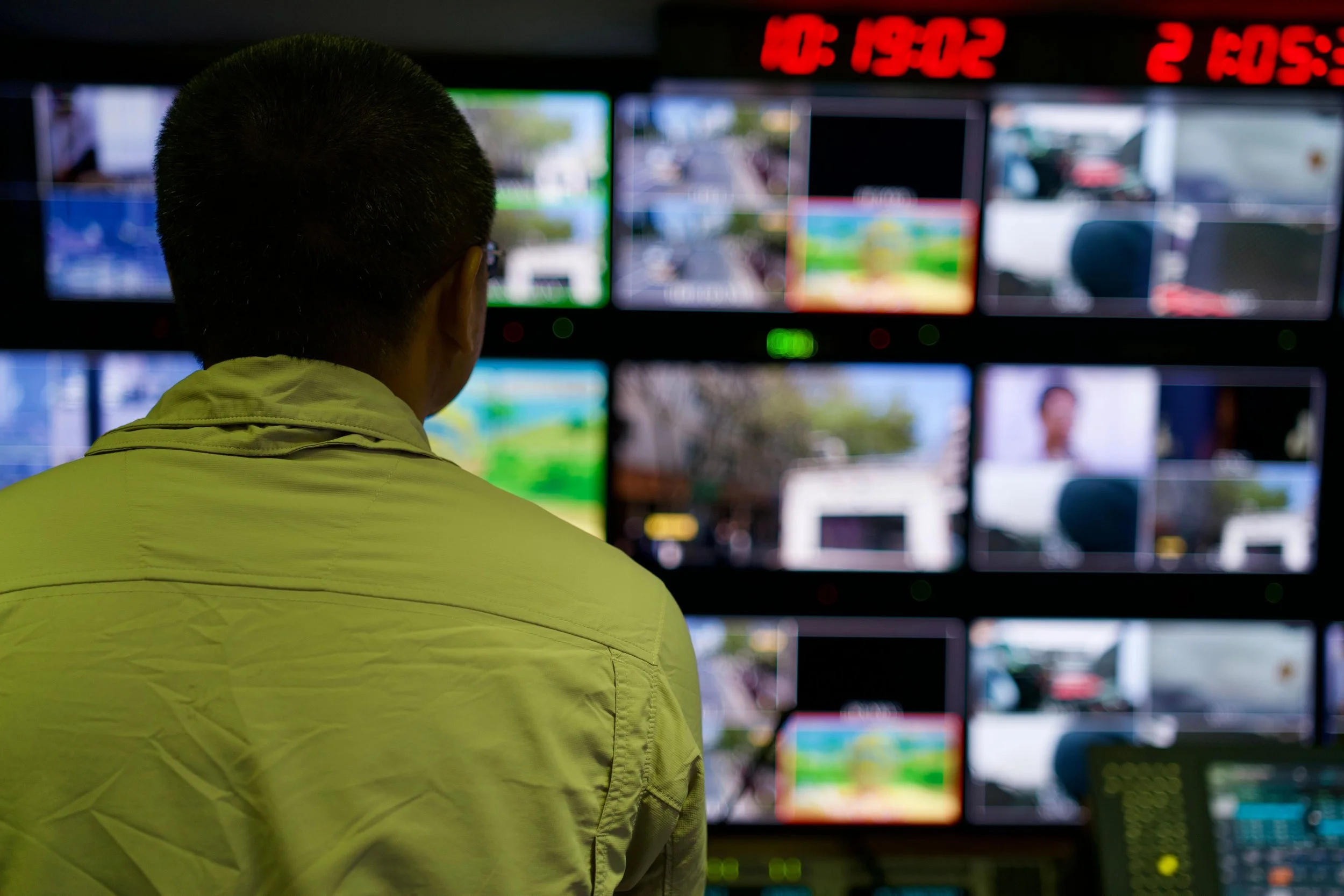
Photo by Samon Yu
Original source: 10 Nov 2026, The Hidden Human Behind Artificial Intelligence: Why We Must Start Talking About “Botsitting”, TimesTech, https://timestech.in/the-hidden-human-behind-artificial-intelligence-why-we-must-start-talking-about-botsitting/
By Professor Yogesh K. Dwivedi, Riyad Bank Chair Professor of Digital Business, Department of Information Systems & Operations Management (ISOM), King Fahd University of Petroleum and Minerals (KFUPM) & Professor Ramakrishnan Raman, Vice Chancellor, Symbiosis International (Deemed University).
By TimesTech
November 10, 2026
Artificial intelligence is often presented as the ultimate productivity revolution: machines that write, analyse, recommend, design and make decisions at unprecedented speed. Organisations are investing billions in AI, hoping to reduce costs, accelerate innovation and transform the way work gets done. Yet an important question remains: if AI can do so much, why does achieving reliable results still demand so much human effort?
The answer lies in a phenomenon that is increasingly shaping workplaces but remains largely invisible. It is called “Botsitting” – the human work involved in supervising, checking, correcting, refining and guiding AI systems so that their outputs become genuinely useful.
A seminal article, “Botsitting: Conceptualizing Value-Enabling Hidden Human Labor in AI-Enabled Work,” published online on 28 October 2026 in the Journal of Computer Information Systems, an A-category journal, brings this phenomenon into sharper academic and managerial focus. Co-authored by Professor Yogesh K. Dwivedi and Professor Ramakrishnan Raman, alongside an international team of scholars, the paper develops one of the first scholarly conceptualisations of Botsitting and explains why it matters for the future of work.
When AI generates answers, humans ensure they are right
Consider a professional using AI to prepare a business report. The system may generate a polished document in seconds. But someone must verify its facts, check its sources, identify misleading conclusions, ensure that the analysis reflects the organisation’s context and correct errors before the report reaches decision-makers.
The same pattern appears in banking, marketing, software development, healthcare administration and security operations. AI can produce recommendations and automate tasks, but human judgement often remains essential to determine whether its outputs are accurate, appropriate and safe to use.
This is the central insight of Botsitting: generating an output is not the same as generating value.
The research identifies a gap between AI-generated potential and realised organisational value. Technology may offer extraordinary capabilities, but those capabilities translate into meaningful outcomes only when supported by appropriate human expertise, organisational processes and governance.
The distinction challenges the simplistic assumption that greater automation necessarily means less human work. AI may eliminate certain tasks while creating others – including work that was previously unrecognised, unplanned or simply absorbed into existing job responsibilities.
The invisible cost of intelligent machines
Botsitting is particularly important because it frequently goes unmeasured. Employees may spend considerable time validating AI-generated material, refining prompts, investigating inconsistencies and correcting mistakes without recording these activities as separate work.
When the AI performs well, the achievement may be attributed to the technology. When it fails, responsibility may fall on the employee who was expected to supervise it. The human contribution remains hidden even when it is indispensable.
This creates a managerial blind spot. An organisation may believe that AI has reduced the time required to complete a task, while overlooking the hours spent checking and repairing the output. If that additional effort is substantial, the expected productivity gain may shrink or disappear.
The paper therefore makes an important practical argument: organisations should estimate Botsitting effort during AI pilots and incorporate it into their return-on-investment calculations. Measuring the cost of generating an answer without measuring the effort required to make it trustworthy offers an incomplete picture of productivity.
Why the babysitting analogy matters
The term Botsitting draws attention to a familiar but revealing analogy: childcare. A caregiver’s work is not limited to moments of visible intervention. It involves continuous readiness, anticipation, judgement and occasional urgent responses. Much of this effort remains unnoticed precisely because nothing appears to be going wrong.
Similarly, an employee overseeing an AI system may appear to be doing little while the system operates smoothly. Yet that employee must remain alert to unexpected errors, inappropriate recommendations or actions that could have serious consequences.
Both activities illustrate how essential work can be undervalued when it is difficult to observe or measure. The analogy is not intended to equate people with machines; it highlights a shared problem of recognition – the tendency to overlook sustained supervisory effort until something goes wrong.
From informal effort to responsible AI governance
The implications extend beyond individual employees. Organisations must decide who is responsible for checking AI outputs, what level of verification is required, how much time should be allocated and what happens when a system operates beyond the limits of meaningful human oversight.
The research distinguishes Botsitting from formally designed human-in-the-loop arrangements. In the latter, oversight responsibilities are specified in advance. Botsitting often emerges when the necessary human work was not adequately anticipated, assigned or resourced.
This distinction matters. Simply naming an employee as responsible for AI oversight does not guarantee that the person has sufficient time, expertise or practical capacity to perform it. As AI systems become faster and more autonomous, meaningful supervision may become harder, not easier.
The answer is not to reject AI. It is to design AI-enabled work more intelligently – with clear accountability, appropriate training, realistic workloads, reliable verification mechanisms and transparent measures of performance.
Recognising the human contribution to the AI future
The significance of this research lies in bringing an overlooked dimension of technological transformation into a coherent conceptual framework. By positioning Botsitting as value-enabling hidden human labour, Professor Yogesh K. Dwivedi, Professor Ramakrishnan Raman and their co-authors offer researchers, business leaders and policymakers a way to examine what happens between AI capability and actual organisational outcomes.
The paper also opens avenues for future empirical research into how Botsitting varies across industries, how it affects productivity and employee well-being, and how organisations can make this work more visible and effective.
The future of AI will undoubtedly be shaped by increasingly capable machines. But its success will also depend on whether organisations recognise the people who make those machines useful.
Perhaps the most important question is no longer simply how much work AI can perform. It is how much human effort is required to make that work reliable, responsible and valuable.
The real measure of AI progress will not be how much human involvement disappears, but how effectively technology and human judgement work together to create value.
By Professor Yogesh K. Dwivedi, Riyad Bank Chair Professor of Digital Business, Department of Information Systems & Operations Management (ISOM), King Fahd University of Petroleum and Minerals (KFUPM) & Professor Ramakrishnan Raman, Vice Chancellor, Symbiosis International (Deemed University).
Original source: 10 Nov 2026, The Hidden Human Behind Artificial Intelligence: Why We Must Start Talking About “Botsitting”, TimesTech, https://timestech.in/the-hidden-human-behind-artificial-intelligence-why-we-must-start-talking-about-botsitting/