Toward a Global Understanding of Public Interest Technology

Photo by Kenneth Surillo
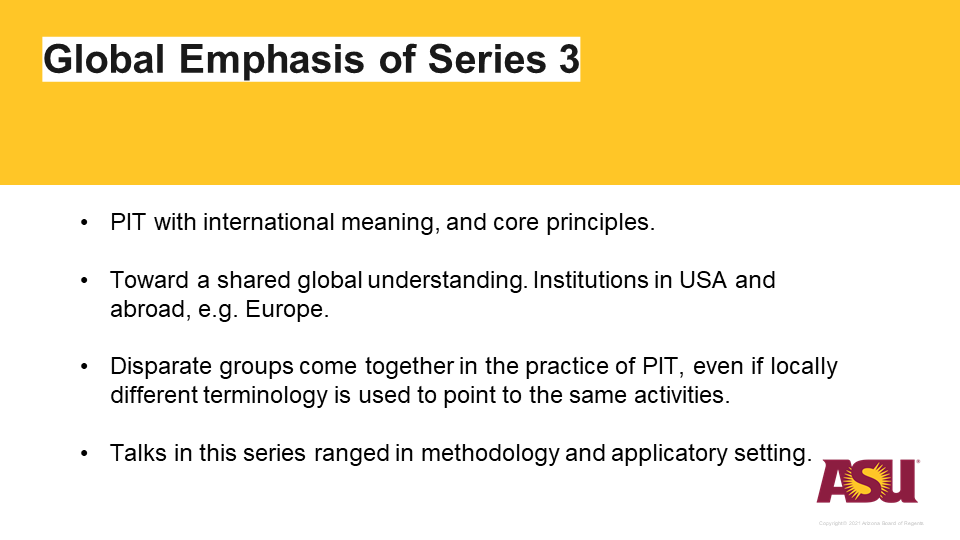
Summary: This module introduces learners to key resources pertaining to foundational concepts, skills, and knowledge for advancing public interest technology (PIT), from a global perspective. As a concept, PIT is a neologism with specific connotation in the US market. Although PIT as a “term” has begun to gain traction in academic literature and internationally, this module has demonstrated that the PIT philosophy and/or goal, has been considered over the past 60 years in a variety of manifestations, and within numerous societies. In this module, we also address the historical and ongoing development of a global understanding of public interest technology through an emphasis on PIT centred global initiatives that emphasise multidisciplinarity and endeavour to achieve transdisciplinarity.
Resources: video, powerpoint presentation (+ PDF), tutorial activities
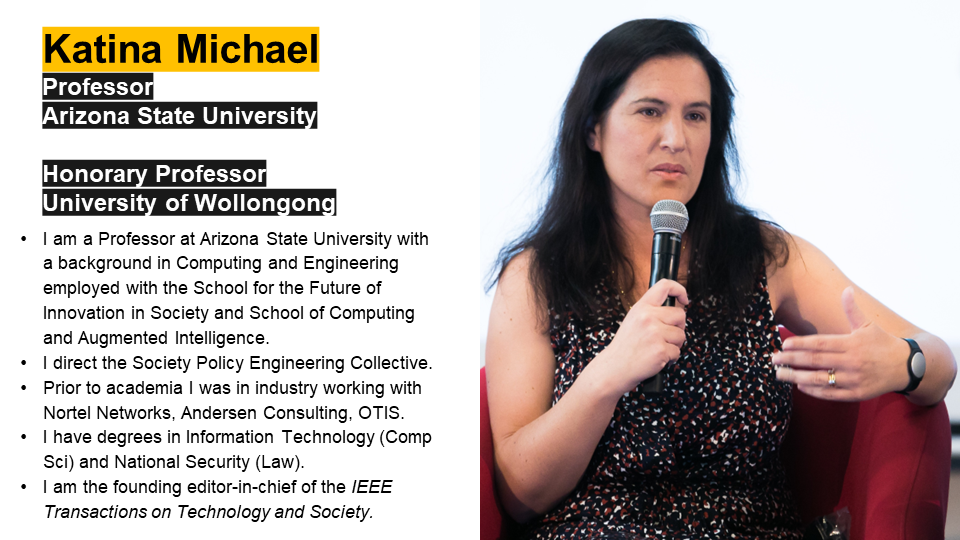
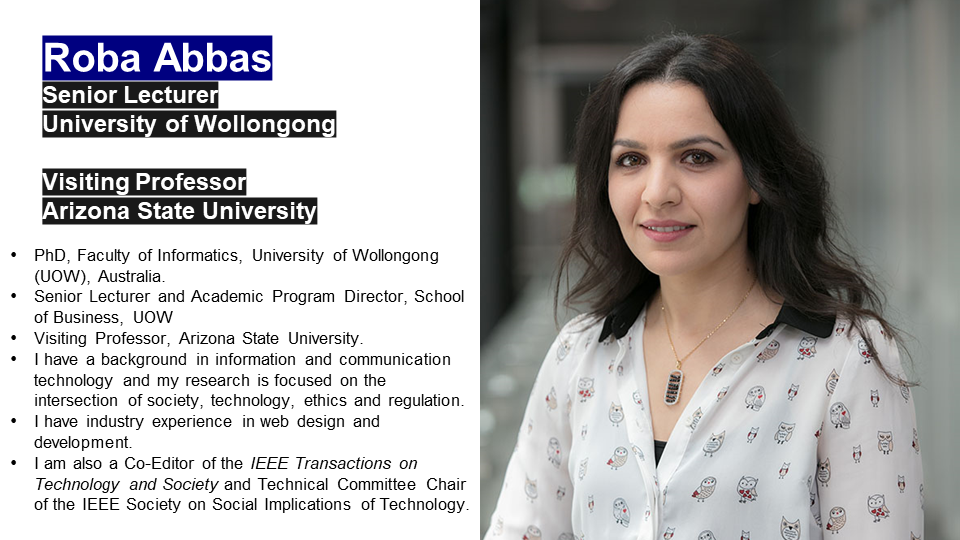
Recorded by Katina Michael of Arizona State University (ASU) and Roba Abbas of the University of Wollongong (UOW) for New America's Public Interest Technology - University Network (PIT-UN)










Tutorial Activities from the Module can be found here (in PDF)
PIT UN Summer Speaker Series
Teaching Module Study Guide: Toward a Global Understanding of Public Interest Technology
Developed by Katina Michael (katina.michael@asu.edu), Roba Abbas (roba@uow.edu.au)
Module Summary
In this module, you have been introduced to key resources pertaining to foundational concepts, skills, and knowledge for advancing public interest technology (PIT), from a global perspective. As a concept, PIT is a neologism with specific connotation in the US market. Although PIT as a “term” has begun to gain traction in academic literature and internationally, this module has demonstrated that the PIT philosophy and/or goal, has been considered over the past 60 years in a variety of manifestations, and within numerous societies. In this module, we also addressed the historical and ongoing development of a global understanding of public interest technology through an emphasis on PIT centred global initiatives that emphasise multidisciplinarity and endeavour to achieve transdisciplinarity. These practice activities will assist you to develop a greater awareness of available materials from international scholars and relevant societies, with a view to reflect on PIT within your unique (institutional) context.
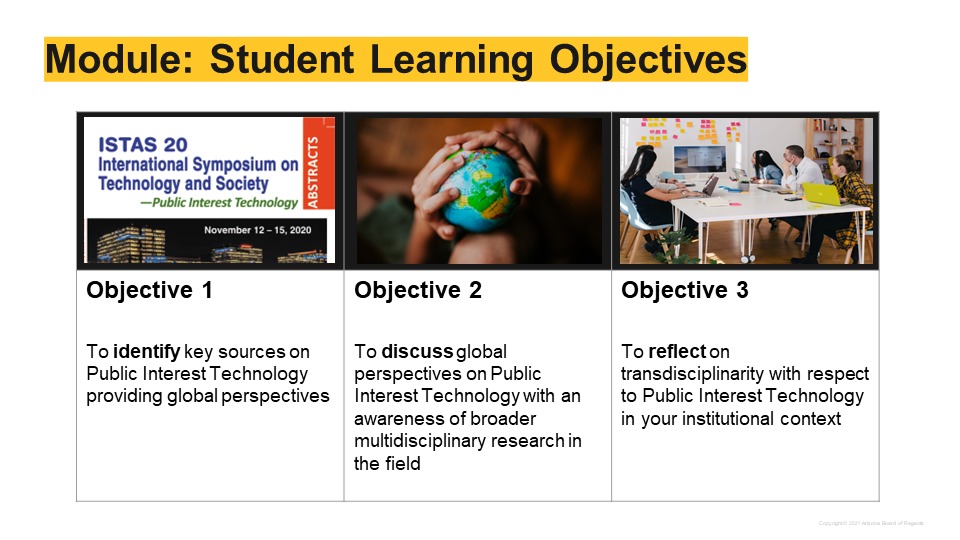
Module Learning Objectives
1. To identify key academic sources on Public Interest Technology providing global perspectives
2. To discuss global perspectives on Public Interest Technology with an awareness of broader multidisciplinary research in the field
3. To reflect on transdisciplinarity with respect to Public Interest Technology in your institutional context
Study Guide Overview
This study guide introduces public interest technology (PIT) and related international scholarship, covering a global understanding of PIT, to supplement the “Toward a Global Understanding of Public Interest Technology” lecture module. From depictions of “technology in the public interest” to multidisciplinary perspectives of “technology and society”, the following activities will provide learners with access to the latest peer reviewed research in public interest technology.
Instructions
Students are to choose only 4 of the 10 activities from the list below. Each activity requires a different set of actions. For instance, some require the downloading and reading of content, others contextualizing PIT to a context, and still others providing a critical response or reflection.
Activities
Activity One – Search for “public interest technology” academic literature on Google Scholar
1. Select and download a single article from the first few pages of Google Scholar’s search results that most resonates with your field of interest (e.g. PIT and cybersecurity).
a. What did you learn?
b. How is the conceptualization of “public interest technology” in that chosen article similar or different do your understanding of PIT?
c. To what extent does the article have a global emphasis?
Activity Two – Search for “public interest technology” in academic literature published in the Institute of Electrical and Electronics Engineers IEEEXplore online database
1. In the IEEEXplore search box put in a search term in relation to your research area:
a. “public interest technology” and “[your field of research]”
b. Download and read the paper(s) that your query returns, and consider where you might be able to offer a comparative and/or original contribution
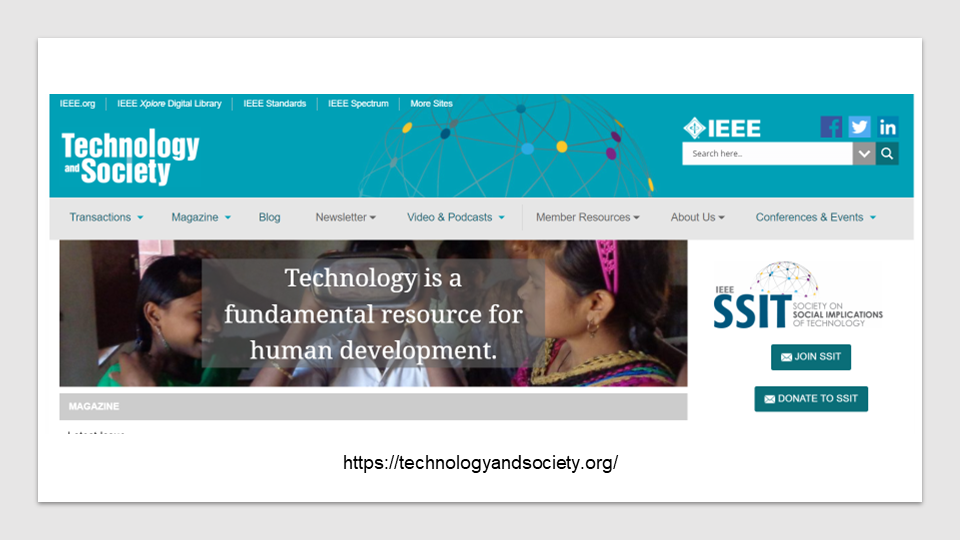
i. Consider submitting your research to a future ISTAS conference, or IEEESSIT publication. To find out more visit www.technologyandsociety.org
Activity Three – Download five significant sources of evidence on global perspectives on “public interest technology”.
1. Familiarize yourself with peer reviewed academic literature by visiting the following 5 web sites and downloading the full proceedings and special issues dedicated to Public Interest Technology.
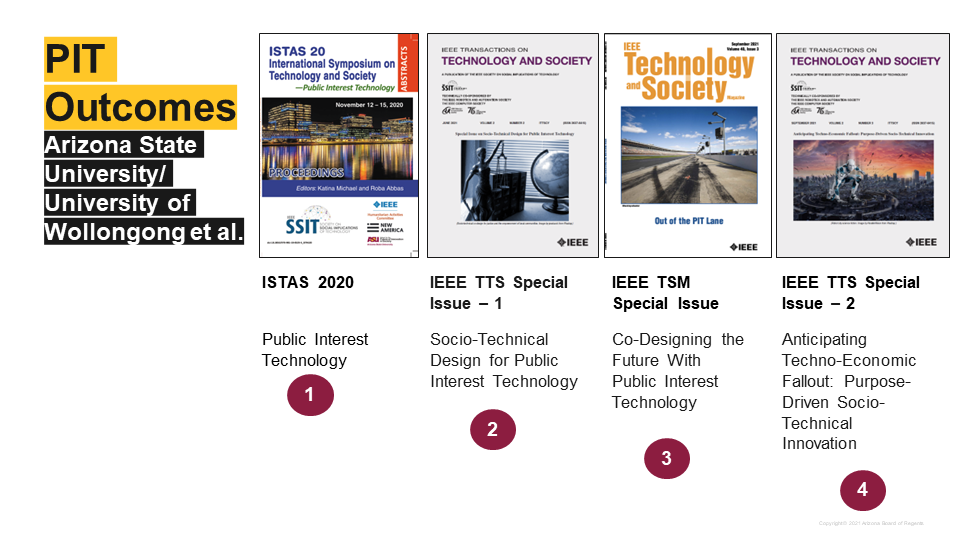
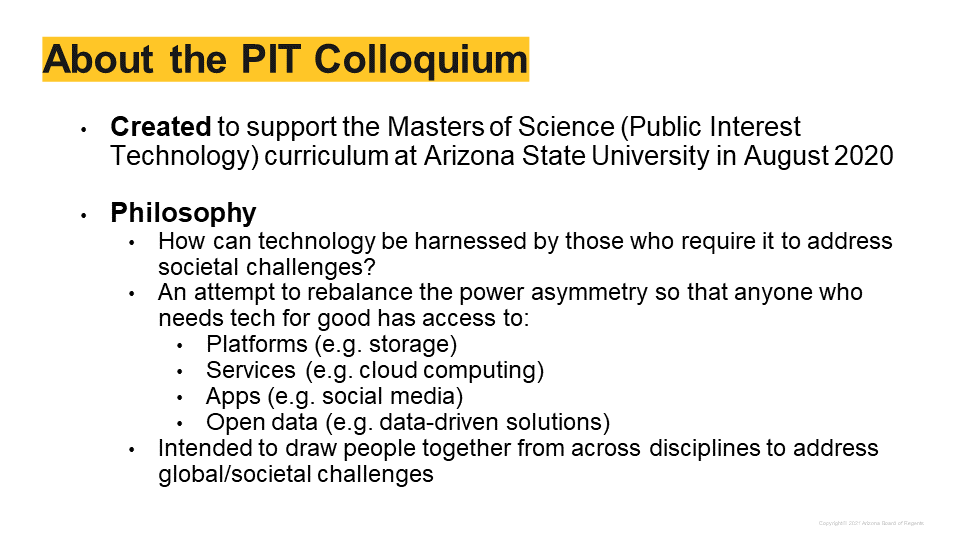
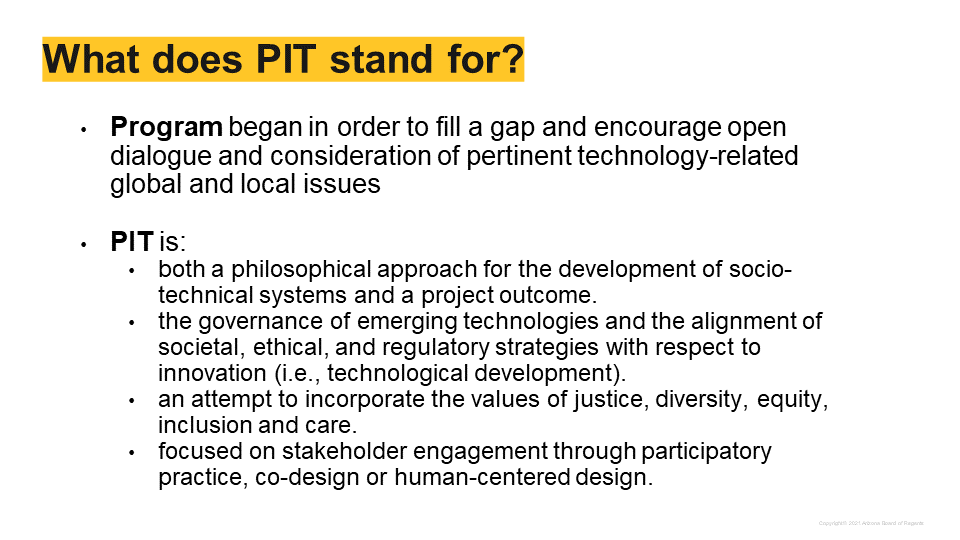
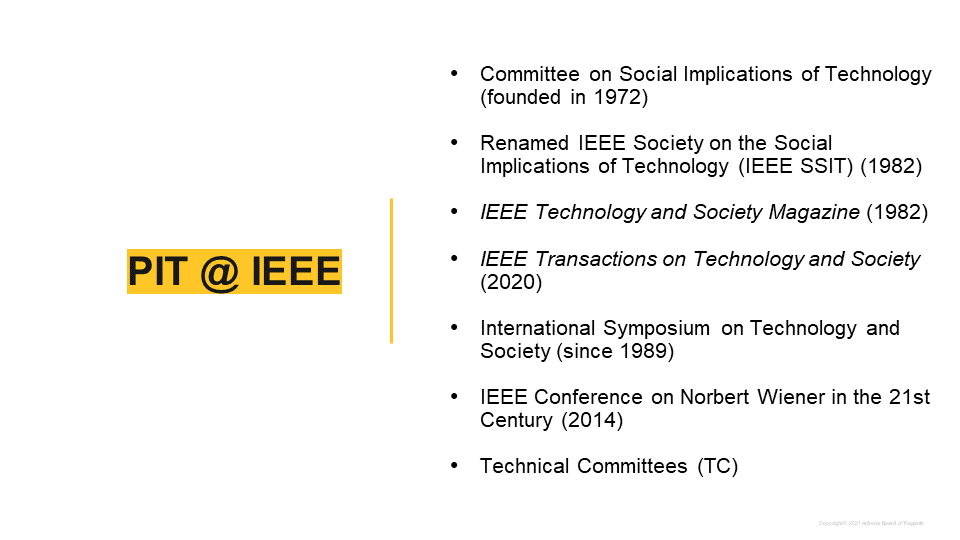
2. In 2020, Arizona State University virtually hosted the International Symposium on Technology and Society from Tempe, Arizona, dedicated to the theme of PIT. The original call for papers can be found here. The following resources represent outcomes from ISTAS20 (a & b) and special issues that were published in 2021 linked to ISTAS20 (c-e).
a. International Symposium on Technology and Society (ISTAS20) – Full conference abstracts on “Public Interest Technology”
b. International Symposium on Technology and Society (ISTAS20) - Full conference peer reviewed proceedings on “Public Interest Technology”
c. IEEE Transactions on Technology and Society (June 2021) – Special issue on “Socio-Technical Design for Public Interest Technology”
d. IEEE Technology and Society Magazine (September 2021) - Special issue on “Co-Designing the Future with Public Interest Technology”
e. IEEE Transactions on Technology and Society (September 2021) – “Anticipating Techno-Economic Fallout: Purpose-Driven Socio-Technical Innovation”
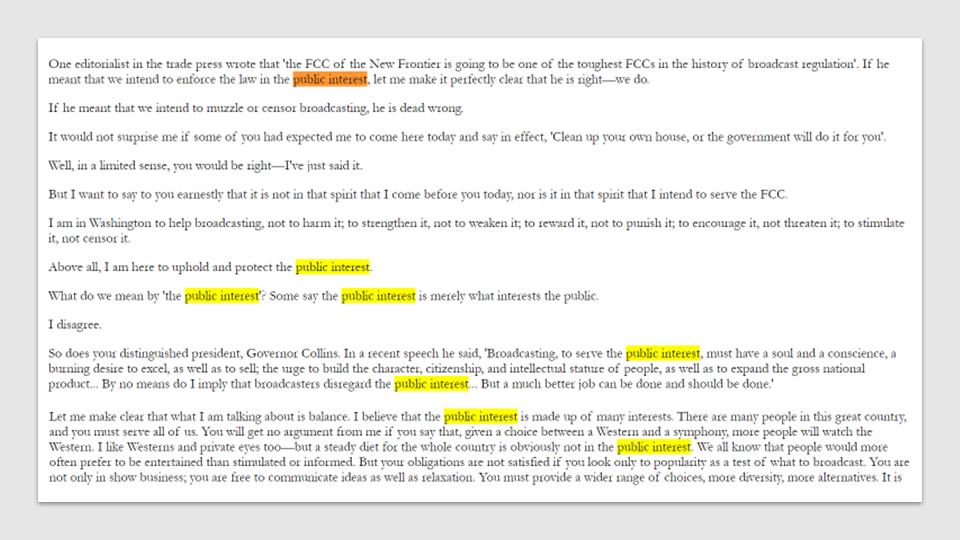
Activity Four – Access a speech by former U.S. Federal Communications Commission (FCC) chairman, Newton N. Minow on “Television and the Public Interest” delivered to the National Association of Broadcasters in 1961. Listen to the audio or read the speech online in full.
1. Compare and contrast Minow’s speech on television broadcasting from 1961 with his article about the Internet fifty years later for The Atlantic, titled “A Vaster Wasteland” (2011).
2. Record in a single CANVAS discussion post 2-3 discussion points you might share with the group at large on reflecting on either article or both together (max. 150 words).
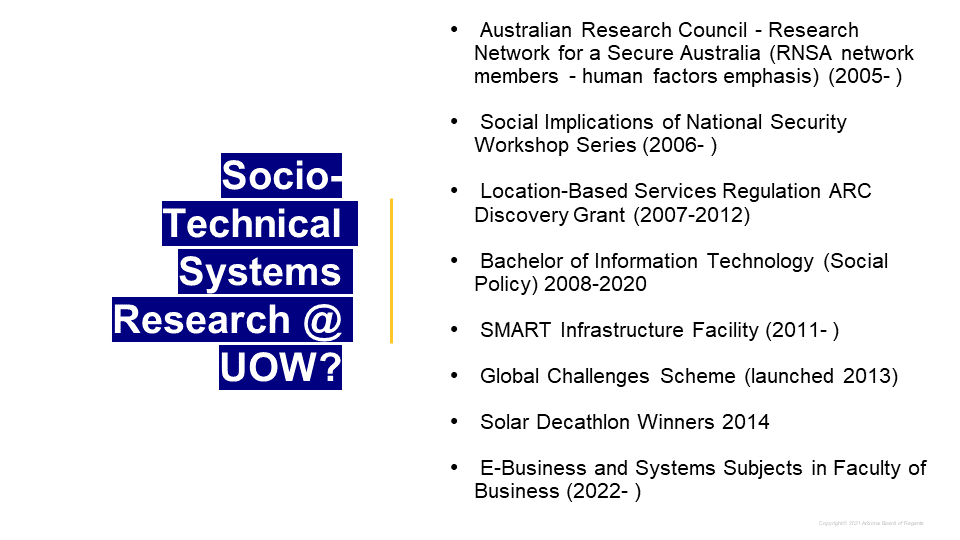
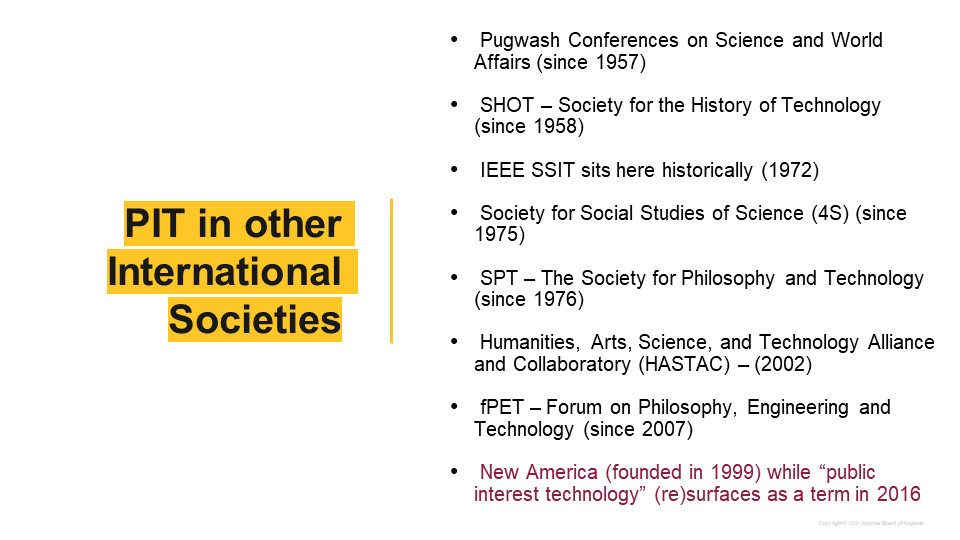
Activity Five – There have been many Societies that have been established since 1957 addressing broad areas of technology, society, regulation and ethics, and from a variety of disciplines (i.e., multidisciplinary). Review the following Society web sites (with a focus on history, philosophy, the humanities and the arts, social sciences, science and technology) and answer the questions below:
· Pugwash Conferences on Science and World Affairs (since 1957)
· SHOT – Society for the History of Technology (since 1958)
· IEEE SSIT – IEEE Society on the Social Implications of Technology (1972)
· 4S - Society for Social Studies of Science (4S) (since 1975)
· SPT – The Society for Philosophy and Technology (since 1976)
· HASTAC - Humanities, Arts, Science, and Technology Alliance and Collaboratory (HASTAC) – (2002)
· fPET – Forum on Philosophy, Engineering and Technology (since 2007)
1. Which of the Society names above were you not aware of? Which do you think you might investigate further?
2. Which Society names are missing that relate to PIT in some way, that you are a part of? Name the Society/ies in a discussion post on CANVAS and provide a URL and describe how it relates to PIT (max. 150 words).
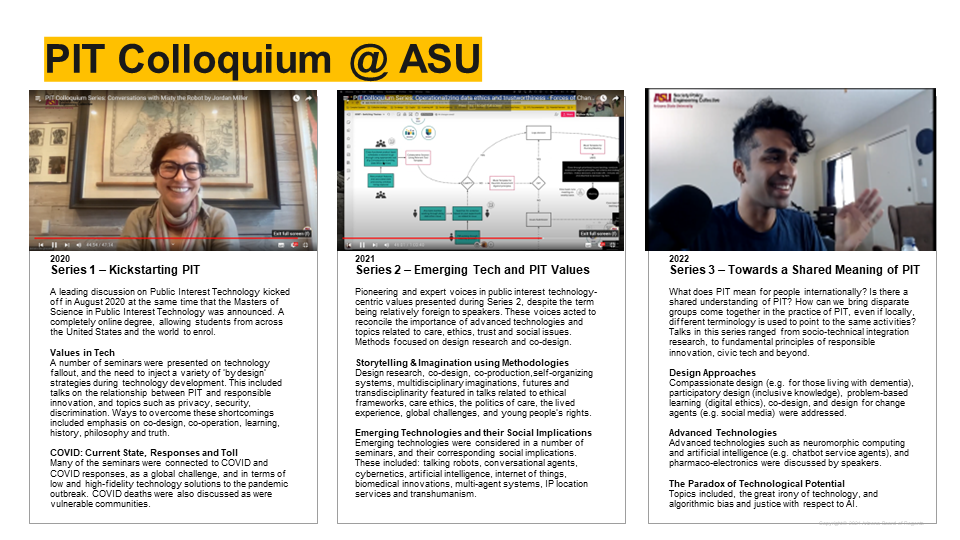
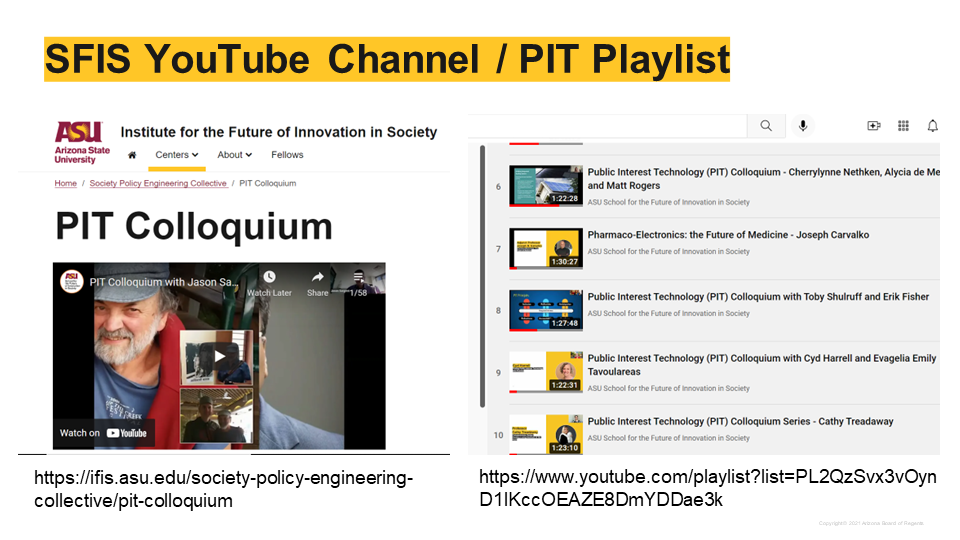
Activity Six - Visit Arizona State University’s PIT Colloquium Series YouTube Playlist
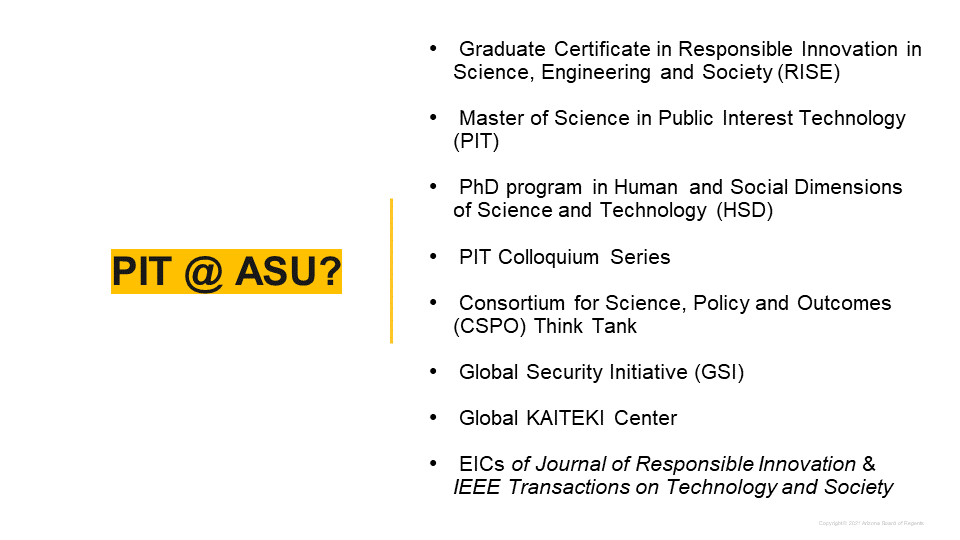
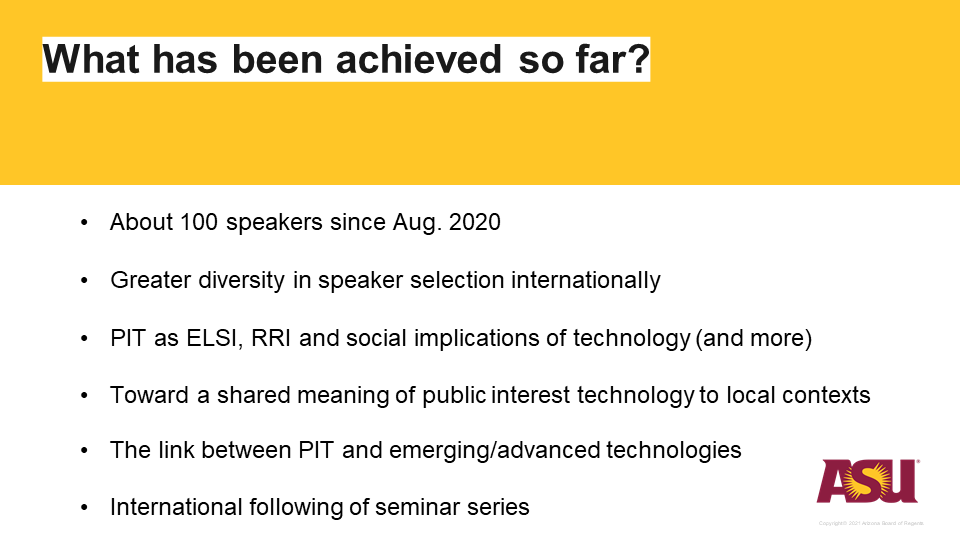
When Arizona State University launched its Master of Science in Public Interest Technology degree in 2020, it also launched the PIT Colloquium series. Resources from the PIT Colloquium Series bring together researchers from across the world to speak about PIT.
· Series 1 (2020) – Kickstarting PIT
· Series 2 (2021) – Emerging Tech and PIT Values
· Series 3 (2022) – Towards a Shared Meaning of PIT
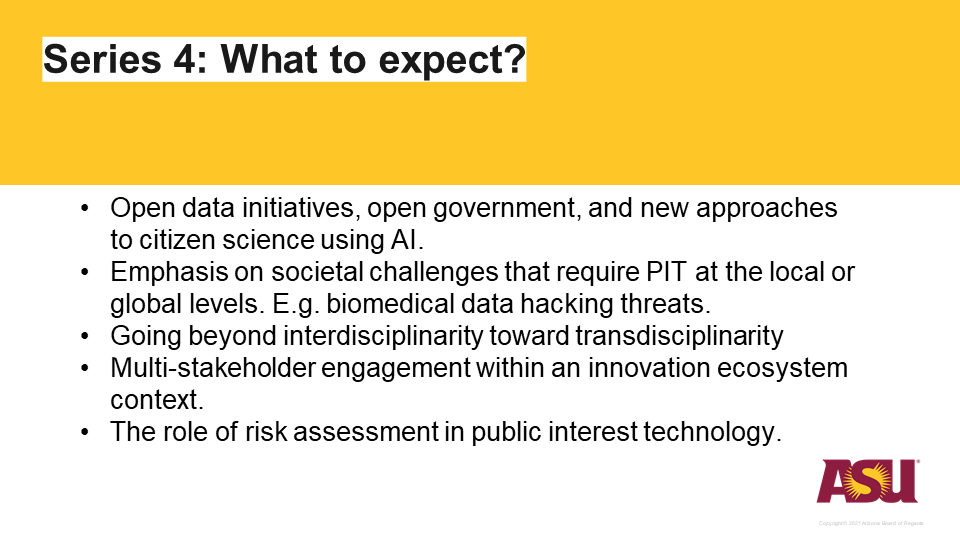
· Series 4 (2022) – PIT & Transdisciplinarity – begins August 30th
1. Browse the ASU PIT Colloquium YouTube playlist.
2. Skim watch a single episode.
3. What did you learn that you did not previously know in the context of PIT?
Activity Seven – Define the following terms using academic literature.
· Social implications of technology (SIT)
· Ethical, Legal & Social Implications/Aspects (ELSI)/(ELSA)
· Responsible Research and Innovation (RRI)
· Public Interest Technology (PIT)
1. Where were the four terms individually founded and in what context?
2. What do the four terms have in common?
3. How do the four terms differ?
Activity Eight – Public interest technology is ______________ :
a. A social movement
b. A philosophical approach to technological innovation
c. An outcome of a human-centered design process
d. A process of participation toward stakeholder empowerment
e. Has diversity, equity and inclusion (DEI) at the very heart of technology development
f. A roadmap for design, development and delivery of a digital service
g. Something that was defined by New America and is only applicable to the U.S. market
h. A neologism that has a historical root in SIT, ELSI, RRI or other areas of research
i. About reducing marginalization by ensuring that technology does not negatively impact under-represented minorities
j. Only about access to technology for third sector organizations, such as NGOs and NfPs
k. All of the above
1. Reflect on each of the possible answers above.
2. Which of the possible answers a)-j) do you have an affinity with?
3. Come up with your own working definition of PIT and record it in a discussion post on CANVAS (max. 50 words).
Activity Nine – How does your institution integrate PIT? Can you locate examples of PIT-related courses/research projects/initiatives? Can you identify any transdisciplinary ties?
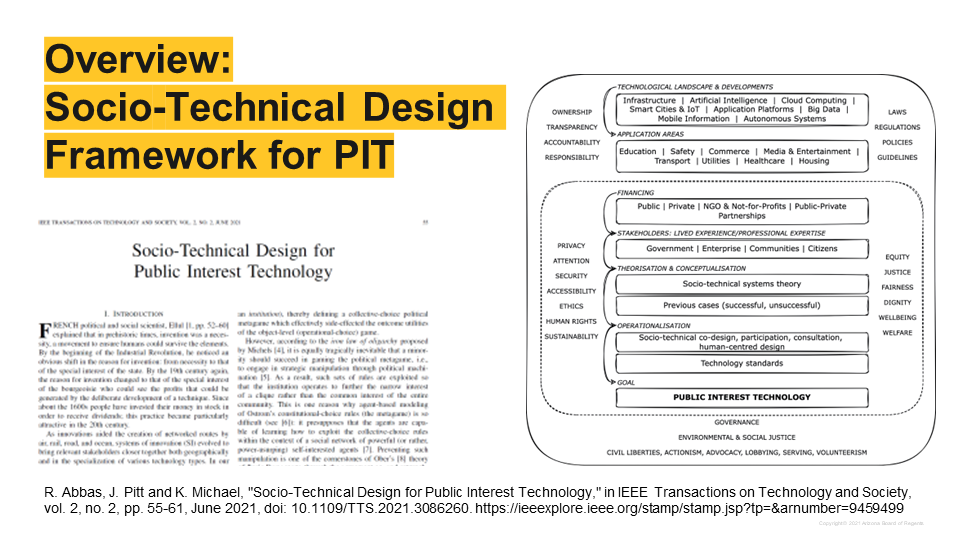
Activity Ten – Download and read the following PIT editorial: R. Abbas, J. Pitt and K. Michael, "Socio-Technical Design for Public Interest Technology," in IEEE Transactions on Technology and Society, vol. 2, no. 2, pp. 55-61, June 2021, doi: 10.1109/TTS.2021.3086260.
1. Go to Figure 1 (p. 58) titled: “PIT complex open socio-technical ecosystem”.
2. In your own words describe the different parts of the diagram: the dimensions, flows, and parameters. Critically reflect on the amalgamation of various PIT building blocks into this single diagram. Record your response in a CANVAS post (max. 200 words).
Citation: Katina Michael and Roba Abbas, 13 June 2022, "Toward a Global Understanding of Public Interest Technology", New America Public Interest Technology (PIT) Summer Speaker Series, https://youtu.be/VkKweqZVLek