Machine Learning, Convergence Digitalization, and the Concentration of Power
Citation: R. Abbas, K. Michael, M. G. Michael, C. Perakslis and J. Pitt, "Machine Learning, Convergence Digitalization, and the Concentration of Power: Enslavement by Design Using Techno-Biological Behaviors," in IEEE Transactions on Technology and Society, vol. 3, no. 2, pp. 76-88, June 2022, doi: 10.1109/TTS.2022.3179756.

Image by cottonbro studio
Abstract
The dawn of electronic business (e-business) changed the way that individuals interact not only with one another but also with the companies that supply them with goods and services, as well as with the government agencies on which they depend for welfare and security. We can speak of “digital business” as the (re)design or (re)definition of new or existing business models, and as the creation of increased flows and connectivity between customers and other entities, both internal and external to the business, among other defining features. In this editorial, we explore three interrelated levels of sociological and economic practice—micro, meso, and macro—as they pertain to advances in digital business [1], with the intention of revealing hidden dynamics and implications resulting from interactions between these levels. At the micro level, we consider the individual user. This can be interpreted as the “self” or the individual level (e.g., a person or person in singular interaction with another). At the meso level, we reflect on technological systems (e.g., information systems, biometrics, and data analysis through machine learning (ML), for the purposes of this article). This level is about groups and how they communicate in building knowledge, with a particular emphasis on what that knowledge means. The groups are made up of organizations, whether business or government agencies, or other collectives. And finally, at the macro level, we consider the societal context inclusive of communities (e.g., local/regional/national or international levels).
SECTION I.
Techno-Biological Interactions at the Micro, Meso, and Macro Levels
The dawn of electronic business (e-business) changed the way that individuals interact not only with one another but also with the companies that supply them with goods and services, as well as with the government agencies on which they depend for welfare and security. We can speak of “digital business” as the (re)design or (re)definition of new or existing business models, and as the creation of increased flows and connectivity between customers and other entities, both internal and external to the business, among other defining features. In this editorial, we explore three interrelated levels of sociological and economic practice—micro, meso, and macro—as they pertain to advances in digital business [1], with the intention of revealing hidden dynamics and implications resulting from interactions between these levels. At the micro level, we consider the individual user. This can be interpreted as the “self” or the individual level (e.g., a person or person in singular interaction with another). At the meso level, we reflect on technological systems (e.g., information systems, biometrics, and data analysis through machine learning (ML), for the purposes of this article). This level is about groups and how they communicate in building knowledge, with a particular emphasis on what that knowledge means. The groups are made up of organizations, whether business or government agencies, or other collectives. And finally, at the macro level, we consider the societal context inclusive of communities (e.g., local/regional/national or international levels).
We attempt to shed light on flows between stakeholders as they interconnect from micro through to meso and finally to macro levels [2]. A note for readers to expect changes in the active voice as we transition between the various levels emphasizing different stakeholder perspectives, such as social, technical, organizational, institutional, and economic [3]. Additionally, there is a deliberate fluidity in each level, in the exemplified narrative in the body of this work, as we consider the interrelationships and flows between different stakeholder types. Fundamentally, we are seeking to understand who we are (cognizant of stakeholder roles and responsibilities), what drives technology diffusion and how technology is being used, what are the consequences of this usage, and how revealing answers to these questions may ensure more ethical and accountable technology systems governed with stakeholder values in mind [4].
A. Micro Level (The Individual)
The micro level refers to an individual and how they navigate their everyday life through a variety of contexts. Increasingly, people are sharing information, particularly of a personal nature, using online applications, services, and platforms. Where it was once possible, to live an “off-the-grid” life, today the Internet has changed the way people interact with almost all providers. Digital footprints and digital chronicles are generated as we interact with different entities for social security, medical services, education, utilities, entertainment services, retail services, and more. At the micro level, we are concerned with how people balance their individual profiles when interacting with government (as citizens), or business (as consumers), or with one another (as people). Offered data can range in sensitivity, from financial data for tax purposes and health-related data for government services, right through to the posting of reviews, or of images and videos taken in a private context and made “public” on a social media platform.
Our modern mass condition of being kept in a continuous “busy state” leaves little time for individuals to reflect on higher level interactions, outside our immediate home or workplace, or indeed, beyond the micro level. The lowest common denominator is the individual who has likes and dislikes, particular traits, and characteristics. Each interaction presupposes a certain level of freedom dictated by the human right of expression [5]. The individual gathers with other human beings and together they produce knowledge within the confines of what is known as a family unit or friendship group, or even workplace team, and these can be sustained or can diminish as a result of a given set of circumstances (e.g., one’s right to opt-in or opt-out). When individuals are organized to produce material objects or are engaged in the provisioning of services for consumption, then they are known as workers/employees of an organization. Building and toiling for the creation of electronic goods and services that will perpetuate some form of addictive behavior, for example, lock-in, and what might best be described as enslavement [6], seems like a counter-intuitive process; particularly when the developers of the technology (usually operational staff of BigTech corporations) can recognize that they themselves can become subject to the very designs they have contributed [7].
B. Meso Level (Technology Systems, Groups, and the Production of Knowledge)
As data is processed by individual businesses or government agencies through information systems using given policies, knowledge is garnered not only about the way individuals do things in order to ensure customer retention but also how groups may form and cooperate in sharing opinions, ideological positions, and cultural norms and values. For example, how the interactions between groups online may be considered meaningful in a way that might be able to inform government policy, and other decisions relevant to an industry context may be clarified. Ways of doing occur mostly at the meso level, extrapolating how humans communicate through systems of interaction. Sometimes the data is aggregated to reveal patterns of behavior among various groups of people, and other times the data forms training datasets for ML applications, or even is garnered for segmentation purposes in the context of relationship marketing. But the groups that form to drive these digital interactions, predominantly in industry, are the ones that the meso level is primarily concerned with in the production of knowledge. Groups are made up of individuals in multilevel interactions, beyond one-to-one interaction between friends, or family members. These are not to be confused with society at large that may relate to a given economic system, ideological position, religious affiliation, cultural background, or broader community context.
At the meso level are social, logical, and physical networks that bring individuals together. Social networking applications entice individuals to communicate in groups to share information toward knowledge creation. However, social media, fueled by the advertising model on which it was built, can act to exacerbate neurobiological tendencies toward repetitious behaviors and even time wasting, through excessive scrolling or even doomscrolling. When groups are engaged in activities that encourage (deliberately or otherwise) addiction, the underlying power ties can become impenetrable given the pressure or influence of peers. Additionally, there are online addictions that are further reinforced by offline influences (e.g., gambling addiction in the physical world that may spur on impulse app-based gambling) [8].
C. Macro Level (Society, Local Community, Regional, National, and International Scale)
At the macro level, we are concerned with the societal context at the broadest level and at various geographic scales. Communities exist within societies, and while “community” is a much narrower concept than “society,” it allows for an understanding at the local, regional, national, and international levels. Additionally, we can refer to society as consisting of people that congregate around shared beliefs and cultural norms. In other words: how might the local impact the global? And how might our understanding of the meso level where organizations operate (whether business or government), impact the micro-processes of the individual, and what might the commensurate macro-social consequences be for society at large [9].
Finally, at the macro level, we center on the societal shifts and cultural impacts influenced by both BigTech Corporations that operate nationally and transnationally, and publicly organized technology systems administered by government agencies that maintain a broad reach. At this level, we are not concerned with the technology systems per se or the organizations that build or host them, but with the implications of what they produce in terms of macro-social dynamics. Technology at the meso level, which may be used to administer private interests or public interests, is politically charged with major consequences for society at large, depending on how the information collected and knowledge generated is applied [10]. Often these mega-scale platforms are under scrutiny beyond business analytics, taking on the form of mass surveillance mechanisms, and stratifying clusters of people based on sentiment and/or other mechanisms [11]. Thus, the responses, reviews, and questions people may impart without reservation, in some cases to access vital support services or to purchase goods or be engaged in play, may be used in retrospective ways beyond the primary use or intended purpose. The gathered data, even when consented to by the customer, can be used in a descriptive, diagnostic, predictive, and prescriptive manner [12]. We refer to the fallout from these kinds of technology systems on society at large as a process of enslavement by design [13]. This fallout may only be remedied with commensurate policy and regulatory responses at an interorganizational, or state/national governmental scale [14].
In the forthcoming sections of this editorial, we present a narrative of the end-to-end interconnectivity and inter-relatedness of the micro–meso–macro levels as they pertain to individuals, technology systems and organizations, and societal consequences (Fig. 1). We particularly note, the increasingly changing expectations of the assumed techno-literate community, how when aggregated, volunteered/petitioned data is being used to reveal patterns of group behavior, and finally, the explicit links to the ways in which this gathered information might be used, deliberately or otherwise, in a revolving lifecycle of enslavement by entities with commensurate power.
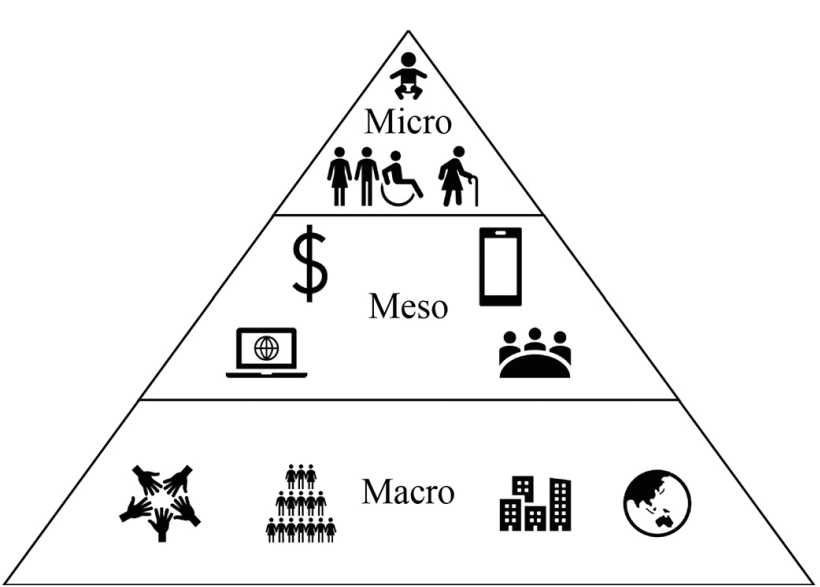
Fig. 1. Micro–meso–macro levels (individuals, groups, and society).
SECTION II.
Micro-Level: “Customer Work” in the Guise of Self-Service
In definition, we should not conflate roles, and reduce civic rights to consumer rights; nor should we confuse citizen expectations with consumer expectations (e.g., a student is not a “customer”). An individual takes on the role of a consumer when dealing with business and a citizen when dealing with government. Since the inception of the World Wide Web, the self-service online business model has replaced the traditional “bricks and mortar” model toward “clicks only” or “clicks and mortar” models [15]. Self-service places the responsibility on the end user to interact through online portals and platforms, at times without the ability to visit a physical store to complete a transaction; thus, the end-to-end process of buying or selling is conducted wholly online [16]. In the context of accessing a government service, the digital divide poses new problems. This is especially true of those who are not computer literate, who do not own a connected computer, and do not have access to broadband. Essentially, they find themselves excluded from civic participation, even for that which is rightfully theirs.
Yet with the rise of digital welfare, digital supply chains, and digital communications, have also come increasing pressures on end users to take on the role and responsibility of a pseudo-customer service staff member. We can refer to this as “customer work,” that is, the inclusion of the end user in invisible labor that goes unrecognized. Whereas once it was possible to ask a human at the checkout for help, online portals increasingly point end users to frequently asked questions (FAQs) webpages, to interaction with a chatbot, or to download a one-stop-shop app. Many large online retailers only allow customers to speak directly with customer representatives as a last resort. The same applies for certain government agencies responsible for digital welfare applications, where citizens may be referred to websites, artificial intelligence (AI) assistants, dedicated apps, and other portals before they are eventually redirected to the appropriate human contact [17]. People calling for help using a telephone are directed through prompts, which results in either long wait times or failure to lead to a conversation with a human. While these may be perceived as efficiency gains for business and government entities, productivity losses are surely being felt by the end user, as well as increasing dissatisfaction given the time taken to resolve a problem through online services that do not maintain an acceptable quality of service (QoS) by keeping a human “in the loop.”
A. Vulnerable Populations
People who are vulnerable may feel overwhelmed by the disintermediated processes that ironically go by the general name of “customer support” or self-service [18]. The vulnerable populations who may find it difficult to communicate with online systems, include older persons, those who have a hearing impairment, those who do not own personal computing devices, those with mobility issues who cannot travel to a public computer, those for whom the official local language is not their first language, those who speak the official language with a nontraditional accent, those living with mental health conditions, and more. They are usually identified in “groups.” For these individuals, access to online services is an issue on multiple levels and may cause the vast majority to opt-out and forego even beneficial government and other commercial services because enrolment and service delivery is completed wholly online. The burden of evidence required to prove one’s circumstances is too much to cope with for a great number of these vulnerable persons [19]. For some people, the stress of interacting within an online environment is overwhelming, and though they might be eligible for government rebates, they would much rather retain their peace of mind than consider the opportunity cost, even if it is monetary. Even such technologies as biometrics, which are deployed for the purpose of providing easier access and usability for humans, often fall short relative to the needs of more vulnerable populations, such as those with accessibility restrictions [20].
SECTION III.
Meso: Machine Learning, Marketing, and Biologicalization-Based Sales
Data continues to be collected at increasing rates, particularly in the cloud [21]. With this plethora of data, has come commensurate advances in analytical approaches. As big datasets have been amassed by corporate entities and government agencies, machine learning may be used to automatically detect meaningful patterns and trends in large troves of customer and citizen data. ML can be considered a subset of AI; it relies on statistical algorithms that can dynamically adapt as they are trained. The more data that is provided to the ML algorithm, the more it can improve without directed and explicit programming. For example, the majority of music and video streaming services rely on ML to recommend appropriate content based on user queries via search engines, while co-locating the most profitable advertisements alongside the search results. ML is also the process that is used to automatically detect and verify a face in a biometric image search; an individual’s voice commands for Internet of Things devices; or it can even aid in the real-time navigation of a self-driving car in terms of the most appropriate route to take during a busy hour of traffic. Companies are embracing the potent use of biometrics of their consumers to instigate (or manipulate) behaviors [22].
As customers make physical connections via a variety of digital conduits, their biological behaviors are being scrutinized at tens of thousands of longitudinal data points, if not hundreds of thousands of discrete interactions [23]. Keystrokes, likes and dislikes, eyeball movements, text-based microblogging, audio, image, and even video analysis can all be used to drive sales [24]. Storing data is costly, and so organizations (business or government) have sought to monetize this new-found capability as a competitive advantage. It is at this meso level that technology systems can be used to discover group sentiment and dynamics. From automakers to casino operators, to show producers, to gaming through the collection of physiological signals through direct engagement [25], some companies are leveraging bio-surveillance (e.g., facial recognition, facial emotion recognition, etc.) to capture, understand, and anticipate the “needs” of their customers. Although ethical issues arise with biometrics-as-a-service (BaaS), the global BaaS market is expected to reach U.S. $ 6.41B and the overall global biometrics market to reach in excess of U.S. $ 99B by 2027 [26], [27]. Data scientists claim that big data can reveal patterns that were previously hidden from view. To carry the analogy further, big data aims to reconstruct the very personal, precisely customized, and hitherto private thought processes of a consumer. Big data explores details of the relationship between people’s intent and actual behavior and how people interact with objects around them [28].
A. Machine Learning and Positive and Negative Uses
The ML algorithms are classified into three categories: 1) supervised (task-driven); 2) unsupervised (data-driven); and 3) reinforcement learning (learning from errors) [29]. Additionally, there is deep learning (DL) distinct in its ability to scrutinize data sets using more sophisticated filtering techniques. DL techniques include convolutional, recurrent, and recursive neural network approaches. When applied to the field of marketing, these capabilities are alleged to disclose patterns of customer behavior that were previously invisible when scrutinized by traditional algorithms. In the practice of marketing, ML is responsible for shifting the focus away from mass market communications to the customer (e.g., traditional free-to-air television channel) to multichannel micro communications relevant to a single individual (i.e., relationship marketing). Digital marketing has acted to bring together a variety of online and offline channels (web site, pay-per-click, social media, email and newsletter marketing, content marketing and search engine optimization, and word of mouth marketing) using multimessaging options.
There have been many positive uses of ML in marketing [30], such as in customer relationship management. For example, ML now can play a role in the qualification of customer leads, in data-driven optimization campaigns using a variety of channels depending on customer preferences, the reduction in external customer churn rates using ML-based stickiness drivers, more focused marketing strategies and campaigns leading to a reduction in marketing costs and thus improved return on investment (ROI), and more accurate market forecasting and the derivation of expected sales targets [31]. But we have also seen some fallout by the use of ML toward decision making focused on the real-time response to customer engagement driven by the goals of profit maximization. ML has particularly received negative reviews with respect to customer-facing applications, like chatbots in customer service in lieu of human beings in vital aspects of customer care, the rise of fabricated increases in social sharing on social media (particularly fake follower brand endorsements and promotions bordering on disinformation scams [32]), microtargeted newsletter content that is highly personalized drawing on data sharing without the explicit consent of the customer, blogging environments allowing for comment and then automatic curation, recreation and redistribution of that content, web analytic path route tracking and unique price adjustment for products or services, and contrived search engine advertising.
Digital marketers now have tools at their disposal that can monitor individual sentiment. This has made very sophisticated recommender systems possible, by analyzing individual interests, likes and dislikes, and transaction level data collected from customer relationship touch points. Triggerable voice assistants can reach out to human beings directly (machine-to-human), literally calling on them via what is known as nudge marketing [33]. This is a strategic application mix of marketing messaging that will encourage the desired behavior by a customer by appealing to their psychology toward the browsing of existing or new products and services, inevitably leading to physical online-based interactions. ML can detect patterns of behavior in end users revealing the right day of the week, and time, to engage individual buyers during the buying cycle, from search to decision and purchase, with precision and successful conversion. When this data is shared for the purposes of cross-selling synergies, for example, in the case of subsidiaries of a retail parent company, without the awareness of the customer it can be deemed as an unfair exchange between sellers and buyer. This is particularly the case with multivendor shopping mall experiences, or large-scale multiproduct online sellers that have a deep profile of their customers, demonstrating the skewed relationship at times, between stakeholders at the meso level and the individual at the micro level.
Online entities that customers engage with are able to collect digital data trails systematically through the use of cookies, and other more overt human–computer interactions (e.g., liking a product or writing a review). Customers are not always cognizant that their clicks on a web site or online “path-to-purchase” are being scrutinized by online sellers, potentially creating a power imbalance of seller over buyer. Impulse buying habits are difficult to break, and it is known that 20% of customers are generally responsible for about 80% of purchases. This refers to the Pareto principle, otherwise known as the 80/20 rule, which is well known in the practice of selling [34]. Large online stores will target the top 20% of customers based on spend [35], to extract even more high-value sales, while still focusing on low-value sales for the rest of the customer base, in the hope of converting them to higher value customers in the long run through specific sales campaigns. Locking these customers into repeat sales by harnessing data analytics raises questions about the intimate knowledge that some online sellers have about their customers, and the potential for exploitation based on this knowledge. This is when systems and actors functioning at the meso level need to be cognizant of their impact on individuals at the micro level.
B. Convergence Digitalization and Persuasive Design
The process of decorporealization of the human as bits of data traces left here and there [36] has been facilitated by convergence digitalization. Convergence [21] can occur at the device level, the application level, and even the data level, providing an entity with granular analytics capabilities that can be turned into intelligence [37]. Entities managing large data warehouses using powerful relational database management systems on the cloud are able to take advantage of big data capabilities. This has led to the likelihood that organizations may well know customers and their buying habits, better than customers know them themselves [38], [39]. Convergence digitalization can aid in driving product development using data-driven innovation processes [40], but can also have the counter effect of locking customers in via deliberate predatory goods and services and/or practices incorporated through fundamental behavioral economics strategies implemented using persuasive design.
Knowing when someone is likely to pick up their smartphone, how they will interact on a given web site and spend their money, and thereafter communicate their opinions to others on a social media platform, can lead to repetitive behaviors in customers with a company’s goal to study patterns in order to encourage customer spend. As Cialdini has rightly said, this is a form of pre-suasion in influence [41], and when we take the analogy further, we automate the ability to conduct momentary shifts of a customer’s attention long enough to trigger a response, and then hope to make that response durable through repeat visits and actions. This is certainly not persuasive design as it was meant when it was developed as a concept to aid in guiding the learner in personalized instruction [42]. In pre-suasion design, we use psychology to set up situations that predispose people toward subsequent choices. If individuals become the target of big data analytics, instead of the purported aggregate analysis that is supposed to take place, the predatory and invasive micro-targeting conducted by self-serving companies for manipulation purposes could make individuals subject to physiological dysregulation. When humans suffer physiological dysregulation too often and/or for too long, they can potentially be cast into a state of allostatic load (A-Load) [43].
C. Allostatic Load
A-Load is an index of the biological wear-and-tear on the physiology of a human due to the chronic over-action of the sympathetic nervous system (i.e., flight, fright, and freeze response) [44]. Without appropriate buffers to offset this persistently heightened state of alertness, individuals can be cast into this maladaptive state of A-Load. The consequences of A-Load can include loss of resilience, anxiety, depression, social withdrawal, physical illnesses, and emotional fragility, among other physical, psycho-social, psycho-spiritual, and psychological distresses [45]–[48]. More generally, A-Load can be defined as, “a number of circumstances in which allostatic systems may either be overstimulated or not perform normally, and this condition has been termed … the price of adaptation” [49, p. 33]. As we adapt to less human-to-human interaction due to the aforementioned online environments, we are likely to enjoy less social contact. Social connections and/or our interpretation of our social environs are correlated to regulating the stress response system [50]–[52]. Frequent use of digital technologies has been shown to impair brain functioning, reduce attention, disrupt sleep, and reduce social and emotional intelligence [53]. Such technologies as social media sites can induce problematic levels of cortisol (i.e., the stress hormone), increase perceived stress, or weaken cortisol recovery [54]–[56]. Researchers [57] are exploring the relationship between A-Load and technological overuse as a result of convergence digitalization. Without the appropriate daily buffers inserted in our lives to offset harmfully persistent heightened states of alertness due to technology usage, physiological enervation, defined here as the weakening of the vitality of the mind-body functioning, is likely to be the consequence.
Repeat visits, repeat purchasing of particular products, and then the on-selling of additional complementary goods and services can impact an individual’s disposable income, and combined household income. Impulse buying is another form of purchasing that is triggered by discount offers and the oft deceptive selling practice [58], such as giving something away for “free” (otherwise known as “bait and switch”), enticing the consumer to buy suddenly when they had no initial intention to do so. When a consumer is in this flow state [59], it becomes increasingly difficult for them to determine a cap on spending; they are in fact “feeling” and not “thinking” [60].
D. Physiological Enervation and Online Addictions—Who or What Is in Control?
Online platforms take anything but physical cash, and the very act of not physically parting with dollars and coins, can make the action of purchasing over the Internet seem invisible and without direct consequences. Additionally, survey results show shoppers (76% in the U.S., 72% in the U.K., 73% in Brazil, and 82% in China) report being more excited to receive online purchases in the mail than compared with levels of excitement when buying things in the traditional shopping environs of bricks-and-mortar [61]. This might be because as shoppers experience anticipation (e.g., look forward to the arrival of the package ordered online) dopamine is released in the brain due to an expectation of reward. The act of browsing an online store means that dopamine-induced decision making might allow for more susceptibility to overspending. Furthermore, a larger online shopping mall that is significantly diversified in its range of goods and services can result in indirect expenses accrued by the consumer in the buying process, due to the time taken scrolling through possible purchases. The more choices people have, the less satisfied they may be with the actual product they have purchased or are considering purchasing [62]. Unfortunately, these overloaded online shopping experiences can also induce consumer stress.
Consumer stress, or the perceived stress or strain encountered by individuals in their consumption lives, can be categorized as stress around choices (e.g., too many brands, comparisons across brands, and unclear attributes or terms), time pressures (e.g., the time needed to make a good decision), and prioritization (e.g., what to buy/do first) [63]. The commercial persuasion of self-interested companies offering algorithmic recommendations can also make consumers feel observed, thereby decreasing the consumers’ perceived personal privacy; this has been reported to evoke feelings of threat to the customer’s autonomy [64]–[66]. The feeling of being watched (e.g., surveilled) has also been linked to increases in strain and stress on humans [67], [68]. Many people who are living with physiological enervation are likely to be prone to making purchasing errors in product choices, and to be particularly prone to buying services that are perceived as too alluring to forego. If physiological enervated individuals are more susceptible to compulsion or addiction, retail therapy, which temporarily makes individuals less sad in the short term [69], can easily shift into oniomania (i.e., shopping addiction), compulsive buying disorder (CBD), buying-shopping disorder (BSD), or low-grade pathological buying over the long term [70], [71]. Individuals who are physiologically enervated can also suffer with brain fog; one’s decision-making capability is impaired, and logic is overpowered by a variety of factors dependent on the context, such as brand, prestige, status, and the illusory feeling of the end user being “in control,” when they are anything but in control of their actions and behaviors [71]. Purchasing through the clicking of buttons on a web page can also mimic the customer-instore interactive experience, providing short bursts of dopamine in the prefrontal cortex, as if a feedback loop was in progress. When someone is entranced by such a feedback loop, breaking it is difficult; human interaction is foregone in favor of the machine that can provide faster response times.
Gamifying the purchasing process is a key way to bolster profits. Gamification is the strategic attempt to enhance consumer experiences in order to motivate and engage buyers through the integration of gaming mechanisms and techniques to create an absorbing experience and encourage participation and interaction; this can include leaderboards, badges, and competitions with prizes to be earned. Researchers [72]–[74] purport gamification can help meet customers’ psychological needs; this is correlated with positively affecting online purchase intention. We can say that this process of engagement in e-business has been gamified; that the process of browsing, selecting, and purchasing is gamified [73]. But the truth is that the end user themselves can often be “gamed” and overpowered, oblivious to the goings-on of the fundamental process in the psychology of the stimulus–response theory [75]. When an individual may be predisposed to addictive tendencies, they become easier prey to such revolving systems [76]. In the field of psychology, there are two broad models of stimulus, one is the classical conditioning approach where the stimulus occurs immediately before the response, and the other is the operant conditioning approach where the stimulus occurs right after the response [77]. In shaping operant conditioning, we reward successive approximations of the target behavior “as it happens,” deconstructing the process of buying from the moment an end user appears on the web site, till they leave it. For example, in online selling, the retailer might reward the online shopper with a VIP membership, a discount code, a short-term offer, or a loyalty card. These are known “stickiness” practices to entice a buyer into a false sense of security, that they are getting something for nothing [78]. This kind of technique when used in online gaming, online gambling, or the adult industry can be highly addictive leading to a neurobiology of addiction (NoA) [79]. The temptation to engage is too much for the end user who seeks more of the same pleasurable feeling, even if the end result is a negative reinforcement (e.g., losing money on a bet), see Fig. 2, thereby having a potential affect on the macro-social level.
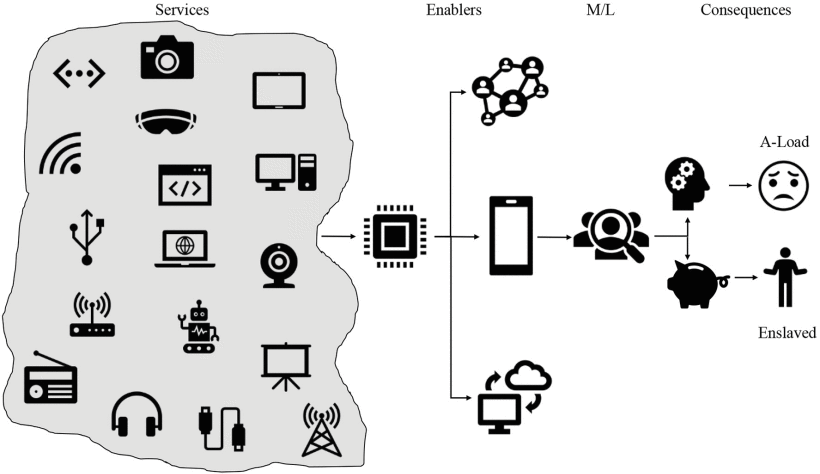
Fig. 2. Meso driving forces that impact the micro with flow-on effects on the macro-social.
SECTION IV.
Macro Level: Enslavement by Design: What Does It Mean for Our Future?
A. Vigilance Fatigue
While some individuals battle with online addictions, now recognized in the DSM-IV: diagnostic and statistical manual of mental disorders, all adults (and increasingly children) are feeling the burden of the online world [80]. If it is not enough for some people to live with online addictions, there are also triggers in everyday life, that necessitate the use of electronic communications in place of face-to-face interactions. This can lead to vigilance fatigue, or the failure to accurately perceive, identify, or analyze bona fide threats, and can lead to serious consequences [81]. Researchers [82]–[84] believe this phenomenon can be brought about by such factors as information overload and prolonged exposure to ambiguous, unspecified, and ubiquitous (even perceived) threat information. There are consequences to the well-being of individuals, despite being the customers, if they are barraged with information or pressured to look for incoming messages from a variety of entities one has relationships with [85], and by default become part of the company workflow. The fatigue usually sets in when an individual gives up on the online world, retreating to reclaim as much of their dignity as possible even at the expense of legitimate and positive transactions, such as one’s right to receive rebates or welfare support. Significant negative impact on individuals can also occur, critically, when the individual has no more money to spend online, has lost their job, or becomes ill, or takes on caregiving responsibility. For a more traditional view of vigilance decrement with response to cognitive fatigue see [86]. In the field of policing, vigilance fatigue has even been considered a threat to public safety and officer well-being, with “information overload” recognized as one of the key determinants: “vigilance fatigue threatens persons and organizations tasked with processing large amounts of data, identifying risks or irregularities, and responding to perceived threats” [87].
B. Neurobiology of Stress and the Feeling of Powerlessness
The human can feel overpowered as they are not only dealing with legitimate, yet often also ubiquitous and sometimes ambiguous, information flows between themselves and entities, for instance, government agencies (e.g., eligible welfare payments) but also juggling deadlines to pay for bills on time, raising a family, and keeping a job. These converging contexts are likely to trigger the neurobiology of stress (NoS) in humans [88] often heightened when there are multiple vectors of communication . When the NoA and NoS are happening in concert and triggering physiological dysregulation, A-Load is far more likely over the long term, and human diminishment and enslavement is likely to be the resultant effect. Consequences can include the inability for an individual to engage in logical and rational decision making; those decisions can be easily usurped by the machine thereby coercing the end user. The online world further exacerbates the overload a human might feel, because in essence, it is the digital imposing itself on the human analog person. Even when purchasing basic goods and services for themselves and their families, consumers can suffer induced stress (e.g., due to issues relative to self-efficacy or lack of online competencies) when self-service options force them to become responsible to actively coproduce the goods or services [66], [89]. There is a mismatch in the human’s capacity to absorb the digital onslaught that shows no mercy, powered by algorithms that can be released with precision on targeted individuals, i.e., addiction by design [91]. If one is engaged in a state of doing at all times, then there is little space for reflection and theorizing the art of being.
When humans are physiologically enervated due to A-Load, they are likely to suffer impaired judgment; they are not likely to recognize, resist, or rectify the concentrations of power to which they are exposed. Thus, the resultant state of A-Load leads to diminished humanity and can have major intensifying repercussions on social relationships, sleep patterns, levels of anxiety (e.g., the feeling of having an unanswered email), the ability to maintain employment, and much more [90]. At times individuals drift toward states of compulsion, dependency, and addiction, to forget about the demands of the online world when it feels it is getting too much. The loss of power an individual ultimately feels is not a tradeoff but rather more like a surrender to a cycle of enslavement. Two ways of addressing the negative impact of the toxicity of the digital, with the assistance of family and medical professionals, is to 1) temporarily cut off interactions in the online world through digital detoxification or 2) digital diet where an end user maintains a diary of interactions to ensure they forego addictive tendencies toward addressing the stressors [92].
C. Need for Socio-Technical Intervention
What all of this points to is a form of techno-feudalism [93]–[96] which can be defined as “a socio-political economic system in which a BigTech company holds sway over a particular domain of enterprise” [97]. In essence, the “rest of us” are “info-peasantry” who surrender our data in exchange for a particular service; however, “the aggregator (the platform owner) is the primary beneficiary” [97]. But if BigTech is credited with this techno-feudal phenomenon, e-government initiatives that utilize premature AI regimes are the perfect complementarity to a reinforcement of the status quo. To an extent, the government can be seen as perpetuating this scenario by mimicking BigTech in its strategies, with the greatest consequences being endured by the very people who depend on government services. As this leap to a “clicks only” environment occurs, one more strategy to hook individuals into an online-only existence is the financial proposition. The move toward cashless societies and the provision of digital currency by platform owners, to further enslave vulnerable enervated humans, is calculated. The enslaved [6], who form the “info-peasants,” either comply “on the grid” under particular terms and conditions, or suffer the plight of being a nonperson.
And yet as awful as the techno-feudalism reveals itself to be, driven perhaps by hopes of surveillance capitalism [98] that continually inform how to best continue to exploit the end user in the name of “upgrades,” the exaggerated surveillance is what keeps the individual in this perpetual loop of modern indentured servitude [99], [100]. What is perhaps most disturbing in all of this is what happens to the individual when there is nothing of their private space left due to an exaggerated surveillance we can refer to here as uberveillance [101], [102]. It is an alleged transparency of every individual’s motivation, intent, sentiment, behavior, and actions. It is that ability to find the consumer, like a needle in a haystack, with precision based on historical movements and current context. The private space is that final frontier that we will inevitably trespass. It is that which Orwell stated was the only thing left that was sacred, that space between our skull where we were once free to roam, think, feel, and reflect without scrutiny. New pervasive technologies have the ability to extract thoughts, removing all barriers for marketing and consumption [28].
The devices and the apps and the data, the convergence digitalization we describe above, is owned privately and/or is capable of being monitored by the state. This can potentially leave a population feeling overwhelmed, unable to work, gridlocked, and unable to tend to themselves or their families adequately. At the macro level, more specifically, a government would hope that society-at-large can support goals toward higher GDP, greater innovation, and mandates that would make a nation more prosperous. But this is far less possible when the very people you depend on for reaching even greater targets, are entirely burdened by the insatiable electronic workload, even if it comes in the guise of leisure or self-service. All of this is a process driven by a techno-economic paradigm that will make a handful of people richer, while the rest of us await what is left over, to string us along in order to keep the model continually moving [14]. Eldred [103, p. 55] seemed to have best articulated what this pattern of behavior might lead to in the Digital Age: Challenges for Today’s Thinking. He writes: the “increasing danger I see today is the rapid encroachment of the cyberworld on the physical world in which we lived hitherto, with the consequence that more and more of our life movements are being enabled or hindered by algorithms that outsource our understanding of certain segments of movements in the world, enabling them to be automatically controlled. There is no ‘freedom of choice’ in this development. The complacent belief and practice that this algorithmic control is for our own convenience and the betterment of human living, including our security, is self-delusion furthered by modern scientific belief and the powers that be.” The ultimate aim is the concentration of power, among the few, and human beings are simply collateral damage in the quest for economics. The effect of subsisting in a state of A-Load is physical enervation that is likely to lead to human diminishment, when in actual fact, the hope of the Good Life is human flourishing [104]. Something has to drastically change if we are serious about human sustainability [105]. It will take a titanic endeavor and tectonic shift, and requires individuals (who also make up groups with multiple lifeworlds), to be true to themselves about the very reason for being, which is reflecting on our nature and behavior.
From a meso perspective, digital business is allowing for the ease of communications at a variety of geographic scales, bringing communities closer together at a macro level, even if these communities are thousands of miles apart. But as we have harnessed these communications for good, the offset has been that these new technological systems at the meso level, have enslaved a generation of individuals at the micro level, and likely generations to come unless we engage in socio-technical interventions to address the societal implications, those that are visible, in addition to those that are hidden (Fig. 3). What forms of change might these interventions take? The first step, must be awareness. The pace of life, and our online interactions are not sustainable in the longer term, in the national/international, professional, and personal contexts. Other considerations include the rules and regulations that prevent the use of open-source intelligence freely volunteered online by individuals, and privately owned data. Additionally, informed consent, constructed in a way that is comprehensible and interpretable, has to occur if/when data is to be passed on to any other entity with the content contributor’s permission.
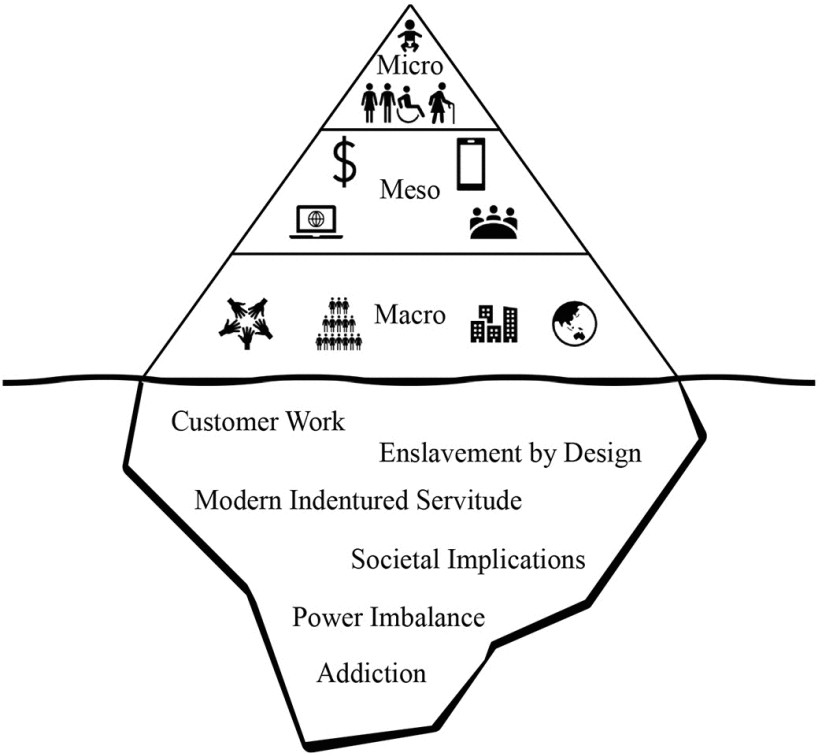
Fig. 3. Revealing patterns and trends hidden beneath the surface of the iceberg.
Organizations must be subject to rules and regulations that ensure that they handle this data and their customer base, with care [106]. That is, a requirement for mandatory algorithmic auditing that maintains that individuals are not manipulated by persuasive design, or perhaps even the introduction of privacy-enhancing technologies that ensure that sensitive data travels along a secure blockchain without being misused. At the micro level, those individuals who have been subjected to unfair practices should be compensated for the harms (both intended and unintended) committed against them, beyond class action lawsuits, and rather through viable social contracts [107]. These are only some of the potential remedies that are actionable but perhaps the greatest aspect that will make the greatest impact will be our ability to self-organize around local and global challenges. The kind of socio-technical change that has not only the greatest effect on society but is also driven by existential meaning, a goal, and objectives that have the greatest positive impact on “living” and “breathing.” If we can find it within ourselves to put down the “distractions” and coordinate around challenges that will benefit people and the environment, the result will certainly not be enslavement but freedom of thought and action to focus our communal/societal attention toward sustainability and human flourishing [108].
SECTION V.
Iceberg Begins to Surface
How do the powerless regain their power? How might that which is hidden beneath the surface of the iceberg become known? Is it possible to reorient existing models toward freedom, values, and sustainability before even more complex technologies and systems are unleashed, such as brain-reading technologies and/or brain–computer interfaces? What might allow us to break with the monotony of modern indentured servitude and enslavement by design, and return to values-based design emphasizing the sustainability of person, process, and place, while at the same time maintaining a profit [109] ?
Perhaps we can be inspired by Ernest Hemingway’s Iceberg Theory [110] also known as the “theory of omission.” Hemingway emphasized the importance of “the story” being told simply, that would evoke thoughts, feelings, motives, and symbolism, allowing the reader to deduce their own interpretation of meaning. The details deliberately remained unspoken, and yet were implied, offering the reader space to contextually understand the fullness of the word with respect to their lifeworld. This explanation of Hemingway’s Iceberg Theory is at complete odds with how the iceberg itself has been presented in technology contexts. It is almost as though the iceberg is really the Trojan Horse with two “stomachs.” Rather, in the technology realm, the iceberg depicts the potential harms that are hidden in the sea. The stakeholders responsible for the murky depths of modern indentured servitude and enslavement by design, certainly do not disclose their true strategies and measures, and the implications are touted as beneficial when in fact they can be detrimental.
To an extent, Hemingway has provided for us a blueprint for communicating: the need for simplicity in our designs when dealing with complexity. What individuals see today is certainly a narrative designed and developed by a whole host of stakeholders operating at the meso level; however, the simplicity and indeed transparency relevant to decisions and operation is missing. One need only point to online terms and conditions that are full of legalese, in many cases that cannot even be interpreted by trained contract law specialists. So yes, we can take from Hemingway that things must get simpler but without losing those finer nuances.
Further, we put forth that this is not a fictitious tale, vis-à-vis The Old Man and the Sea[111], and customers/citizens are not characters within, whose futures and character arcs have been or should be predetermined. That is, where Hemingway used the device of omission or implication, we are calling for stakeholders at the meso level to be explicit about the processes they are engaged in toward profit and their corresponding consequences. In doing so, we do not seek to call out businesses or government agencies for their practices because these same organized groups comprise everyday people who make up the micro level. Rather, we implore meso level stakeholders to redefine their objectives and goals to incorporate ethics, values, and sustainability, in addition to profit. We also request that the following question be considered in light of this editorial: has the very system (and subsystems) we have helped to build (e.g., technology systems and related infrastructure) and rely upon for our mission-critical services, begun to “hack” all of us, and denigrate some to a life of social and economic oblivion?
So, we are putting the Iceberg Theory here to the test, and calling on that which is hidden to surface through collective action and transparent, human-centered, and value-based design processes resulting from a socio-technical intervention. We have attempted to do this by exposing modern day practices fueled with the hope of technology. We have possibly been at risk of overexplaining the patterns and trends that we see, but it is time for a global discussion on the matter of how we use our limited resources, including our brains, to respond to everyday needs and challenges that really matter [112].
SECTION VI.
Papers in This Special Issue
Our special issue begins with a multidisciplinary paper by Associate Professor Said Mikki of Zhejiang University/University of Illinois at Urbana–Champaign Institute in China titled “Machine, Information, and Culture: The Structural Transformations of the Technosphere.” The article examines the rise of digitization and technification processes in daily life applying a historico-philosophical analysis of the evolution of the concept of the machine. Mikki takes us from early times right to the intelligent machine and draws on several traditions in science, sociology, the philosophy of technology, ontology, and history. Furthermore, the paper aids in understanding the rise of automation from the primitive, pointing to the overpowering capacity of technification on all explicit dimensions that form the essential fabric of the social lifeworld and civic organization.
The second article in this special issue demonstrates the automated classification of societal sentiments on Twitter using ML. It is written by six authors led by Piyush Vyas of Dakota State University. The paper considers the growth in information sharing on social media to investigate the development of an automated framework to extract positive, negative, and neutral sentiments and further apply ML toward classification. The paper lays claim to a novel hybrid framework that combines a lexicon-based technique for tweet sentiment analysis and labeling with supervised ML techniques for tweet classification. The evaluation results demonstrate that the hybrid framework performs well in the classification of large tweet volumes.
From the ability to classify sentiment around COVID-19 with respect to Twitter, we move to the third paper in the special issue by academics at Stevens Institute of Technology, on “Topic Modeling and Progression of American Digital News Media During the Onset of the COVID-19 Pandemic.” In this paper, led by Xiangpeng Wan, multiple sources of data on COVID-19 are utilized. The team developed a natural language processing pipeline capable of automatically distilling various digital articles into manageable pieces of information, while also modeling the progression of topics as discussed over time in order to aid readers in rapidly gaining holistic perspectives on pressing issues using diverse sources. Unlike the previous paper in the issue, in this instance, the researchers apply unsupervised and semi-supervised learning procedures to summarize articles, clustering them based on their similarities using the community detection method. This paper grants visibility on how the conversation around COVID-19 evolved over time. The ability to classify news media and individual sentiment from a single source of evidence or in fact multiple sources of evidence provides a great deal of power to individual entities that have control, ownership, and access to that level of visibility at various geographic levels. The capability itself can be considered a competitive advantage in electronic commerce.
The fourth paper in this special issue is titled “What You Don’t Expect When You’re Expecting: Privacy Analysis of Femtech” and is timely given the U.S. Supreme Court’s expected overturning of the Roe vs Wade 1973 ruling. In this paper, Jacob Erickson, Jewel Yuzon, and Tamara Bonaci from the Khoury College of Computer Sciences at Northeastern University in Seattle, WA, USA, outline how sensitive data gathered by Femtech applications is emphasizing the ease of access to the data recorded and shared by these apps. The researchers identify what data the apps actually share with third parties, and how the data is preprocessed and transmitted to the third parties. This paper further develops the notion that information is power and can be used asymmetrically to target end users, an obvious misuse of the data gathered. The authors look at possible technical and regulatory approaches to improve the current state of the industry, acknowledging the potential benefits, if the risks can be adequately treated.
In the final paper in this issue, we learn why AI-based, noninvasive lie detection technologies are likely to experience a rapid uptake in the coming years by analyzing effective features of one’s facial expressions, body movements, and voice [113]. Authors Kurtis Glenn Haut, Taylan K. Sen, Denis Lomakin, and M. Ehsan Hoque argue in “A Mental Trespass? Unveiling Truth, Exposing Thoughts and Threatening Civil Liberties With Non-Invasive AI Lie Detection,” that the current U.S. regulations of thought-exposing technologies are generally ambiguous and inadequate to safeguard civil liberties. The team proposes legislation around the concept of a “mental trespass” which is what occurs when things people might think privately are exposed for third-party scrutiny without consent.
We began the special with a paper that sets the scene for the potential use of intelligent machines and end the special with the most invasive type of machine that could breach even human thought(s). To a degree, that humans have taken to social media and other online platforms to share their thoughts and reflections has aided ML approaches, as training data abound, whether or not the data is accurate. The point is, the data exists. Tied together with new forms of multimodal biometric data capture, we might speculate that this is the very last surveillance frontier, the sacred space “inside your skull” as Orwell referred to it in 1984, as being subject to manipulation, and abuse [114]. What is left then of our human rights, when we have stripped away even that which was considered entirely private and personal?
References
[1] "2.1 micro, meso, and macro approaches," in Principles of Sociological Inquiry: Qualitative and Quantitative Methods. Washington, DC, USA : Saylor Acad., 2012. [Online]. Available: https://saylordotorg.github.io/text_principles-of-sociological-inquiry-qualitative-and-quantitative-methods/s05-01-micro-meso-and-macro-approache.html
[2] K. Dopfer, J. Foster, and J. Potts, "Micro-meso-macro," J. Evol. Econ., vol. 14, pp. 263–279, Jul. 2004. [Online]. Available: https://doi.org/10.1007/s00191-004-0193-0
[3] K. Michael, "The technological trajectory of the automatic identification industry: The application of the systems of innovation (SI) framework for the characterisation and prediction of the auto-ID industry," Ph.D. dissertation, Dept. School Inf. Technol. Comput. Sci., Univ. Wollongong, Wollongong, NSW, Australia, 2003, p. 64.
[4] J. V. Wijk, C. Zietsma, S. Dorado, F. G. A. de Bakker, and I. Martí, "Social innovation: Insights from institutional theory," Bus. Soc., vol. 58, no. 5, pp. 887–918, 2019.
[5] M. Wigan, "Owning identity—One or many—Do we have a choice?," IEEE Technol. Soc. Mag., vol. 29, no. 2, pp. 33–38, Jun. 2010, doi: 10.1109/MTS.2010.937026.
[6] K. Michael, "Enslaved," IEEE Technol. Soc. Mag., vol. 33, no. 4, pp. 5–10, Dec. 2014.
[7] P. Lewis ( Guardian, London, U.K.) Our Minds Can Be Hijacked': The Tech Insiders Who Fear a Smartphone Dystopia. Oct. 2017. [Online]. Available: https://www.theguardian.com/technology/2017/oct/05/smartphone-addiction-silicon-valley-dystopia
[8] S. M. Gainsbury, "Online gambling addiction: The relationship between Internet gambling and disordered gambling," Current Addict. Rep., vol. 2, pp. 185–193, Jun. 2015. [Online]. Available: https://doi.org/10.1007/s40429-015-0057-8
[9] K. Michael and R. Clarke, "Location and tracking of mobile devices: Überveillance stalks the streets," Comput. Law Security Rev., vol. 29, no. 3, pp. 216–228, 2013. [Online]. Available: https://doi.org/10.1016/j.clsr.2013.03.004
[10] R. Pringle, K. Michael, and M. G. Michael, "Unintended consequences: The paradox of technological potential," IEEE Potentials, vol. 35, no. 5, pp. 7–10, Sep./Oct. 2016, doi: 10.1109/MPOT.2016.2569672.
[11] R. Pringle, K. Michael, and M. G. Michael, "Unintended consequences of living with AI: The paradox of technological potential? part II [guest editorial]," IEEE Technol. Soc. Mag., vol. 35, no. 4, pp. 17–21, Dec. 2016, doi: 10.1109/MTS.2016.2632978.
[12] K. Lobo. "What Are the Four Types of Analytics and How Do You Use Them?," Analytics8. Sep. 2021. [Online]. Available: https://www.analytics8.com/blog/what-are-the-four-types-of-analytics-and-how-do-you-use-them/
[13] M. G. Michael and K. Michael, "The fallout from emerging technologies: Surveillance, social networks, and suicide," IEEE Technol. Soc. Mag., vol. 30, no. 3, pp. 13–17, Sep. 2011, doi: 10.1109/MTS.2011.942312.
[14] R. Abbas, K. Michael, J. Sargent, and E. Scornavacca, "Anticipating techno-economic fallout: Purpose-driven socio-technical innovation," IEEE Trans. Technol. Soc., vol. 2, no. 3, pp. 111–113, Sep. 2021, doi: 10.1109/TTS.2021.3098046. [Online]. Available: https://ieeexplore.ieee.org/document/9500093
[15] E. Lawrence, S. Newton, B. Corbitt, J. Lawrence, S. Dann, and T. Thanasankit, Internet Commerce: Digital Models for Business. Milton, QLD, Australia : Wiley, 2003.
[16] F. X. Frei, "The four things a service business must get right," Harvard Bus. Rev., vol. 86, no. 4, pp. 70–80, 2008.
[17] S. Akter, "Algorithmic bias in data-driven innovation in the age of AI," Int. J. Inf. Manag., vol. 60, Oct. 2021, Art. no. 102387. [Online]. Available: https://doi.org/10.1016/j.ijinfomgt.2021.102387
[18] K. Michael, "Algorithmic bias: The Australian Governments online compliance intervention system and its fallout," in Proc. 20th IFIP Conf. e-Bus. e-Serv. e-Soc., Galway, Ireland, Sep. 2021. [Online]. Available: https://www.i3e2021.com
[19] P. Whiteford, "Debt by design: The anatomy of a social policy fiasco–Or was it something worse?," Aust. J. Public Admin., vol. 80, no. 2, pp. 340–360, 2021.
[20] R. Blanco-Gonzalo, C. Lunerti, R. Sanchez-Reillo, and R. M. Guest, "Biometrics: Accessibility challenge or opportunity?," PLoS ONE, vol. 13, no. 3, 2018, Art. no. e0194111. [Online]. Available: https://doi.org/10.1371/journal.pone.0194111
[21] S. Akter, K. Michael, M. R. Uddin, G. McCarthy, M. Rahman, "Transforming business using digital innovations: The application of AI, blockchain, cloud and data analytics," Ann. Oper. Res., vol. 308, pp. 7–39, May 2020. [Online]. Available: https://doi.org/10.1007/S10479-020-03620-W
[22] A. P. Pons, "Biometric marketing: Targeting the online consumer," Commun. ACM, vol. 49, no. 8, pp. 60–66, 2006. [Online]. Available: https://doi.org/10.1145/1145287.1145288
[23] K. Michael and K. W. Miller, "Big data: New opportunities and new challenges," Computer, vol. 46, no. 6, pp. 22–24, Jun. 2013, doi: 10.1109/MC.2013.196.
[24] S. Akter, Y. K. Dwivedi, S. Sajib, K. Biswas, R. J. Bandara, and K. Michael, "Algorithmic bias in machine learning-based marketing models," J. Bus. Res., vol. 144, pp. 201–216, May 2022. [Online]. Available: https://doi.org/10.1016/j.jbusres.2022.01.083
[25] W. Yang, M. Rifqi, C. Marsala, and A. Pinna, "Physiological-based emotion detection and recognition in a video game context," in Proc. Int. Joint Conf. Neural Netw. (IJCNN), 2018, pp. 1–8. [Online]. Available: https://doi.org/10.1109/IJCNN.2018.8489125
[26] Emergen Research, "Biometrics market by technology (facial recognition, fingerprint recognition, voice recognition, palm recognition, iris recognition), by industry vertical (government & defense, healthcare & life sciences, retail & E-commerce, BFSI), By applications (site access control, time recording), system type (unimodal, multimodal), component (hardware, software) and regions forecasts to 2027." Market Res., Surrey, BC, Canada, Rep. ER_00177, 2020. [Online]. Available: https://www.emergenresearch.com/industry-report/biometrics-market
[27] M. Smith and S. Miller, "The ethical application of biometric facial recognition technology," AI Soc., vol. 37, no. 1, pp. 167–175, 2022. [Online]. Available: https://doi.org/10.1007/s00146-021-01199-9
[28] M. G. Michael, K. Michael, and C. Perakslis, "Überveillance, the Web of things, and people: What is the culmination of all this surveillance?," IEEE Consum. Electron. Mag., vol. 4, no. 2, pp. 107–113, Apr. 2015, doi: 10.1109/MCE.2015.2393007.
[29] "What Is Machine Learning: Definition, Types, Applications And Examples." Potentia Analytics. 2021. [Online]. Available: https://www.potentiaco.com/what-is-machine-learning-definition-types-applications-and-examples
[30] S. Akter, "Addressing algorithm bias in AI-driven customer management," J. Global Inf. Manag. vol. 29, no. 6, p. 27, 2021, doi: 10.4018/JGIM.20211101.oa3.
[31] B. N. R. Chagas, J. A. N. Viana, O. Reinhold, F. Lobato, A. F. L. Jacob, and R. Alt, "Current applications of machine learning techniques in CRM: A literature review and practical implications," in Proc. IEEE/WIC/ACM Int. Conf. Web Intell. (WI), 2018, pp. 452–458, doi: 10.1109/WI.2018.00-53.
[32] C. Riefa, "Consumer protection on social media platforms: Tackling the challenges of social commerce," in EU Internet Law in the Digital Era, T. E. Synodinou, P. Jougleux, C. Markou, and T. Prastitou, Eds. Cham, Switzerland : Springer, 2020, pp. 321–345. [Online]. Available: https://doi.org/10.1007/978-3-030-25579-4_15
[33] B. Collier, G. Flynn, J. Stewart, and D. Thomas, "Influence government: Exploring practices, ethics, and power in the use of targeted advertising by the U.K. state," Big Data Soc. vol. 9, Jan. 2022, Art. no. 20539517221078756, doi: 10.1177/20539517221078756.
[34] R. Sanders, "The Pareto principle: Its use and abuse," J. Serv. Market. vol. 1, no. 2, pp. 37–40, 1987. [Online]. Available: https://doi.org/10.1108/eb024706
[35] M. Grguric. "What Are 'Mobile Game Whales' & How to Find Them [Guide Included]." Medium. Nov. 2019. [Online]. Available: https://medium.com/swlh/what-are-mobile-game-whales-how-to-find-themguide-included-fa4b29a6ccf3
[36] K. Simonsen, "Bodies, sensations, space and time: The contribution from Henri Lefebvre," Geografiska Annaler Ser. B, Human Geogr. vol. 87, no. 1, pp. 1–14, 2005. [Online]. Available: http://www.jstor.org/stable/3554441
[37] K. Michael, "Location-based Services—A vehicle for IT&T convergence," in Advances in E-Engineering and Digital Enterprise Technology. Bury St Edmunds, U.K.: Prof. Eng. Publ., 2004, pp. 467–477.
[38] J. Carmichael. "Google Knows You Better Than You Know Yourself." The Atlantic. Aug. 2014. [Online]. Available: https://www.theatlantic.com/technology/archive/2014/08/google-knows-you-better-than-you-know-yourself/378608/
[39] N. Thompson. "When Tech Knows You Better Than You Know Yourself." Wired. Oct. 2018. [Online]. Available: https://www.wired.com/story/artificial-intelligence-yuval-noah-harari-tristan-harris/
[40] S. Zillner, "Business models and ecosystem for big data," in The Elements of Big Data Value. Cham, Switzerland : Springer, 2021, pp. 269–288.
[41] R. Cialdini, Pre-Suasion: A Revolutionary Way to Influence and Persuade. New York NY, USA : Simon Schuster, 2016.
[42] B. F. Skinner, "Teaching machines: From the experimental study of learning come devices which arrange optimal conditions for self-instruction," Science, vol. 128, no. 3330, pp. 969–977, 1958.
[43] C. Perakslis, "Retreat to move forward: Alleviating allostatic load for the brave [last word]," IEEE Technol. Soc. Mag. vol. 36, no. 3, p. 88, Sep. 2017.
[44] (Benson-Henry Inst. Harvard Med. School, Boston, MA, USA). Stress Management and Resiliency Training: The Relaxation Response Resiliency Program®. ( 2021 ). [Online]. Available: https://bensonhenryinstitute.org/smart-program/
[45] H. Benson. "The Mind/Body Effect: How Behavioral Medicine Can Show You the Way to Better Health." 2019. [Online]. Available: http://search.ebscohost.com/login.aspx?direct=true&scope=site&db=nlebk&db=nlabk&AN=2145500
[46] H. Benson and W. Proctor, Beyond the Relaxation Response: How to Harness the Healing Power of Your Personal Beliefs. New York, NY, USA : Berkley Books, 1985.
[47] E. Park, P. Baim, and L. Kagan, Stress Management and Resiliency Training: The Relaxation Response Resiliency Program®. Benson-Henry Inst. Harvard Med. School, Boston, MA, USA, 2021.
[48] E. R. Park, "The development of a patient-centered program based on the relaxation response: The relaxation response resiliency program (3RP)," Psychosomatics, vol. 54, no. 2, pp. 165–174, 2013. [Online]. Available: https://doi.org/10.1016/j.psym.2012.09.001
[49] B. S. McEwen, "Stress, adaptation, and disease: Allostasis and allostatic load," Ann. New York Acad. Sci. vol. 840, no. 1, pp. 33–44, 1998.
[50] L. Doane and E. K. Adam, "Loneliness and cortisol: Momentary, day-to-day, and trait associations," Psychoneuroendocrinology, vol. 35, no. 3, pp. 430–441, 2010. [Online]. Available: https://doi.org/10.1016/j.psyneuen.2009.08.005
[51] F. Ozbay, D. C. Johnson, E. Dimoulas, C. A. Morgan, D. Charney, and S. Southwick, "Social support and resilience to stress: From neurobiology to clinical practice," Psychiatry, vol. 4, no. 5, pp. 35–40, 2007.
[52] E. Park, P. Baim, and L. Kagan, Stress Management and Resiliency Training: The Relaxation Response Resiliency Program®, Benson-Henry Inst. Harvard Med. School, Boston, MA, USA, 2021.
[53] G. W. Small, "Brain health consequences of digital technology use," Dialogues Clin. Neurosci. vol. 22, no. 2, pp. 179–187, 2020. [Online]. Available: https://doi.org/10.31887/DCNS.2020.22.2/gsmall
[54] J. Hilliard and T. Parisi. "Social Media Addiction." Addiction Center. Dec. 2021. [Online]. Available: https://www.addictioncenter.com/drugs/social-media-addiction/
[55] A. Rödlund, "Social media and stress: A quantitative study of social media habits and stress in an adult population," Ph.D. dissertation, Dept. Public Health Sci., Malardalens Hogskola, Västerås, Sweden, 2020. [Online]. Available: https://www.diva-portal.org/smash/get/diva2:1450843/FULLTEXT01.pdf
[56] H. M. Rus and J. Tiemensma, "Social media under the skin: Facebook use after acute stress impairs cortisol recovery," Front. Psychol. vol. 8, p. 1609, Sep. 2017. [Online]. Available: https://doi.org/10.3389/fpsyg.2017.01609
[57] C. Perakslis, "Boundaries without borders: A call for resiliency technology in a world of veillances," in Proc. IEEE Int. Symp. Technol. Soc. Nov. 2020.
[58] "Digital Dopamine: 2015 Global Digital Marketing Report from Razorfish," Global Digital Marketing. 2015. [Online]. Available: https://Razorfish.com
[59] Y. J. Lee, S. Ha, and Z. Johnson, "Antecedents and consequences of flow state in e-commerce," J. Consum. Marketing, vol. 36, no. 2, pp. 264–275, 2019, doi: 10.1108/JCM-10-2015-1579.
[60] B. Verplanken and A. Herabadi, "Individual differences in impulse buying tendency: Feeling and no thinking," Eur. J. Pers. vol. 15, no. s1, pp. S71–S83, 2001.
[61] "Digital Dopamine: 2015 Global Digital Marketing Report from Razorfish," Razorfish.com. 2015. [Online]. Available: https://www.razorfish.com/ideas/digital-dopamine.htm
[62] S. Jeffries. "Why Too Much Choice Is Stressing Us Out." The Guardian. Oct. 2015. [Online]. Available: https://www.theguardian.com/lifeandstyle/2015/oct/21/choice-stressing-us-out-dating-partners-monopolies
[63] S. Sujan, H. Sujan, J. Bettman, and T. Verhallen, "Sources of consumers; stress and their coping strategies," in E-European Advances in Consumer Research, vol. 4, 1999, pp. 182–187. [Online]. Available: https://www.acrwebsite.org/volumes/11379/volumes/e04/E-04
[64] C. R. Sunstein, "Fifty shades of manipulation," J. Market. Behav. vol. 1, nos. 3–4, pp. 214–244, 2016. [Online]. Available: https://doi.org/10.1561/107.00000014
[65] K. Wertenbroch, "Autonomy in consumer choice," Market. Lett. vol. 31, no. 4, pp. 429–439, 2020. [Online]. Available: https://doi.org/10.1007/s11002-020-09521-z
[66] Y. Zwebner and R. Y. Schrift, "On my own: The aversion to being observed during the preference-construction stage," J. Consum. Res. vol. 47, no. 4, pp. 475–499, 2020. [Online]. Available: https://doi.org/10.1093/jcr/ucaa016
[67] J. M. Kensbock and C. Stöckmann, "'Big brother is watching you': Surveillance via technology undermines employees' learning and voice behavior during digital transformation," J. Bus. Econ. vol. 91, no. 4, pp. 565–594, 2021. [Online]. Available: https://doi.org/10.1007/s11573-020-01012-x
[68] L. Stark, A. Stanhaus, and D. L. Anthony, "I dont want someone to watch me while im working: Gendered views of facial recognition technology in workplace surveillance," J. Assoc. Inf. Sci. Technol. vol. 71, no. 9, pp. 1074–1088, 2020. [Online]. Available: https://doi.org/10.1002/asi.24342
[69] S. I. Rick, B. Pereira, and K. A. Burson, "The benefits of retail therapy: Making purchase decisions reduces residual sadness," J. Consum. Psychol. vol. 24, no. 3, pp. 373–380, 2014. [Online]. Available: https://doi.org/10.1016/j.jcps.2013.12.004
[70] K. M. B. Hunter, "Shopaholic stories: Tales of therapeutic addiction, governance, and political economy," J. Consum. Cult. vol. 18, no. 4, pp. 497–519, 2018. [Online]. Available: https://doi.org/10.1177/1469540516684186
[71] A. Müller, S. Steins-Loeber, P. Trotzke, B. Vogel, E. Georgiadou, and M. de Zwaan, "Online shopping in treatment-seeking patients with buying-shopping disorder," Comprehensive Psychiat. vol. 94, Oct. 2019, Art. no. 152120. [Online]. Available: https://doi.org/10.1016/j.comppsych.2019.152120
[72] A. García-Jurado, M. Torres-Jiménez, A. L. Leal-Rodríguez, and P. Castro-González, "Does gamification engage users in online shopping?," Electron. Commerce Res. Appl. vol. 48, Jul./Aug. 2021, Art. no. 101076. [Online]. Available: https://doi.org/10.1016/j.elerap.2021.101076
[73] V. Insley and D. Nunan, "Gamification and the online retail experience," Int. J. Retail Distrib. Manag. vol. 42, no. 5, pp. 340–351, 2014. [Online]. Available: https://doi.org/10.1108/IJRDM-01-2013-0030
[74] Y. Xu, Z. Chen, M. Y.-P. Peng, and M. K. Anser, "Enhancing consumer online purchase intention through gamification in China: Perspective of cognitive evaluation theory," Front. Psychol. vol. 11, Nov. 2020, Art. no. 581200. [Online]. Available: https://doi.org/10.3389/fpsyg.2020.581200
[75] N. E. Miller, "Theory and experiment relating psychoanalytic displacement to stimulus-response generalization," J. Abnormal Soc. Psychol. vol. 43, no. 2, p. 155, 1948.
[76] K. S. Young, "Internet addiction: A new clinical phenomenon and its consequences," Amer. Behav. Sci. vol. 48, no. 4, pp. 402–415, 2004.
[77] I. Kirsch, S. J. Lynn, M. Vigorito, and R. R. Miller, "The role of cognition in classical and operant conditioning," J. Clin. Psychol. vol. 60, no. 4, pp. 369–392, 2004.
[78] R. Cooper and K. Michael, "The structure and components of E-mall business models," in Proc. Collab. Electron. Commerce Technol. Res. Conf. LatAm (CollECTeR LatAm), Oct. 2005, pp. 1–15.
[79] G. F. Koob and N. D. Volkow, "Neurobiology of addiction: A neurocircuitry analysis," Lancet Psychiat. vol. 3, no. 8, pp. 760–773, 2016.
[80] K. Albrecht, K. Michael, and M. G. Michael, "The dark side of video games: Are you addicted?," IEEE Consum. Electron. Mag. vol. 5, no. 1, pp. 107–113, Jan. 2016.
[81] P. Roberts, "Information visualization for stock market ticks: Toward a new trading interface," M.S. thesis, Dept. School Manag., Massachusetts Inst. Technol., Cambridge, MA, USA, 2004. [Online]. Available: https://dspace.mit.edu/bitstream/handle/1721.1/16668/56675083-MIT.pdf?sequence=2
[82] J. Eisert, "Vigilance and fatigue: A double sided coin?," in Proc. Human Factors Ergonom. Soc. Annu. Meeting, vol. 60, 2016, pp. 1563–1568. [Online]. Available: https://doi.org/10.1177/1541931213601361
[83] N. Pattyn, X. Neyt, D. Henderickx, and E. Soetens, "Psychophysiological investigation of vigilance decrement: Boredom or cognitive fatigue?," Physiol. Behav. vol. 93, nos. 1–2, pp. 369–378, 2008. [Online]. Available: https://doi.org/10.1016/j.physbeh.2007.09.016
[84] A. R. Lee, S.-M. Son, and K. K. Kim, "Information and communication technology overload and social networking service fatigue: A stress perspective," Comput. Human Behav. vol. 55, pp. 51–61, Feb. 2016. [Online]. Available: https://doi.org/10.1016/j.chb.2015.08.011
[85] C.-Y. Li, "Why do online consumers experience information overload? An extension of communication theory," J. Inf. Sci. vol. 43, no. 6, pp. 835–851, 2017. [Online]. Available: https://doi.org/10.1177/0165551516670096
[86] N. Pattyn, X. Neyt, D. Henderickx, and E. Soetens, "Psychophysiological investigation of vigilance decrement: Boredom or cognitive fatigue?," Physiol. Behav. vol. 93, nos. 1–2, pp. 369–378, 2008.
[87] M. Krause. "Vigilance Fatigue in Policing: A Critical Threat to Public Safety and Officer Well-Being." FBI Law Enforcement Bulletin. Dec. 2012. [Online]. Available: https://leb.fbi.gov/articles/featured-articles/vigilance-fatigue-in-policing-a-critical-threat-to-public-safety-and-officer-well-being
[88] M. Gunnar and K. Quevedo, "The neurobiology of stress and development," Annu. Rev. Psychol. vol. 58, pp. 145–173, Jan. 2007.
[89] M. Mende, M. L. Scott, M. J. Bitner, and A. L. Ostrom, "Activating consumers for better service coproduction outcomes through eustress: The interplay of firm-assigned workload, service literacy, and organizational support," J. Public Policy Market. vol. 36, no. 1, pp. 137–155, 2017. [Online]. Available: https://doi.org/10.1509/jppm.14.099
[90] A. Alter, Irresistible: The Rise of Addictive Technology and the Business of Keeping Us Hooked. New York, NY, USA : Penguin, 2017.
[91] N. D. Schüll, Addiction by Design: Machine Gambling in Las Vegas. Princeton, NJ, USA : Princeton Univ. Press, 2012.
[92] K. Michael, "Are you addicted to your smartphone, social media, and more? The new antisocial app could help," IEEE Consum. Electron. Mag. vol. 6, no. 4, pp. 116–121, Oct. 2017.
[93] C. Durand. Techno-féodalisme—Critique de l'économie numérique. Paris, France : Editions La Découverte, 2020.
[94] G. Zarkadakis. Cyber Republic: Reinventing Democracy in the Age of Intelligent Machines. Cambridge, MA, USA : MIT Press, 2020.
[95] G. Varoufakis. "Techno-Feudalism Is Taking Over." DiEM25. 2021. [Online]. Available: https://diem25.org/techno-feudalism-taking-over/
[96] D. Cuddy, New World Order: The Rise of Techno-Feudalism. Bethany, OK, USA : Bible Belt Publ., 2010.
[97] J. Pitt, "The BigTech-academia-parliamentary complex and techno-feudalism," IEEE Technol. Soc. Mag. vol. 39, no. 3, pp. 5–8, Sep. 2020.
[98] S. Zuboff, The Age of Surveillance Capitalism: The Fight for a Human Future at the New Frontier of Power, 1st ed. New York, NY, USA : Public Affairs, 2019.
[99] J. Pitt, "Against modern indentured servitude," IEEE Technol. Soc. Mag. early access, Jun. 2022. [Online]. Available: https://ieeexplore.ieee.org/xpl/mostRecentIssue.jsp?punumber=44
[100] J. Pitt, "Against modern indentured servitude," in Proc. 2nd Int. Workshop Artif. Intell. Equity (AI4Eq), Oct. 2021. [Online]. Available: https://rppc.github.io/ai4eq/
[101] M. G. Michael and K. Michael, "Toward a state of Überveillance [special section introduction]," IEEE Technol. Soc. Mag. vol. 29, no. 2, pp. 9–16, Jun. 2010, doi: 10.1109/MTS.2010.937024.
[102] R. Clarke, "What is Überveillance? (and what should be done about it?)," IEEE Technol. Soc. vol. 29, no. 2, pp. 17–25, Jun. 2010.
[103] M. Eldred, Digital Age: Challenges for Todays Thinking. Wollongong, NSW, Australia : MK Press, 2021.
[104] S. Wolf, "Happiness and meaning: Two aspects of the good life," Soc. Phil. Policy, vol. 14, no. 1, p. 207, 2009.
[105] K. Michael and R. Abbas, "Technology, information systems and sustainability: A public interest research agenda," in Y. Dwivedi, Nov. 2021. "Climate change and COP26: Are digital technologies and information management part of the problem or the solution? An editorial reflection and call to action," Int. J. Inf. Manag. vol. 63, Apr. 2022, Art. no. 102456. [Online]. Available: https://JJIM_102456PIIS0268-4012(21)00149-3
[106] R. Abbas, K. Michael, and M. G. Michael, "Using a social-ethical framework to evaluate location-based services in an Internet of Things world," Int. Rev. Inf. Ethics, vol. 22, pp. 42–73, Dec. 2014.
[107] K. Michael, "Unintended consequences of emerging technologies: Anticipating societal issues," in Proc. AAAS Sci. Technol. Forum, May 2019.
[108] M. G. Michael and K. Michael, "Resistance is not futile, nil desperandum," IEEE Technol. Soc. Mag. vol. 34, no. 3, pp. 10–13, Sep. 2015.
[109] K. Michael, R. Abbas, J. Pitt. "Maintaining Control Over AI." Issues in Science and Technology: FORUM. May 2021. [Online]. Available: https://issues.org/debating-human-control-over-artificial-intelligence-forum-shneiderman/
[110] R. O. Stephens, "Hemingways old man and the iceberg," Mod. Fiction Stud. vol. 7, no. 4, pp. 295–304, 1961.
[111] E. Hemingway, The Old Man and the Sea. New York, NY, USA : Charles Scribners Sons, 1952.
[112] J. Pitt, Self-Organising Multi-Agent Systems: Algorithmic Foundations of Cyber-Anarcho-Socialism. London, U.K.: World Sci., 2021. [Online]. Available: https://doi.org/10.1142/q0307
[113] K. Michael ( Nokia Auditorium, Naperville, IL, USA ). When Machines Become "Know It Alls" IEEE Women in Engineering AI Leadership Summit. ( Sep. 2019 ). [Online]. Available: https://attend.ieee.org/wieails-2019/program/
[114] K. Michael, R. Abbas, P. Jayashree, R. J. Bandara, and A. Aloudat, "Biometrics and AI bias," IEEE Trans. Technol. Soc. vol. 3, no. 1, pp. 2–8, Mar. 2022, doi: 10.1109/TTS.2022.3156405.
Authors
University of Wollongong, Wollongong, NSW, Australia
Roba Abbas received the BICT degree (Hons.) majoring in business information systems and the Ph.D. degree in location-based services regulation from the University of Wollongong, Wollongong, NSW, Australia.
Arizona State University, Tempe, AZ, USA
Katina Michael (Senior Member, IEEE) received the Bachelor of Information Technology degree from the University of Technology Sydney, Ultimo, NSW, Australia, the Master of Transnational Crime Prevention degree from the Faculty of Law, University of Wollongong, Wollongong, NSW, Australia, and the Ph.D. degree (auto-ID trajectory) from the School of Computer Science and Information Technology, University of Wollongong.
University of Wollongong, Wollongong, NSW, Australia
M. G. Michael received the B.A. degree from The University of Sydney, Sydney, NSW, Australia, the B.Theol. degree from Sydney College of Divinity, Macquarie Park, NSW, Australia, the M.A. degree (Hons.) from Macquarie University, Sydney, NSW, Australia, the M.Theol. degree from The University of Sydney, and the Ph.D. degree from the Australian Catholic University, Brisbane, QLD, Australia.
Arizona State University, Tempe, AZ, USA
Christine Perakslis serves as an educator and a consultant for various organizations. She serves as a Researcher with publications and presentations focusing on the social implications of technology, group integration competencies, and behavioral motivators/psychometrics.
Imperial College London, London, U.K
Jeremy Pitt received the B.Sc. degree in computer science from the University of Manchester, Manchester, U.K., and the Ph.D. degree in computing from Imperial College London, London, U.K.
Citation: R. Abbas, K. Michael, M. G. Michael, C. Perakslis and J. Pitt, "Machine Learning, Convergence Digitalization, and the Concentration of Power: Enslavement by Design Using Techno-Biological Behaviors," in IEEE Transactions on Technology and Society, vol. 3, no. 2, pp. 76-88, June 2022, doi: 10.1109/TTS.2022.3179756.