DARPA's ADAPTER Program
Citation: K. Michael, "DARPA's ADAPTER Program: Applying the ELSI Approach to a Semi-Autonomous Complex Socio-Technical System," 2021 IEEE Conference on Norbert Wiener in the 21st Century (21CW), Chennai, India, 2021, pp. 1-10, doi: 10.1109/21CW48944.2021.9532581.
Abstract
This paper presents a conceptual framework for Ethical, Legal and Social Aspects (ELSA) of the Defense Advanced Research Project Agency's (DARPA) ADvanced Acclimation and Protection Tool for Environmental Readiness (ADAPTER) Program. ADAPTER aims to develop a travel adapter for the human body, an implantable or ingestible bioelectronic carrier. This paper is written in my capacity as an unpaid ELSI panelist providing insights to the project and technical teams engaged with ADAPTER. The methodology employed in the work uses normativity to address the question of desirability and permissibility of an implantable for warfighters to achieve the goal of better sleep cycles and the diminishment of traveler's diarrhea. The paper's contribution is in defining ELSI, understanding ELSI aspects embedded in socio-technical systems design, the role of transdisciplinarity when applying ELSI, and presenting a conceptual framework that will be used to interrogate ADAPTER throughout the lifetime of the Program.
SECTION I.
Introduction
The aim of this article is to develop a conceptual framework focused on Ethical, Legal and Social Implications (ELSI) in the context of a semi-autonomous complex sociotechnical system, i.e., the ADAPTER implantable. The article will define ELSI with a broad introduction to socio-technical systems. The importance of the multi/inter/trans-discipline, as Norbert Wiener so clearly articulated in the study of cybernetics, will be presented alongside the emergence of the broader domain of science, technology, society and environment (STSE). The article describes how we may begin to consider the implications of the new biological technology built for warfighters, and the aspects that need to be addressed before such an innovation is diffused into the military. The article is divided into seven sections. Section II introduces the reader to the DARPA ADAPTER Program and how the semiautonomous complex socio-technical ADAPTER implantable system works. Section III will provide a brief methodological overview focused on normativity and DARPA's process of engagement with the invited ELSI Panel. Section IV will define the ELSI approach and section V will relate ELSI to socio-technical systems. Section VI will emphasize the importance of multi/inter/trans-disciplinary perspectives while section VII will present a brief discussion addressing convergence and complexity in science and technology toward the presentation of an ELSI conceptual framework focused on humancentric implantables for warfighters in the military.
SECTION II.
DARPA's ADAPTER Program
A. What is ADAPTER Supposed to Achieve?
The ADvanced Acclimation and Protection Tool for Environmental Readiness (ADAPTER) program is located within the DARPA Biological Technologies Office (DARPA/BTO) [1]. ADAPTER aims to develop a travel adapter for the human body, an implantable or ingestible bioelectronic carrier that contains cellular factories and compounds (therapies) to be released upon secure external activation (Figure 1). Imagine a soldier on deployment having the command and control to trigger a release of therapies to prevent particular conditions in their own body. The system is designed to either entrain the sleep cycle, halving the time to reestablish normal sleep after a disruption (e.g., jet lag), or to eliminate the top 5 bacterial sources of traveler's diarrhea. Consider it a remote control capability to wellness and recovery. ADAPTER is a way to physically interface with the human body, a type of wireless “living pharmacy”, via an implantable device that attempts to control the body's circadian clock, aiding to regulate cycles by providing accurate diagnostics and response mechanisms.
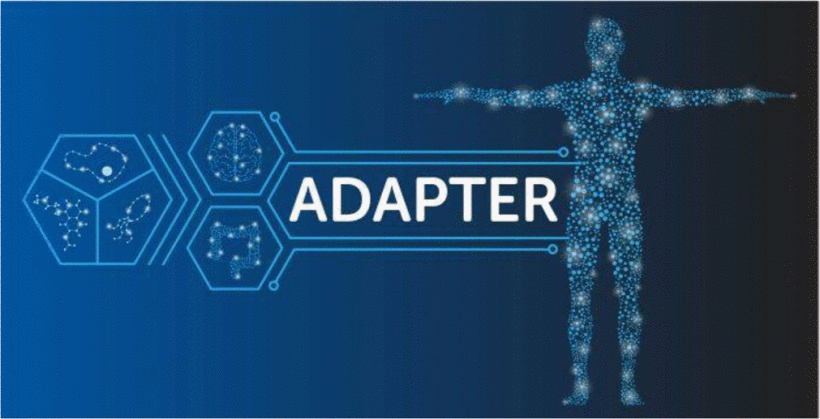
Fig. 1. DARPA's ADAPTER program is ‘a travel adapter for the human body’. Courtesy of DARPA.
It is not the first time that DARPA has raised the potential for implantable devices. It was in 2013 that they called for proposals for brain implants that might support ex-service men and women who had developed the debilitating Post Traumatic Stress Disorder (PTSD) as a result of being to war [2]. In the RAM (Restoring Active Memory) Project the ultimate aim was to develop an implantable neural device that would help with recovery of memory. The RAM Project, is reminiscent of the great work that Norbert Wiener had begun to study in cybernetic systems with Mexican neurophysiologist Arturo Rosenblueth, related to the way the brain works. Rosenblueth reinforced Wiener's view of the similarity of control in the human and the machine, at least on a statistical basis. Wiener used complex quantitative models to explore neurobiological and behavioral distinctions [3, p. 253]. How could we use natural learning models for instance, and then somehow create an intervention that would have memory function return through a brain implant [4]. There are many labs around the world that are now working on “brain on a bench” projects [5], inspired by the works of Norbert Wiener. While this may sound a little too Elon Musk-ish and NeuraLink style [6]–[8], the truth is that Norbert and Elon have vastly different sensitivities, at least on the surface [9].
B. How ADAPTER will Work?
Operational scenarios for implantables are gaining momentum in the medical and non-medical spaces [10]. With the rapid growth of the prosthetic market, e.g. insulin pumps, citizenry have become more accustomed to hearing about people who bear biomedical devices for the management of their personal health. As patients, carers, doctors, nurses, engineers, counsellors and teachers have begun to be educated about these next generation devices, a whole economic infrastructure has emerged to support the education and awareness of new service offerings, e.g. deep brain stimulation (DBS) for those with Parkinson's Disease [11], [12]. For decades, we have had DIYers adopt passive radiofrequency identification (RFID) for opening doors, logging in to applications and networks, and contactless transactions. Yet, the distinction between medical and non-medical devices is now blurring [13]. Companies such as Vivokey [14], [15] have considered how to tether edge devices e.g., between implantables and smartphones, for bitcoin applications [16] among many other security-centric solutions [17].
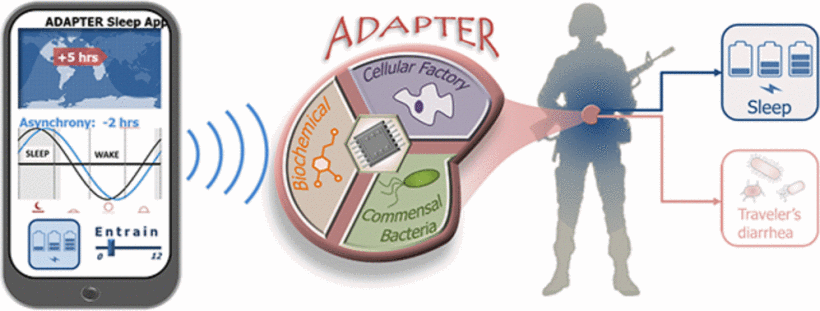
Fig. 2. DARPA's ADAPTER implantable to help overcome jetlag and travellers diarrhea to enhance soldier performance. Courtesy of DARPA.
It should not surprise us therefore, that government agencies like DARPA (Defense Advanced Research Projects Agency) are heavily considering what the future might hold, and soliciting proposals from cross-disciplinary technical research teams to ponder on one possible socio-technical imaginary [18]; a future where implants tethered to smartphones are commonplace and not the exception but the norm. In many ways this imaginary - the feedback loops between humans and machines-preoccupied the great Norbert Wiener, and what we have now through his mindfulness is a manner by which to ponder the possibilities. We cannot rule out anything; but at the same time, we must be sober with our analysis of what might or even what should be.
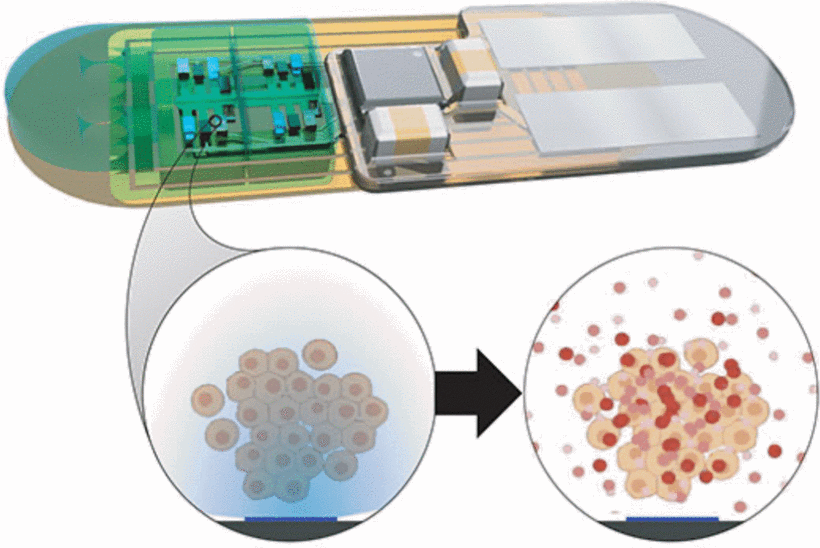
Fig. 3. A close-up of the NTRAIN implant shows its internal cellular factories, which, when activated by light, produce precisely-dosed peptide therapies. The device keeps the cellular factories tightly enclosed, only allowing the therapies to diffuse into the body. Courtesy of northwestern university [20].
According to DARPA (Figure 2), the ADAPTER program will “develop a travel adapter for the human body, an implantable or ingestible bioelectronic carrier that contains therapeutic cellular factories and biomolecules which can provide warfighters control over their own physiology” [19]. ADAPTER is multiapplication and multifunctional. It uses an integrated system to house a variety of bio/sensors that will be diagnostic and interventionist, disrupting the typical medical supply chain that is lengthy in preparation and delivery. It will provide just-in-time antibiotic production, and will be wholly embedded and performed in vivo (figure 3). ADAPTER will allow for toxin removal from ingested resources and will provide the soldier on deployment with the ability to quickly acclimatize due to time zone differences the body is unmistakably exposed to after long-haul travel, i.e., shift lag and what is more generally known as jet lag.
The whole point of ADAPTER is to overcome human physiological limitations during active operational service. The two priority areas for the military that have been identified in ADAPTER include:
“(1) entraining the sleep cycle, either to a new time zone or back to a normal sleep pattern after night missions”; and
“(2) eliminating bacteria that cause traveler's diarrhea from contaminated food and water, a perennial challenge for militaries noted as far back as the Peloponnesian War”.
ADAPTER is not about altering the genetics of the human body, but working with the body to provide transient enhancement and extension of warfighter readiness. In Figure 4, we see how this will work, in a proof of concept using an edge device (i.e., “external hub”), interfacing with the Normalizing Timing of Rhythms Across Internal Networks of Circadian Clocks (NTRAIN) implant. Each transponder implant has a unique ID that will come with enough storage capacity to contain an encryption key for secure data transfer. It is believed that the implant will be embedded during an outpatient procedure, into the sub-dermal layer and the insertion site will be the triceps of the individual [22]. The chip will be triggerable by the battery-powered hub attached to an external form factor, like a wearable armband or even luggable smart phone. The hub will receive and transmit signals while tethered to a smartphone using a dedicated app. This is just one of several operational scenarios (i.e., in-body device communicates with on-body hub) that are plausible for the future of implants previously described [23]–[27].
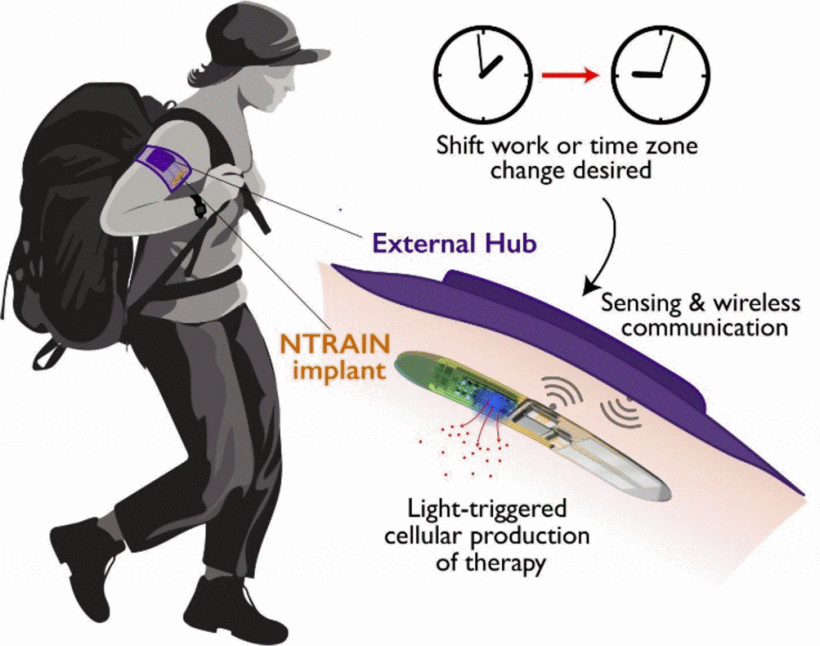
Fig. 4. In this artistic illustration, a user with an NTRAIN implant and its accompanying external hub works in the field. The user inputs a desired time shift (due to shift work or travel across time zones). Based on cues from the body's physiology, the external hub detects the user's circadian rhythm, and triggers the implant to produce precisely-dosed peptide therapies. Courtesy of Northwestern University [20]. See also partners Blackrock Microsystems [21], a privately held company that provides enabling tools for neuroscience, neural engineering and neuroprosthetics research worldwide.
SECTION III.
DARPA Methodology
The methodology of the paper itself is wholly qualitative and normative in its approach, with the explicit aim of forming a conceptual framework within which to offer critical reflections on the ADAPTER Program. This conceptual framework will identify ethical, legal and social aspects with which to interrogate the semi-autonomous socio-technical device being proposed by DARPA. In addition, this section is dedicated to DARPA's methodology. It will describe the composition of the ELSI panel, the program requirements, and the non-disclosure agreement (NDA). The reader must also remember that DARPA is positioned for advanced research projects (often referred to as “blue sky projects”) and not proven technologies. In many ways DARPA's programs fits into an experimental research methodology.
A. Normativity
The methodology of the paper itself is wholly qualitative and normative in its approach. The research question is plainly:
Is it desirable for warfighters in the US Armed Forces to bear an implantable device for the goal of better sleep cycles and the diminishment of traveler's diarrhea?
The investigation is likely to yield a range of diverse responses from a variety of stakeholders, such as, it is desirable, to it is undesirable; or even it is permissible to it is not permissible [28]. What kind of standard of evaluation can we anticipate for something that is predictive in nature? Will most soldiers take on the ADAPTER and incorporate it into their day to day practice [29]? And what of the exceptions who maintain their right to opt-out [30]? Will there be direct repercussions on their right of refusal? What might this mean for cultural norms in the Armed Forces and the shared values of a defense personnel that holds so deeply to social structure that enables cohesion and impenetrableness during conflict and war? Can we therefore prejudge ethics, prejudge behaviors and outcomes, before ADAPTER actually happens? Indeed, should it proceed, and if so, how should it be instituted? What kind of conceptual framework can we develop that cuts across a number of normative fields of inquiry: ethics, legal, social? In brief, if ADAPTER is to go ahead, beyond the proof of concept phase, what are the fundamental principles that should govern its application.
B. ELSI Panel
The ELSI panel is made up of four professors including myself; one from bioethics, another joint from bioethics and humanities, one from health law policy, biotechnology and bioethics, and finally the author of this article who specializes in public interest technology. Of the 36 profiles provided in the ADAPTER Kickoff booklet, 31 profiles were assumed to be male and 5 to be female. These numbers do not include the ELSI panel that was composed of 2 males and 2 females.
The technical teams are made up of interdisciplinary specialists from Northwestern University [21], Rice University [31], the University of Minnesota, Carnegie Mellon University [32], University of Utah, together with a privately held company Blackrock Microsystems [22]; MIT [33] and Stanford University [34].
C. Semi-Annual Program Meeting Requirements
The ELSI panel for ADAPTER has been asked to attend semi-annual full-day program meetings where the ADAPTER research teams summarize their progress, and panelists contribute some brief commentary at the end of the meetings. The Proposer's Day for ADAPTER was held 15 April, 2021 [35]. The first program meeting was hosted on April 30, after which point the panel was asked if they would like to work independently or self-organize into a team. Technical teams were also encouraged to reach out to individual ELSI panelists to explore areas of socio-ethical benefits, risks or harms. To date, no one has contacted me to my knowledge, but this is to be expected as breakthroughs of a technical kind are being sought and this has always seemed to be the practice of engineers-seek to innovate first, worry about the social implications, risks and unintended consequences later.
On the 30th of April 2021, I was granted 10 minutes for a brief overview presentation, and was graciously given another 5 minutes by the program manager after another ELSI panelist offered very brief but significant remarks. I chose to deliver my comments using the “I” and adopting an autoethnographic approach using a mix of primary and secondary sources of evidence. In the 10 minutes the directive was that we introduce ourselves and provide some thoughts and reflections on two ethical, legal, and/or social issues related to technology developed through the ADAPTER program. The technical teams received between 1-1.5 hours for each of their presentations but understandably given the content requirements. One criticism I have, is that the ELSI panel should have received the same length of time in presentation. Although the vast majority of the audience and participants stayed online for the duration of the day; ELSI panels seem to always go last and are given the last time slot available for delivery. This has to change, and ELSI panels should set the tone of the day after initial programmatic presentations. Moreover, ELSI specialists need to be incorporated into the conception phase of the Program, at the outset.
D. Non-Disclosure and the Military-Industrial Complex
ELSI panel members, purely given the nature of their work and their attendance to academic matters, will always have limited time and competing interests to give special attention to potentially world changing initiatives like the DARPA ADAPTER Project. Although a Non-Disclosure Agreement was signed by ELSI panelists the Program Manager encouraged the socialization and writing of ELSI reflections in the public domain, but not to address technical matters given they are fraught with Intellectual Property sensitivities potentially with spin-off commercial interests in the future. This military-industrial complex is a topic that has previously been addressed, even by Presidents of the United States. In President Eisenhower's 1961 Farewell Address, where he referred to the informal alliance between the military and defense industries, he warned, “we must guard against the acquisition of unwarranted influence, whether sought or unsought, by the military-industrial complex” [36].
SECTION IV.
Defining ELSI
An ELSI panel has been composed consisting of four transdisciplinary academics with differing strengths in ethics, law and social implications (ELSI) of advanced biomedical implantable devices. For a brief overview of ELSI [37] topics in the literature that have received significant attention refer to [38]–[43] related to the fields of genomics, forensics, and nanotechnology. The term ELSI was coined by James Watson in 1988, the director of the Human Genome Project (HGP), who called for the US National Institutes of Health (NIH) to directly fund research into this effort [44].
Before proceeding with this article, it is important to define exactly what is meant by the loaded terms that form the ELSI approach: ethics, law, social and implications/aspects. Table I provides definitions inspired by the Oxford English Dictionary, a list of synonyms, and examples of each term. It should be noted that the critical term beyond the thematic areas of ethics, law and social is the last term of the ELSI/ELSA acronym referring to implications/ aspects. When discussing “implications” we are pointing to the conclusion that can be drawn from something although it is not explicitly stated, while “aspects” are about a particular part or feature of something. Without deflecting from the focus of this paper, many European scholars prefer the Responsible Research and Innovation (RRI) approach that uses the Anticipate, Reflect, Engage and Act (AREA) framework. Yet, both ELSI and RRI have come under heavy criticism for alleged “ethics washing” when ethics is preferred to regulation, and/or lip service is paid to action because a company, government agency or defense force may have a technical ethics board that conducts fabricated or exaggerated practice to “uphold” standards and/or professional ethics (e.g. the involvement of Sidewalk Labs in the Quayside project in Toronto) [45].
SECTION V.
ELSI and Socio-Technical Systems Design
Independent of how strongly individuals feel ‘for or against’ a technology's diffusion, it must be acknowledged that the process of innovation is a process of interactive learning that should incorporate a variety of different stakeholders who actively listen, share and deliberate toward sensemaking [46]. And this interaction must take into consideration the asymmetry of time between various phases and approaches adopted in the Program's lifecycle. What is clearly to be preferred is that design should incorporate a values-based development process [47], [48], acknowledging that ethical alignment [49], legal and regulatory considerations [50], and social determinants are embedded from the outset and not “bolted on” if budgets allow, as an afterthought. Additionally, there must be an acknowledgement that not all stakeholders-particularly indirect, or even potential end-users - have the same level of power at the roundtable, during the design process, if in fact a roundtable even exists and users have been approached to provide input. If anything, the production machine, particularly if backed by a military-industrial complex [51], has vastly more stealth in decision-making than the application side where end-users are presented with a limited set of choices that at times is illusory. Market branding may show diversity in form and function for differentiation and appeal, but while the product comes in different packaging, it does almost identical in usage.
Table I. Defining ELSI
It would be naïve to believe that because processes of inclusive design, participatory design, and even co-design exist, steeped within their own methodological and theoretical consultative frameworks, that technologies are built by the people with the people, and systems of innovation actually adhere to professional ethics in the development of new technologies by being inclusive of diverse community groups. Each person carries several value-laden imperatives by their mere existence and behavior. They are in fact a member of one or more stakeholder types (e.g. manufacturer, NGO, government, citizen, etc.) [52]. But one must reflect on a much deeper personal question, independent of what organizational or institutional unit they belong to: who and/or what do they ‘belong to’ as a holistic being, at the micro-personal level. In other words, what is the lifeworld of a given person [53]: what constitutes their immediate experiences, activities, and contacts that make up their world as an individual or corporate life, and how does this life flourish between contexts in harmony (i.e., the fusion of the individual and corporate life and beyond). A person can be an employee, carer, and maintain both religious beliefs and political orientations. More simply and in the context of this article, for example, is one:
Employed as an engineer at a manufacturer;
A government employee at a government agency (e.g. the USA's FDA (Food and Drug Administration)
A member of a non-government organization, volunteering their time on matters of human rights law
An individual who may contribute their expertise to wireless systems development of standards regarding the placement of implantables on the human body, electromagnetic interference (EMI), etc.
A government-funded scientist who studies spectrum related issues of implantable devices
A program manager who might belong to a consortium or even to a defence proposal arm like DARPA
A member of a not-for-profit organization that advocates for soldiers who have been to war and the wellbeing of their families
An academic researcher in a variety of fields
A patient who bears a brain implant device
A carer of a person who cannot afford an implant device
A displaced person who has previously suffered persecution for their beliefs (e.g. refugee)
A person who belongs to an under-represented minority and has been discriminated against (e.g. migrant)
A unique person on Earth with given philosophical, ideological and/or religious beliefs.
Other lifeworlds individuals might engage with, include: family and friendship networks; clubs and identity-related groups of belonging; religious or ethical groups of practice; online gaming networks and other entertainment services, and much more. As humans we seem to demarcate well between our day-job and who we are as every day people after hours. If anything, this is a call to authenticity, to share our real selves with one another; when it counts, without fear of retribution. It's a call to a future that is not based on the techno-economic paradigm [54], but a spirit of true co-design toward community-based development and empowerment through socio-technical design efforts and common goals for a positive future based on beneficial socio-technical imaginaries.
As in socio-technical systems design, ELSI researchers cannot ignore the contributions of STEM scientists and practitioners, nor can STEM professionals sideline ELSI representative voices. Value-sensitive design is paramount to the success of a design of any open and complex sociotechnical system [55]. A process that is inclusive, participatory, and ideally co-evolving toward design is to be preferred than one where stakeholders are hardly on speaking terms. Much has been written on pre-judging ethics, laws and societal responses when taking a precautionary approach to emerging technologies [56], [57]. Some critics have warned that only when an emerging technology is rolled out can we ascertain how society will shape technology (i.e., the social shaping of technology) [58]. Others believe that technologies have inherent qualities that are value-laden that can determine how a technology will be applied and its ultimate trajectory (i.e., technological determinism) [59]. And still others prefer praxistemology that supports agile methods and rapid prototyping without a focus on laws and regulations, and theoretical or precautionary or anticipatory ideas [60]. The motto of the praxistemologist is “just do it” (the marketing slogan for the Nike brand), with teething problems either addressed as necessary or obstructing the diffusion of a technology. For praxistemologists, the market will dictate the survival of a given technology, and if the market does not want the technology then it will not get through the infamous “valley of death” phase of an innovation going from basic research to commercialization.
SECTION VI.
Multi/Inter/Trans-Disciplinary Perspectives
In the paper titled: “Wiener's Cybernetics Legacy and the Growing Need for the Interdisciplinary Approach” published in Proceedings of the IEEE in 2015, Adamson et al. [61] emphasize Wiener's willingness to cross disciplinary boundaries to consider questions usually reserved for social scientists, likely because of his family's grounding in the humanities. It was Wiener through the Macy Conferences held between 1946 and 1953 who had hoped for “cybernetics” to be considered a hybrid interdiscipline with the goal of creating a field that would allow for fluency between diverse skillsets: mathematicians, engineers, biologists, social scientists, and humanists [62]. Schools that are interdisciplinary and transdisciplinary have been deliberately created internationally to support science, technology, society and environment (STSE) educational initiatives as a response to the evolution of complex problems in the world. For example, the School for the Future of Innovation in Society (SFIS) in the College of Global Futures at Arizona State University, houses over 35 full-time academics with more than 50 different disciplinary backgrounds [63]. Core members of the Society Policy Engineering Collective (SPEC) in the Institute for the Future of Innovation in Society (IFIS) have joint appointments in various Schools of Engineering (FSE), and every member of SFIS is affiliated with at least one School and Research Center outside their home base.
The aim of what has come to be known plainly as Science Technology and Society (STS) studies is to develop graduates who are able to engage in issues pertaining to the impact of science and technology on everyday life, toward responsible decision-making and the creation of processes and methods to address complex problems [64]–[66]. STS applies a wide range of theories at the intersection of science, technology and society with the primary goal of understanding a real-world issue (e.g. genetic engineering) by the integration of social, ethical, economic and political aspects [67]. Responsibility, care, reflexivity, inclusion, respect, knowledge and accountability underpin STS curriculum values; and content in these programs is historical, philosophical and issues-based. The ultimate goal is humanizing science and technology fields by the infusion of humanities and social science scholarship [68].
SECTION VII.
Discussion: Science and Technological Convergence and Complexity
Table II. ELSI conceptual framework: Adapter issues
It is important therefore to note that the need for interdisciplinarity or more precisely, ELSI considerations, was not simply born from the Human Genome Project (HGP) of the 1990s. If anything, the HGP signified a resurgence in the need for transdisciplinarity since the days of Wiener because it (i.e., DNA and HGP) was going to change the face of the fields of genomics and forensics as we knew them. This followed on from such works as Margaret Sharp's 1985, Europe and the New Technologies: Six Case Studies in Innovation and Adjustment [69] that pointed to the significant impacts that technologies would have on diverse societal processes. Today, we can point to ever increasing complexity in the convergence of science and technology-based processes, such as gene editing and synthetic biology, brain-to-computer interfaces (BCI) and brain implants, next generation AI (e.g. neuromorphic computing), robotics and autonomous systems and much more that requires the attention of ELSI researchers and practitioners. But where are these qualified persons “in-situ” when it counts? The emergent field of public interest technology (PIT) seeks to incorporate these unique voices into mainstream technology practice, and while the need is recognized the business and government models to make this happen are fledgling [70].
Just as important to highlight today is that we cannot separate out “the creation of knowledge from its uses” [40, p. S8]. We have for too long led with the systems of innovation evolutionary economic paradigm, rather than be inspired by the community who know their needs but may require support in achieving those ends because they do not possess the necessary skill-set or know-how to development. The proposed solutions may more appropriately come from diverse disciplines that are not scientific or technical, such as ethicists, lawyers, social scientists, theologians and public policy specialists [71]. And these skillsets must be injected into the nascent stage of the innovation process, not after the proof of concept has been defined that requires further analysis and design. By that stage it is too late to onboard people to contribute actively to the robust delivery of a product or service. To many technologists, this kind of early intervention is considered a road block but even Alvin Toffler in Future Shock noted the importance of a diverse workforce. He reflected on the “…world's biggest and most tough-minded corporations… [that] hire intuitive futurists, science fiction writers and visionaries as consultants. A gigantic European chemical company employs a futurist who combines a scientific background with training as a theologian. An American communications empire engages a future-minded social critic” [72, p. 463].
In fact, I am of the opinion that while it is vital to interject diverse skillsets into the socio-technical design effort for the ultimate combined creativity and inventiveness potential and for ethical alignment; it is not only the technologists or engineers, nor the social scientists or humanities scholars that are needed to bolster the design process, but a grass-roots coordinated community-based effort that identifies the needs of those who are geographically co-located and directs a way forward. All change is local after all, as Jacques Ellul noted: “By thinking globally I can analyze all phenomena, but when it comes to acting, it can only be local and on a grassroots level if it is to be honest, realistic, and authentic” [73]. Additionally, acknowledgement that we exist within a Science, Technology, Society and Environmental (STSE) ecosystem, and that every stakeholder has a role to play in the development of a product or process is vital; especially when that innovation has the potential to impact our path and that of the world around us [74].
Thus, in short, my first ELSI recommendation is to request access to the warfighters that might one day be asked to house ADAPTER within their bodies and use it appropriately. Table II provides a list of issues under each aspect that might be addressed by focus groups with a pre-test; intervention; posttest methodology. The pre-test would measure what knowledge individual soldiers had about jet lag, sleep, traveler's diarrhea and implants. The intervention would be composed of visual material of how ADAPTER works (e.g. figures 2–4) and commensurate videos of other implantable and tethered to smartphone systems on the commercial market [75]. Finally, in the post-test we would measure whether or not sentiments have changed since engaged in the intervention. The hope is to break down questions posed to the focus groups using Table II below. The most obvious question to ask the soldiers and the technical teams working on the ADAPTER Program is: What are the alternative remedies to addressing the problems identified by the Program?
Table II contains 60 questions that may be addressed at various phases of the Program. It must be noted, that these are neither exhaustive or meant to be a checklist. Rather they are an illustration of what questions could be considered as a part of the ELSI conceptual framework. Further research, such as a deeper literature review with respect to implants in the military, or the conduct of focus groups with various stakeholders, especially the warfighter, might determine a more pertinent list of questions achieving literal replication through the application of a systematic research approach. From the outset we may need to ask the fundamental question of the soldier's real or perceived moral agency, on whether they believe they have a choice to refuse an implant like that which is being proposed, and what kind of impact that autonomy might have on the individual warfighter, and more broadly in their respective military unit [76]. Are military implants for example, akin to the complete list of vaccinations and booster shots provided to soldiers upon enlistment?
The ELSI conceptual framework that will shape the bounds of my reflections in the ELSI panel for the ADAPTER Program can be found in Figure 5. This is the coalescence of the socio-technical systems design approach with the ELSI approach. The socio-technical systems approach converges with ELSI in the “social” and “legal/environmental” dimensions and diverges on “ethics” and “technical”. The socio-technical is a design approach, whereas ELSI considers implications using a variety of dimensions. The prominent themes that emerge from the overlaying of socio-technical dimensions with those of ELSI include the individual rights of a soldier and citizen human rights; the level of public awareness and education and consultation with non-eligible users; the values embedded into the design of ADAPTER pertaining to the ethical dimension and the values that warfighters personally possess that may/may not be different to those values espoused by the defence at large; the level of autonomy of the ADAPTER technology and the access that soldiers have to their own datasets collected by ADAPTER; the right for the warfighter to be able to render the ADAPTER “off” or “on”, in effect a ‘kill switch’ and the right for removal of the device altogether; the importance of standards and guidelines to support the release of ADAPTER and involvement by federal agencies, such as the FDA and FCC. There is also a great need to distinguish between in-vivo devices and ex-vivo devices inclusive of luggable programmers that can be tethered to the ADAPTER implantable, on-body wearable hubs acting in concert with external to the body lampposts or other infrastructural apparatus. Warfighter access to care, and policies that describe the liability of the individual who bears an implant are important to define as is the ability to audit the blackbox and alert the end-user when there are exceptions or errors in readings and what these might mean. Additionally, the eligibility of this ADAPTER program only to military personnel has to be addressed, as does the propensity for the warfighter to traverse borders and be subject to international laws and systems of governance.
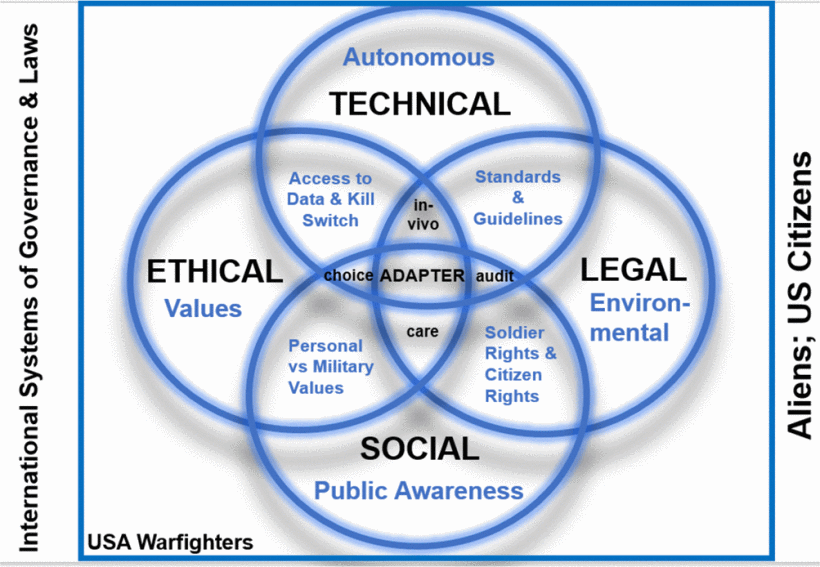
Fig. 5. The ELSI conceptual framework defined for DARPA's ADAPTER program inquiry by applying a socio-technical systems design lens.
SECTION VIII.
Conclusion
This paper has introduced the DARPA Program known as ADAPTER. It has identified that DARPA has chosen to engage a panel of experts around socio-ethical-legal aspects of an implantable proposal for warfighters with respect to jet lag and traveler's diarrhea. The article focused on exploring aspects of ELSI and socio-technical design, the importance of transdisciplinary inquiry, and has presented a conceptual framework by which to bound critical reflections for the duration of the DARPA engagement. Importantly, the persistent question of an ELSI panel might well be, what is the non-technical alternative to what is being proposed. Might it be, better planning amongst the armed forces? Arriving at the location of conflict before operational activities in-situ begin, allowing the warfighter some recovery time? Can warfighters receive better training when it comes to preparedness of conflict, and mindfulness about how to deal with and overcome some of the challenges in the field? Through the NTRAIN, we might well be opening up soldiers to greater vectors of attack and unwellness through the option to target an embedded device that is not passive but semi-autonomous [77]. At the same time the public require to be kept informed of the developments of such proposals. What mechanisms of communication will exist? And what of the prospects of commercializing this military technology? Is this yet another GPS or RFID or Google Earth (formerly Keyhole Inc) technology?
SECTION IX.
On Reflection
The existence of an ELSI panel that serves the function of reminding the technical teams to be cognizant of ethical, legal and social aspects of their research endeavor, i.e., throughout a design process, is better than not having a panel at all. However, technical presentations in dense back-to-back hourlong sessions every six months, does not really demonstrate true engagement, despite being a start. While this paper emphasized the need to consider a socio-technical design approach when considering complex systems, the ADAPTER interdisciplinary technical teams did not identify any specific methodology they followed. This may well mean that the “socio” side has completely been ignored in preference to a more experimental design approach that focuses on technical results.
One of the challenges of working in highly specialized fields, is the initial chasm that may exist between the technical specialist and the ELSI panelist. The specialist (bio)-engineering language that was employed in the first meeting demonstrated the need for the emergence of a common lexicon. This has much to do with fluency between the disciplines and is one of the skillsets that an interdisciplinary researcher is endowed with by way of their science, technology, society and environmental (STSE) training. Indeed, the engineering teams were cited by DARPA as being “interdisciplinary” but it must be emphasized, interdisciplinary within the STEM and medical fields, no further. ELSI panelists may have been perceived at talking in vague terms about high-level concepts that apply to all people, while the technical teams were talking about micro-details relevant to their project aims and their aspect of the working/functional system elements. Somewhere there has to be a meeting point of minds where more proximate engagement is required. But this cannot be imposed, it must emerge organically, and trust needs to be established between various stakeholders.
Quite interestingly, however, is that when such “blue sky” programs emerge, especially in terms of complexity, that seemingly simplistic questions in plain English cannot be addressed adequately by the technically superior. This is not a failure on the part of the engineering fraternity, just a reality that the more complex systems we determine to build, the greater the potential for even very simple questions to go unanswered. One is left questioning whether in fact, our sociotechnical imaginaries should be believed as plausible futures or whether we are seemingly attracted to a strange type of technological determinism that propels us forward because we cannot resist the allure of the technically possible [78]. ELSI panelists do have access to high-level technical documentation, but again, are bound by a Non-Disclosure Agreement which reduces transparency to the general public, but also to those onlookers observing the project from a commercial lens. Ideally, this group of researchers and external panelists, would be complemented greatly by a socio-technical ecosystem view of the world, where there was greater representation from diverse stakeholders.
References
1. U.S. Department of Defense, Advanced Acclimation and Protection Tool for Environmental Readiness (ADAPTER), SAM.gov, Apr. 27, 2020. Available: https://sam.gov/opp/cz1c517d629541dbba86c58098c72e54/view
2. P. Tucker, “The military is building brain chips to treat PTSD,” The Atlantic, May 2014. Available: https://www.theatlantic.com/technology/archive/2014/05/the-military-is-building-brain-chips-to-treat-ptsd/371855/
3. N. Wiener, I Am a Mathematician: The Later Life of a Prodigy. New York, NY, USA: Doubleday, 1956.
4. K. Michael, M. G. Michael, J. C. Galliott, and R. Nicholls, “Socio-ethical implications of implantable technologies in the military sector,” IEEE Technology and Society Magazine, vol. 36, no. 1, pp. 7–9, Mar. 2017. https://doi.org/10.1109/MTS.2017.2670219
5. G. Wallace, M. Cook, and K. Michael, “The Brain on the Bench Project: The science, the application, the implications,” ACES 2020 Public Lecture, Aug. 18, 2020. Available: https://www.katinamichael.com/seminars/2020/8/19/brain-on-the-bench-project
6. K. Michael, “Neuralink and Synchron,” in I. Mendoza (Chair), Theme 4: The Intersection of Bioethics and Synthetic Biology (Part II), Biosecurity, Biosafety, and Bioethics Conference, Arizona State University, Dec. 3–4, 2020.
7. W. Armstrong and K. Michael, “The implications of Neuralink and brain-machine interface technologies,” in 2020 IEEE International Symposium on Technology and Society (ISTAS), 2020, pp. 201–203. https://doi.org/10.1109/ISTAS50296.2020.9462223
8. M. Demko, K. Michael, K. Wagner, and T. Bookman, “When brain-computer interfaces pose an existential risk,” in 2020 IEEE International Symposium on Technology and Society (ISTAS), 2020, pp. 112–114. https://doi.org/10.1109/ISTAS50296.2020.9462244
9. N. Wiener, “Some moral and technical consequences of automation,” Science, vol. 131, no. 3410, pp. 1355–1358, 1960. https://doi.org/10.1126/science.131.3410.1355
10. K. Michael, M. G. Michael, C. Perakslis, and R. Abbas, “Uberveillance and the rise of last-mile implantables: Past, present and future,” in I. Pedersen and A. Iliadis (Eds.), Embodied Computing: Wearables, Implantables, Embeddables, Ingestibles. Cambridge, MA, USA: MIT Press, 2020, pp. 97–130. https://doi.org/10.7551/mitpress/11564.003.0007
11. K. Michael, “Brain pacemakers in consumer medical electronics improve quality of life: Benefits, risks, and challenges,” IEEE Consumer Electronics Magazine, vol. 7, no. 4, pp. 82–85, Jul. 2018. https://doi.org/10.1109/MCE.2018.2816298
12. K. Michael, “Brain pacemakers in consumer medical electronics improve quality of life—Part II: The need for patient feedback in the product lifecycle management,” IEEE Consumer Electronics Magazine, vol. 7, no. 6, pp. 51–54, Nov. 2018. https://doi.org/10.1109/MCE.2018.2835879
13. A. Graafstra, K. Michael, and M. G. Michael, “Social-technical issues facing the humancentric RFID implantee sub-culture through the eyes of Amal Graafstra,” in 2010 IEEE International Symposium on Technology and Society (ISTAS), 2010, pp. 498–516. https://doi.org/10.1109/ISTAS.2010.5514602
14. K. Michael, “Humancentric RFID: Socio-technical learnings from industry cases,” tutorial presented at the IEEE RFID Conference, 2017. Available: http://2017.ieee-rfid.org/humancentric-rfid-socio-technical-learnings-from-industry-cases/
15. SOSV, “VivoKey: Secure subdermal identity platform protecting digital identities—Trust as a Service,” 2021. Available: https://sosv.com/portfolio/vivokey
16. K. Michael, “RFID/NFC implants for Bitcoin transactions,” IEEE Consumer Electronics Magazine, vol. 5, no. 3, pp. 103–106, Jul. 2016. https://doi.org/10.1109/MCE.2016.2556900
17. K. Michael and FIS 111 Students, “Global vendor and reseller case studies of RFID/NFC and other implantable devices,” tutorial presented at the IEEE RFID Conference, Phoenix, AZ, USA, 2019. Available: http://2019.ieee-rfid.org/workshops-tutorials/
18. DARPA, “DARPA ADAPTER: Kick-off virtual meeting.” Available: https://events.sa-meetings.com/website/23650/2/5
19. DARPA, “DARPA announces researchers to tackle common travelers' issues that impact force readiness,” May 10, 2021. Available: https://www.darpa.mil/news-events/2021-05-10
20. A. Morris, “Implantable ‘living pharmacy’ could control body's sleep/wake cycles,” Northwestern Now, May 13, 2021. Available: https://news.northwestern.edu/stories/2021/05/implantable-living-pharmacy-could-control-bodys-sleep-wake-cycles
21. J. C. Galliott, Military Robots: Mapping the Moral Landscape. Farnham, UK: Ashgate Publishing, 2015.
22. P. W. Singer, Wired for War: The Robotics Revolution and Conflict in the Twenty-First Century. New York, NY, USA: Penguin Press, 2009.
23. R. C. Arkin, Governing Lethal Behavior in Autonomous Robots. Boca Raton, FL, USA: CRC Press, 2009.
24. M. Coeckelbergh, “Artificial intelligence, responsibility attribution, and a relational justification of explainability,” Science and Engineering Ethics, vol. 26, no. 4, pp. 2051–2068, 2020. https://doi.org/10.1007/s11948-019-00146-8
25. L. Floridi and J. Cowls, “A unified framework of five principles for AI in society,” Harvard Data Science Review, vol. 1, no. 1, 2019. https://doi.org/10.1162/99608f92.8cd550d1
26. J. Bryson, “The artificial intelligence of the ethics of artificial intelligence,” in M. D. Dubber, F. Pasquale, and S. Das (Eds.), The Oxford Handbook of Ethics of AI. Oxford, UK: Oxford University Press, 2020, pp. 1–25.
27. K. Michael and M. G. Michael, “Toward a state of uberveillance,” IEEE Technology and Society Magazine, vol. 29, no. 2, pp. 9–16, Summer 2010. https://doi.org/10.1109/MTS.2010.937339
28. R. Abbas, K. Michael, and M. G. Michael, “The social implications of location-based services: A review of the literature,” Journal of Location Based Services, vol. 8, no. 1, pp. 1–46, 2014. https://doi.org/10.1080/17489725.2014.884055
29. K. Michael, M. G. Michael, and R. Abbas, “Ubiquitous sensor networks and the rise of the internet of things: Ethical, legal, and social considerations,” in Proceedings of the IEEE International Symposium on Technology and Society (ISTAS), 2015, pp. 1–8.
30. R. Clarke, “Information technology and dataveillance,” Communications of the ACM, vol. 31, no. 5, pp. 498–512, 1988. https://doi.org/10.1145/42411.42413
31. M. G. Michael and K. Michael, “The diffusion of surveillance technologies: Toward uberveillance,” Computer Law & Security Review, vol. 24, no. 1, pp. 1–8, 2008.
32. S. Zuboff, The Age of Surveillance Capitalism. New York, NY, USA: PublicAffairs, 2019.
33. N. Bostrom, Superintelligence: Paths, Dangers, Strategies. Oxford, UK: Oxford University Press, 2014.
34. F. Pasquale, The Black Box Society: The Secret Algorithms That Control Money and Information. Cambridge, MA, USA: Harvard University Press, 2015.
35. D. J. Solove, Understanding Privacy. Cambridge, MA, USA: Harvard University Press, 2008.
36. H. Nissenbaum, Privacy in Context: Technology, Policy, and the Integrity of Social Life. Stanford, CA, USA: Stanford University Press, 2010.
37. M. A. Boden, AI: Its Nature and Future. Oxford, UK: Oxford University Press, 2016.
38. J. Kaplan, Artificial Intelligence: What Everyone Needs to Know. Oxford, UK: Oxford University Press, 2016.
39. B. Schneier, Data and Goliath: The Hidden Battles to Collect Your Data and Control Your World. New York, NY, USA: W. W. Norton & Company, 2015.
40. R. Kurzweil, The Singularity Is Near: When Humans Transcend Biology. New York, NY, USA: Viking, 2005.
41. E. Fisher, “Lessons learned from the Ethical, Legal and Social Implications Program (ELSI): Planning societal implications research for the National Nanotechnology Program,” Technology in Society, vol. 27, no. 3, pp. 321–328, 2005. https://doi.org/10.1016/j.techsoc.2005.04.006
42. S. B. Haga and L. M. Beskow, “Ethical, legal, and social implications of biobanks for genetics research,” Advances in Genetics, vol. 60, pp. 505–544, 2008. https://doi.org/10.1016/S0065-2660(07)00418-X
43. R. Hazin, K. B. Brothers, B. A. Malin, B. A. Koenig, S. C. Sanderson, M. A. Rothstein, M. S. Williams, E. W. Clayton, and I. J. Kullo, “Ethical, legal, and social implications of incorporating genomic information into electronic health records,” Genetics in Medicine, vol. 15, no. 10, pp. 810–816, 2013. https://doi.org/10.1038/gim.2013.117
44. R. M. Cook-Deegan, The Gene Wars: Science, Politics, and the Human Genome. New York, NY, USA: W. W. Norton & Company, 1994.
45. E. P. Goodman and J. Powles, “Urbanism under Google: Lessons from Sidewalk Toronto,” Fordham Law Review, vol. 88, no. 2, pp. 457–498, 2019. Available: https://ir.lawnet.fordham.edu/flr/vol88/iss2/4
46. C. Edquist, Systems of Innovation: Technologies, Institutions and Organizations. London, UK: Pinter, 1997.
47. B. Friedman, “Value-sensitive design,” Interactions, vol. 3, no. 6, pp. 16–23, 1996.
48. S. Spiekermann, Ethical IT Innovation: A Value-Based System Design Approach. London, UK: Routledge, 2016.
49. IEEE Standards Association, Ethically Aligned Design: A Vision for Prioritizing Human Well-Being with Autonomous and Intelligent Systems, Version 2. Available: https://standards.ieee.org/content/dam/ieee-standards/standards/web/documents/other/ead_v2.pdf
50. K. Michael, R. Abbas, and J. Pitt, “Maintaining control over AI,” Issues in Science and Technology, vol. 37, no. 3, Spring 2021. Available: https://issues.org/debating-human-control-over-artificial-intelligence-forum-shneiderman/
51. K. Michael, H. A. Love, and J. Wajcman, “Speaking out against socially destructive technologies: Norbert Wiener and the call for ethical engagement,” IEEE Technology and Society Magazine, vol. 36, no. 2, pp. 13–26, Jun. 2017. https://doi.org/10.1109/MTS.2017.2705779
52. E. G. Carayannis, T. D. Barth, and D. F. J. Campbell, “The Quintuple Helix innovation model: Global warming as a challenge and driver for innovation,” Journal of Innovation and Entrepreneurship, vol. 1, article 2, 2012. https://doi.org/10.1186/2192-5372-1-2
53. E. Husserl, The Crisis of European Sciences and Transcendental Phenomenology. The Hague, The Netherlands: Martinus Nijhoff, 1954. (Original work published 1936.)
54. K. Michael, The Technological Trajectory of the Automatic Identification Industry: The Application of the Systems of Innovation (SI) Framework for the Characterisation and Prediction of the Auto-ID Industry. Ph.D. dissertation, School of Information Technology and Computer Science, University of Wollongong, Wollongong, NSW, Australia, 2003. Available: http://ro.uow.edu.au/theses/309
55. R. Abbas, J. Pitt, and K. Michael, “Socio-technical design for public interest technology,” IEEE Transactions on Technology and Society, vol. 2, no. 2, pp. 55–61, Jun. 2021. https://doi.org/10.1109/TTS.2021.3086260
56. K. Michael and M. G. Michael, “The social, cultural, religious and ethical implications of automatic identification,” in Proceedings of the Seventh International Conference on Electronic Commerce Research (ICER-7), Dallas, TX, USA, Jun. 10–13, 2004.
57. K. Michael and M. G. Michael, “Predicting the socioethical implications of implanting people with microchips,” PerAda Magazine, Jun. 19, 2009. Available: https://www.katinamichael.com/opinion/2013/9/18/predicting-the-socioethical-implications-of-implanting-people-with-microchips
58. D. MacKenzie and J. Wajcman (Eds.), The Social Shaping of Technology, 2nd ed. Buckingham, UK: Open University Press, 1999.
59. M. R. Smith and L. Marx (Eds.), Does Technology Drive History? The Dilemma of Technological Determinism. Cambridge, MA, USA: MIT Press, 1994.
60. N. Sharkey, A. van Wynsberghe, J. C. Havens, and K. Michael, “Socioethical approaches to robotics development,” IEEE Robotics & Automation Magazine, vol. 25, no. 1, pp. 26–28, Mar. 2018. https://doi.org/10.1109/MRA.2017.2787225
61. G. Adamson, R. R. Kline, K. Michael, and M. G. Michael, “Wiener's cybernetics legacy and the growing need for the interdisciplinary approach,” Proceedings of the IEEE, vol. 103, no. 11, pp. 2208–2214, Nov. 2015. https://doi.org/10.1109/JPROC.2015.2483958
62. R. R. Kline, The Cybernetics Moment: Or Why We Call Our Age the Information Age. Baltimore, MD, USA: Johns Hopkins University Press, 2015.
63. Arizona State University, School for the Future of Innovation in Society. Available: https://sfis.asu.edu
64. J. Solomon, Teaching Science, Technology and Society. Buckingham, UK: Open University Press, 1993.
65. G. S. Aikenhead, “STS education: A rose by any other name,” in R. Cross (Ed.), A Vision for Science Education: Responding to the Work of Peter J. Fensham. London, UK: Routledge, 2003.
66. P. J. Fensham, “Science for all,” Journal of Curriculum Studies, vol. 17, no. 4, pp. 415–435, 1985.
67. J. Solomon and G. Aikenhead (Eds.), STS Education: International Perspectives on Reform. New York, NY, USA: Teachers College Press, 1994.
68. K. Michael and J. Pitt, “Humanistic values: STEM education framework,” in A. Anbar, P. Mishra, and L. R. Ragan (Eds.), STEM Futures: The Future Substance of STEM Education. Available: https://serc.carleton.edu/stemfutures/webinar1.html#resources
69. M. Sharp, Europe and the New Technologies: Six Case Studies in Innovation and Adjustment. London, UK: Pinter, 1985.
70. New America, “Public Interest Technology,” 2018. Available: https://www.newamerica.org/pit/about/
71. F. S. Collins, E. D. Green, A. E. Guttmacher, and M. S. Guyer, “A vision for the future of genomics research,” Nature, vol. 422, pp. 835–847, 2003.
72. A. Toffler, Future Shock. New York, NY, USA: Bantam Books, 1970.
73. J. Ellul, interviewed by W. H. Vanderburg, Perspectives on Our Age. Toronto, ON, Canada: House of Anansi Press, 1997. (Original interview 1981.)
74. L. J. Robertson, R. Abbas, G. Alici, A. Muñoz, and K. Michael, “Engineering-based design methodology for embedding ethics in autonomous robots,” Proceedings of the IEEE, vol. 107, no. 3, pp. 582–599, 2019.
75. D. Mantey, “Implant could bring end to jet lag, food poisoning,” IEN Magazine, May 17, 2021. Available: https://www.youtube.com/watch?v=8-W1CtMAo7o
76. K. Michael, “U.S. relaxes body-modifying regulations for personnel entering the military: Floodgates open to emerging electronic tattoos for ID, exoskeletons, brain implants and beyond,” presented at the PREMT Symposium on the Ethical, Legal and Social Implications of Emerging Military Technologies, Melbourne Law School, The University of Melbourne, Melbourne, VIC, Australia, May 28, 2017. Available: https://www.katinamichael.com/seminars/2017/5/29/symposium-on-the-ethical-legal-and-social-implications-of-emerging-military-technologies
77. J. Burns, M. E. Johnson, and P. Honeyman, “A brief chronology of medical device security,” Communications of the ACM, vol. 59, no. 10, pp. 66–72, Oct. 2016. https://doi.org/10.1145/2890488
78. A. Mehta, “DARPA has a crappy new idea to help soldiers,” Military Times (Observation Post), Apr. 7, 2020. Available: https://www.militarytimes.com/news/your-army/2020/04/08/darpa-has-a-crappy-new-idea-to-help-soldiers/
Authors
School for the Future of Innovation in Society and School of Computing and Augmented Intelligence, Arizona State University, Tempe, Arizona
Citation: K. Michael, "DARPA's ADAPTER Program: Applying the ELSI Approach to a Semi-Autonomous Complex Socio-Technical System," 2021 IEEE Conference on Norbert Wiener in the 21st Century (21CW), Chennai, India, 2021, pp. 1-10, doi: 10.1109/21CW48944.2021.9532581.