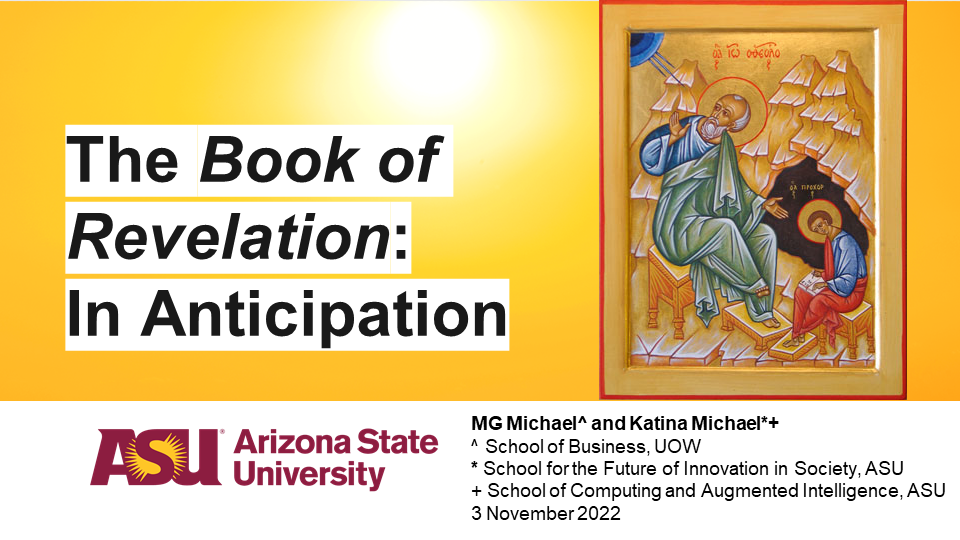
The Book of Revelation: In Anticipation
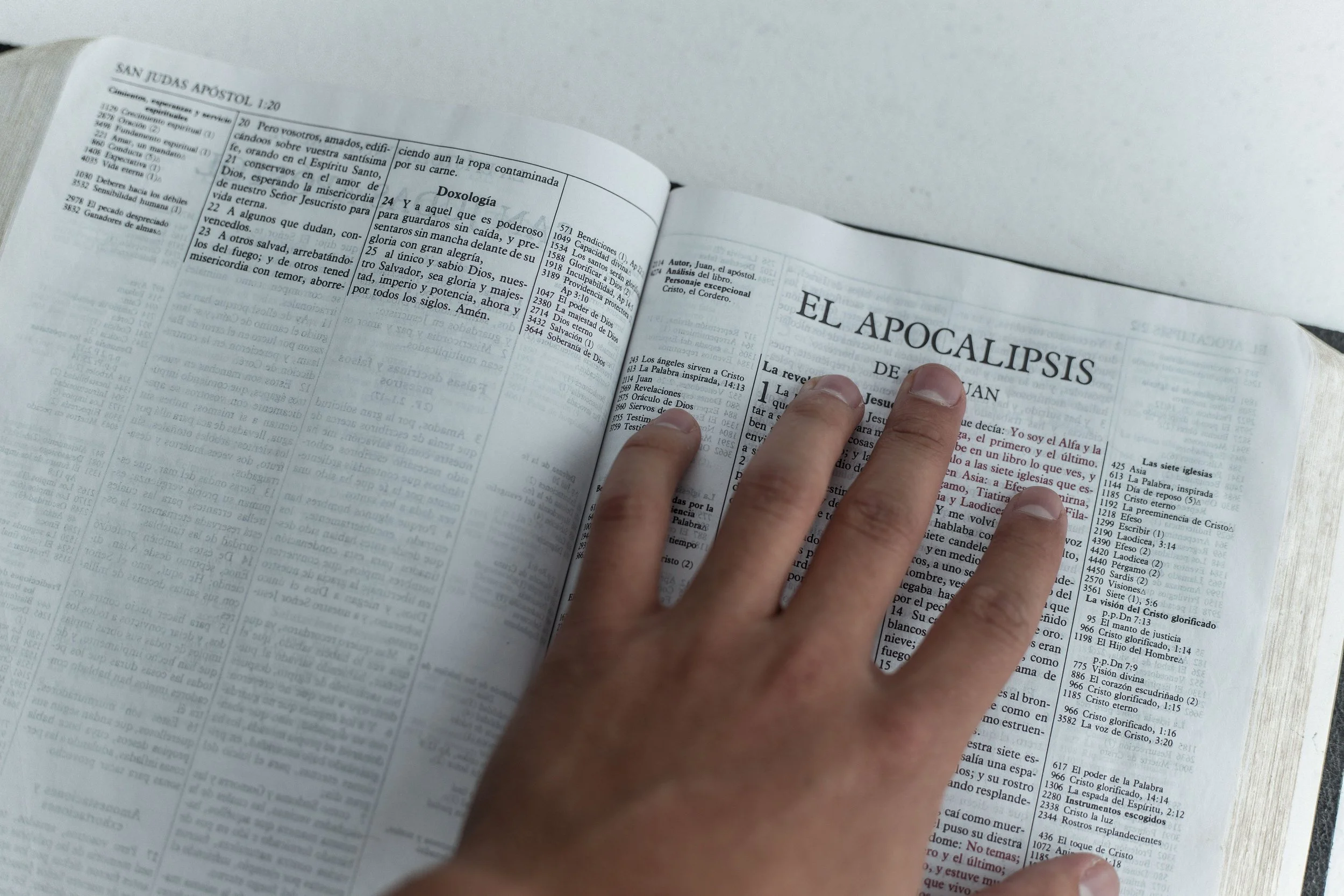
Photo by Luis Quintero
Abstract:
The Oxford Dictionary definition of anticipation is noted as "the action of anticipating something; expectation or prediction."
We can gain a great deal of inspiration regarding the concept of anticipation when we study prophecy in religio-historical texts, such as the Bible.
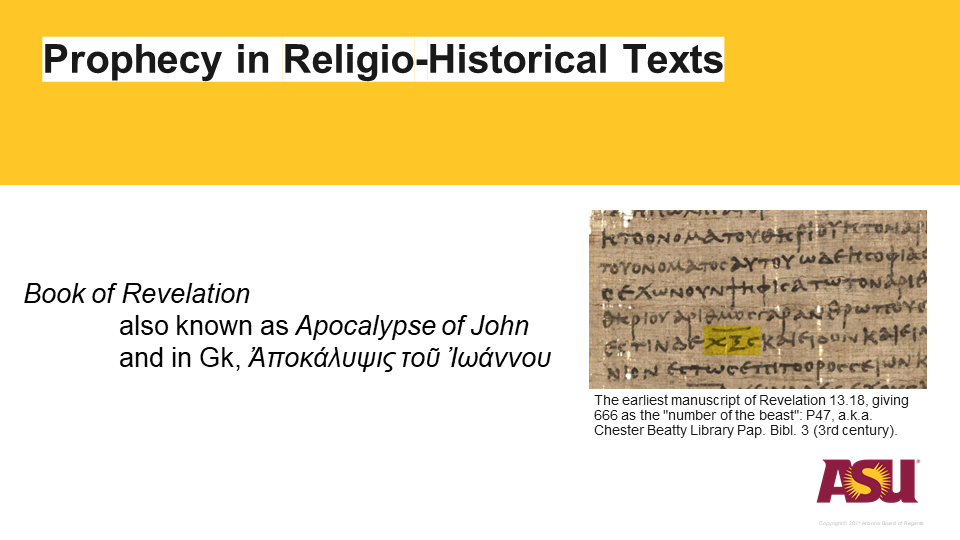
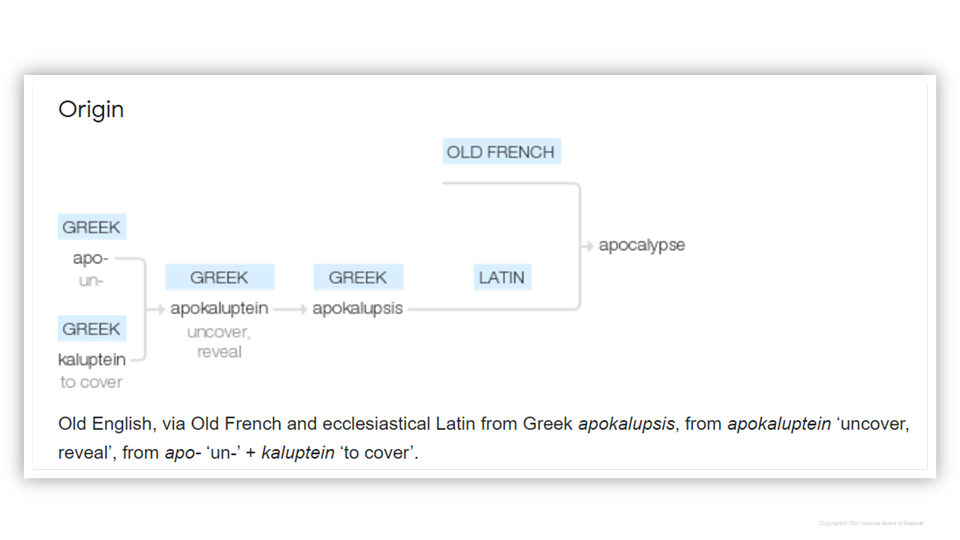
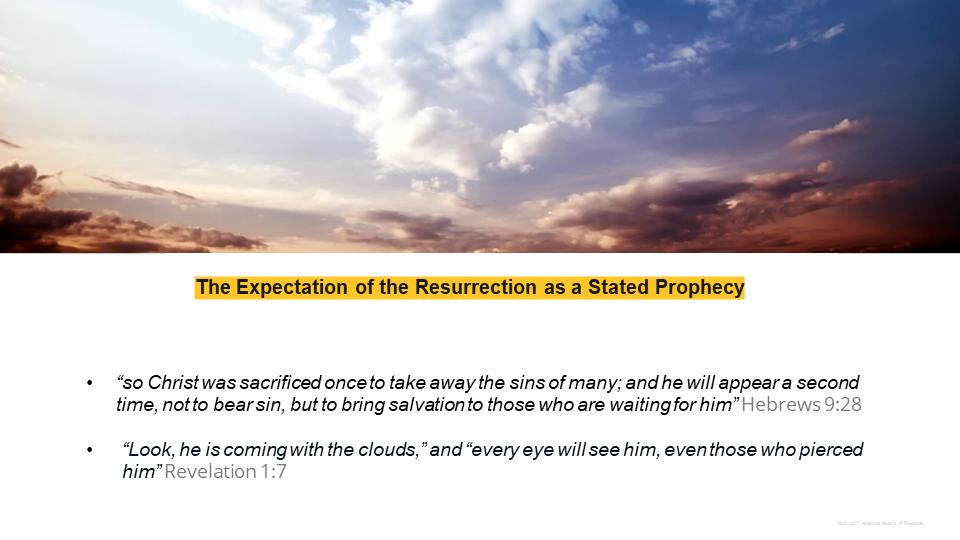
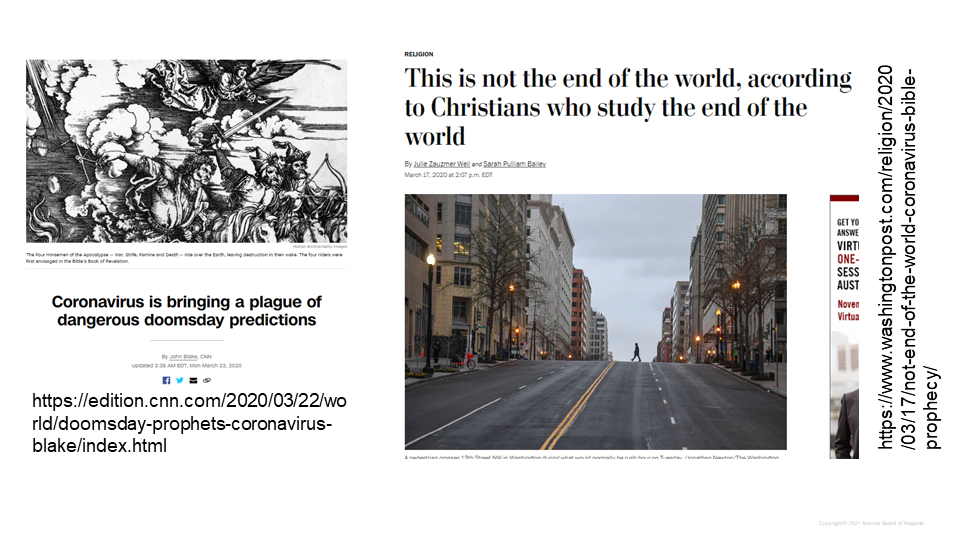
In a number of manifest ways, the study of the Book of Revelation, which is a revealing or an “uncovering” of the promises of God to the community of believers, including the so named “Second Coming” of Jesus Christ, provides an impetus for anticipation (Hebrews 9:28; Revelation 1:7). Believers, of the Christian faith, have an expectation of the resurrection, not merely as a prediction, but as a stated prophecy that will be fulfilled in a time to come in the future.
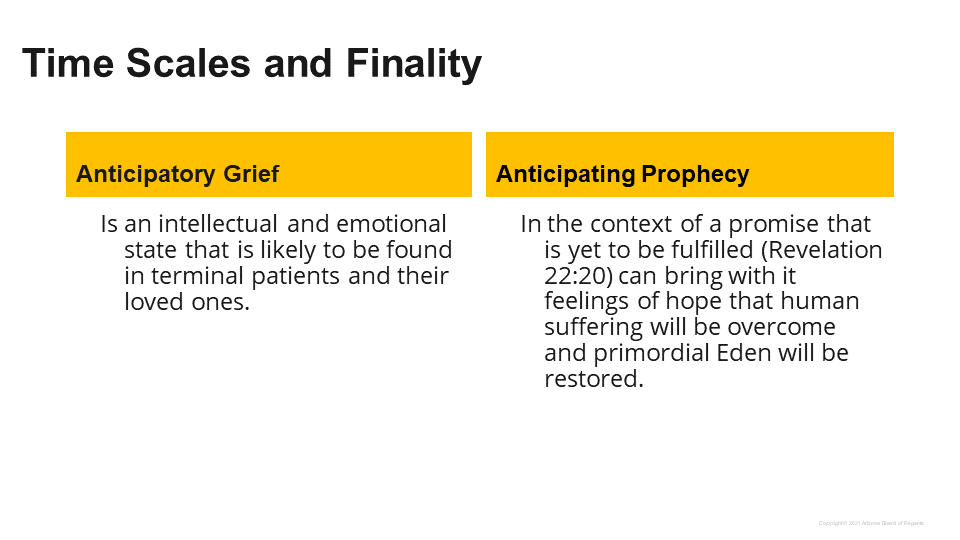
When something is anticipated, the timescale may not be finite, nor may it even be clear in terms of a date or a time in the future. Unlike the intellectual and emotional state of anticipatory grief in terminal patients and their loved ones, anticipating prophecy in the context of a promise that is yet to be fulfilled (Revelation 22:20) can bring with it feelings of hope that human suffering will be overcome and primordial Eden will be restored (Revelation 22:1-5).
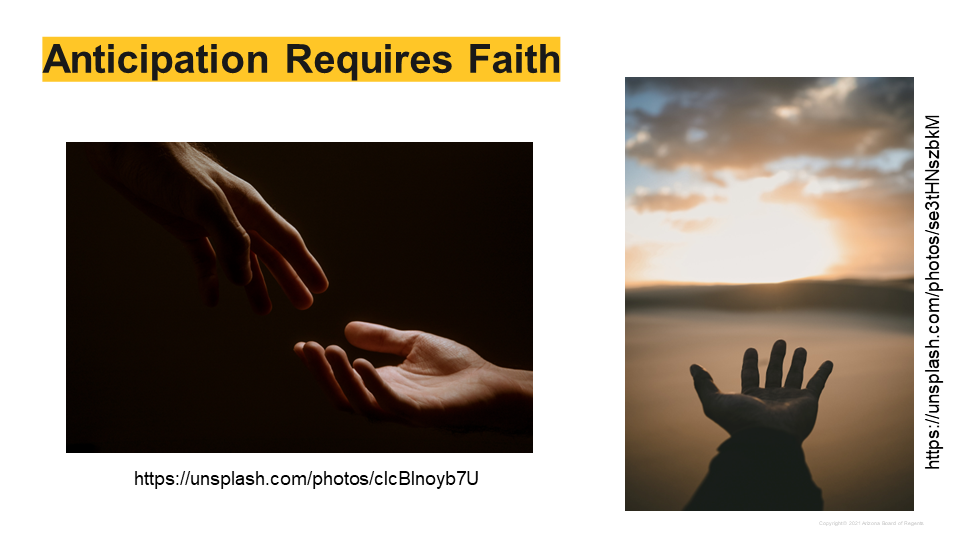
Anticipation therefore requires patience, it requires faith, and it requires constancy of consideration and purposefulness. To anticipate something means we have a trust in its occurrence and we do not typically require material proof of its inevitability. However, we may also be asked to consider certain signposts or “signs” (John 2:11; Luke 12:54-56) along the way which may point to the proximity of the ultimate event and may provide us with some pre-warning of a time to come that makes an event imminent.
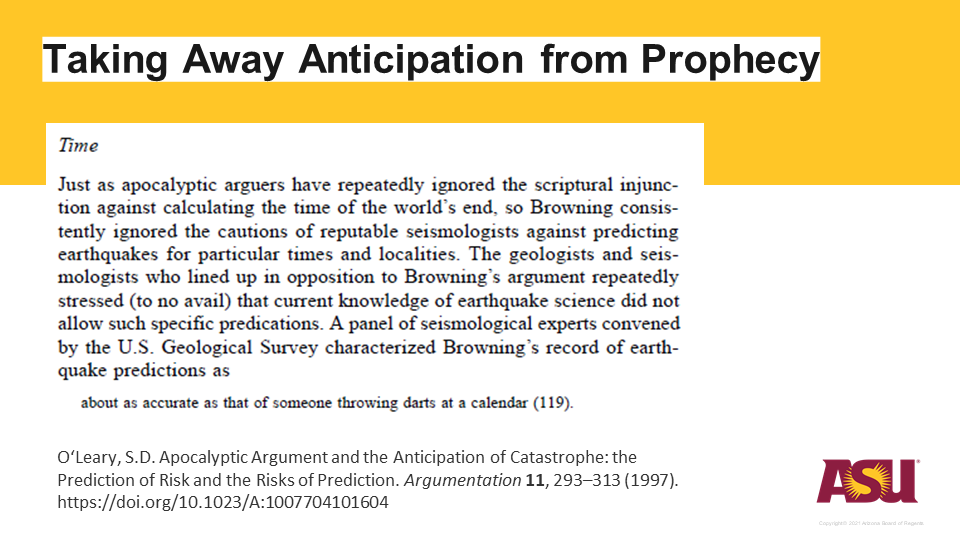
For those who wish to take away anticipation from prophecy, to hurry up a revelation or a divine promise, what we then have is an interpretation that is more secular in thinking than religious in spirit and ironically according to many Christian commentators, could lead to the identification of "false prophets" themselves as noted in the sacred scriptures (2Timothy 4:3; Revelation 19:20). As such, people that try to ‘hurry up’ the end times, may be viewed as spreading ‘conspiracy theory’ because no one knows the hour (of the second coming), except for God himself (Matthew 24:36).
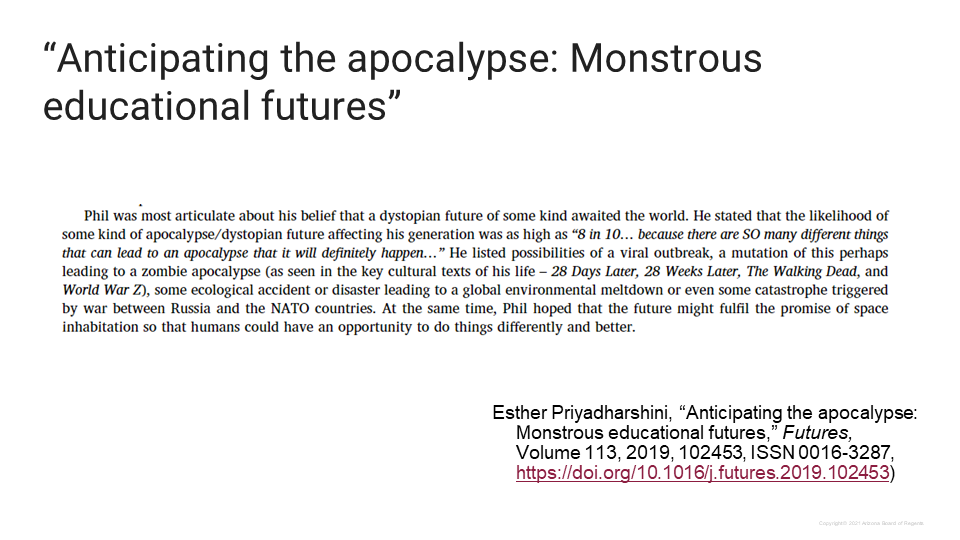
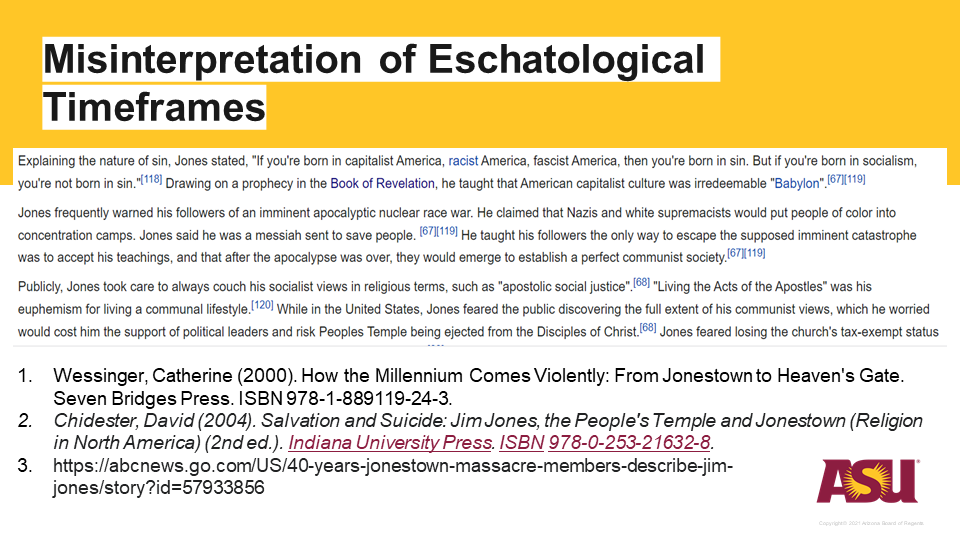
We have often seen in history and with some devastating results, a ‘bad faith’ anticipation directly linked to a misinterpretation of eschatological timeframes by fundamentalist communities or a purposeful erroneous reading by others for power gains. This forced anticipatory behavior has often been responsible for the phenomenon of the ‘religious cult’ and the cult leader such as David Koresh and Jim Jones.
Prophecy itself is not responsible for anticipation. For Christians, anticipation is not new, but has been prevalent since the time of the Old Testament, and the birth and death of the historical figure known as Jesus Christ. People anticipate things on a daily basis, for example, that the sun will rise in the morning and set in the evening, or that the tides will ebb and flow, but when there is human intervention alone to extrapolate meaning about prophecy which is not of the consensus of the church at large, ‘the church universal’, that can lead and oftentimes does, to ultimate peril.
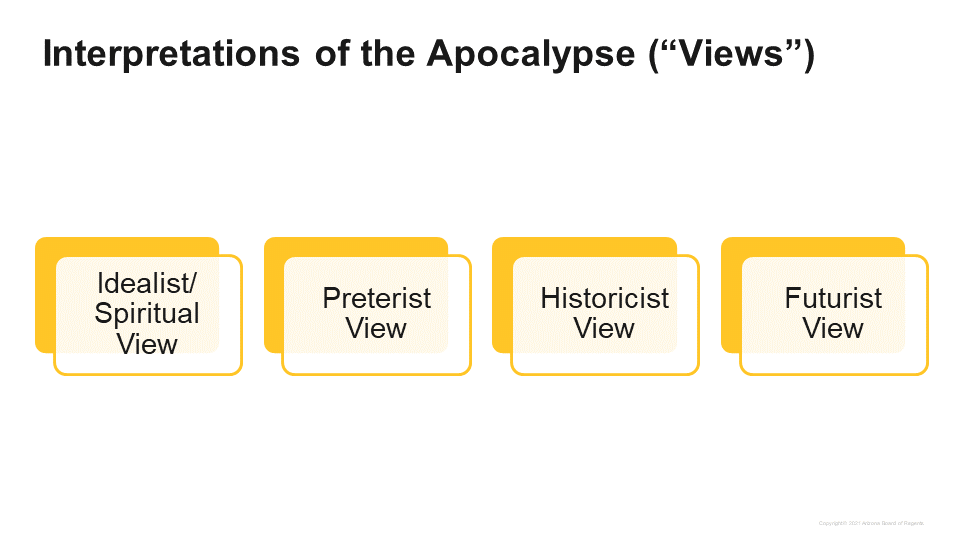
Prophecy it has been well said, might be spoken once, but this does not mean it has to happen at once. In the books of Daniel (9-11) and Revelation (1:4), for example, past, present, and future, are often intertwined like a ‘triple helix’. This ‘twisting’ and ‘turning’ of time is common to apocalyptic literature and together with the central drama of universal conflict (good versus evil), it underpins the narrative character of its genre. This has led to various interpretations or “views” of the Apocalypse [the idealist or spiritual; the preterist; the historicist; and the futurist]. Yet despite these manifest differences in the timeline of the end times, most of these interpreters will hold to the essential teaching of the book which closes the New Testament canon; that the Church is called to “overcome” her tribulations in history and that she emerges “victorious” in the final conflict (Revelation 2-3, 19).
Critically, what is also lost on those who deduce meaning from prophecy outside its proper context and setting, its Sitz im Lebem, is that prophecy in both the Old and New Testaments is not always connected to foretelling or to anticipatory events. Not rarely biblical prophecy would also mean to teach and/or to admonish, to hold people accountable before God, to encourage, and to make straight that which has been set off course (Isaiah 6; 1 Corinthians 14:3). And so a prophet is one who is above all called, commissioned, to announce and to proclaim in “patient endurance” (Revelation 1:9).
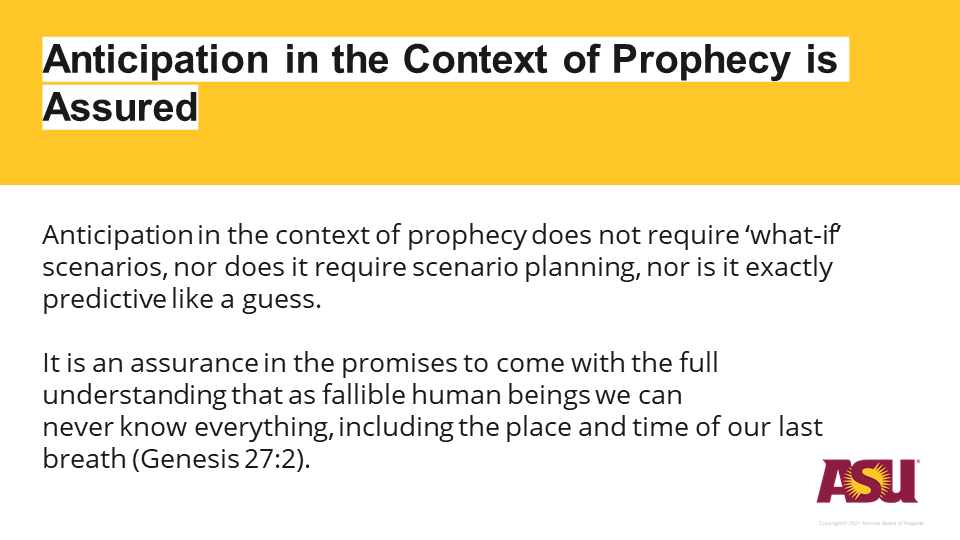
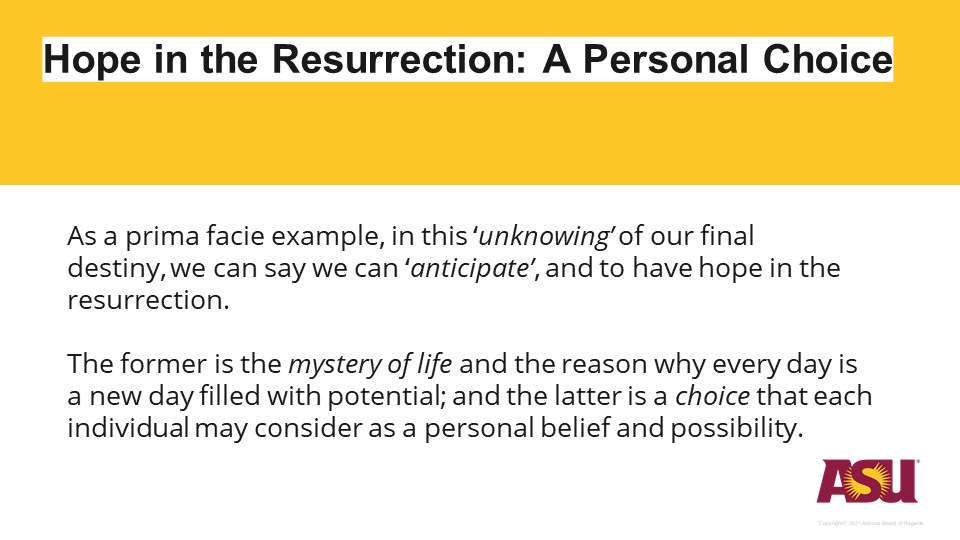
Anticipation in the context of prophecy does not require ‘what-if’ scenarios, nor does it require scenario planning, nor is it exactly predictive like a guess. It is an assurance in the promises to come with the full understanding that as fallible human beings we can never know everything, including the place and time of our last breath (Genesis 27:2). As a prima facie example, in this ‘unknowing’ of our final destiny, we can say we can ‘anticipate’, and to have hope in the resurrection. The former is the mystery of life and the reason why every day is a new day filled with potential; and the latter is a choice that each individual may consider as a personal belief and possibility.
Citation (abstract accepted for presentation): M.G. Michael and Katina Michael, 4 November 2022, “The Book of Revelation: In Anticipation”, in C. Selin, 4th Conference on Anticipation, Tempe, Arizona (virtual), http://anticipationconference.org/