Information Systems as an Enabler of Social Development
Official Launch of the Central Africa Chapter of the Association for Information Systems (CACAIS)
The various activities of the AIS Community are to promote the exchange of professional communications among scholars and professionals responsible for education, design, implementation, and management of information systems in both private and public organizations. The activities of the Community include:
-
Providing a locally-focused forum for those concerned with all aspects of information systems;
-
Providing an opportunity for the exchange of ideas concerning the management of information systems with member counterparts
-
Conducting locally-focused programs and conferences for the benefit of members;
-
Providing a means for critical examination of the problems and opportunities associated with information systems in the CENTRAL AFRICA.
More here: https://www.cacais.brain-booster.net/
The AIS
The Association for Information Systems (AIS) serves society through the advancement of knowledge and the promotion of excellence in the practice and study of information systems. AIS is the premier professional association for individuals and organizations who lead the research, teaching, practice, and study of information systems worldwide. Thus, the AIS Strategic Goal is to Position information systems as a leading profession in the service of society. Because AIS members are located in over 90 countries, many have formed regional chapters that facilitate additional networking between colleagues that live and work close by. As an extension of AIS, the purpose of the Central Africa Chapter is to promote the exchange of ideas, experiences, and knowledge among scholars and professionals in CENTRAL AFRICA engaged in the development, management, and use of information systems and technologies. More here: https://aisnet.org/page/AboutAIS
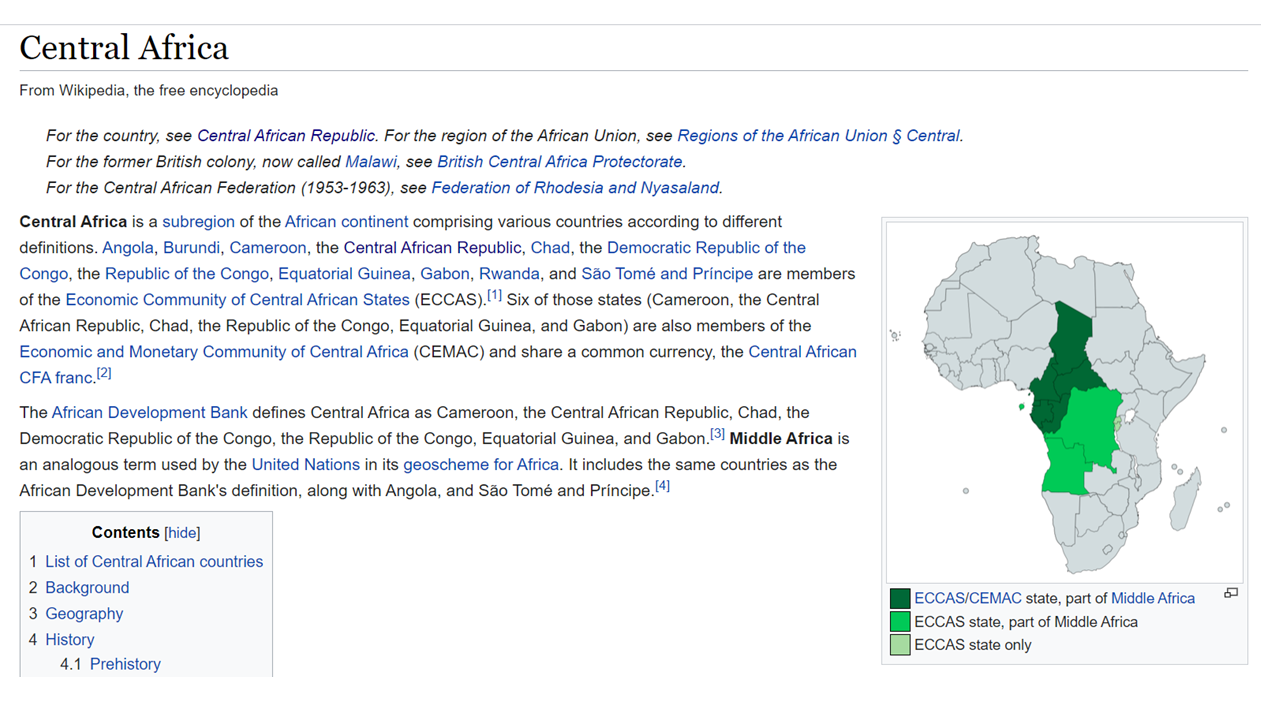
Reflection: What an honor to be invited to speak at this incredible event in Central Africa. I spent days trying to better understand the context of Central Africans, what constituted the administrative boundaries of “Central Africa”, and studied more about the culture. Luckily for me, I have had close friends from Central Africa and have learnt much by listening to them over the last 15 years. I make this disclaimer, here, that I have never personally stepped foot on Central Africa, and I begin my talk by appealing to the AIS community that is forming at this CACAIS launch, that I want to know more.
I give this brief talk through the lens of a Second Generation Greek-Australian, whose father was a young child when World War II struck, and who migrated with close to nothing in his pockets to Australia in the 1960s, as did my mother (a post-war baby).
I acknowledge that today I speak from a position of privilege. But my heart is to raise awareness of how IS can support the goals of Central Africans. The speaker request, sent me on a personal journey of discovery for days on end. I was asked to speak on “Social Development” and not the de facto in thing “Social Transformation” or “Digital Transformation”, and truly that has made all the difference to the emphasis of my talk.
What is also apparent to me is the profound influence that being co-located with professors Netra Chhetri, Nalini Chhetri, Mary Jane Parmentier, and Faheem Hussain has had on me since joining Arizona State University in 2018. I am constantly learning, and not just from these 4 professors, but also from the student base in the Innovation and Global Development PhD program in the School for the Future of Innovation in Society. What an incredible program Netra has begun- I hope for many Central Africans to be able to join us at ASU before too long!
My 10 min presentation will focus on the role of women and girls. It has more to do with values than pure IS.
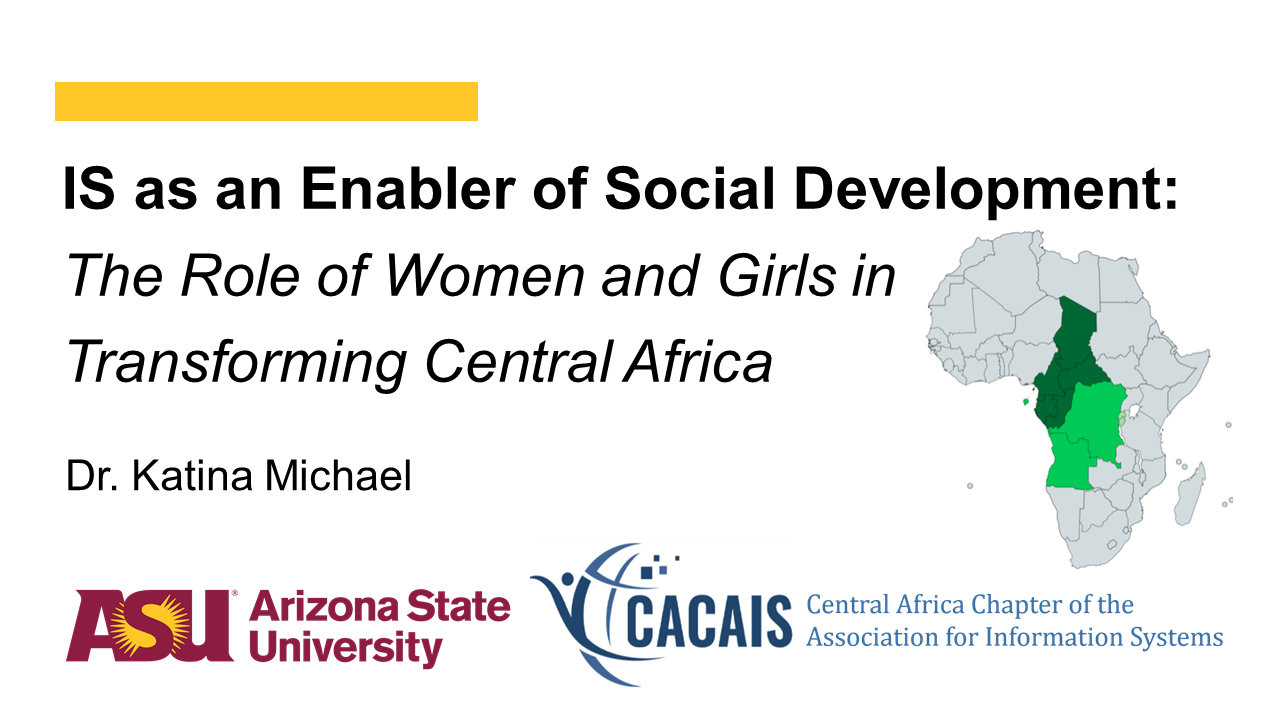
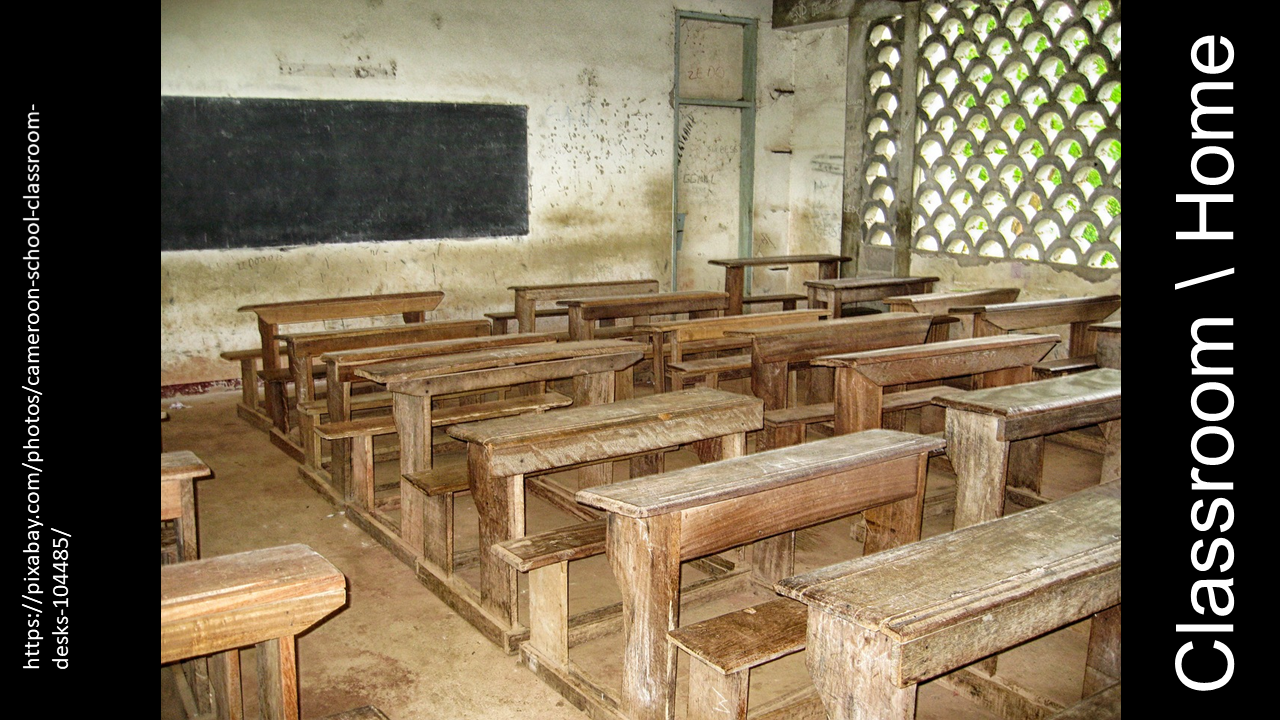
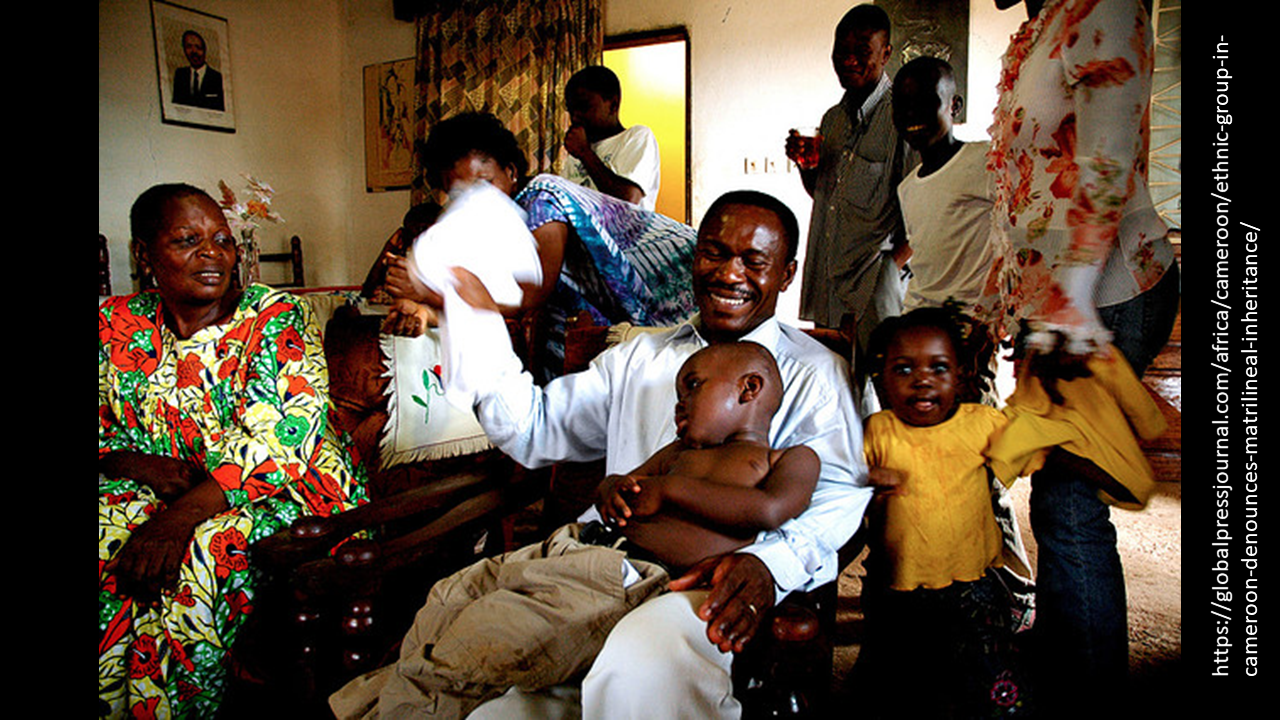

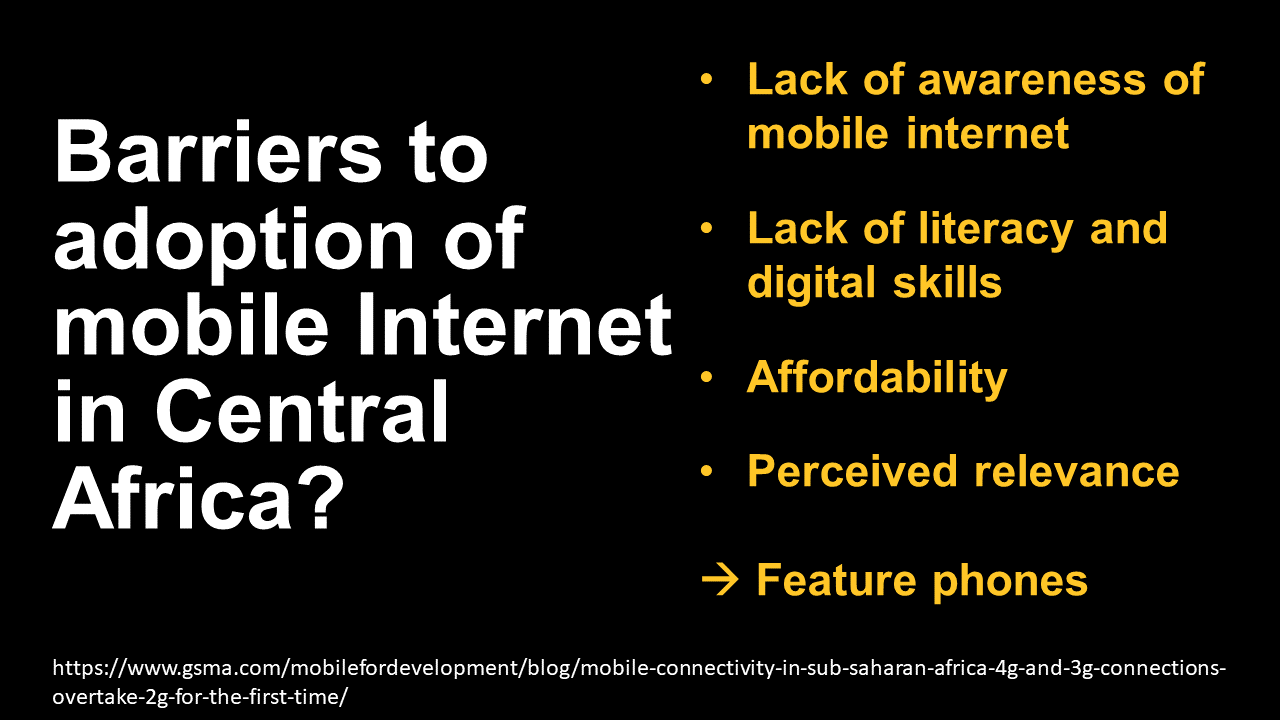
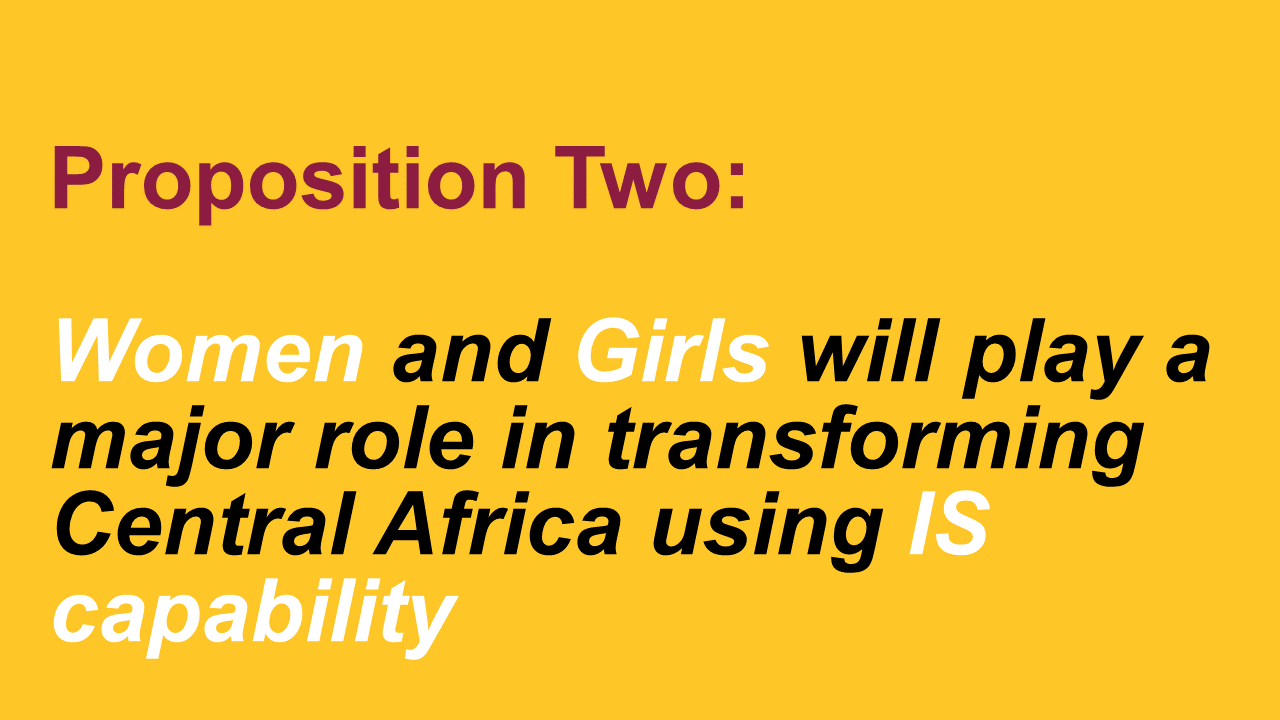
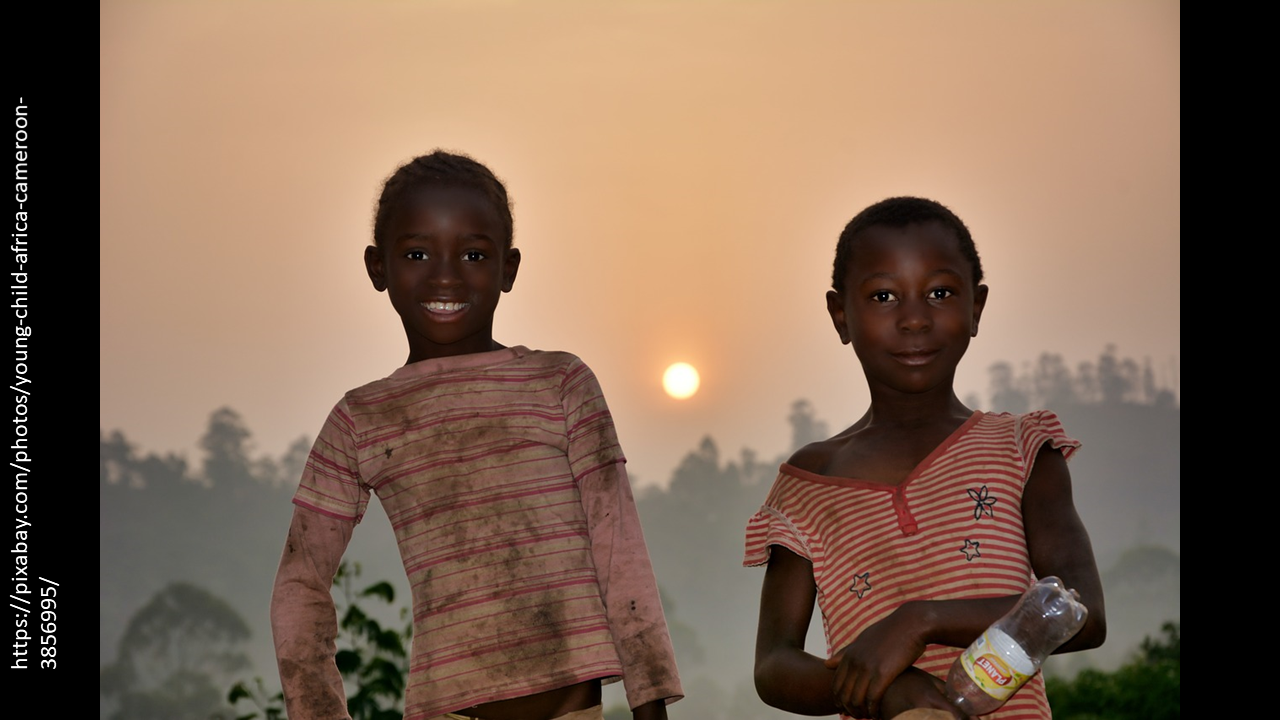
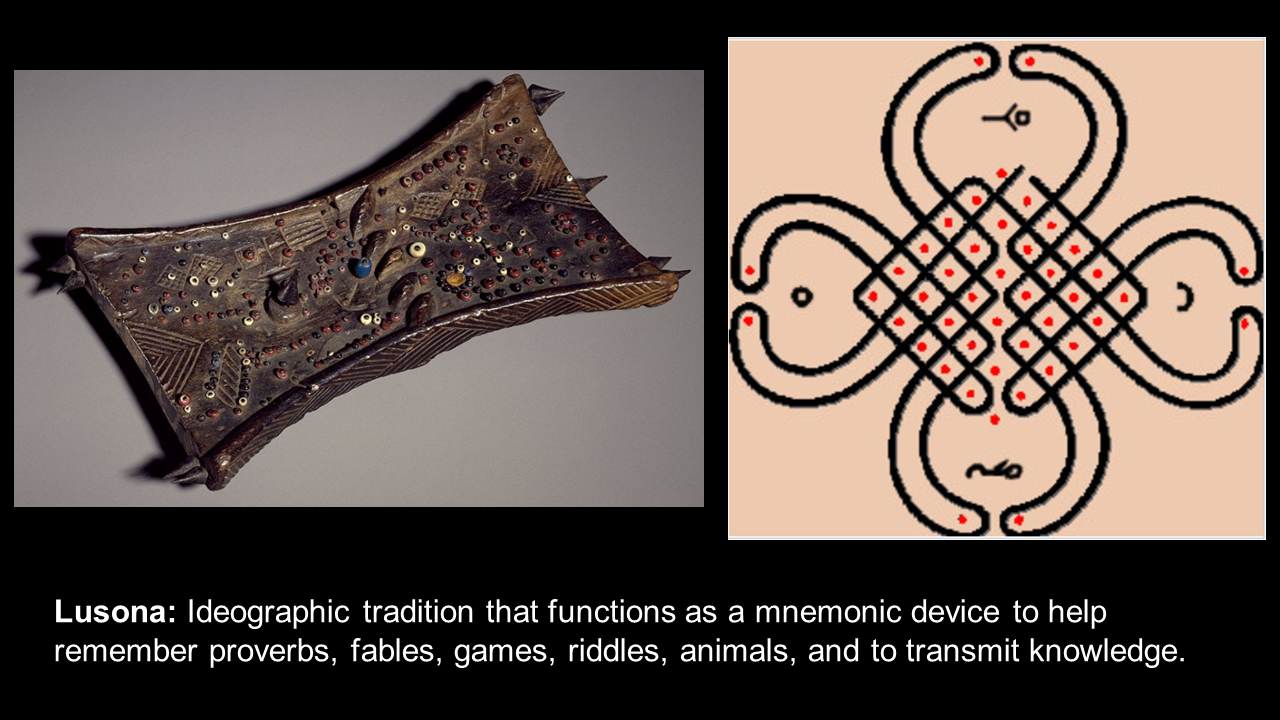

Information Systems as an Enabler of Social Development: The Role of Women and Girls in Transforming Central Africa
Speakers: Pr. Katina MICKAEL
There is no doubt that information systems is an enabler of social transformation. The question is what kind of social development will this transformation yield? Social transformation has been defined as the “restructuring of all aspects of life; from culture to social relations; from politics to economy; from the way we think to the way we live” [i]. According to Rabie, societies once depended on their social transformation from associations in small communities that were knitted together by kinship and tradition and were situated within nations that were tied together by history, politics, cultures and laws. And change at first was quite slow until humans began to create tools which disrupted the natural process of change.
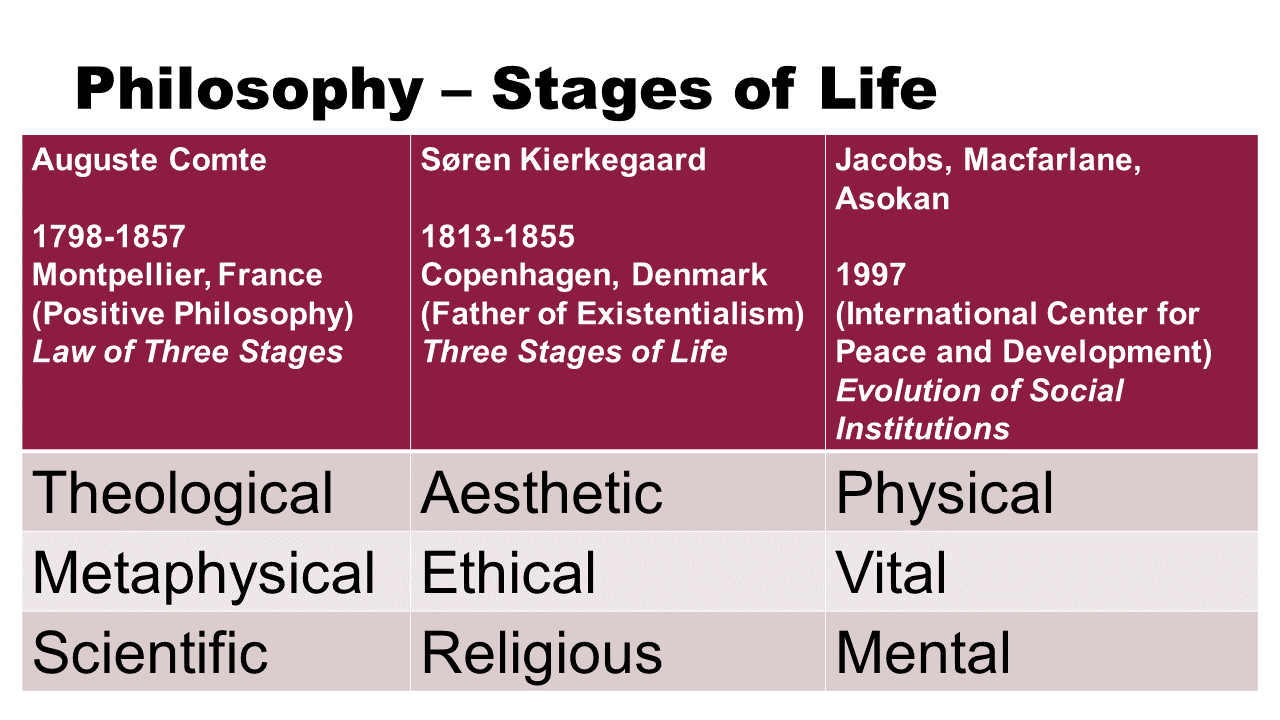
For the positive philosopher Augustus Comte, society as a whole, moves through the law of three stages: the theological stage, the metaphysical stage, and the positive stage (i.e. scientific) [ii]. For Søren Kierkegaard the three stages of life were considered as analogous to an individual’s existence: childhood, adolescence, adulthood. He described three levels in his work which have been summated as the aesthetic, the ethical, and the religious [iii]. While Comte and Kierkegaard provide for us two seemingly opposite paradigms, a third three stage paradigm will be considered, this one with respect to social development. The three components as presented by Jacobs et al. [iv] are: physical, vital and mental, and each will be explored in this presentation as a way to understand renewal in Central Africa.
Rabie [v] also states that once a society experiences profound transformation, it is rather irreversible. Social development differs to social transformation. It too is affected by tools and technologies, but social development is traditionally about “children and young people learning the values, knowledge and skills that enable them to relate to others” [vi]. By exposing children and youth to positive values when they are in their social development phase, their chance at long term success in interacting with others in society increases. This might be related to how a young person interacts with their family, their educators, and wider society. Tools have changed the means of communication and thus impacted the way people identify their values, and live them.
But if we take a step back from where social development theory emerged [vii], we can talk about social development in the context of “improving the well-being of every individual in society so they can reach their full potential. The success of society is linked to the well-being of each and every citizen” [viii]. Social development means we need to invest in people, and not from a monetary perspective but one of time. That we believe in their future path as being one that is positive, and where they can develop in the skills they require to succeed, both formal and informal skills, allowing them to stand on their own two feet and feel like a valued member of society. While this is considered by some a type of volunteerism at the grassroots, by others the ideal is considered a core value of imparting knowledge toward the prosperity of the community as a whole. How might we be able to raise one another’s capacity and make it greater? And how might the citizen feel once again in control of their future to the extent they can clearly see how they can influence it for generations to come?
“Social development incorporates public concerns in developing social policy and economic initiatives. Until relatively recently, social development was conceived in terms of a set of desirable results – higher incomes, longer life expectancy, lower infant mortality, more education. Recently emphasis has shifted from the results to the enabling conditions, strategies and public policies for achieving those results – peace, democracy, good governance, social freedoms, equal access, laws, institutions, markets, infrastructure, education and technology” [ix]. In this call to the AIS group of Central Africa, with a particular focus on the role of women and girls, I will present some of the forces at play, and how culture may play a catalytic role in achieving IS with purpose, and IS as a framework or process of change that harnesses the richness of the local traditions that we must celebrate, and at the same time attaining reach to new global opportunities and international communities. All IS design must be driven locally, by local norms and local procedures and local stakeholders, shared between mothers and fathers and children, multigenerational and through networks of care to nurture this emergent practice. The process must be inclusive of members of society, independent of beliefs, diverse voices will only act to strengthen the richness of community.
Women and girls must not be vulnerable, living in fear, especially during times of conflict but rather they must feel empowered and that they can participate in society as valued members [x]. Information systems may be a mechanism toward liberation and independence, if used appropriately, granting access to timely information and services. Women and girls seek peaceful resolution to conflict, they understand the importance of healthcare and education for their families, and see democratization as a way to go forward. This is a call to action, not to destabilize what has worked in Central Africa, not to tell the women and men and children of Central Africa what to do nor how to do it, but to encourage them to recognize their power toward positive change. To harness those incredible cultural traditions and infuse them into the modern world toward social development. The opportunities are limitless through mindful coordination of public interest technology.
References
[i] Rabie M. (2013) “Social Transformation”. In: Global Economic and Cultural Transformation. Palgrave Macmillan, New York. https://doi.org/10.1057/9781137365330_4
[ii] Comte, A., 1858. The positive philosophy of Auguste Comte. Blanchard. https://books.google.com.au/books?hl=en&lr=&id=ktM3AQAAMAAJ&oi=fnd&pg=PA3&dq=Auguste+Comte&ots=CKo6Lmja0l&sig=XnUwxB-soSgDD38zBd5PVv4BbIM&redir_esc=y#v=onepage&q=Auguste%20Comte&f=false
[iii] Collins, J.D., 2014. The mind of Kierkegaard. Princeton University Press.
[iv] ICPD, Garry Jacobs, Robert Macfarlane, and N. Asokan, 1997, “Comprehensive Theory of Social Development”, International Center for Peace and Development, http://www.icpd.org/development_theory/comprehensive_theory_of_social_development.htm
[v] Rabie M. (2013) “Social Transformation”. In: Global Economic and Cultural Transformation. Palgrave Macmillan, New York. https://doi.org/10.1057/9781137365330_4
[vi] AG. 2021, “Social development: What is social development?” Beyond Blue, https://beyou.edu.au/fact-sheets/social-and-emotional-learning/social-development
[vii] Midgley, J., 2013. Social development: Theory and practice. Sage.
[viii] Economic and Social Inclusion Corporation, 2008-2009. “What is social development?”, New Brunswick Canada, https://www2.gnb.ca/content/gnb/en/departments/esic/overview/content/what_is_social_development.html
[ix] Worldanimal.net, “What is social development?” Social Change, https://worldanimal.net/documents/1_Social_Development_Background.pdf
[x] Zipporah Musau, n.d. “Women seek greater role in rebuilding Central African Republic”, Africa Renewal,https://www.un.org/africarenewal/web-features/women-seek-greater-role-rebuilding-central-african-republic
Citation: Katina Michael, 6 August 2021, “IS as an Enabler of Social Development: The Role of Women and Girls in Transforming Central Africa”, Launch of Central Africa Chapter of the Association of Information Systems, https://www.cacais.brain-booster.net/