Codesigning with the End-user: An Emerging Neurotechnological Research Paradigm

12:05 – 12:25
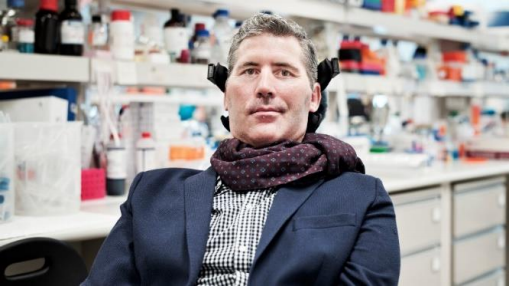
1st Speaker: Justin Yerbury, Topic: “Living with Motor Neurone Disease.”
https://www.dropbox.com/sh/chzbcuzgol43f36/AABF-17nufQ4DJWNGD-ovGyra?dl=0
Justin Yerbury is a Professor in Neurodegenerative Disease at the University of Wollongong. Yerbury’s Lab focuses on the understanding of the molecular processes underpinning the Motor Neurone Disease (MND) Amyotrophic Lateral Sclerosis (ALS) with a particular emphasis on protein misfolding, protein aggregation and inclusion formation. The team that Justin leads is part of the Proteostasis and Disease Research Centre at the University of Wollongong and is housed in the Illawarra Health and Medical Research Institute. Yerbury was diagnosed with MND himself in 2016 but continues to research
12:25 – 12:50
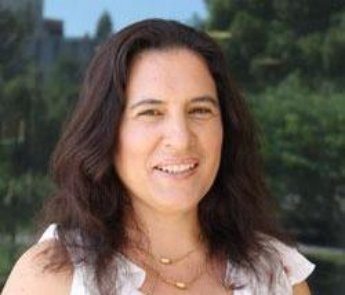
2nd Speaker: Rebecca Monteleone, Topic: “Leveraging Expertise as Experience in Design”
Abstract:
In this section, Dr. Monteleone will discuss the social, political, and ethical implications of research for rather than with, highlighting issues of mismatched priorities, usability, and affordability as barriers to access. She will offer examples of the experiential knowledge of people with disabilities – especially those experiencing multiple marginalizations – being leveraged in both formal and informal design practices, arguing for a broader and more inclusive definition for research and design expertise.
Rebecca Monteleone is an Assistant Professor of Disability and Technology at the University of Toledo. Her work focuses on the experiential expertise of people with disabilities in the design and use of everyday, medical, and assistive technologies. She has earned recognition as a Fulbright Scholar, Mirzayan Science and Technology Policy Fellow with the National Academy of Engineering, and an NSF IGERT Fellow.
12:50 – 13:15
3rd Speaker: Katina Michael, Topic: “Empowering the End-User in the Development
and Operation of Brain Implant Technologies: The Case for Co-Design”
Slides,chats:
https://www.dropbox.com/sh/chzbcuzgol43f36/AABF-17nufQ4DJWNGD-ovGyra?dl=0
Abstract: Co-designing brain implants with end-users means that the end-user is not simply “participating” in the biomedical development process, they are integral to defining the requirements and design of the implant, and then providing qualitative feedback related to usability. Once the device is embedded in the end-user’s body and the device is in the clinical testing phase or operation, communications between the supplier and end-user must remain open, beyond the quantitative data gathered from the implant automatically. Thus co-design emphasizes that in this context implant recipients work hand-in-hand with biomedical developers, engineers, and associated stakeholders to build more robust products. When end-users are ignored, there are demonstrated examples that they take matters into their own hands. We focus here on the need for open source code, consumer protection, access to the embedded device and its corresponding data streams, among other issues.
Katina Michael is a professor at Arizona State University, holding a joint appointment in the School for the Future of Innovation in Society and School of Computing, Informatics and Decisions Systems Engineering. She is also the director of the Society Policy Engineering Collective (SPEC) and the Founding Editor-in-Chief of the IEEE Transactions on Technology and Society. Katina is a senior member of the IEEE and a Public Interest Technology advocate who studies the social implications of technology. She is the Senior Editor of the socio-economic impact section in IEEE Consumer Electronics Magazine and was the editor in chief of the award-winning IEEE Technology and Society Magazine. In 2019 she took on the role of working group chair for the IEEE P2089 standard. In 2017, she received the Brian M. O’Connell SSIT Distinguished Service Award. Katina Michael received her PhD, Master’s in Transnational Crime Prevention from the Law School at the University of Wollongong, and Bachelor of Information Technology from the University of Technology Sydney.
Final Round Challenge Agenda:
Agenda
* Los Angeles time
9:00 - 9:15am Introduction - IEEE Santa Clara Valley and local supporting chapters and BDBC: Joseph Wei, and Dr. Nan Chu
9:15 - 9:45am Keynote: Neurotechnology for Aging Brain and grants available from National Institute on Aging (NIA): Dr. Yuan Luo, Program Director
9:45 - 1:30pm Teams competing in the final competition
(135 minutes) 1. BDBC- Taiwan, Team MINE Professor Brain, National Central University,
- Title: “Utilizing Deep Learning Model to Predict Brain Age for Alzheimer's Disease and Mild Cognitive Impairment Patients”
2. BDBC- Boston, Team Pokemon Brain – University of Missouri-Kansas City,
- Title: “Improving deep learning performance using transfer learning to Predict Early Stages of Alzheimer in ADNI dataset"
3. BDBC- Saint Petersburg, Team i-Pavlovian, The I. P. Pavlov Institute of Physiology, Russian Academy of Sciences,
- Title: “Identifying age and cognitive impairment based on EEG data"
4. SPCN-2020, Team MTLNeuro, S.M. Kirov Military Medical Academy, Saint Petersburg, Russia;
- Title: “Functional Connectivity of Neural Networks and Cognitive Status in Patients with Alzheimer's Disease"
5. SPCN-2020, Team Azerbayjan Physiology, National Academy Karayev Institute of Physiology, Azerbaijan
- Title: “Neurophysiology of Alzheimer’s disease rehabilitation by Safron anf Curcuma Longa”
Judges: Joaquin Anguera – Univ. of California, San Francisco, USA
Rhoda Au – Boston University, USA
Seth Elkin-Frankston – Army Research, USA
Yuan Luo – NIH, USA
Vijaya Kolachalama, Boston University, USA
(75 minutes) Panel: Codesigning with the End-user: An Emerging Neurotechnological Research Paradigm! (See title abstracts in agenda pdf)
Moderator: Troy McDaniel, Arizona State University, USA.
- Justin Yerbury, University of Wollongong, Australia. Speech Title: Living with Motor Neurone Disease.
- Rebecca Monteleone, University of Toledo, OH, USA. Speech Title: Leveraging Experience as Expertise in Design
- Katina Michael, ASU, USA & UoW, Australia. Speech Title: Empowering the End-User in the Development and Operation of Brain Implant Technologies: The Case for Co-Design
(15 minutes) Award presentation and conclusion
- Announcement of judges and the winner teams
- Acknowledgment of Impactful Contribution to BDBC, 2017 - 2020
1:30pm Conclude
Citation: Justin Yerbury, Rebecca Monteleone, Katina Michael, 5 December 2020, “Codesigning with the End-user: An Emerging Neurotechnological Research Paradigm!”, Brain Data Bank Challenge in Brain Aging and Neurotechnology, https://spcn2020taiwan.com/finale/
-
Thank you to Dr Troy McDaniel of ASU for moderating our session