Risk Intelligence in the Age of Generative AI
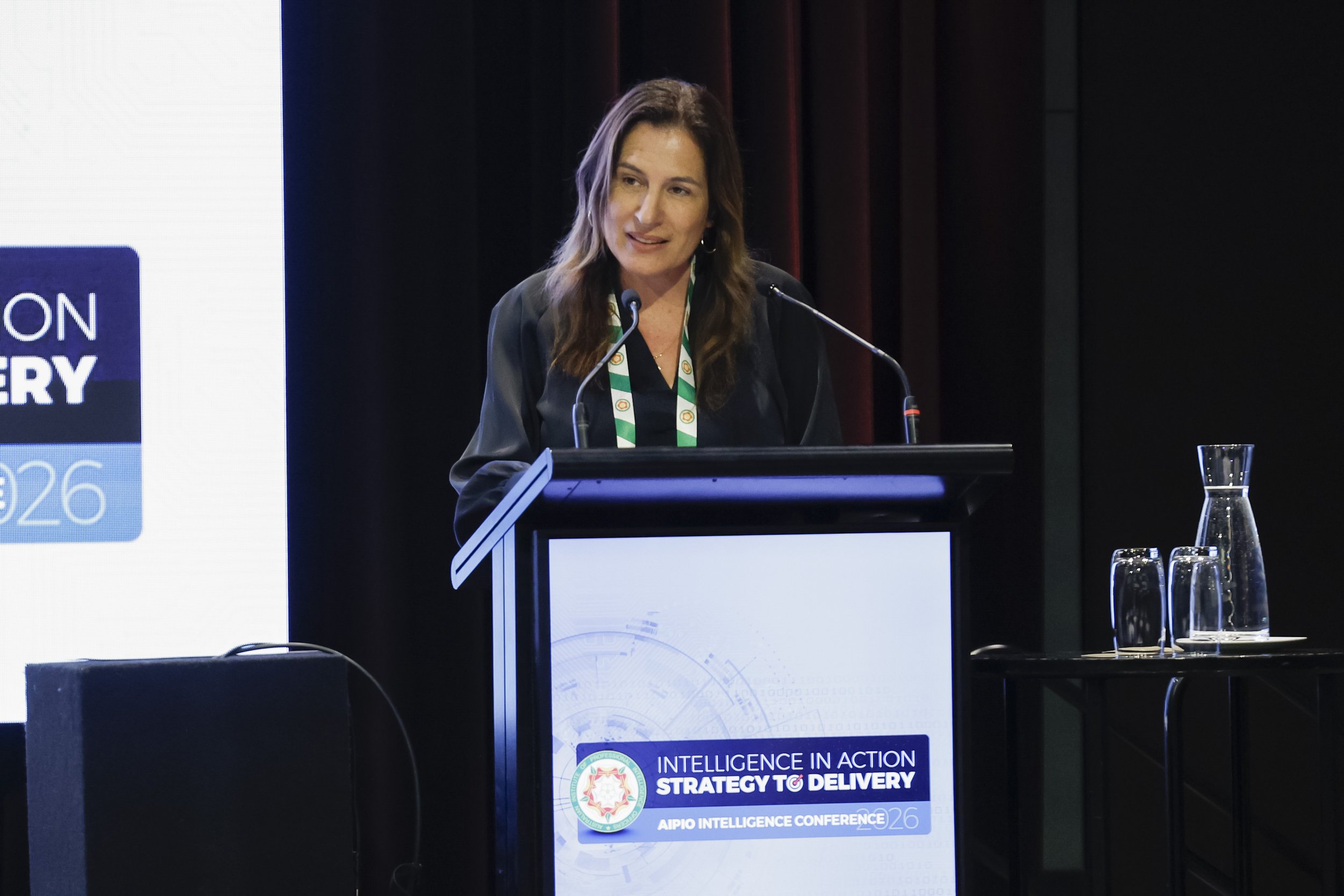
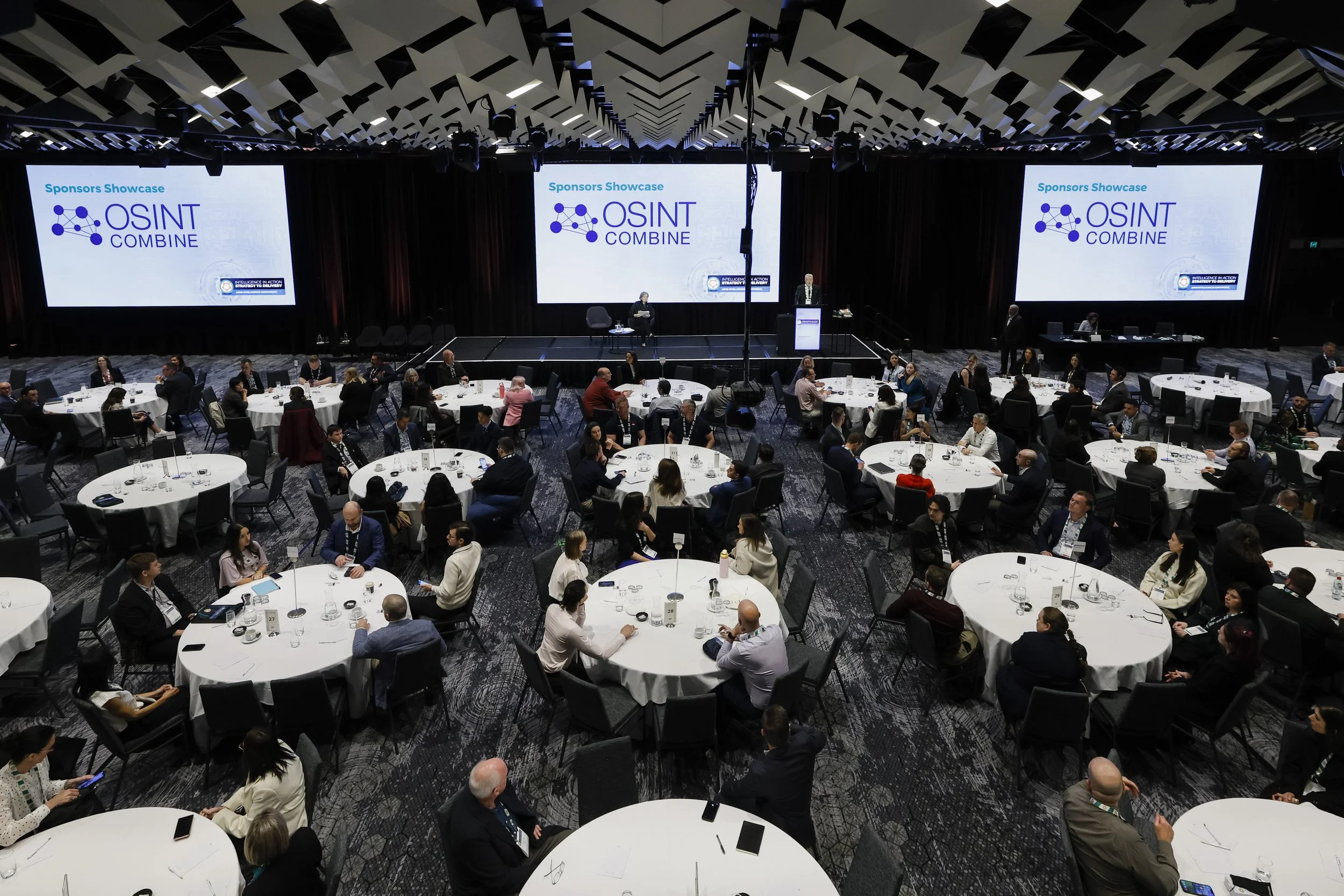
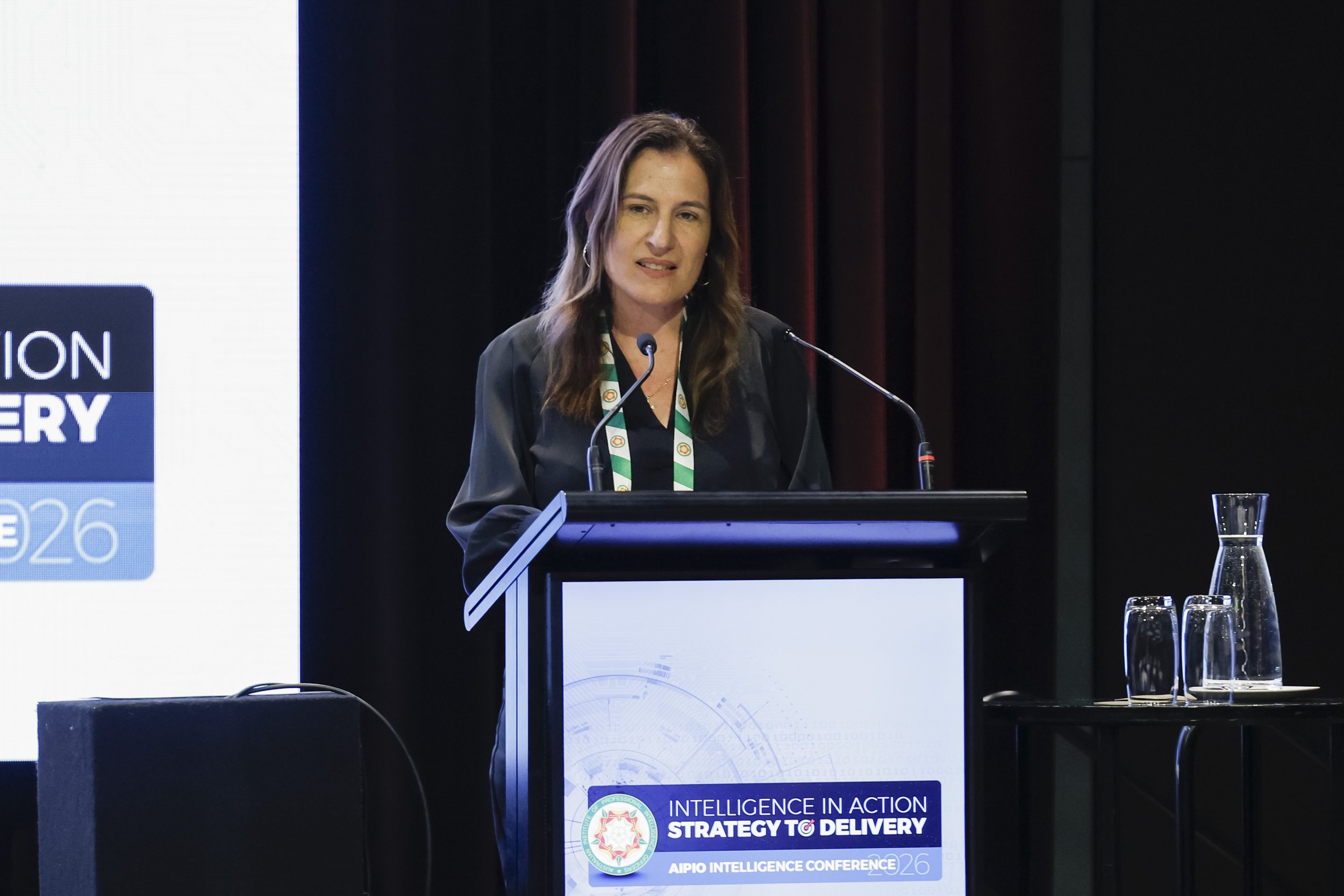
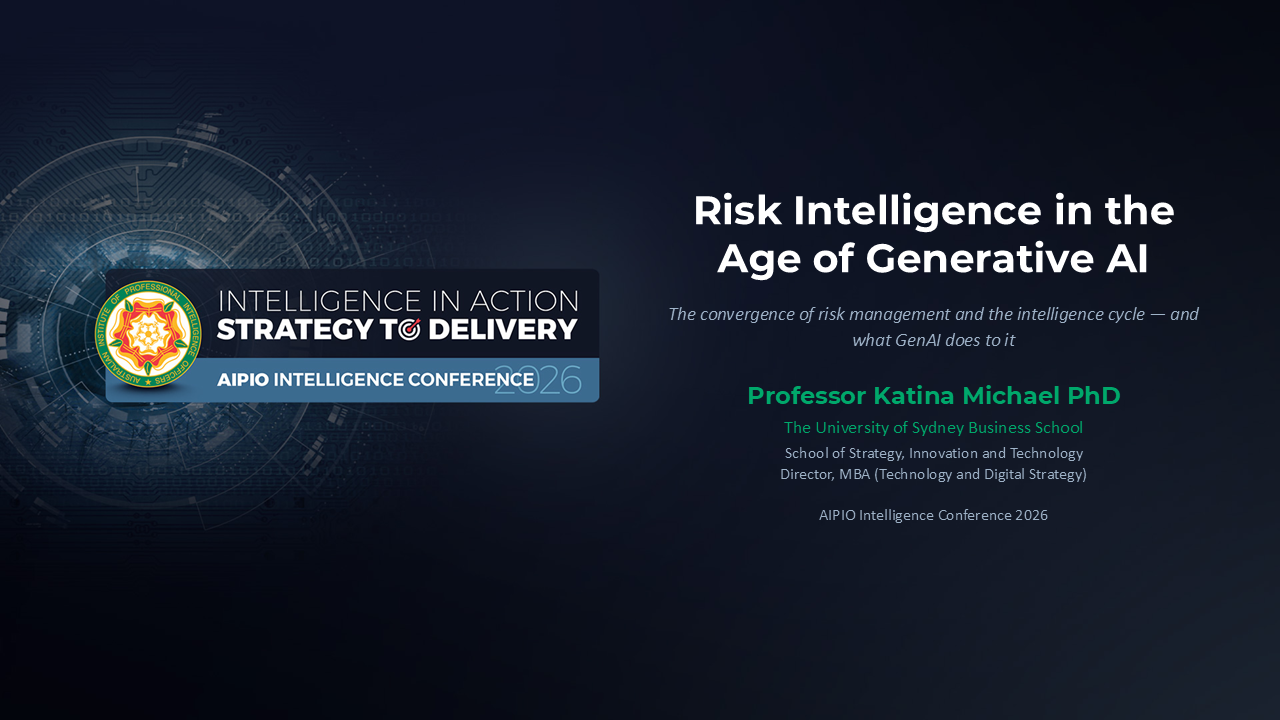
Citation: Katina Michael, “Risk Intelligence in the Age of Generative AI”, Impact and Integration Stream, AIPIO Intelligence Conference 2026, 27 August 2026, 4.15-4.45pm, Melbourne, https://www.aipionationalevents.asn.au/program?date=2026-08-27

Audio of the presentation
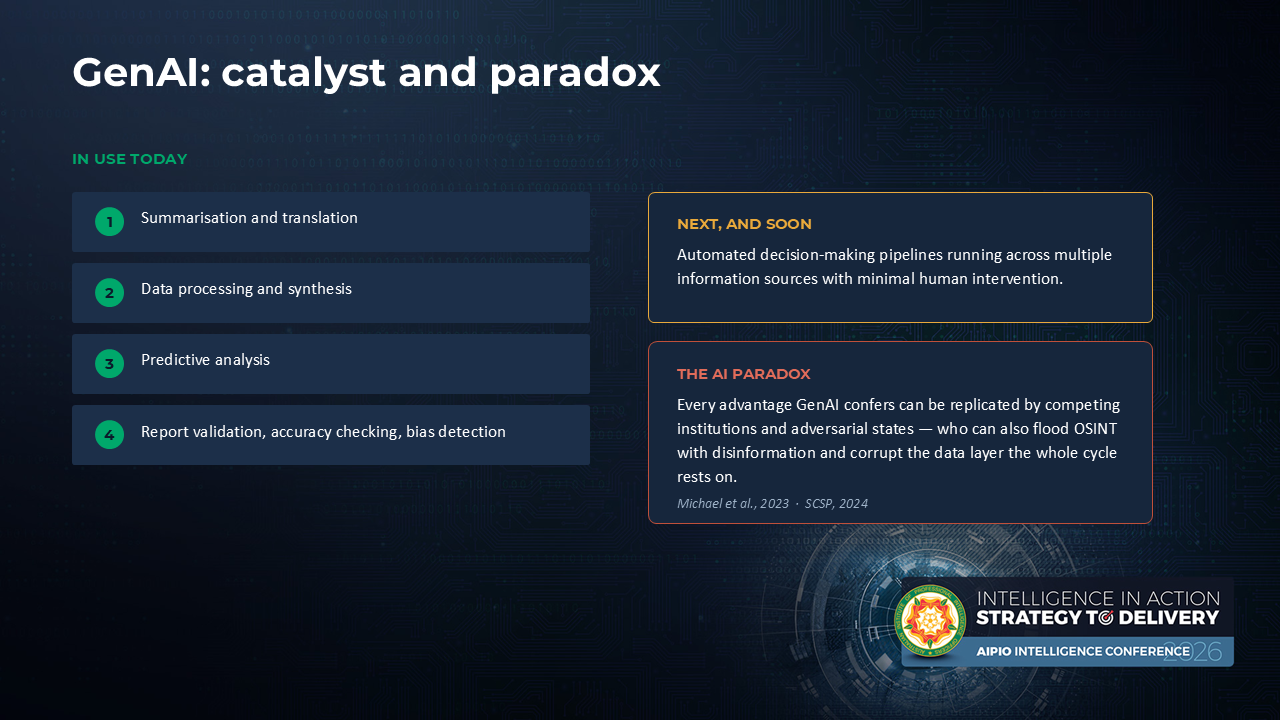
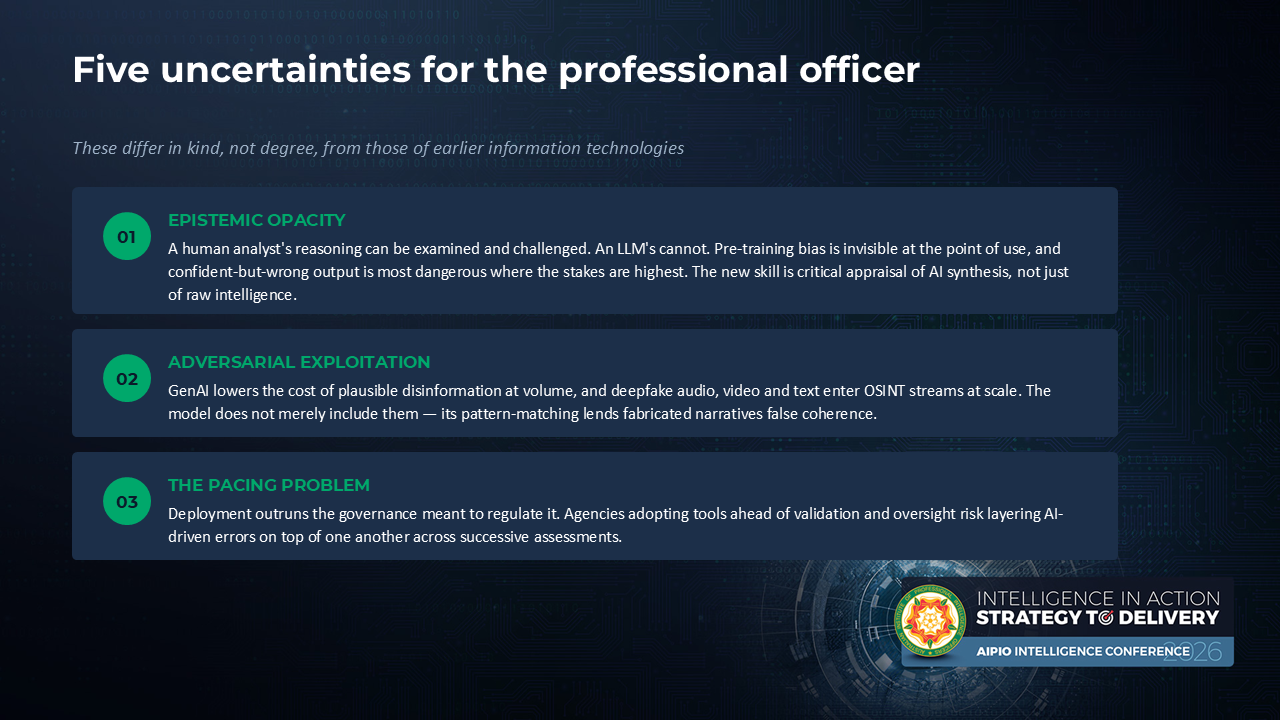
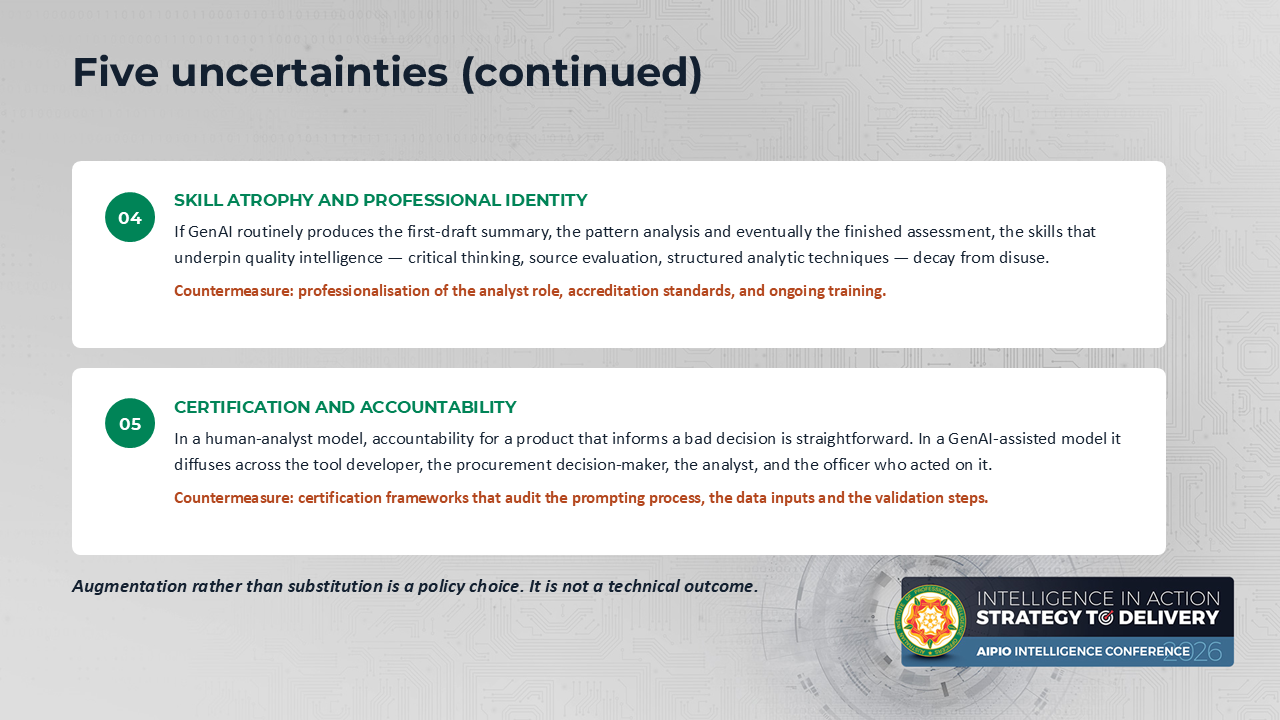
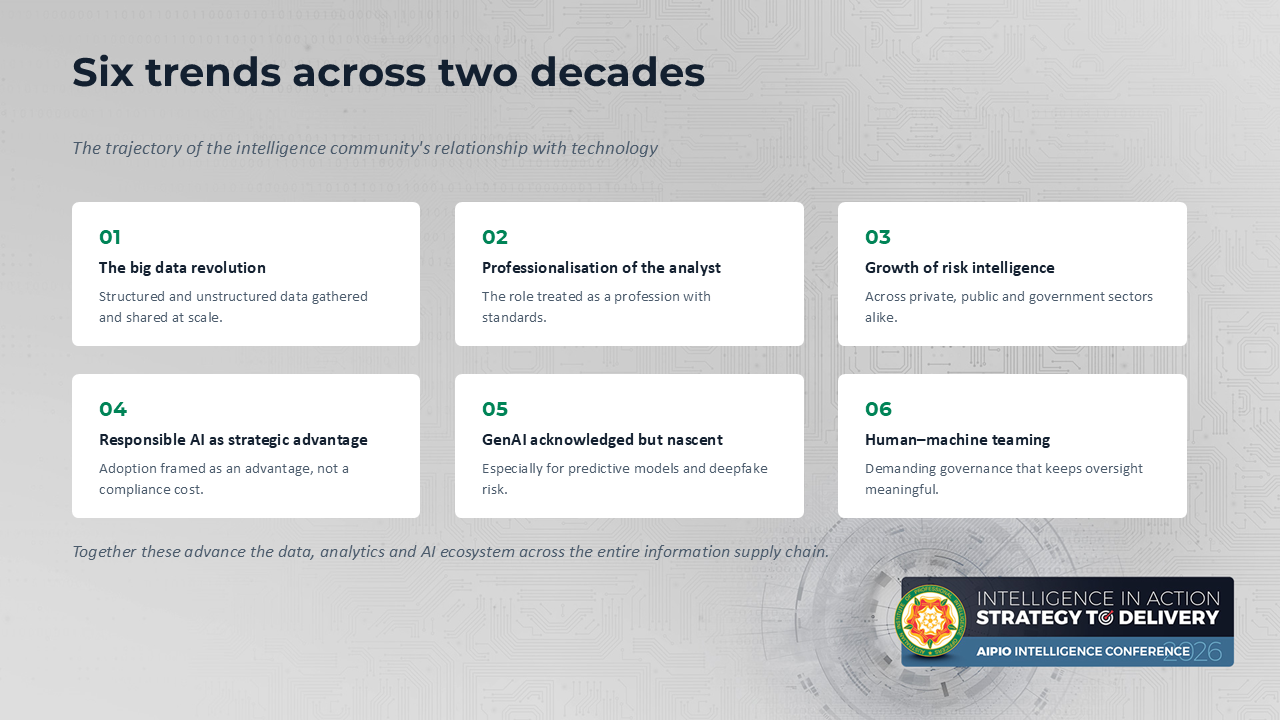
Questions and Answers
How do you practically certify a GenAI-assisted product?
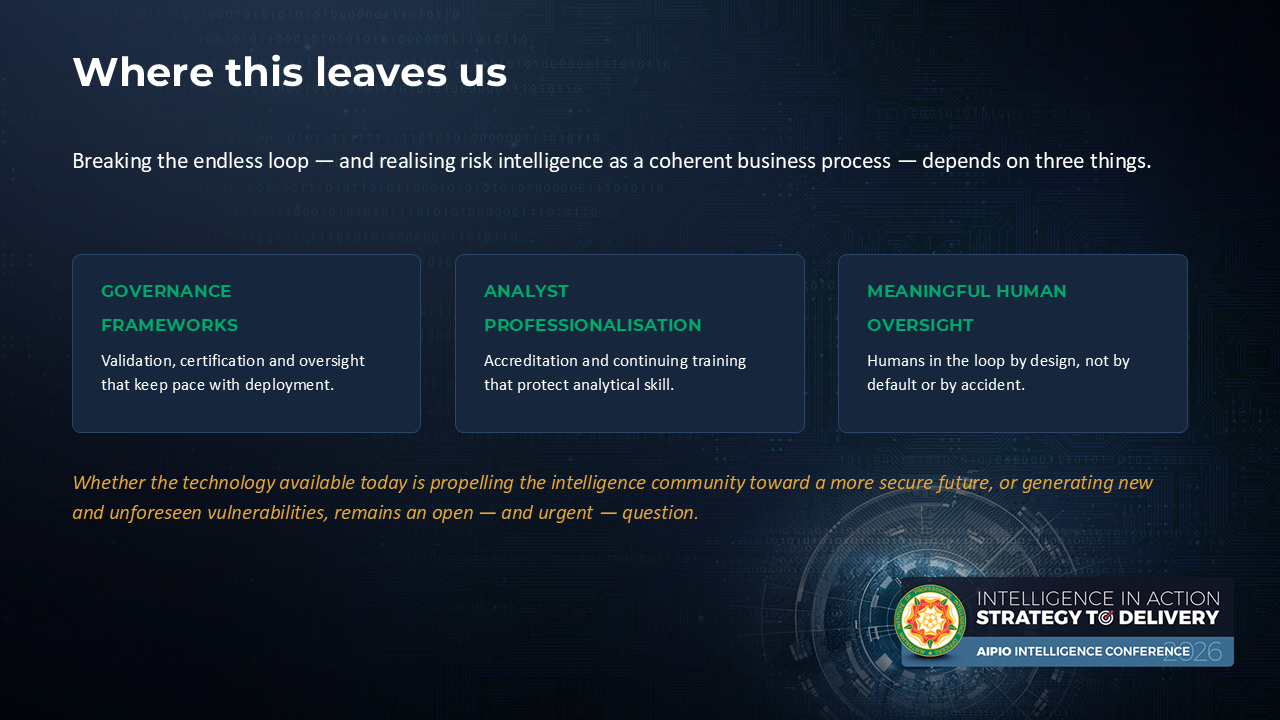
Go to the process, not the artefact. What you can audit is the prompt chain, the provenance of the data inputs, and the validation steps taken before sign-off.
Is skill atrophy actually measurable, or is it a worry?
The longitudinal evidence isn't in yet, because the exposure period is too short. But we have prior analogues in aviation automation and diagnostic medicine, and in both the effect was real and took roughly a decade to surface. The argument for acting now is that by the time it's measurable, a cohort has already lost the practice.
Small agencies have no governance capacity. What do they do?
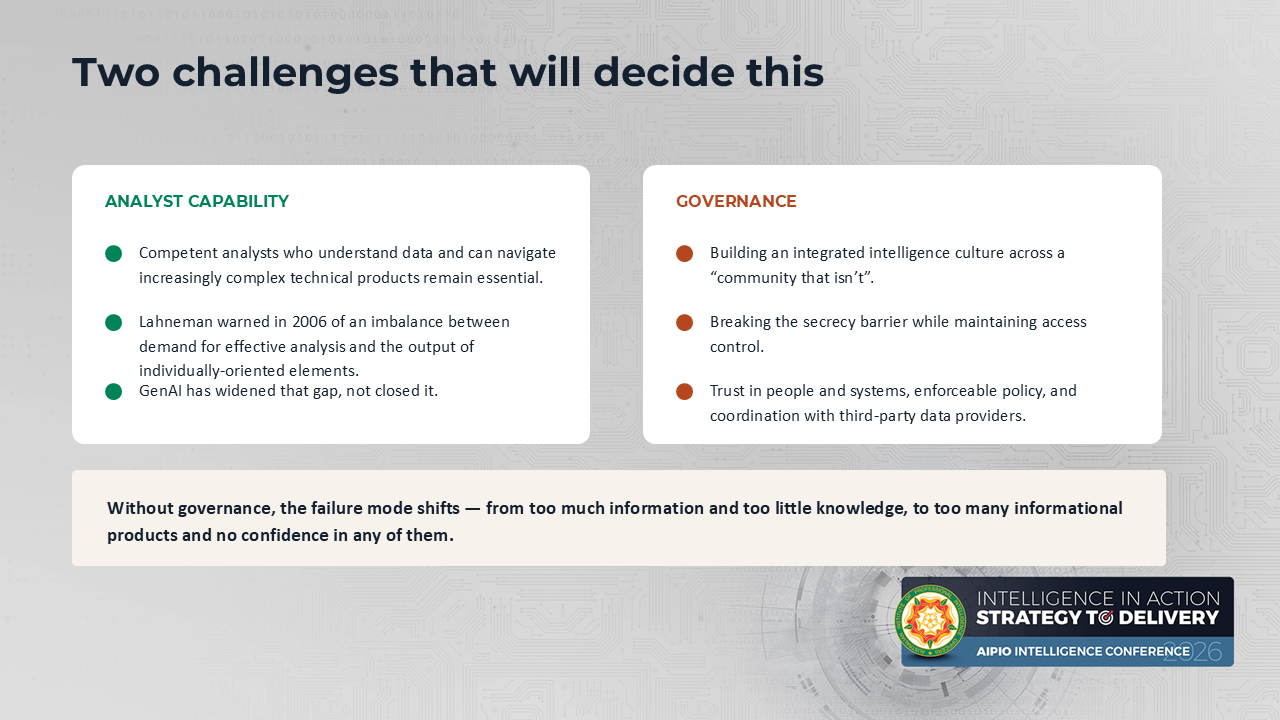
Small agencies can have a written statement of which product types are permitted to use GenAI at all; a provenance note attached to every product that used it; and a standing requirement that one human can articulate why the product exists.
Aren't you just describing a productivity gain and calling it a risk?
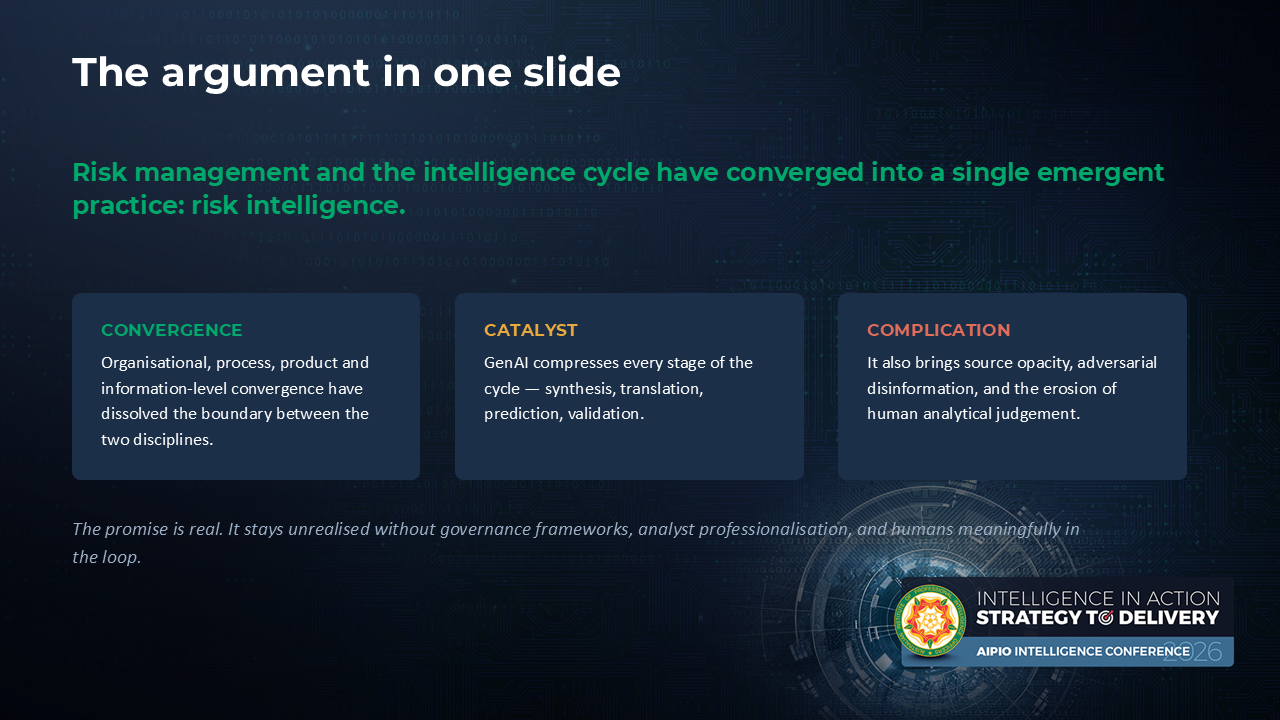
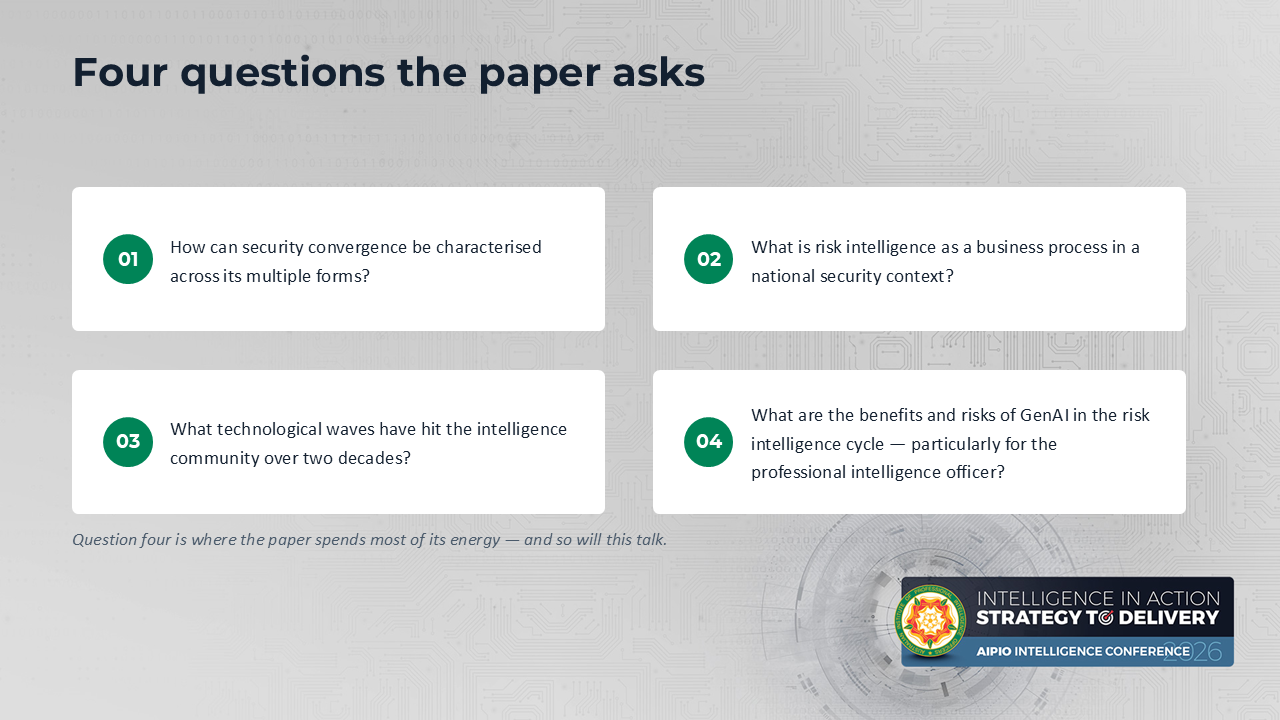
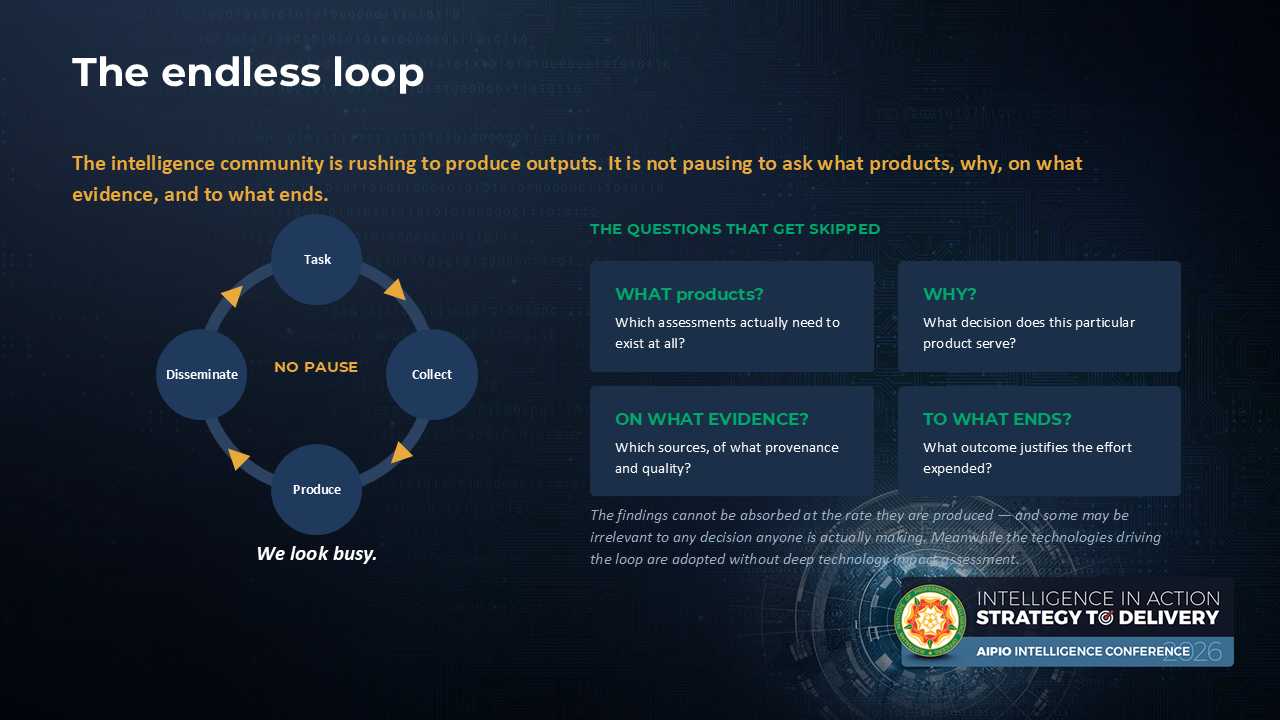
The productivity gain is real and worth having. The argument is not against speed; it's that speed without the four questions on Slide 16 produces volume rather than intelligence, and that the absorption capacity of decision-makers has not increased at all.
What does 'meaningfully in the loop' actually mean?
Meaningful means the human can interrogate the reasoning, has the time and standing to reject the output, and is accountable for having done so. If any of those three is missing, the human is decorative.
Isn't the adversary going to do this anyway, so shouldn't we move faster?
Yes, they will. But the asymmetry runs the other way: their cheapest attack is on your data layer, not their model quality. Racing on adoption doesn't defend against that. Governance and provenance do.
Biography
Katina Michael is the inaugural program director of the MBA (Technology and Digital Strategy) at The University of Sydney Business School. She is professor of Strategy, Innovation and Technology. She is a transdisciplinary scholar who connects technical, policy, and public audiences, raising awareness of socio-technical challenges and how to address them through human-centered design.
In 2008, Katina commenced a Master of Transnational Crime Prevention at the University of Wollongong, focusing on intelligence within the domains of policing and national security. Her research into data science, big data analytics, geographic information systems (GIS), machine learning, and surveillance studies provides a distinctive lens through which to critically examine emergent policing paradigms, including predictive policing and intelligence-led policing. Katina specialises in open-source intelligence (OSINT), with particular expertise in the limitations of information-dependent systems, especially in relation to signal-to-noise ratios, data reliability, and the challenges of extracting actionable intelligence from increasingly complex information environments.
While she was still doing her PhD, Katina was employed as a pre-sales engineer at a transnational telecommunications vendor, Nortel Networks. She credits her international perspective on the opportunities she was granted between 1996-2001 to work on critical and emerging technologies in many countries that were undergoing deregulation in the telecommunications sector, especially throughout Asia. She learnt first-hand how important new technologies were to traditional brick-and-mortar business and to startups and their strategy.
As a senior member of the IEEE Society on the Social Implications of Technology, and with a cross-disciplinary background in technology, law and business, Katina not only does research on the ethical, legal, and social implications (ELSI) of emerging technology but on how to mitigate risks through better design approaches, technical standards, policies, and regulation that is enforceable. She is an advocate of systemic change through the adoption of new business models, such as public interest technology, that are not solely based on economics, but on principled innovation.
What purpose our socio-technical systems serve, and how sustainable into the long-term they will be, directly will impact the flourishing of people and planet.
Bio source: https://www.aipionationalevents.asn.au/program/speakers/katina-michael