TEDxASU: Brain Implants- Hope or Hype
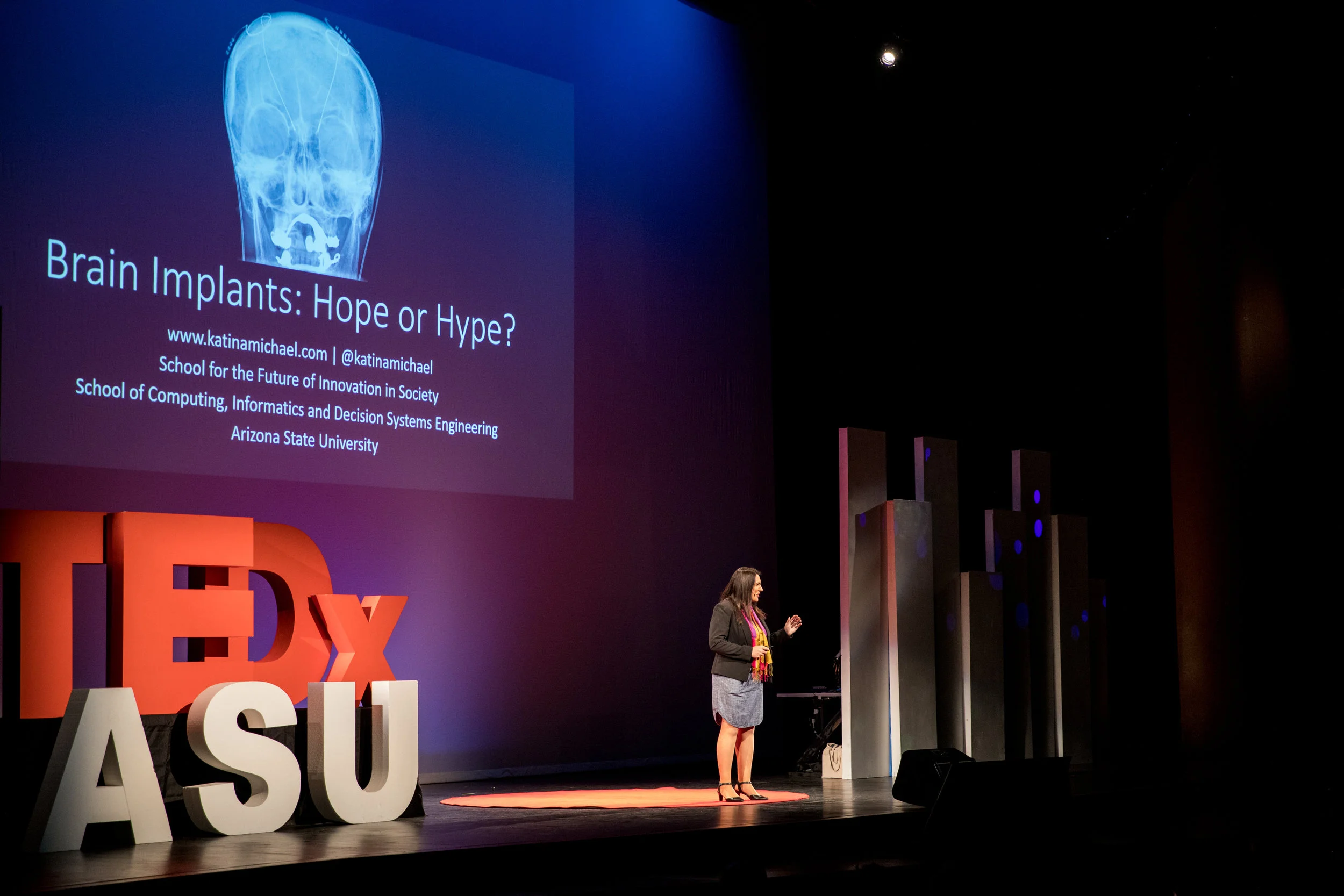
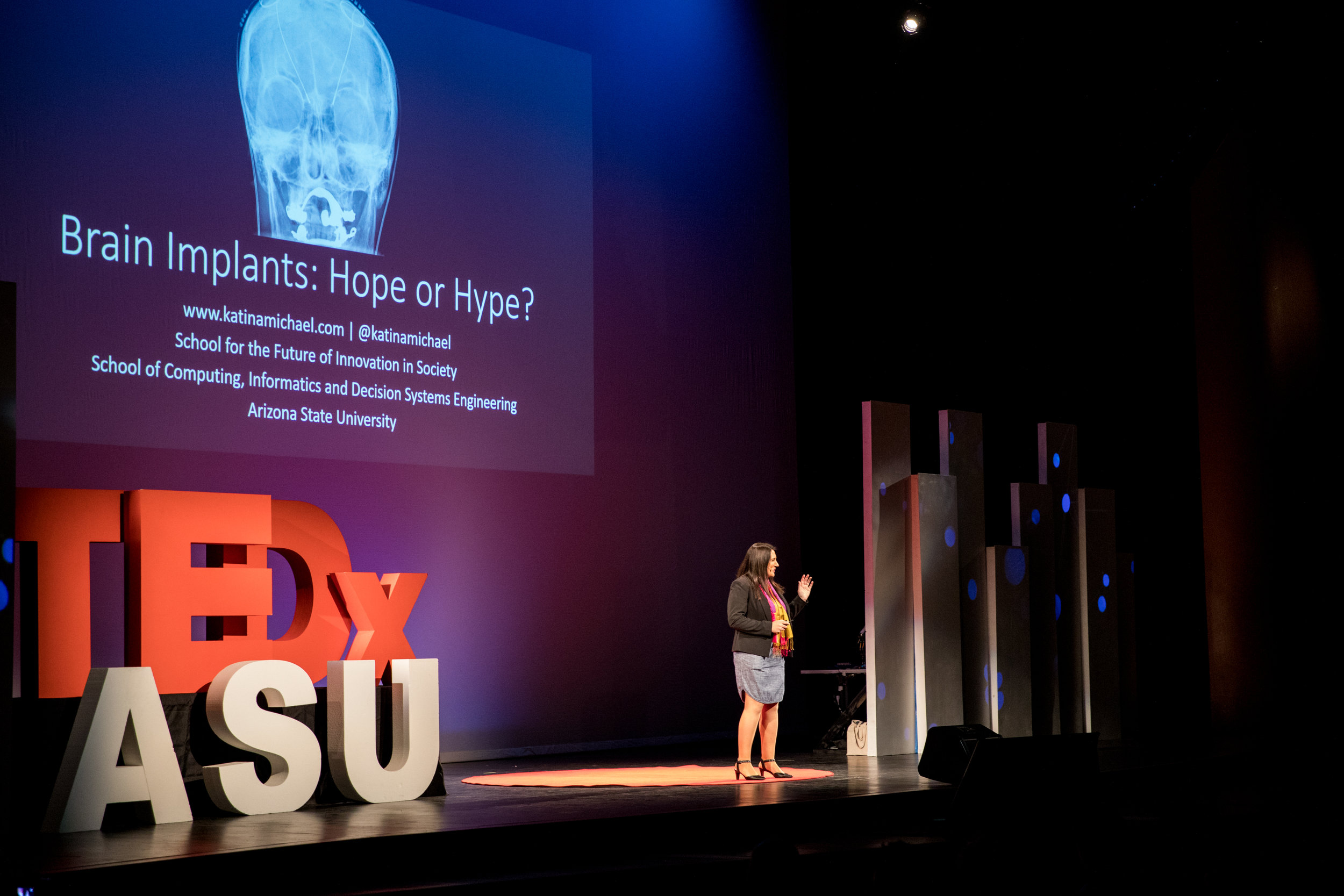
Brain Implants: Hope or Hype?
The Facts- Deep Brain Stimulation for Therapeutics
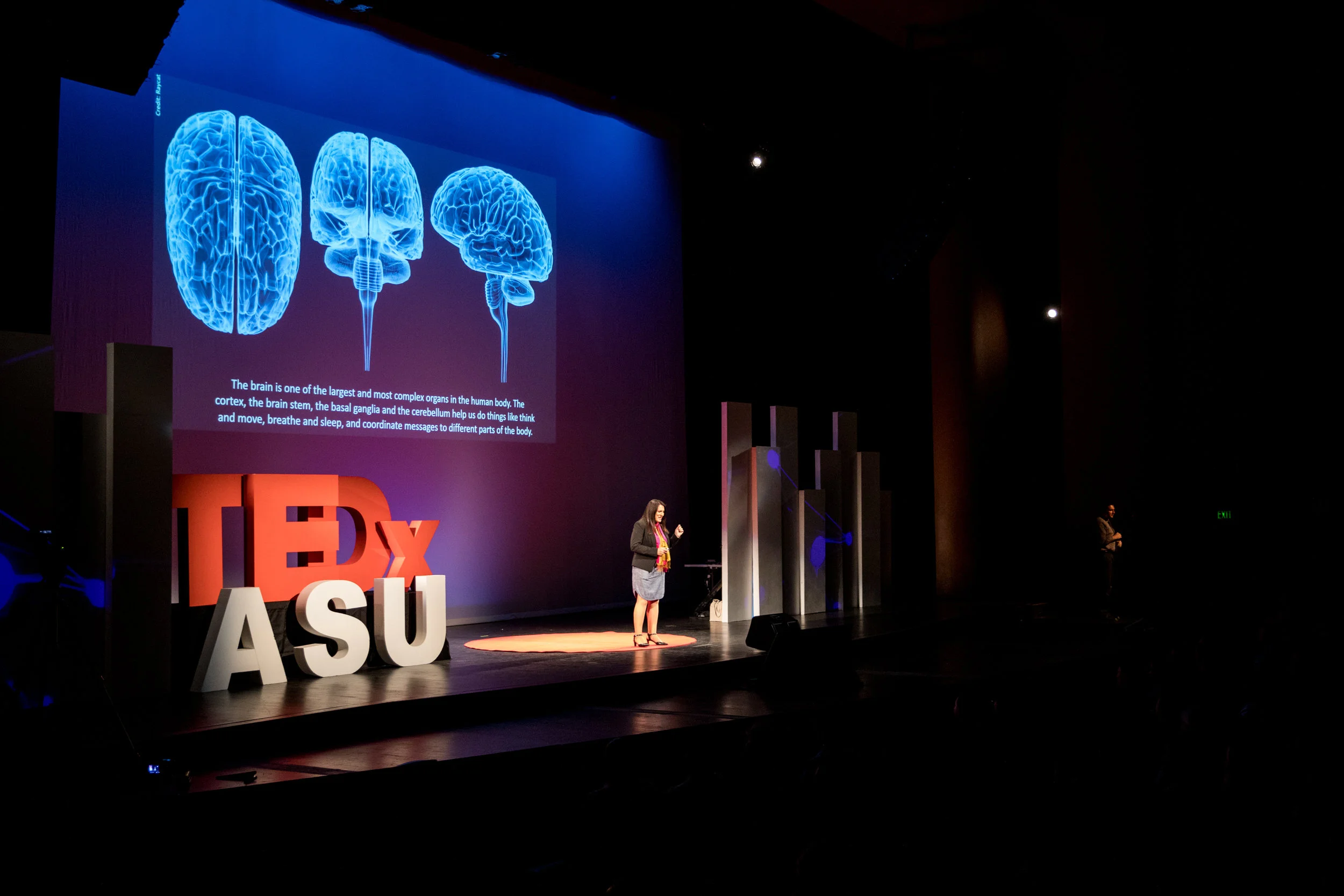
The brain is one of the largest and most complex organs in the human body. The cortex, the brain stem, the basal ganglia and the cerebellum help us do things like think and move, breathe and sleep, and coordinate messages to different parts of the body.
And then we have the frontal lobe, the parietal lobe, the temporal lobe and the occipital lobe which are used for problem solving and judgement and motor function, for memory and hearing, and visual processing.
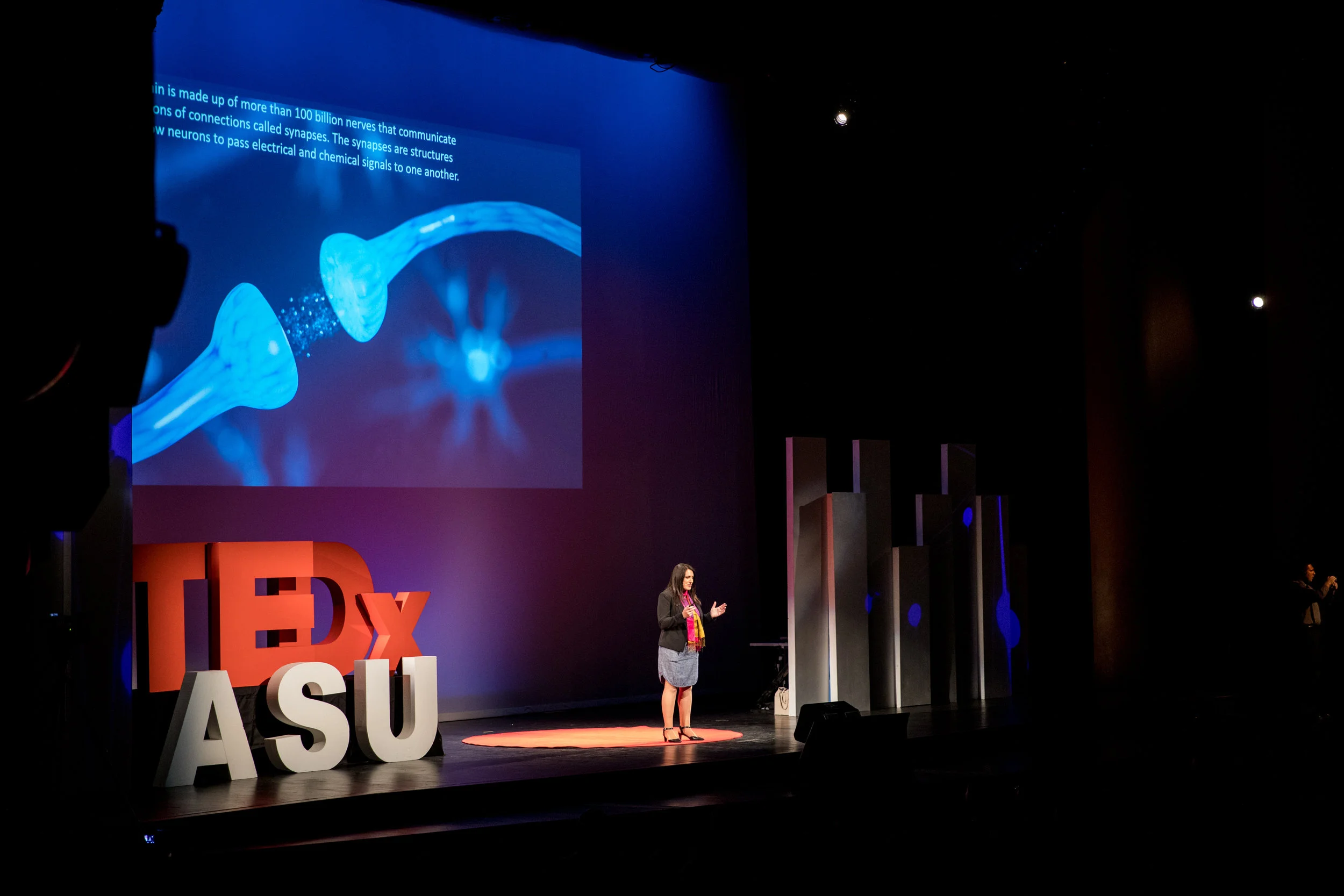
The brain is made up of more than 100 billion nerves that communicate in trillions of connections called synapses. The synapses are structures that allow neurons to pass electrical and chemical signals to one another.
It is mind-blowing to think that each of us, as we go about our day, is carrying one of the deepest network of networks that has existed.
But sometimes neurons take an abnormal turn and die out, causing brain disease.
That’s where neuroprosthetic devices come in. They connect directly to a person’s brain, either placed on the surface of the brain, or attached to the brain's cortex, and are used to stimulate neurons.
The restorative surgical procedure costs up to 100,000 dollars and is the only hope some patients have when they become resistant to pharmaceutical drugs.
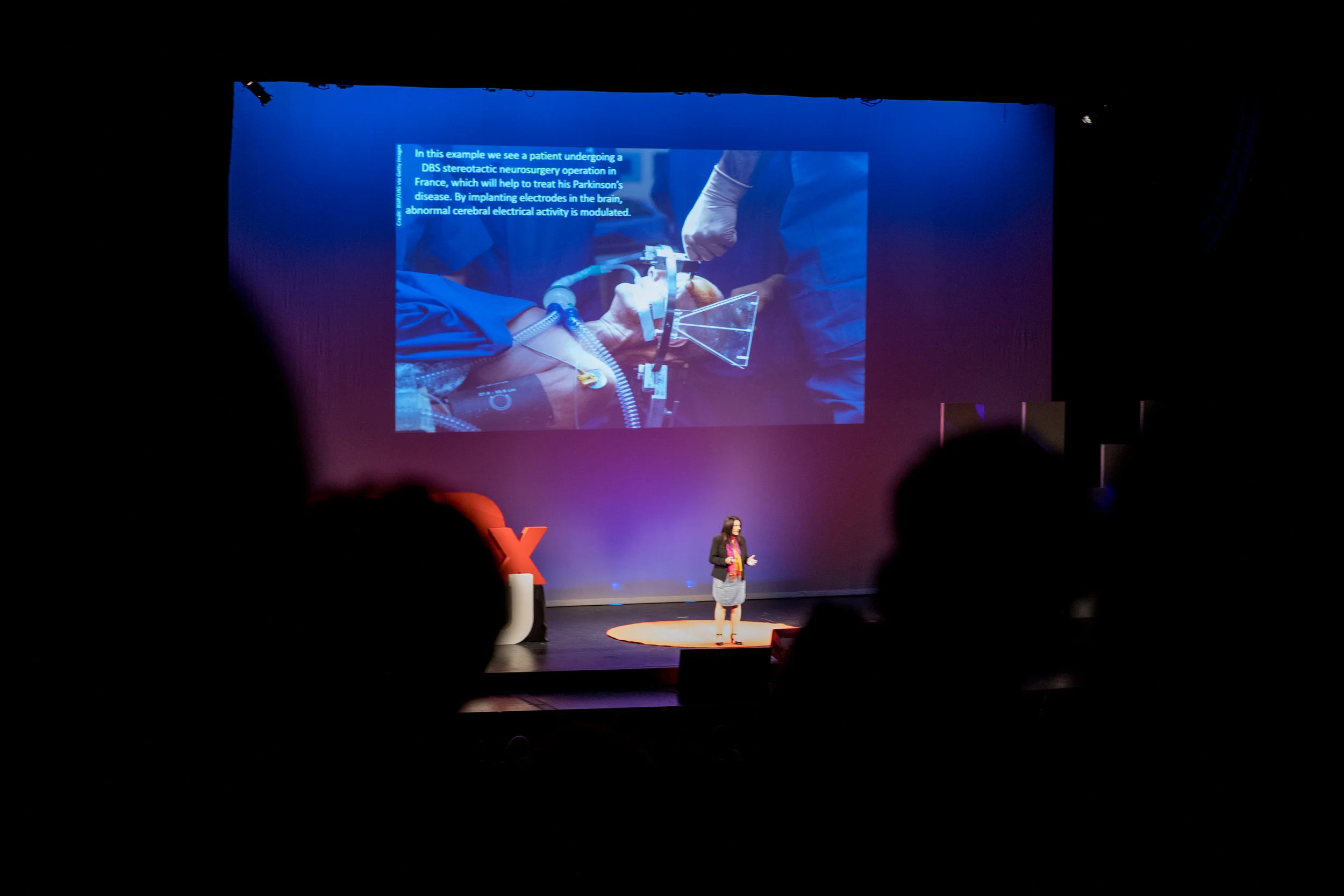
In this example we see a patient undergoing a DBS stereotactic neurosurgery operation in France, which will help to treat his Parkinson’s disease. By implanting electrodes in the brain, abnormal cerebral electrical activity is modulated.
The technique has also been applied to Major Depressive Disorder (MDD) as a last resort, with markedly different levels of success- about one third of patients undergoing deep brain stimulation are said to achieve remission. And one has to ponder, while clinically significant, what happens to the other two thirds undergoing this invasive surgery?
The Future? Repurposing Deep Brain Stimulation for Non-Medical Application
And so I pose the question- are brain implants our plausible future? Might we consider repurposing them for everyday use beyond therapeutics?
As one example, Facebook in 2017, revealed it had a team of 60 engineers working on building a brain-computer interface that would let you type with just your mind, scanning your brain a hundred times per second using optical imaging.
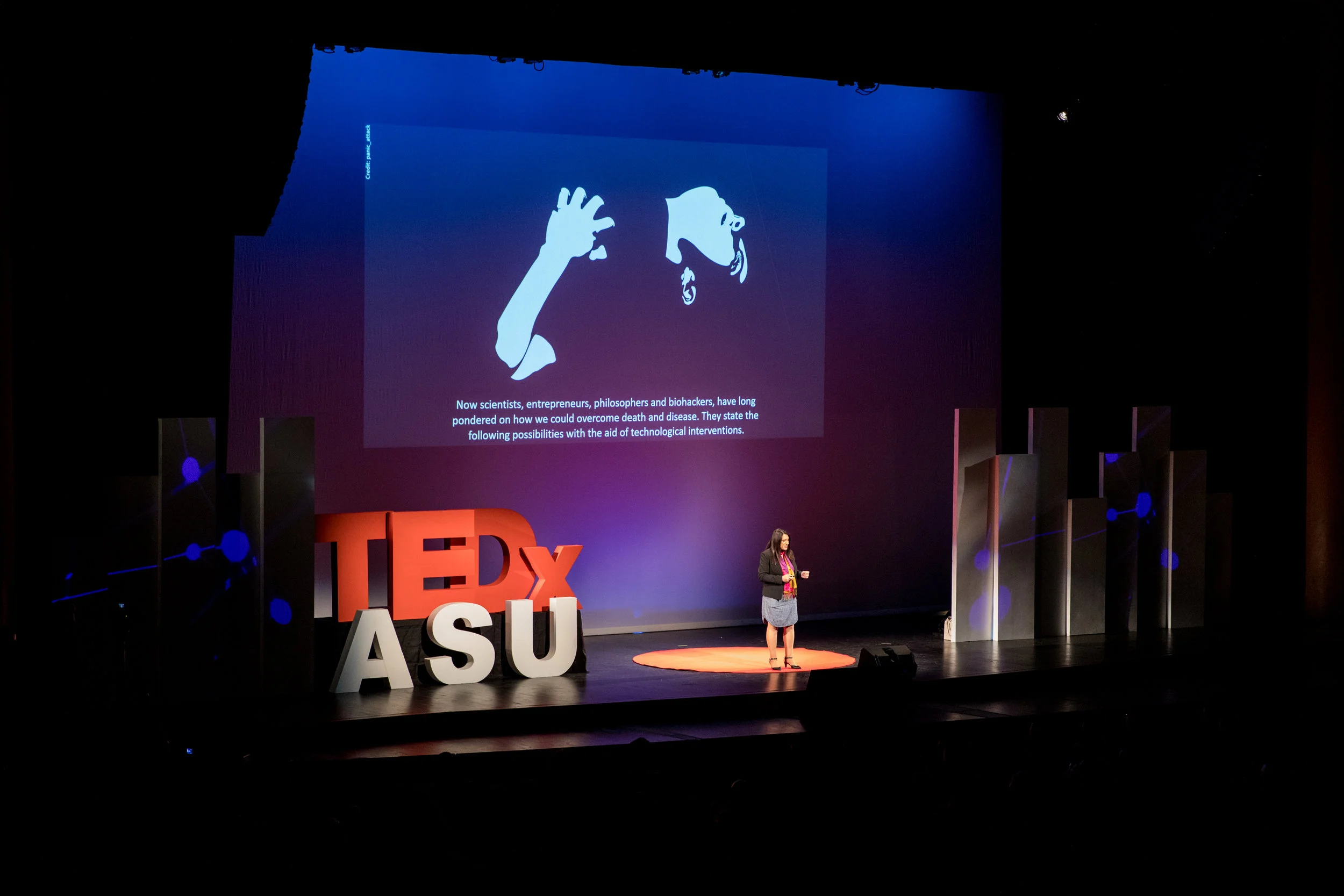
Now scientists, entrepreneurs, philosophers and biohackers, have long pondered on how we could overcome death and disease. They state the following possibilities with the aid of technological interventions.
One way is to embed tiny nanobots inside the body to monitor physical characteristics and vital signs and provide care on demand through internet of things devices.
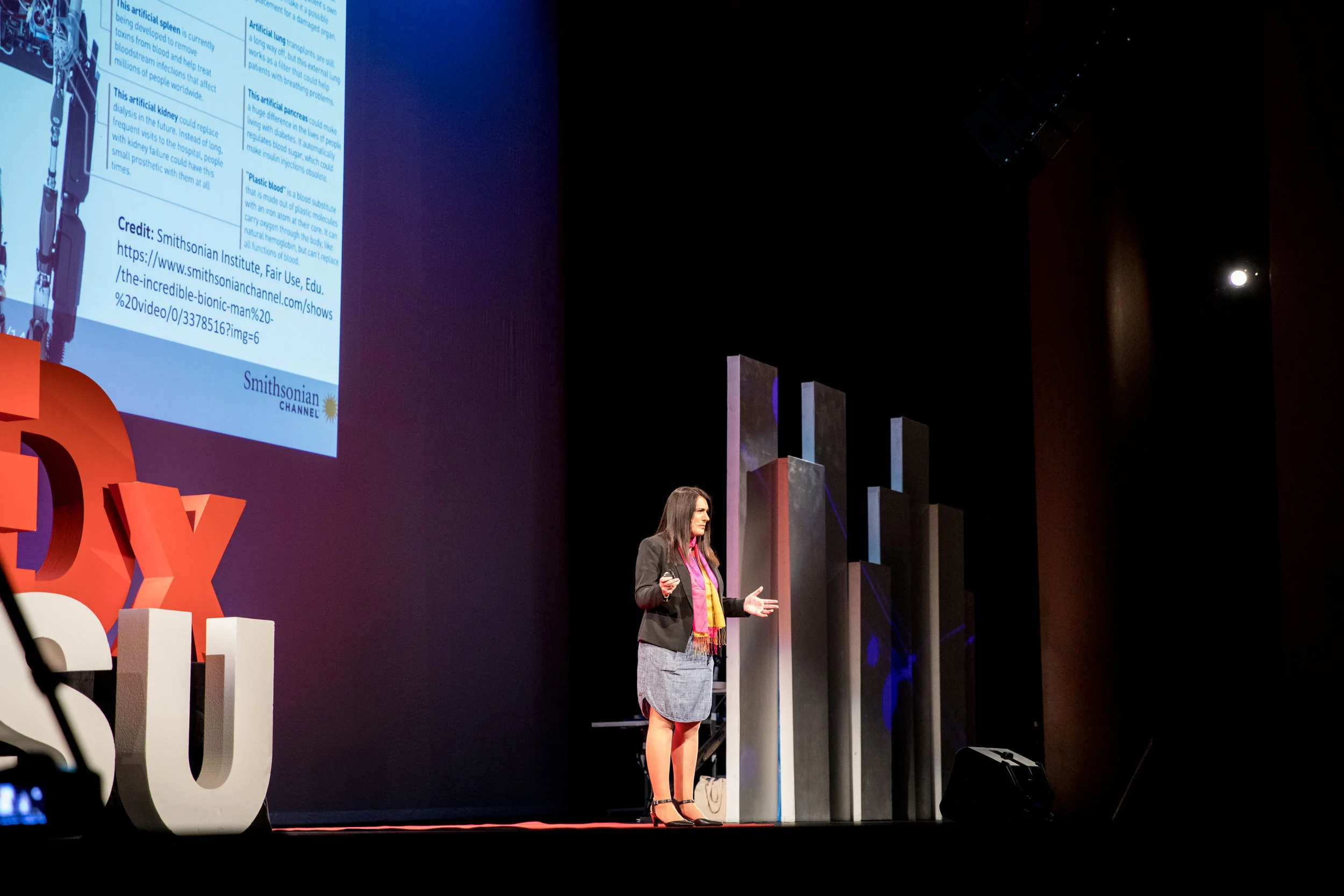
Another is to replace dying organs with new biomechanical systems.
And to keep the body stationary doing away with the need for movement- just jack into a computer and let your mind travel logically.
And the final reductionistic possibility is to keep the brain and nothing else.
Over the next few minutes, I am going to take you through an intricately woven thought experiment. I don’t want you to be bound by what you know. This is what happens when all that is left of you is just a brain, kept alive by the Earth’s Telluric currents! Are you ready?
Act I. NextGens in the Digital Vortex
Imagine you are weightless, without pain or suffering, there are no deadlines or demands- everything is perfect.
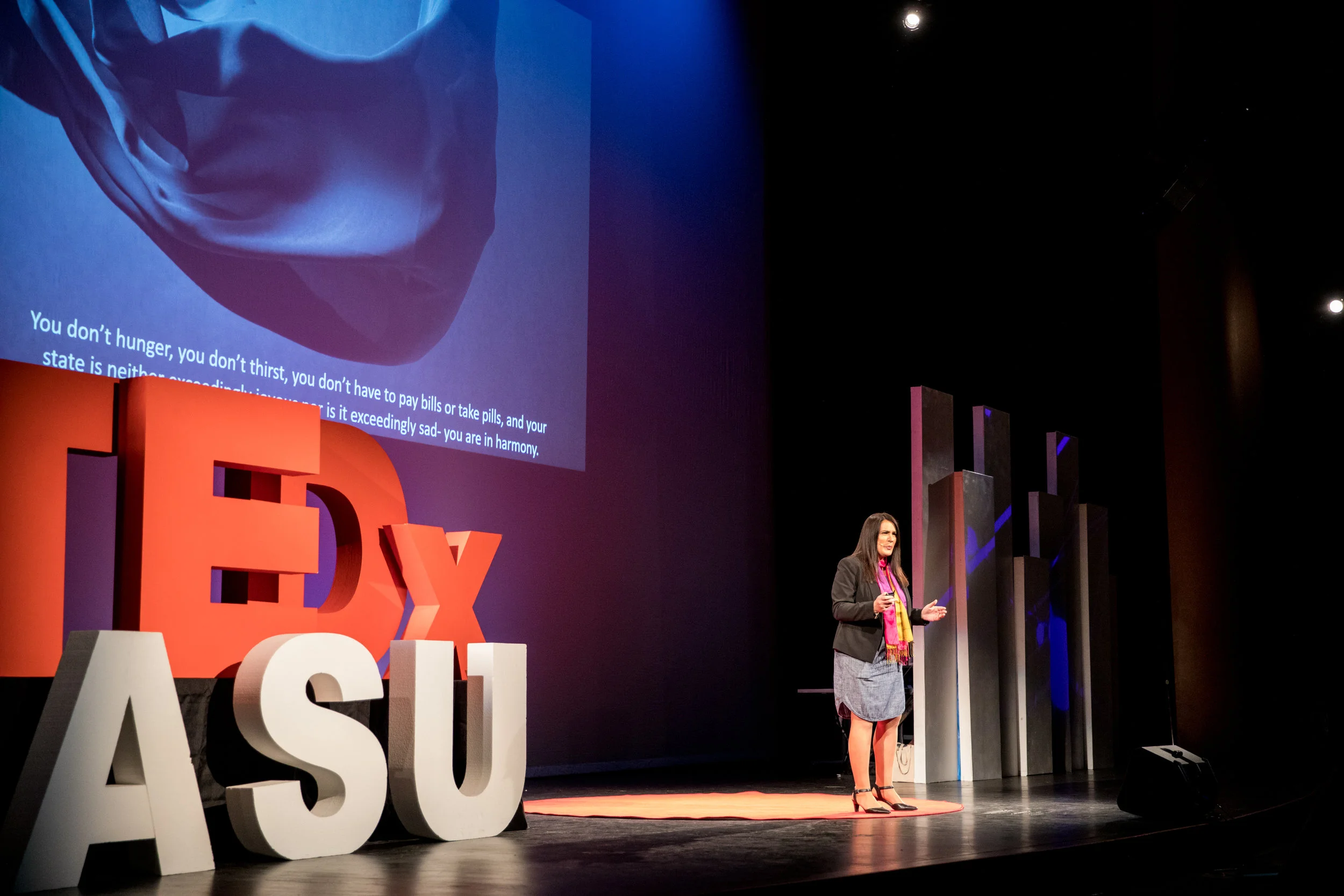
You don’t hunger, you don’t thirst, you don’t have to pay bills or take pills, and your state is neither exceedingly joyous nor is it exceedingly sad- you are in harmony.
There is no noise that will take you out of this state of being, no traffic on the road to slow you down, and you’re on the back porch sitting on your swing chair with a light breeze in the shade.
And your favourite book is in one hand, and you are clasping the hand of the one you love in the other. You say to yourself this is as good as it gets.
And suddenly you feel yourself drifting… drifting… drifting…
And when you wake up, after the anesthetic has worn off you find yourself reaching out with your mind’s eye.
The book is there, and you can recount every word on every page. Your brain has set you free. And you find yourself reaching out into that vast open expanse where there is no up or down or left or right.
You connect with all of those people who have ever read the book and you feel their understanding in the inner core of your spirit.
For some the book was torturous and for others it was a happy experience but all now have the awareness of how the book was integral to their life.
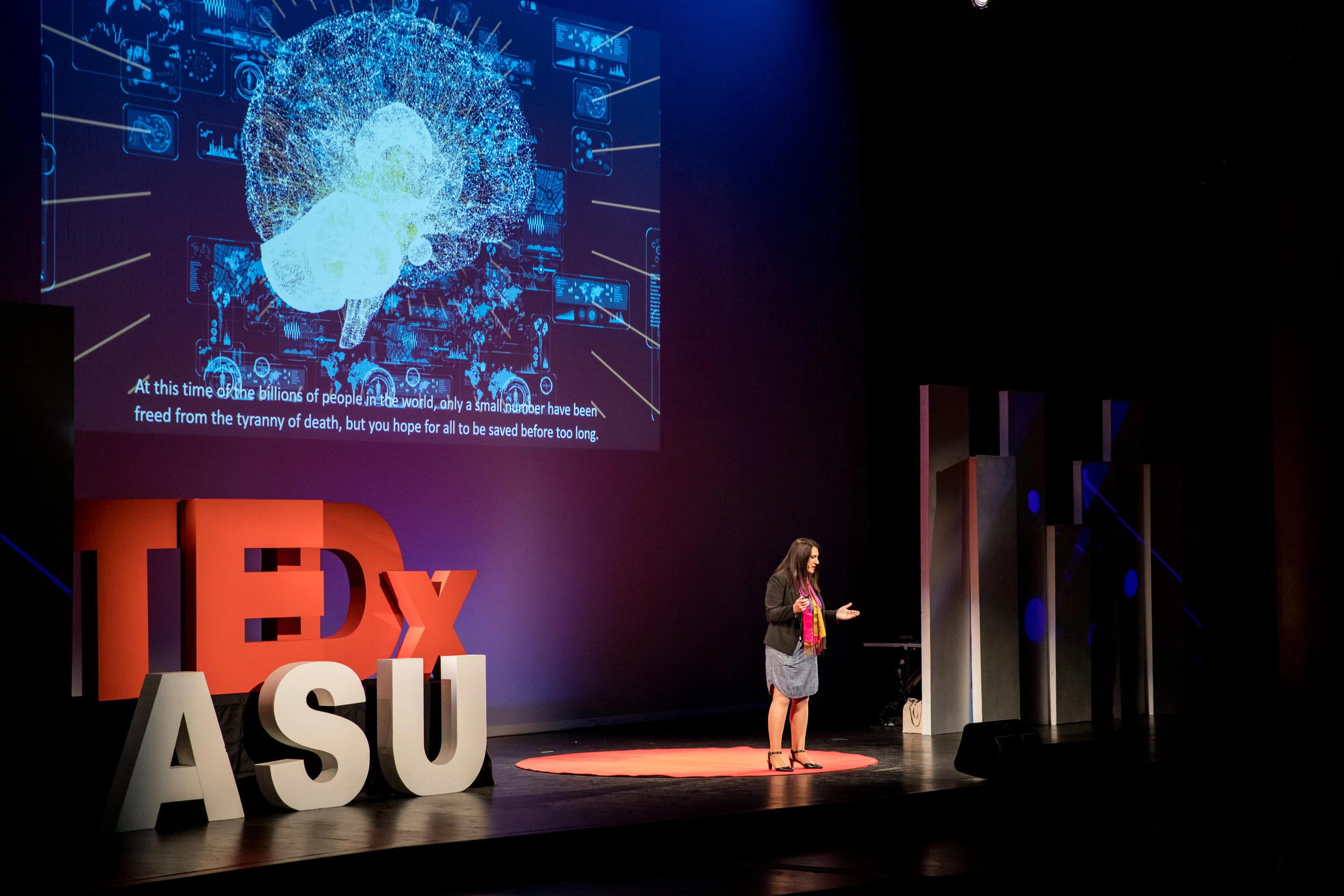
At this time of the billions of people in the world, only a small number have been freed from the tyranny of death, but you hope for all to be saved before too long.
While you begin to share your own reflections of the book effortlessly without thinking, you catch a glimpse of a tiny tiny insect.
NextGeners have taken you to the Digital Vortex to become one with Creation.
You are a tiny round egg, you hatch and turn into a caterpillar, then you form into a chrysalis, and undergo the most remarkable of transformations, you are undergoing ‘metamorphosis,’ the tissue, limbs and organs of the caterpillar have all been changed it is now time for the butterfly to be released, and so it begins to pump blood into the wings and then it will get to fly, find a mate and reproduce, beginning the process all over again.
You realise you no longer have to put on the Goggles to live an augmented reality, you are reality…
Act II. Jacking-in to the Collective SuperBrain
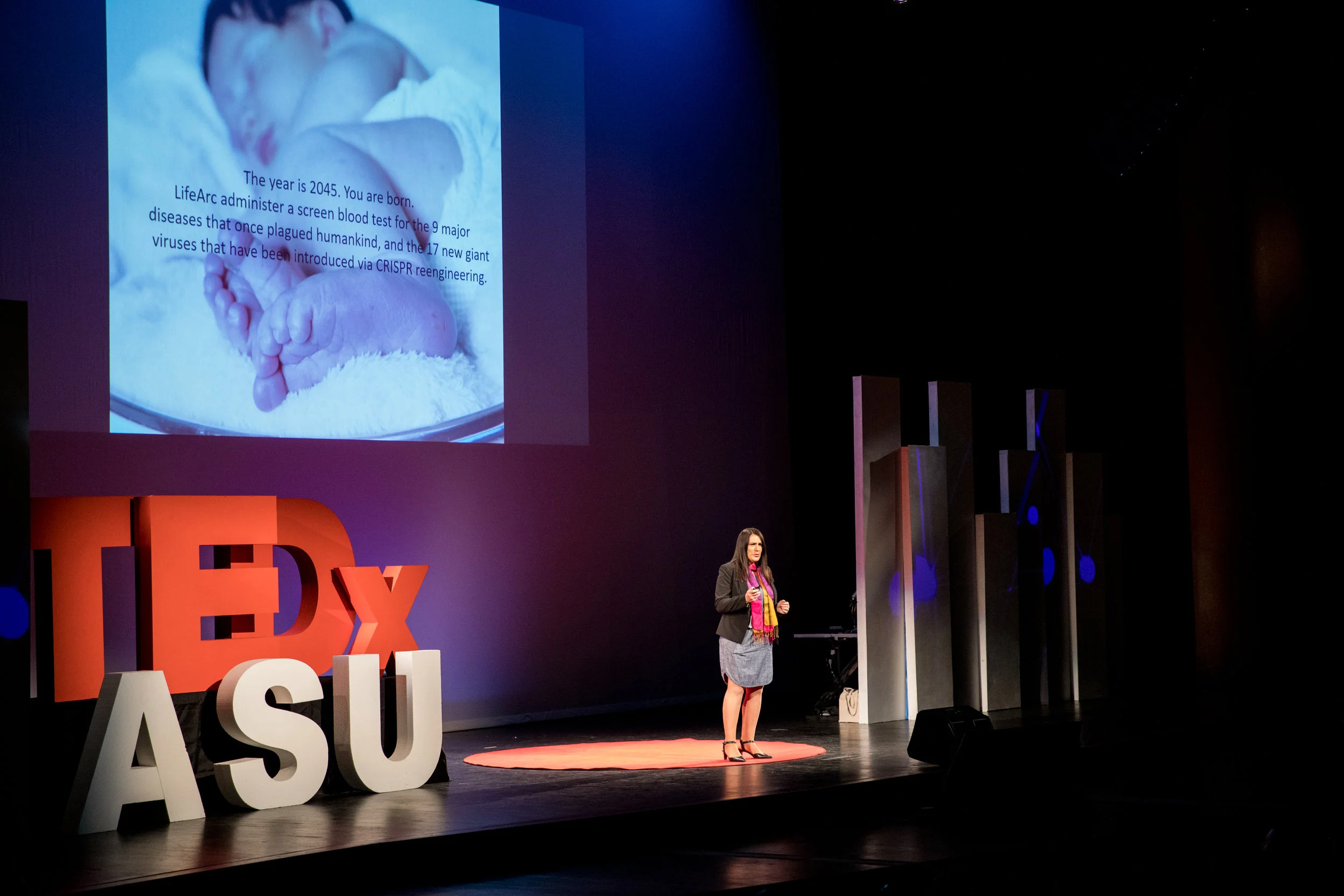
The year is 2045. You are born.
LifeArc administer a screen blood test for the 9 major diseases that once plagued humankind, and the 17 new giant viruses that have been introduced via CRISPR reengineering.
Your cord blood is collected because it can bring you back to life, though few choose to have biological children these days.
You then undergo a very short procedure
to allow for the biology to continue to thrive under the constant surveillance of physical interfaces.
You become the electrophorus, a bearer of light, ambient intelligence
You now transform into something other than what you were born into the world.
At age 12, you would jack in to the Collective SuperBrain.
This life would be incredibly free, we could read all the books in the world, we could remember everything we wanted to remember on demand.
We could relive the best moments our life, not once, not twice but endlessly over and over and over again.
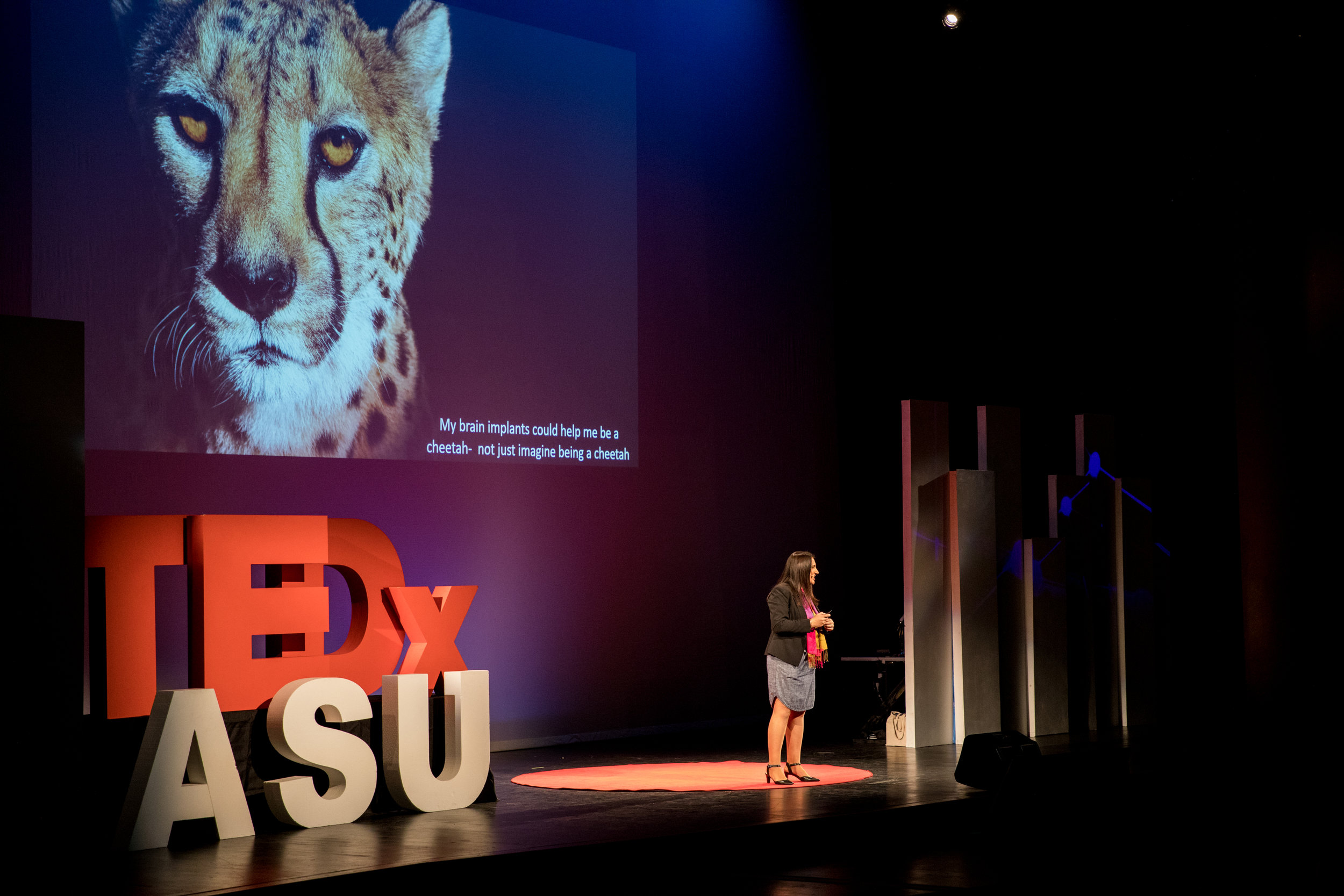
My brain implants could help me be a cheetah- not just imagine being a cheetah
but be a cheetah in all its cat-like qualities
the next day I might wish to be water
the following enveloped by the sky
then I could morph into a rainforest
a tree that is thousands of years old
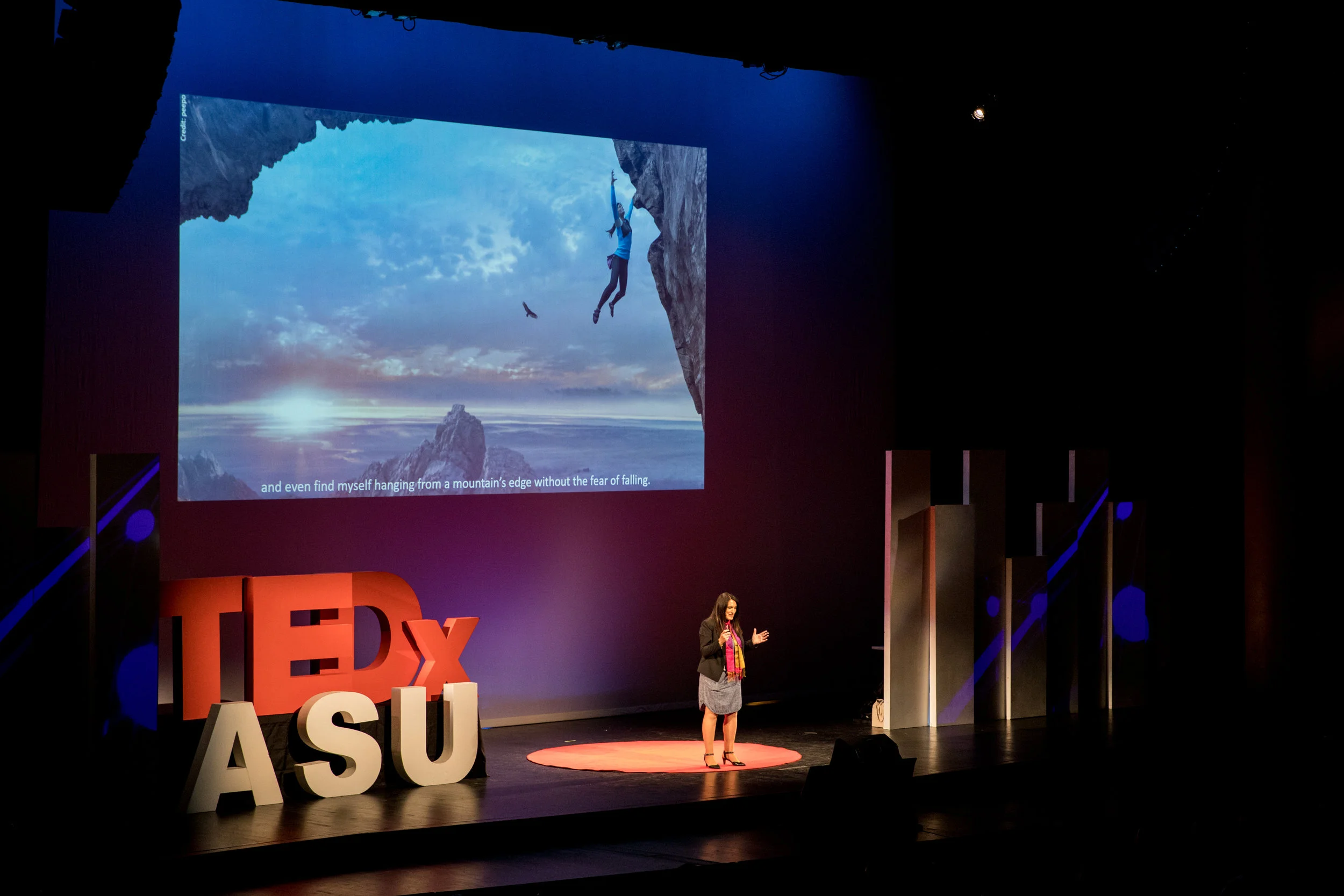
and even find myself hanging from a mountain’s edge without the fear of falling.
All my transactions would happen via blockchains of universality. I would continue to evolve forever.
My name would be calculated using Binary.
I could simultaneously be with others
and if I wanted to be alone, I would make myself lost in the furthest part- sometimes that place would be on Mars or in another Universe.
but other times it would be on a little known server or channel where no one could find me.
I would not simply imagine growing from a seed, to a flower, I would germinate like a flower, reproduce and pollinate and spread my digital hash with other NexGeners.
Reflection: The Uberveillance Risk
Ladies and gentlemen, therein ends the allegory portion of my presentation.
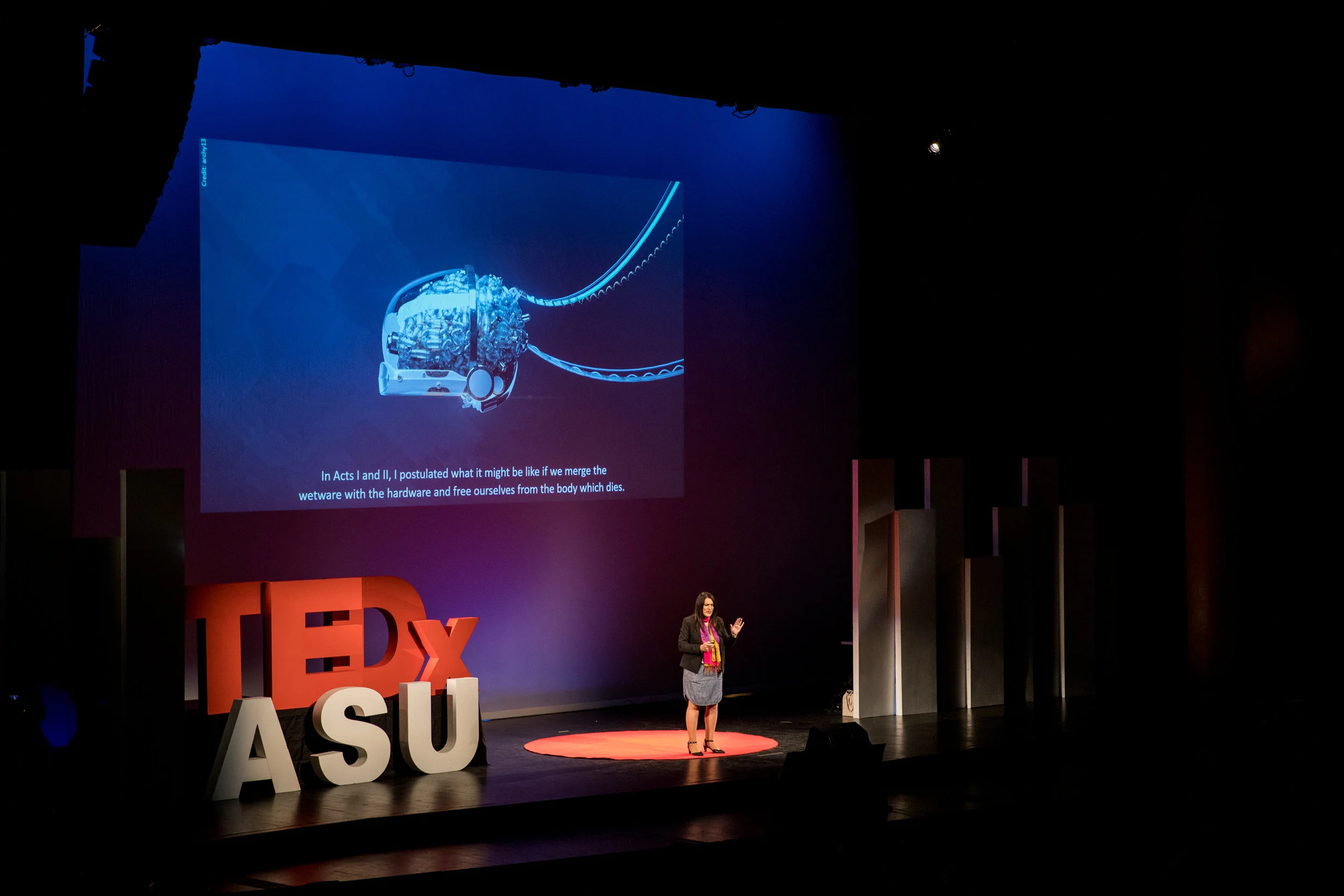
In Acts I and II, I postulated what it might be like if we merge the wetware with the hardware and free ourselves from the body which dies.
Is there anything wrong with the future I am posing?
A techno-centric existence; where society becomes technology?
Where the focus is not only on creating bionic supermen…
and cyborg superwomen through technological enhancements and amplifications
but on our very brazenness to think there must be a technological solution for trampling down every disease and even death?
Did we not learn anything from the ancients who decided to build a big Tower in the hope they would reach the heavens? Those engineers displayed hubris. We’ve been there before.
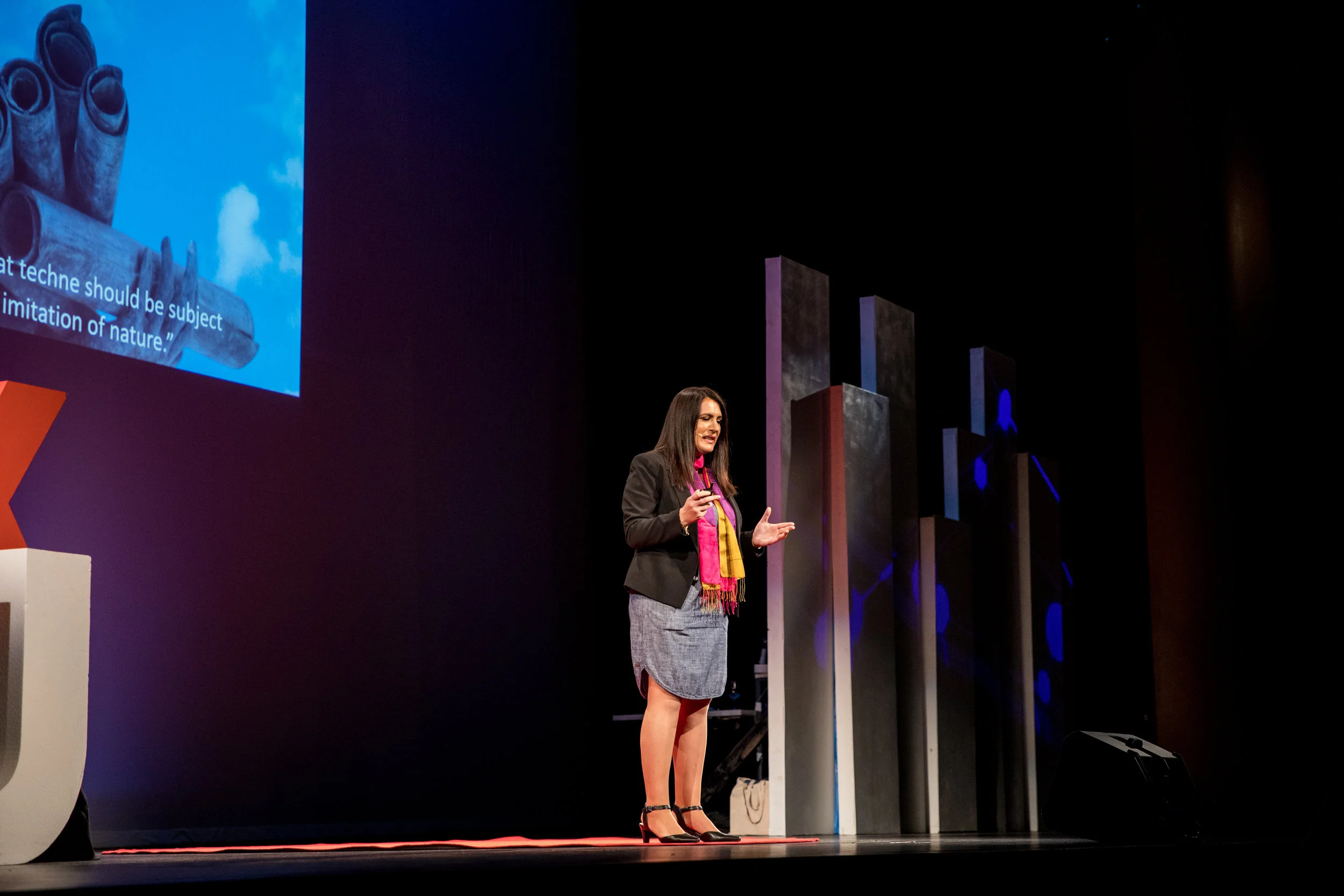
Two of our greatest thinkers, Plato and Aristotle, warned that techne should be subject to “reason and law,” that it was an “imperfect human imitation of nature.”
So why have we gradually moved away from seeking out metaphysical connections? And what is that doing to us?
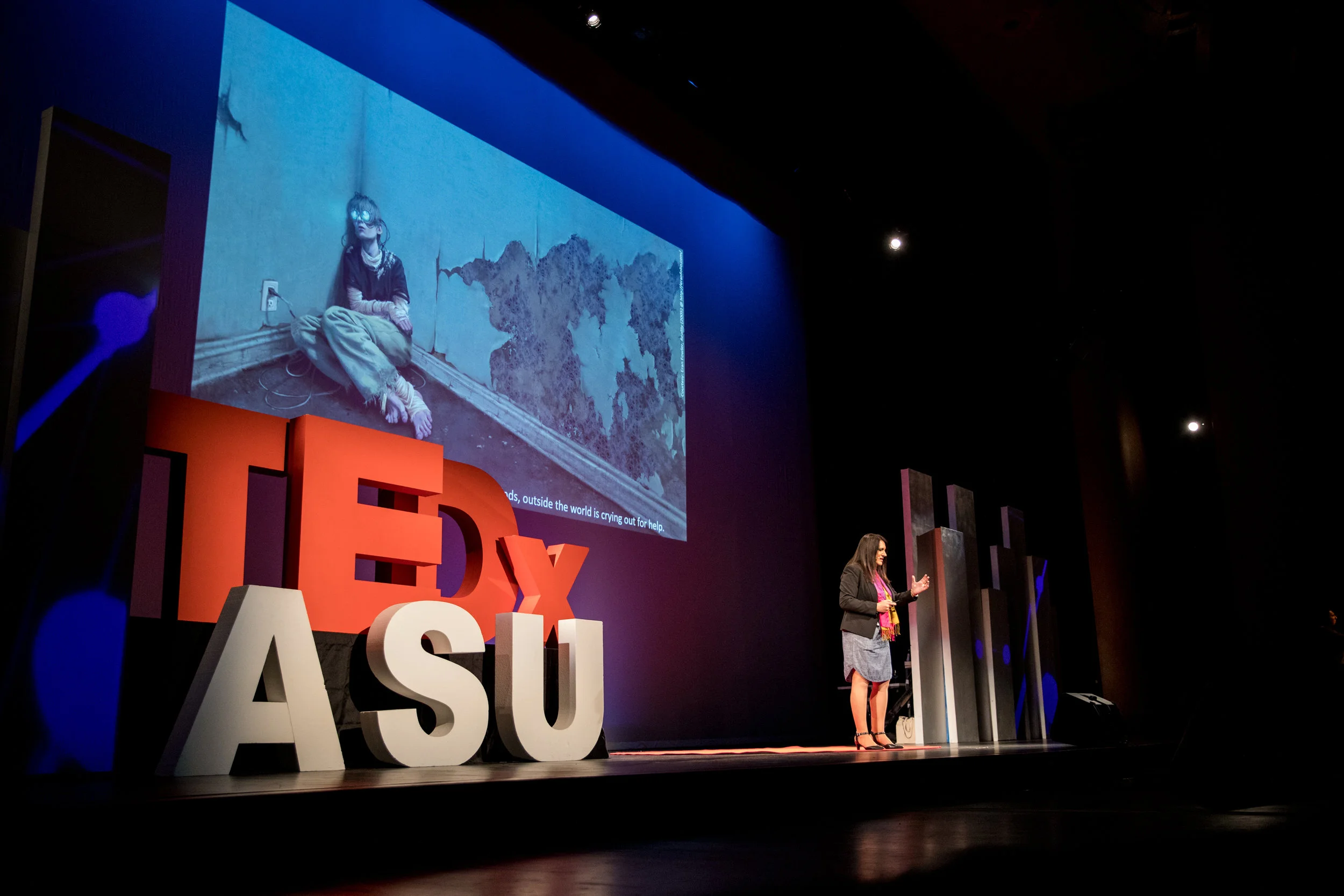
While we are busy entertaining implants of all kinds, outside the world is crying out for help.
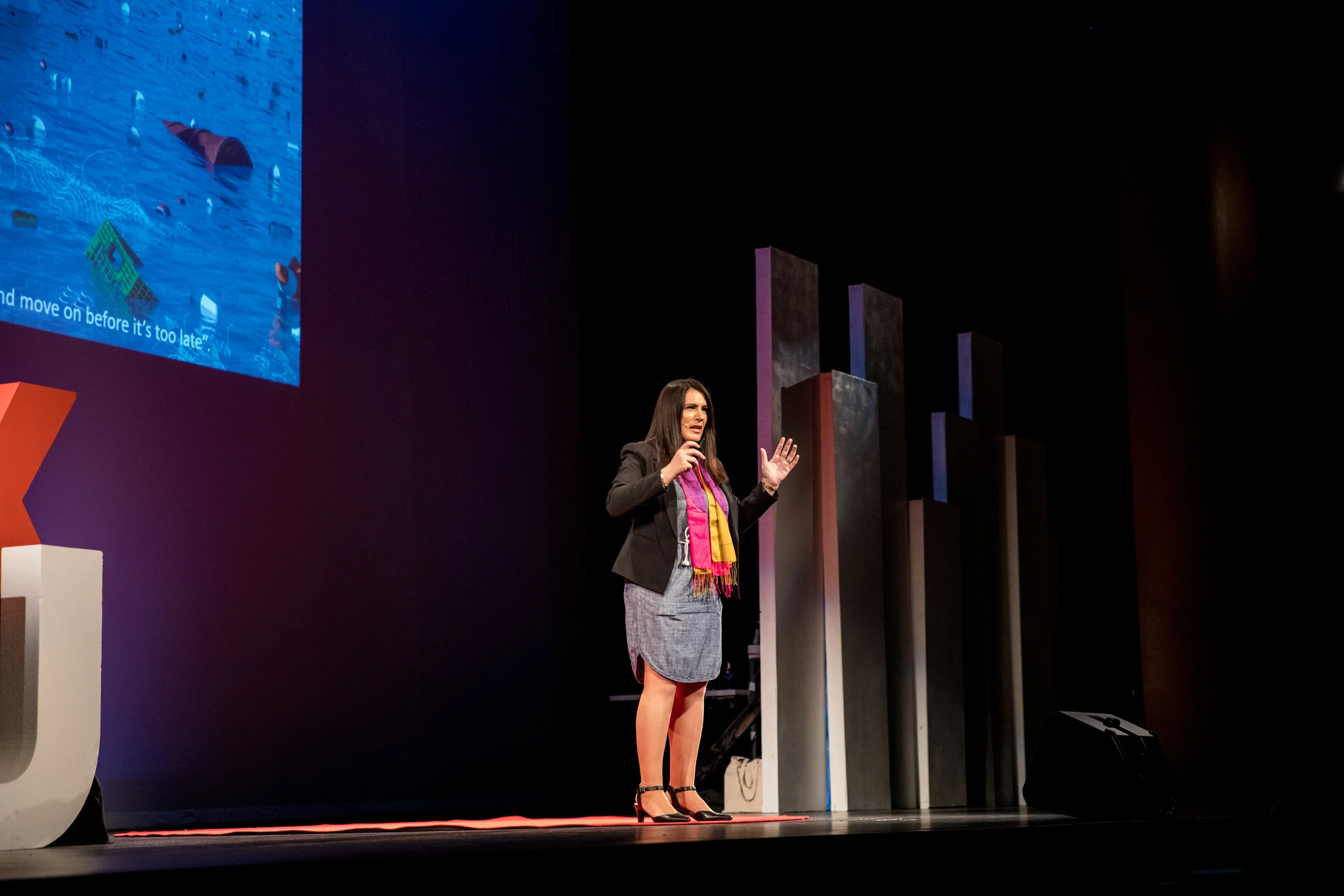
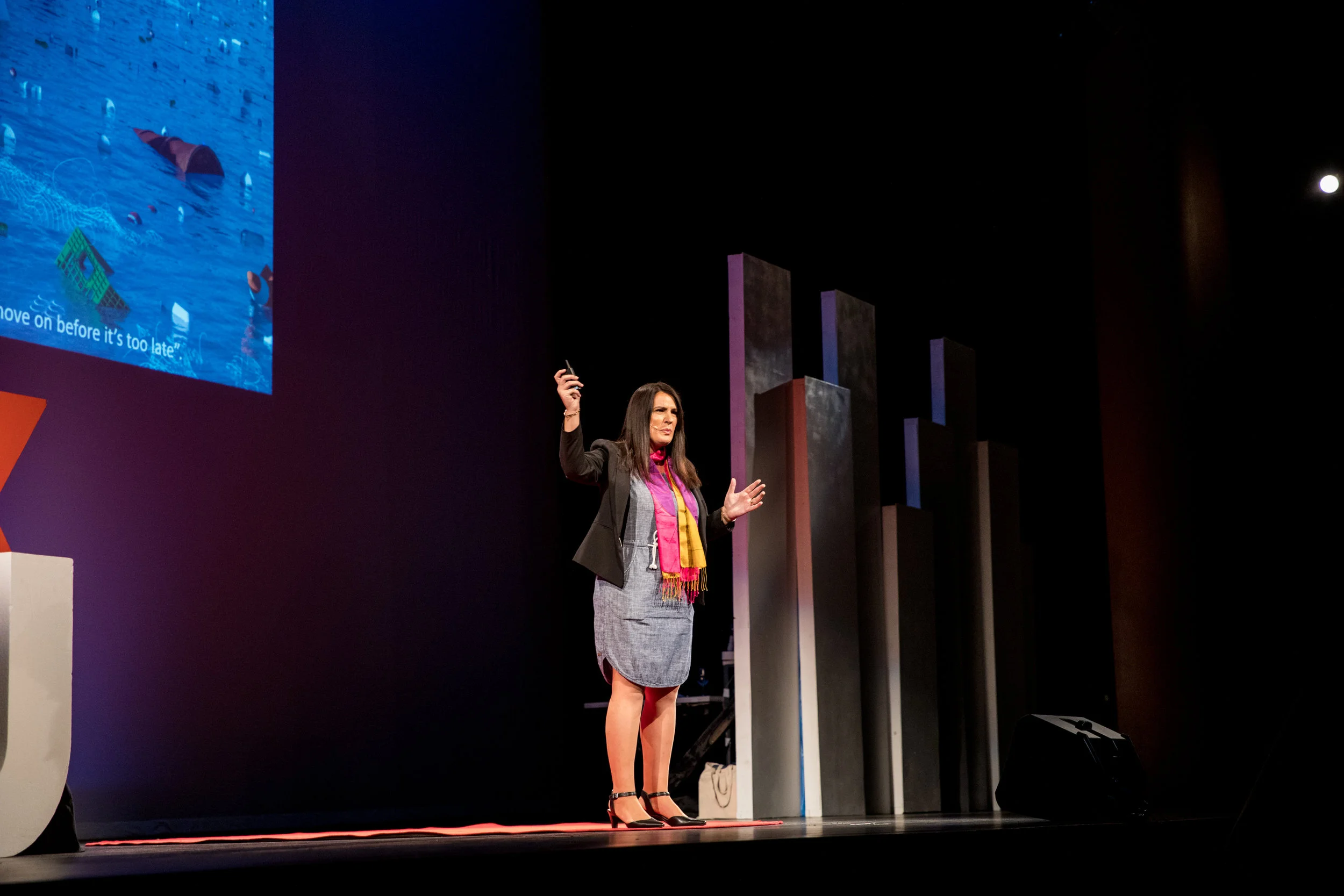
We just cannot say “we got this one wrong, so let’s be done with it and move on before it’s too late”.
Our earth is resembling the state of our inner hearts. We are becoming of our environment.
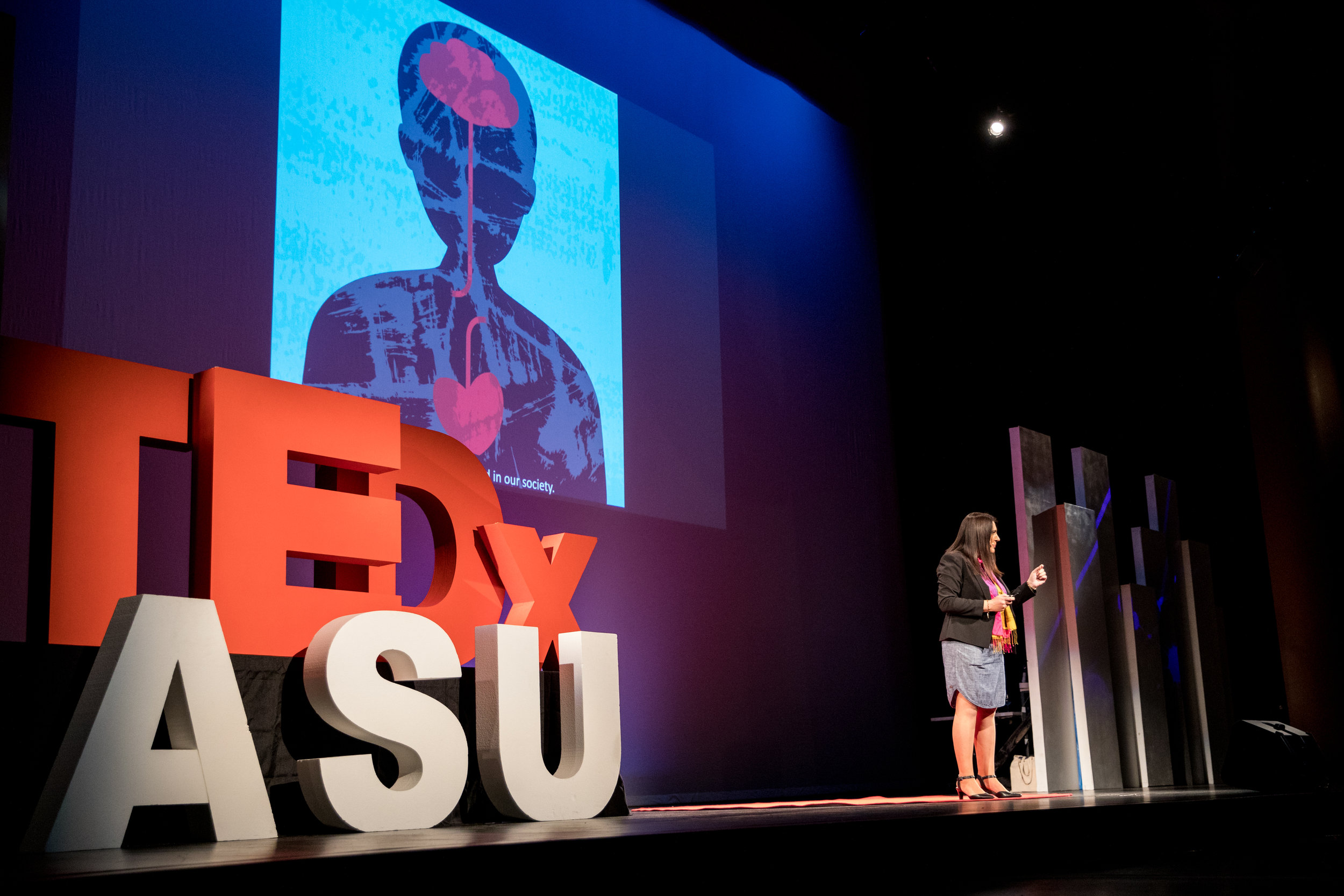
Something has ruptured in our society.
Over a quarter of British young women between the ages of 16 and 24 have self-harmed, and experienced anxiety or depression.
And 1 in 7 have post traumatic stress disorder, but they have never gone to war!
Our mental health crisis is not merely neurobiological, but psychosocial.
But don’t worry we’ll fight the war on depression with the ultimate weapon- brain implants to combat the problem of too much technology?
When things get too difficult, we can switch off and reboot, and make ourselves artificially happier again.
Ladies and gentlemen we are becoming entangled in too many cables and wires.
We lust for high tech but have no overload switch and are short circuiting as a result.
Our kids just want us to look at them.
But we can’t disconnect from our smartphones.
We love our computers but they do not love us, and never will.
We are spontaneous beings, and microchips are simply random generators.
Machines don’t dream.
Machines don’t pray.
Machines don’t know what it’s like to thirst.
Machines don’t know what it’s like to be homeless.
Mimicry is not the real thing.
For our own homes we invest in Next Generation AI surveillance hubs that take note of our every action, and listen to our every word, all the while deconstructing our uniqueness in the name of safety, convenience, and productivity.
We have fallen in love with the vampire and instead of resisting, we beckon him forward to take the first bite.
We are living in a zombie apocalypse.
It is difficult to detect, because in this instance there is no blood, and the zombie walk has been normalized.
If we are hooked now, wait till the implantables get under our very skin and into our heads.
We have already heard about brain and heart pacemaker security vulnerabilities.
Has anyone considered death by Internet? The ultimate uberveillance risk.
Social theorist C.S. Lewis in 1943 called all of this the “slumber of cold vulgarity”. He was referring here to the Abolition of Man.
That man would be reduced to nothing but a “head” that would finally self-destruct, as depicted in That Hideous Strength.
No, I want to live as a human.
I want to place my ear on my beloved’s chest and hear his heart beating, and be skin to skin.
I want to bleed if I cut myself accidentally.
And I want there to be a hand to reach out to when I am in need.
Our life is not a video game. We are not living in a simulation. This is it.
Conclusion: Responsible Engineering
Ladies and gentlemen to conclude:
Machinery and technology are to be used for the betterment of humankind and not for its subservience. Techne used to be complimentary to our endeavors and we were in partnership with the engineering.
However, we have gradually moved away from this healthy synergy where we are not only becoming faceless numbers but are deconstructing the basic building blocks of our very being.
We need engineers to step up and take responsibility, both at the building and ethical levels of their work.
There is a rightful place of science and technology. We need a new breed of practitioners who build with meaning for the urgent needs of humankind.
Yes, there are no limits to innovation.
But when technology itself may involve a wrongful use of humans, animals, or natural things; we should say we go no further.
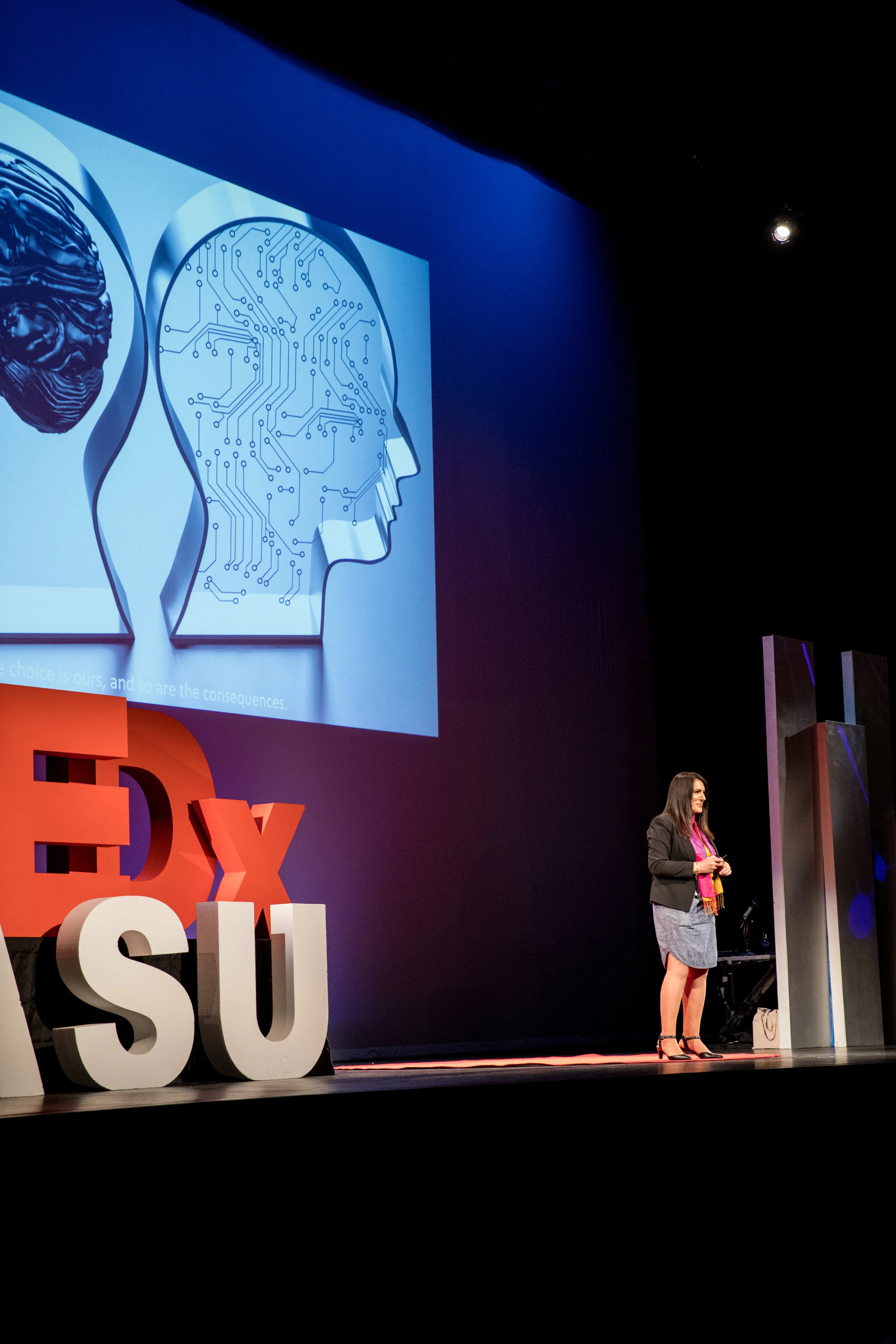
The choice is ours, and so are the consequences.