Public Interest Technology for Innovation in Global Development
Citation: R. Abbas, K. Michael, D. Davlembayeva, S. Papagiannidis and J. Pitt, "Public Interest Technology for Innovation in Global Development: Recommendations for Launching PIT Projects," in IEEE Transactions on Technology and Society, vol. 5, no. 1, pp. 14-23, March 2024, doi: 10.1109/TTS.2024.3375431.

Image by Mike
SECTION I.
Introduction
This paper serves as an Introduction to the Public Interest Technology (PIT) for Innovation in Global Development Special Issue, based on a workshop of the same title held in September 2023. The paper’s contribution is in proposing recommendations and practical guidance to aid in launching PIT projects. We begin by situating the Special Issue in evolving definitions of PIT in Section II, followed by an overview of the PIT ecosystem in Section III to offer a succinct account of the current state of PIT scholarship. The corresponding links to the innovation in global development context are subsequently described in Section IV, in keeping with the theme of the workshop. These links relate to an overview of adjacent fields and concepts; an illustrative example in the information technology for development (ICT4D) field; the identification of gaps in current PIT scholarship; and the preliminary questions that require attention. Next, Section V presents workshop outcomes, in the form of a general overview of the event; the identification of prevalent themes emerging from and / or are reinforced in the workshop; and a summary of Special Issue papers. The workshop is used as an interdisciplinary catalyst for the explication of more recent PIT developments. These developments are encapsulated in ten recommendations for launching PIT projects in Section VI, intended to direct PIT project managers or lead investigators prior to project launch or during the initial stages of a project.
SECTION II.
What is Public Interest Technology?
Public Interest Technology is a nascent field that can be traced to 2016 when several charitable foundations commissioned a study on a new generation of technologist for the public interest [1], [2]. Notions of the public interest stemming from ancient Greek philosophers such as Plato (428–347 BC) and Aristotle (384–322 BC), have “assumed the existence of a public interest that is more than the sum of the interests of the individuals that make up a polity” [3, p. 101]. Albeit controversially, modern interpretations of the public interest stress the “collective” consisting of individual interests summed together, needing to be protected by public servants [3]. Thus, subsequent efforts in political philosophy and law, have generally described the public interest in terms of justifiable community benefits [4].
While many definitions of PIT have emerged (refer to Table I for representative examples), most encompass ideas of solving public problems for the “public good” or in the public interest within an evolving ecosystem of stakeholders [5], [6]. Other attributes of PIT include: recognition of the undesirable consequences and implications of technology; responsible approaches to emerging technology supported by cross-sectoral collaboration [7]; public (citizen) participation opportunities [8]; interdisciplinarity with respect to the design, implementation, and regulation of technologies; an emphasis on groups that may be “targeted and neglected by technology” [9]; and the role and training of the public interest technologist [10]. While Freedman et al. [1, p. 1] originally referenced “technologists for the public interest”, the term was reversed in academia and practice to public interest technology, following the established area of public interest law (PIL), and the more recent developments in public interest journalism (PIJ).
TABLE I Definitions of Public Interest Technology
SECTION III.
The PIT Ecosystem
PIT can be described as both a philosophy of technology / innovation / systems design and development, and / or as an end goal [11]. It can also be depicted as an open socio-technical ecosystem [11, Fig. 1, p. 58], [12]. Core to the PIT ecosystem is the notion of purpose-driven socio-technical innovation, which accounts for unintended consequences and requires a redefinition of what is considered “purposeful”: in this context, it is striving for public (citizen and community) benefit [13]. A primary objective of the PIT ecosystem, and its constituent stakeholders, is to advance core values such as justice and equity in technology or innovation related projects and processes [6]. This objective should be pursued in a manner that aligns with and reinforces the values and needs of traditionally disenfranchised or vulnerable groups [9]. Reinforcing qualitative human values, both individually and collectively, necessitates PIT design methodologies that incorporate expectations, accountability, reflexivity and polycentricity [14].
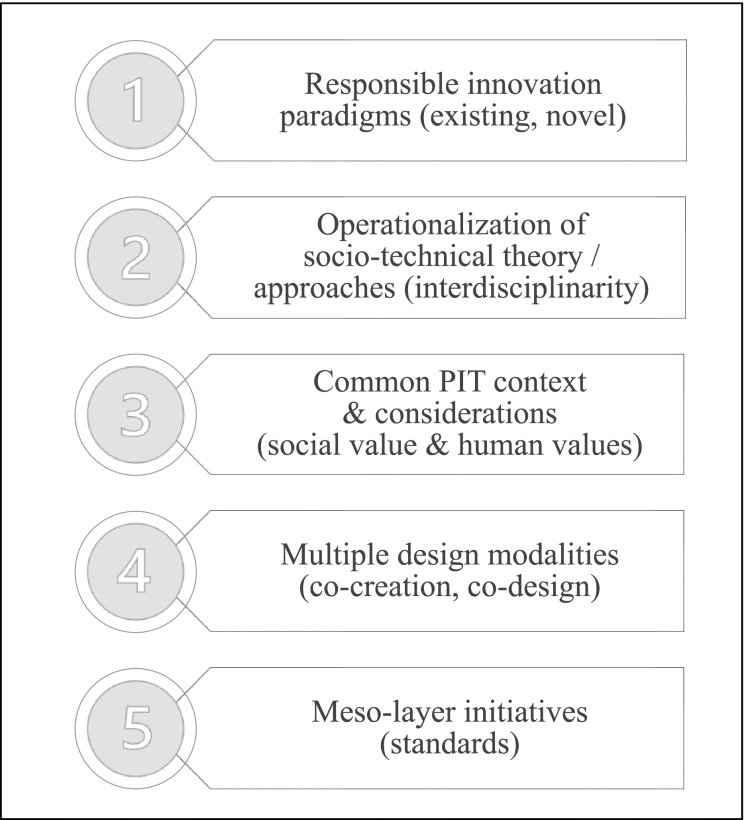
Fig. 1. PIT workshop themes.
A related key consideration is establishing the link with public policy, law, regulation, and governance mechanisms within a stipulated context, while identifying and exploring the technological landscape and developments relative to a given application area [11]. Regarding regulation, multiple stakeholder perspectives need to be accounted for, including user-based and individual perspectives on regulatory compliance and the associated perceptions of emotional empowerment in value-based contexts, for instance, with respect to security- and privacy-preserving technologies [15]. The way in which these individual perspectives contribute to broader public perceptions regarding a range of values in a specific context is also critical. A related consideration here is collective action, relying on coordinated efforts and the orchestration of knowledge “in order to achieve a desired outcome relative to the applicable metrics,” such as performance and quality [16, p. 6].
A PIT ecosystems perspective equally requires an appreciation of other factors and interacting elements incorporating financing considerations, stakeholder-related experience and expertise, theoretical and conceptual frameworks, and design approaches allowing for operationalization, in addition to the identification of a suite of fundamental human values that need to be accounted for. Refer to Abbas et al. [11, Fig. 1, p. 58] for a visual representation of the PIT open socio-technical ecosystem framework, which provides the necessary context for this Introduction.
SECTION IV.
PIT for Innovation in Global Development
With its emphasis on equity, justice, ethics and responsibility, PIT and its ecosystem manifestation is somewhat comparable to other fields that connect technology, innovation, and scientific endeavors to global development. The definition of global development assumed in this Introduction, not to be confused with the often-conflated term international development, is about advancing local, regional, national, and international community interests from social, economic, technological, health, environmental, and other connected perspectives, resulting in a relational and encompassing definition of development that is valid globally [17]. This definition is aligned with recognized sustainability agendas that promote “global partnership” and apply to both developing and developed nations and broader perspectives of global development, such as the UN Sustainable Development Goals [18]. This definition also relates to other fields and concepts that are adjacent to PIT, and that have emphasized technological interests among others.
A. Adjacent Fields and Concepts
Narrowing in on the technological and innovation aspect of global and sustainable development for the purposes of this Introduction, a discernible starting point at the intersection of PIT and global development are fields such as humanitarian engineering [19], [20], Tech for Good [21], [22], Civic Tech [23], [24] and Information Technology for Development (ICT4D, see the following section for further detail), among others. Other adjacent fields include responsible innovation [25], [26], [27], [28], socio-technical design / co-design / participatory design [29], [30], [31], [32], [33], [34], [35], and citizen science [8], [36], [37], [38].
A cursory view of the identified fields indicates that they tend to be discipline- or sector-specific. Furthermore, they appear to overlap in their emphasis on people and planet, although this is often contested as discussed in the following section. While a comprehensive review of these fields is beyond the scope of this Introduction, ICT4D is used below as an illustrative example of a global development field that is adjacent to PIT with the purpose of highlighting that PIT scholarship and the PIT ecosystem do not exist in isolation. This is significant as there may be the need to explore adjacent fields and concepts in the context of any given PIT project.
B. Illustrative Example: Information Technology for Development (ICT4D)
ICT4D is defined as a multidisciplinary field [39] that focuses on the supply and use of information and communication technologies or digital technologies for community development, initially aimed at progressing developing countries and communities [40], [41], [42], although this definition has been challenged [43]. Development in this context has been described from four vantage points: specifically, from the perspectives of enhanced freedom, inclusion, well-being, and economic productivity [44].
The evolution of ICT4D can be described in three distinct periods: the first (mid-1980s to mid-1990s) championed research on the social implication of information systems (IS) in developing countries; the second (mid-1990s to mid-2000s) coincided with significant technological changes and ensuing critiques, resulting in an expansion in the scope, type of research and disciplinary focus beyond the IS domain; and the third (2000–2017) amplified the interdisciplinary focus and critiques of the field [41]. While interdisciplinarity and critical reflection are enduring themes in current ICT4D discourse [39], and global development scholarship more broadly, a high incidence of ICT4D project failures has been reported [44], attributed to many factors including insufficient attention to the relationship between “the macro context and the local IS innovation” setting [45, p. 698] and the design-reality gaps [46], [47].
The ICT4D field was initially scrutinized for what was considered a problematic emphasis on developing countries [48], contributing to further issues relating to both ICT4D research and practice [43], [48]. These include issues such as the lack of user centricity while in parallel furthering techno-centric ideologies; inadequate treatment of ethics and ethical considerations; and the lack of quality and rigor in research, which naturally impedes practical efforts and projects [43]. Less forgiving assessments question the central premise of the field, that is, the technologically deterministic perspective that suggests technology is in fact a requirement to achieving (global) development objectives [43], which can somewhat undermine the indispensable social orientation of global development research and projects. Recent studies have called for a reorientation of sorts, where it is suggested that justice and equity should and can be operationalized through an impact-driven framework that defines the interrelated elements of motivation, stakeholders, practices, and goals [49]. The intention in this instance is to address issues of the marginalization of populations and select criticisms of ICT4D research [49].
When positioning ICT4D relative to PIT, it is immediately evident that both fields relate to global development in their overarching goals. For example, the ICT4D field is committed to tackling significant issues, including but not limited to, economic wellbeing, global health, and the undesirable consequences of ICTs [41]. The PIT field is similarly inclined. However, points of divergence include the foundations, maturity, evolution, and focus of the respective fields. A case in point is the direct emphasis on “the public” in the case of PIT compared with the techno-optimistic perspective that has traditionally been assumed in the ICT4D field [43].
C. Gaps in PIT Scholarship
In this Introduction, we acknowledge progress in the ICT4D field, and the adjacent fields previously identified. We also call for a recognition and exploration of these fields when considering the launch of PIT projects. This particularly applies to projects centered on global development in the broad sense of the term, but equally concerns PIT projects in general. In doing so, we seek to better understand how we can engage in and successfully launch PIT projects within what can be considered a rich, overlapping, and interconnected environment, thereby addressing a significant gap in existing PIT literature. This understanding is a prerequisite for engaging in interdisciplinary PIT dialogue and projects, as the somewhat indistinct connection between PIT and adjacent fields may inhibit the progress, and indeed the launch, scope, and focus, of PIT projects. This is specifically pertinent in instances where there may be perceived discrepancies regarding approaches and concepts, and a potential sense of rivalry regarding disciplinary positions, expectations, and interests.
D. Preliminary Questions
As there is insufficient academic research into these considerable discrepancies, gaps, and challenges, several preliminary questions surface with respect to PIT for innovation in global development and more broadly. Questions include: What is the role of public interest technology (as a field, philosophy, outcome) when applied to global development? What initiatives are required to strengthen the emergent academic field of public interest technology? Do we need novel theories, methodologies, frameworks, and approaches given the existing body of knowledge in adjacent fields? What is required for interdisciplinary PIT projects to succeed? How can purposeful, interdisciplinary PIT partnerships and projects be initiated and nurtured, moving toward an agreed upon, values-based outcome? And are there any practical recommendations for launching PIT projects?
SECTION V.
PIT for Innovation in Global Development Workshop (Pit Workshop)
A. Workshop Overview
The preliminary questions identified in the preceding section, among others, and previous work in the PIT domain (see Appendix A (which refers to supplementary material/media files.) for a teaching module study guide containing further readings related to global PIT initiatives, Appendix B (this refers to supplementary material/media files.) for the accompanying slides and [50] for the associated video resource) provided the impetus for developing the concept of the Public Interest Technology for Innovation in Global Development Workshop (from here on the PIT Workshop) and issuing the associated call for papers [51]. The PIT Workshop was held on the 12 September 2023 and was co-located with the IEEE International Symposium on Technology and Society 2023 (ISTAS23). The workshop overview [52] and five PIT papers emerging from the event were published in the ISTAS23 proceedings [53]. The workshop also provided paper development opportunities with the purpose of progressing manuscripts for consideration in related special collections, including this Special Issue in the IEEE Transactions on Technology and Society (IEEE TTS) and a special collection in the International Journal of Business Science and Applied Management (IJBSAM). Refer to [A1], [A2], [A3], and [A4] below for a list of the accepted IEEE TTS Special Issue papers. The PIT projects identified in the papers were at varying stages of development and employed assorted perspectives and approaches, contributing to the primary focus of the workshop: to expand our understanding of PIT for innovation in global development with the purpose of addressing local through to broader societal challenges, using interdisciplinary approaches [51].
B. Themes
TABLE II Description of PIT Workshop Themes and Implications for PIT Research and Practice
The PIT Workshop papers, inclusive of related Special Issue papers, covered various themes, sub-themes, concepts, and approaches that enrich existing PIT scholarship (refer to Appendices A-B which include supplementary material/media files for further reading and [50] for an accompanying resource reviewing global PIT initiatives and considerations). Specifically, these articles and resources contributed valuable insights into the interpretation of interdisciplinary dynamics and subtleties in the context of a range of PIT projects related to innovation for global development. Five dominant workshop themes were identified manually through high-level coding of the published PIT workshop papers. The purpose of this Introduction and Special Issue is to demonstrate how existing projects and studies can be utilized to inform the launch of PIT projects in the first instance and contribute to PIT scholarship and the explication of PIT ecosystem elements in the second.
The dominant themes from the PIT Workshop are identified in Fig. 1, and are broadly centered on developing responsible innovation paradigms, operationalizing socio-technical approaches through genuine interdisciplinarity, enhancing the understanding and representation of common contextual factors and considerations that are consistent across all PIT project instances, highlighting the multiple modalities for engaging in co-creation and problem and solution co-design, in addition to emphasizing the role of meso-level initiatives with the purpose of designing, developing, and implementing artifacts consistent with the core tenets of PIT, as described in Sections II and III. Table II succinctly summarizes the respective themes, presenting the implications for PIT research and practice.
C. Special Issue Papers
Further to the PIT Workshop themes above, this section provides a summary of the accepted IEEE TTS Special Issue papers, each of which presents insights regarding one or more of the themes, as applied to a specific context and level (e.g., micro, meso or macro). The first paper in this Special Issue is titled “The Human(e) Technology Design Studios: An Action-Oriented, Co-creative Modality for Centering the Human in Critical Technology Discussions,” by Erica O’Neil, Elizabeth Grumbach, Gaymon Bennett and Elizabeth Langland of the Lincoln Center for Applied Ethics at Arizona State University [A1]. This paper outlines a co-creation tool developed to facilitate critical technology dialogue with a specific focus on user groups that are “disproportionately impacted” by a given problem or system, thereby aligning with fundamental definitions and requirements of PIT, as described in this Guest Editorial. The authors present the theoretical underpinnings informing the Human(e) Technology Design Studios and the principles of engagement, covering notions such as experience and expertise, the question-based orientation of the studios and the significance of “systematic thinking,” among other principles. They also reveal details about the rhythm or progression of the design studios encompassing movements and convergent and divergent thinking activities, after which a comprehensive case study elaborating on the creation of the principles is presented. A publicly accessible Design Studio Modality toolkit is forthcoming.
The second paper in this Special Issue is by Emily Zuetell and Paulina Jaramillo from the Department of Engineering and Public Policy at Carnegie Mellon University [A2]. The paper is titled “A Framework for the Interpretable Modeling of Household Wealth in Rural Communities from Satellite Data.” The aim of this paper is “to demonstrate that simple, human-understandable models can be developed with performance and outcomes similar to deep learning models while adhering to responsible, equitable, and inclusive design principles.” As such, Zuetell and Jaramillo propose an interpretable model for predicting household wealth utilizing satellite data, specifically village-level annual household wealth in Uganda. The paper additionally articulates the challenges and trade-offs that exist in this context, highlighting the significant link between interpretable methods of this nature and human-centered design.
The third paper in this Special Issue is focused on “Social and Ethical Norms in Annotation Task Design” and is authored by Razvan Amironesei, an independent researcher, and Mark Díaz from Google Research [A3]. This article explores the reliance on humans for annotation of machine learning datasets, and the ensuing social and ethical considerations in annotation task design. Specifically, the authors draw attention to the process of human-generated annotation that is used as a basis for training machine learning models. Amironesei and Díaz maintain that such approaches may disregard factors such as social and cultural judgements in the context of subjective tasks that require presumed knowledge of socio-cultural contexts. The failure to acknowledge how subjective experiences and individual values influence “data judgements” may lead to a range of biases and “representational harms” potentially impacting minoritized communities. The authors call for responsible AI approaches, posing critical questions that require immediate attention “for proactively addressing representational harms that emerge in data.”
The fourth and final paper in this Special Issue is by Michael Eldred, titled “An Invisible Global Social Value” [A4]. Eldred’s paper provides a deep, philosophical treatment of the setting within which public interest technology initiatives are entrenched and of the concept of value, both the visible and seemingly invisible global social values. Commencing with the question “Who are we?”, the author progresses to the concept of interplay, providing an overview of global human rights and visible values, following the Western tradition. Eldred particularly notes the value of democracy as enabling “a squaring of the circle of political power.” This is followed by an exploration of “thingified value” as an invisible global social value relating to what the author terms the competitive “gainful game.” It is within this setting that Eldred reflects on the impact of assigning worth to thingified value on both people and place, in addition to other notions that provoke thought regarding perceptions of value and values in a public interest technology framework.
SECTION VI.
Recommendations for Launching PIT Projects
Based on the PIT Workshop outcomes, the emerging themes and their corresponding implications for PIT research and practice, the Special Issue papers and experience drawn from previous PIT scholarship and projects (see Appendices A-B for supplementary material/media files and [50] for an overview), the following ten recommendations are offered to guide PIT project managers and or lead investigators. These practical recommendations are intended to be used prior to the commencement of a project. The primary purpose is to determine the immediate feasibility of pursuing a PIT project, and to ease the process of launching and/or directing the project. Furthermore, the recommendations are presented only for guidance and are not designed to be prescriptive nor are they validated.
The recommendations, which can utilized in tandem with the PIT ecosystem framework developed in [11, Fig. 1, p. 58] are as follows:
Identify stakeholders within the relevant PIT project. This encompasses both direct and indirect stakeholders to ensure cross-sector representation. It is important to ascertain which stakeholders can realistically contribute to the PIT project, factoring in project constraints, resources, priorities, and other factors. Refer to the stakeholders identified in each of the Special Issue papers [A1], [A2], [A3], and [A4] and the PIT Workshop papers published in the ISTAS23 Proceedings [53], which represent diverse stakeholders in the PIT ecosystem. Example stakeholders include users, ageing populations, underserved and remote communities, and citizens within a particular application context.
Ensure that appropriate modalities or approaches for participation are selected to facilitate stakeholder engagement across disciplinary and sectoral boundaries to allow for the joint identification of the PIT socio-technical problem/s that the project is seeking to address. Refer to the Special Issue paper by O’Neil et al. for an example of a co-creative modality in the form of design studios [A1].
Ensure clarity and agreement regarding the context of innovation and the definition of “public interest” and “public interest technology” within the identified setting. For instance, from a PIT for innovation in global development perspective, refer to PIT Workshop papers published in the ISTAS23 Proceedings [53] and Special Issue papers listed below ([A1], [A2], [A3], and [A4]) for example studies / projects across distinct contexts.
Initiate interdisciplinary, and potentially transdisciplinary, dialogue among project team members and the identified stakeholders in line with Recommendation 1. The PIT ecosystem framework, this Introduction and accompanying Special Issue papers can be used as a guide to prompt discussion around the foundational socio-technical perspective that should be assumed in the early stages of the project. Discussions should additionally cover the conceptions of social value and human values that the project is seeking to privilege supplementary to core PIT values, such as equity. Refer to [12] for further information pertaining to socio-technical systems theory, the Special Issue paper by Eldred for a philosophical treatment of the concept of social value [A4], the PIT ecosystem framework in [11, Fig. 1, p. 58] for an illustrative list of values, and the principles and features of PIT identified in Section II.
Collaboratively identify elements within the PIT ecosystem framework that resonate with different stakeholder groups and are applicable in the defined context. See Recommendation 1 for a note on stakeholders, and use the PIT ecosystem framework in [11, Fig. 1, p. 58] as a supplement to this exercise.
Collaboratively identify elements that are absent from the PIT ecosystem framework and ensure their inclusion, once again, mapping elements against the PIT ecosystem framework in [11, Fig. 1, p. 58].
Adapt the PIT ecosystem framework [11, Fig. 1, p. 58] to suit the specific project instance, ensuring the elements identified in steps 5 and 6 are adequately represented in the tailored, project-specific framework.
Using the adapted PIT framework, identify comparable concepts, frameworks, and terms currently in use by project team members and other relevant stakeholders. Ensure interdisciplinary mapping and knowledge sharing with the purpose of brainstorming existing competencies and mechanisms to foster an environment conducive to knowledge co-creation. This step is crucial for creating respectful and truly interdisciplinary project environments, since it is important not to reinvent the wheel, and acknowledge and link to potentially adjacent fields and concepts, such as those identified in Sections IV-A and IV-B as well as example projects for lessons regarding co-creation, stakeholder engagement and values-based decisions across varied contexts. Refer to the Special Issue papers [A1], [A2], [A3], and [A4] and the PIT Workshop papers published in the ISTAS23 Proceedings [53] for representative examples.
Decide on the nature and intended outcomes of the PIT project and ensure agreement regarding specific calls to action among interdisciplinary stakeholders. Pose questions such as: What is the desired PIT design artifact? What constitutes an acceptable outcome for stakeholders? What values supplementary to equity and justice will be advanced?
Operationalize selected elements of the PIT ecosystem framework tailored to a specific project instance once there is agreement regarding the above aspects.
The Guest Editorial team offers these recommendations, the papers featured in this Special Issue and the broader PIT Workshop project outcomes with the intention of informing and guiding future PIT projects, ideas, and interdisciplinary dialogue. In doing so, the aspiration is that technology and innovation can be harnessed for development locally through to globally.
ACKNOWLEDGMENT
The Special Issue Guest Editors would like to acknowledge the International Symposium on Technology and Society (ISTAS23) Chairs and Committee, workshop participants and reviewers, and the IEEE Transactions on Technology and Society Special Issue authors, handling editors and peer reviewers for their support.
In Memoriam
The authors wish to remember the late Gaymon Bennett, Associate Director at Arizona State University’s Lincoln Center for Applied Ethics and co-author to [A1] who passed away on 31 January 2024.
Appendix: Related Articles
E. O’Neil, E. Grumbach, G. Bennett, and E. Langland, “The human(e) technology design studios: An action-oriented, co-creative modality for centering the human in critical technology discussions,” IEEE Trans. Technol. Soc., early access, Mar. 18, 2024, doi: 10.1109/TTS.2024.3378057.
E. Zuetell and P. Jaramillo, “A framework for the interpretable modeling of household wealth in rural communities from satellite data,” IEEE Trans. Technol. Soc., early access, Mar. 14, 2024, doi: 10.1109/TTS.2024.3377541.
R. Amironesei and M. Díaz, “Social and ethical norms in annotation task design,” IEEE Trans. Technol. Soc., early access, Mar. 7, 2024, doi: 10.1109/TTS.2024.3374639.
M. Eldred, “An invisible global social value,” IEEE Trans. Technol. Soc., early access, Feb. 29, 2024, doi: 10.1109/TTS.2024.3371786.
References
[1] T. Freedman, J. Roeder, A. C. Hart, K. Doran, and K. Sklar (Freedman Consult., LLC, Washington, DC, USA), A Pivotal Moment: Developing a New Generation of Technologists for the Public Interest. Accessed: Feb. 16, 2024. [Online]. Available: https://www.netgainpartnership.org/resources/2018/1/26/a-pivotal-moment
[2] B. Schneier, “Public-interest technology resources.” Accessed: Feb. 16, 2024. [Online]. Available: https://public-interest-tech.com/#introduction
[3] H. Elcock, “The public interest and public administration,” Politics, vol. 26, no. 2, pp. 101–109, May 2006, doi: 10.1111/j.1467-9256.2006.00256.x.
[4] T. Züger and H. Asghari, “AI for the public: How public interest theory shifts the discourse on AI,” AI Soc., vol. 38, no. 2, pp. 815–828, Apr. 2023, doi: 10.1007/s00146-022-01480-5.
[5] K. Michael and R. Abbas, “What is public interest technology?” presented at the IEEE International Symposium on Technology and Society (ISTAS), Swansea, U.K., 2020. [Online]. Available: https://attend.ieee.org/istas-2020
[6] “Public Interest Technology,” New America, n.d. [Online]. Available: https://www.newamerica.org/pit/about/
[7] “Public Interest Technology Program,” CEDA, 2020. [Online]. Available: https://events.ceda.com.au/Research-and-policy/Public-Interest-Technology-Program
[8] “TTS Solutions,” U.S. General Services Administration, 2022. [Online]. Available: https://www.gsa.gov/about-us/organization/federal-acquisition-service/technology-transformation-services/tts-solutions
[9] “Putting the Public Interest in Front of Technology,” Stanford Social Innovation Review. [Online]. Available: https://ssir.org/articles/entry/co_powering_an_emergent_horizon
[10] “Online Master of Science in Public Interest Technology,” ASU Online. [Online]. Available: https://asuonline.asu.edu/online-degree-programs/graduate/public-interest-technology-masters/
[11] R. Abbas, J. Pitt, and K. Michael, “Socio-technical design for public interest technology,”IEEE Trans. Technol. Soc., vol. 2, no. 2, pp. 55–61, Jun. 2021, doi: 10.1109/TTS.2021.3086260.
[12] R. Abbas and K. Michael, Socio-Technical Theory: A Review, S. Papagiannidis, Ed. Newcastle, U.K.: TheoryHub Book, 2022. [Online]. Available: https://open.ncl.ac.uk
[13] R. Abbas, K. Michael, J. Sargent, and E. Scornavacca, “Anticipating techno-economic fallout: Purpose-driven socio-technical innovation,” IEEE Trans. Technol. Soc., vol. 2, no. 3, pp. 111–113, Sep. 2021, doi: 10.1109/TTS.2021.3098046.
[14] J. Pitt and S. Cranefield, “A conceptual model and metaplatform for public interest technology design,” IEEE Trans. Technol. Soc., vol. 2, no. 2, pp. 71–82, Jun. 2021, doi: 10.1109/TTS.2021.3075189.
[15] D. Marikyan, S. Papagiannidis, O. F. Rana, and R. Ranjan, “General data protection regulation: A study on attitude and emotional empowerment,” Behav. Inf. Technol., pp. 1–7, Nov. 2023, doi: 10.1080/0144929X.2023.2285341.
[16] J. Pitt, K. Michael, and R. Abbas, “Public interest technology, citizen assemblies, and performative governance,” IEEE Technol. Soc. Mag., vol. 40, no. 3, pp. 6–9, Sep. 2021, doi: 10.1109/MTS.2021.3104402.
[17] R. Horner, “Towards a new paradigm of global development? Beyond the limits of international development,” Prog. Hum. Geogr., vol. 44, no. 3, pp. 415–436, Jun. 2020, doi: 10.1177/0309132519836158.
[18] “The 17 Goals,” United Nations Department of Economic and Social Affairs, n.d. [Online]. Available: https://sdgs.un.org/goals
[19] J. D. VanderSteen, K. R. Hall, and C. A. Baillie, “Humanitarian engineering placements in our own communities,” Eur. J. Eng. Educ., vol. 35, no. 2, pp. 215–223, May 2010, doi: 10.1080/03043790903536869.
[20] A. Mazzurco and S. Daniel, “Socio-technical thinking of students and practitioners in the context of humanitarian engineering,” J. Eng. Educ., vol. 109, no. 2, pp. 243–261, Apr. 2020, doi: 10.1002/jee.20307.
[21] K. Rider, “Building ideal workplaces: Labor, affect, and identity in tech for good projects,” Int. J. Commun., vol. 16, pp. 5005–5022, 2022.
[22] A. B. Powell, F. Ustek-Spilda, S. Lehuedé, and I. Shklovski, “Addressing ethical gaps in ‘Technology for Good’: Foregrounding care and capabilities,” Big Data Soc., vol. 9, no. 2, pp. 1–12, Jul. 2022, doi: 10.1177/20539517221113774.
[23] C. Harrell, A Civic Technologist's Practice Guide. San Francisco, CA, USA: Five Seven Five Books, 2020.
[24] A. May and T. Ross, “The design of civic technology: Factors that influence public participation and impact,” Ergonomics, vol. 61, no. 2, pp. 214–225, Feb. 2018, doi: 10.1080/00140139.2017.1349939.
[25] S. Bacq and R. V. Aguilera, “Stakeholder governance for responsible innovation: A theory of value creation, appropriation, and distribution,” J. Manag. Stud., vol. 59, no. 1, pp. 29–60, Jan. 2022, doi: 10.1111/joms.12711.
[26] R. Owen, M. Pansera, P. Macnaghten, and S. Randles, “Organisational institutionalisation of responsible innovation,” Res. Policy, vol. 50, no. 1, Art. no. 104132, Jan. 2021, doi: 10.1016/j.respol.2020.104132.
[27] A. G. Scherer and C. Voegtlin, “Corporate governance for responsible innovation: Approaches to corporate governance and their implications for sustainable development,” Acad. Manag. Perspect., vol. 34, no. 2, pp. 182–208, May 2020, doi: 10.5465/amp.2017.0175.
[28] All Tech Is Human, Public Interest Technology. 2018–2024. [Online]. Available: https://alltechishuman.org/public-interest-technology-knowledge-hub
[29] R. Abbas, S. Hamdoun, J. Abu-Ghazaleh, N. Chhetri, and K. Michael, “Co-designing the future with public interest technology,” IEEE Technol. Soc. Mag., vol. 40, no. 3, pp. 10–15, Sep. 2021, doi: 10.1109/MTS.2021.3101825.
[30] A. Cavoukian, “Privacy by design [Leading Edge],” IEEE Technol. Soc. Mag., vol. 31, no. 4, pp. 18–19, Dec. 2012, doi: 10.1109/MTS.2012.2225459.
[31] A. Cherns, “The principles of sociotechnical design,” Hum. Relat., vol. 29, no. 8, pp. 783–792, Aug. 1976, doi: 10.1177/001872677602900801.
[32] A. Cherns, “Principles of sociotechnical design revisited,” Hum. Relat., vol. 40, no. 3, pp. 153–161, Mar. 1987, doi: 10.1177/001872678704000303.
[33] E. Mumford, “The story of socio-technical design: Reflections on its successes, failures and potential,” Inf. Syst. J., vol. 16, no. 4, pp. 317–342, Oct. 2006, doi: 10.1111/j.1365-2575.2006.00221.x.
[34] J. Pitt, J. Dryzek, and J. Ober, “Algorithmic reflexive governance for socio-techno-ecological systems,” IEEE Technol. Soc. Mag., vol. 39, no. 2, pp. 52–59, Jun. 2020, doi: 10.1109/MTS.2020.2991500.
[35] L. J. Robertson, R. Abbas, G. Alici, A. Muñoz, and K. Michael, “Engineering-based design methodology for embedding ethics in autonomous robots,” Proc. IEEE, vol. 107, no. 3, pp. 582–599, Mar. 2019, doi: 10.1109/JPROC.2018.2889678.
[36] H. Sauermann, “Citizen science and sustainability transitions,” Res. Policy, vol. 49, no. 5, Art. no. 103978, Jun. 2020, doi: 10.1016/j.respol.2020.103978.
[37] R. Lukyanenko, A. Wiggins, and H. K. Rosser, “Citizen science: An information quality research frontier,” Inf. Syst. Front., vol. 22, pp. 961–983, Aug. 2020, doi: 10.1007/s10796-019-09915-z.
[38] L. Ceccaroni, “Advancing the productivity of science with citizen science and artificial intelligence,” in Artificial Intelligence in Science: Challenges, Opportunities and the Future of Research. Paris, France: OECD Publishing, 2023, doi: 10.1787/69563b12-en.
[39] G. Walsham, “Are we making a better world with ICTs? Reflections on a future agenda for the IS field,” J. Inf. Technol., vol. 27, no. 2, pp. 87–93, Jun. 2012, doi: 10.1057/jit.2012.4.
[40] M. A. Thomas, Y. Li, V. Sistenich, K. N. Diango, and D. Kabongo, “A multi-stakeholder engagement framework for knowledge management in ICT4D,” J. Assoc. Inf. Sci. Technol., vol. 74, no. 12, pp. 1384–1400, Dec. 2023, doi: 10.1002/asi.24703.
[41] G. Walsham, “ICT4D research: Reflections on history and future agenda,” Inf. Technol. Dev., vol. 23, no. 1, pp. 8–41, Jan. 2017, doi: 10.1080/02681102.2016.1246406.
[42] C. Avgerou, “Information systems in developing countries: A critical research review,” J. Inf. Technol., vol. 23, no. 3, pp. 133–146, Sep. 2008, doi: 10.1057/palgrave.jit.2000136.
[43] L. Schelenz and M. Pawelec, “Information and communication technologies for development (ICT4D) critique,” Inf. Technol. Dev., vol. 28, no. 1, pp. 165–188, Jan. 2022, doi: 10.1080/02681102.2021.1937473.
[44] W. Chipidza and D. Leidner, “A review of the ICT-enabled development literature: Towards a power parity theory of ICT4D,” J. Strategic Inf. Syst., vol. 28, no. 2, pp. 145–174, Jun. 2019, doi: 10.1016/j.jsis.2019.01.002.
[45] C. I. Lin, F. Y. Kuo, and M. D. Myers, “Extending ICT4D studies,” MIS Quart., vol. 39, no. 3, pp. 697–712, Sep. 2015. [Online]. Available: https://www.jstor.org/stable/26629627
[46] R. Heeks, “Information systems and developing countries: Failure, success, and local improvisations,” Inf. Soc., vol. 18, no. 2, pp. 101–112, Mar. 2002, doi: 10.1080/01972240290075039.
[47] S. Masiero, “The origins of failure: Seeking the causes of design–reality gaps,” Inf. Technol. Dev., vol. 22, no. 3, pp. 487–502, Jul. 2016, doi: 10.1080/02681102.2016.1143346.
[48] Y. Zheng, M. Hatakka, S. Sahay, and A. Andersson, “Conceptualizing development in information and communication technology for development (ICT4D),” Inf. Technol. Dev., vol. 24, no. 1, pp. 1–14, Jan. 2018, doi: 10.1080/02681102.2017.1396020.
[49] B. Mehra, “Toward an impact-driven framework to operationalize social justice and implement ICT4D in the field of information,” J. Assoc. Inf. Sci. Technol., vol. 74, no. 12, pp. 1419–1436, Dec. 2023, doi: 10.1002/asi.24693.
[50] K. Michael and R. Abbas, “Toward a global understanding of PIT,” YouTube, 2022. [Online]. Available: https://www.youtube.com/watch?v=VkKweqZVLek
[51] R. Abbas, K. Michael, D. Davlembayeva, S. Papagiannidis, and J. Pitt, “Workshop: Public interest technology (PIT) for innovation in global development,” presented at the IEEE International Symposium on Technology and Society (ISTAS), 2023. [Online]. Available: https://attend.ieee.org/istas-2023/wp-content/uploads/sites/502/2023/07/IEEE_ISTAS2023_Co-Located-Workshop-PIT-for-Innovation-in-Global-Development.pdf
[52] R. Abbas, K. Michael, D. Davlembayeva, S. Papagiannidis, and J. Pitt, “Public interest technology (PIT) for innovation in global development: Virtual co-located workshop,” in Proc. IEEE Int. Symp. Technol. Soc. (ISTAS), Swansea, U.K., 2023, pp. 1–3, doi: 10.1109/ISTAS57930.2023.10306103.
[53] “Technology and Analytics for Global Development: Public Interest Technology for Innovation in Global Development Workshop,” in Proc. IEEE Int. Symp. Technol. Soc. (ISTAS), Swansea, U.K., 2023. [Online]. Available: https://ieeexplore.ieee.org/xpl/conhome/10305708/proceeding?isnumber=10305722&sortType=volonly-seq&pageNumber=3
Supplemental Items
Description
Supplemental appendix. PIT Summer Camp Presentation
DOI:10.1109/TTS.2024.3375431/mm1
Description
Supplemental appendix. PIT Summer Camp Activities
DOI:10.1109/TTS.2024.3375431/mm2
Authors
School of Business, University of Wollongong, Wollongong, NSW, Australia
Roba Abbas (Member, IEEE) is a Senior Lecturer of Operations and Systems with the Faculty of Business and Law, University of Wollongong, Australia. Her researchis focused on methodological approaches to complex socio-technical systems design, emphasizing interdisciplinarity, co-design and the intersection of society, technology, ethics, and regulation. She is also a Co-Editor-in-Chief of the IEEE Transactions on Technology and Society, a former Associate Editor of the IEEE Technology and Society Magazine, and the Technical Committee Chair of the Socio-Technical Systems Committee of the IEEE.
School for the Future of Innovation in Society, Arizona State University, Tempe, AZ, USA
School of Computing and Augmented Intelligence, Arizona State University, Tempe, AZ, USA
Katina Michael (Senior Member, IEEE) is a Professor with Arizona State University and a Senior Global Futures Scientist with the Global Futures Laboratory and has a joint appointment with the School for the Future of Innovation in Society and the School of Computing and Augmented Intelligence. She has been funded by the National Science Foundation, the Canadian Social Sciences and Humanities Research Council, and the Australian Research Council. She is the Director of the Society Policy Engineering Collective and the Founding Editor-in-Chief of the IEEE Transactions on Technology and Society. She is also the Founding Chair of the inaugural Master of Science in Public Interest Technology.
Cardiff Business School, Cardiff University, Cardiff, U.K.
Dinara Davlembayeva received the M.Sc. degree in marketing and strategy from Warwick Business School and the Ph.D. degree in marketing from Newcastle University Business School. She is a Lecturer of Marketing and Strategy with Cardiff Business School. She is interested in exploring individuals’ behavior and purchase decisions within digitally mediated environments and social groups by taking into account interdisciplinary insight into the phenomena under investigation. She has been serving as an Associate Editor for the International Journal of Business Systems and Applied Management since April 2018.
Newcastle University Business School Newcastle University, Newcastle upon Tyne, U.K.
Savvas Papagiannidis is the David Goldman Professor of Innovation and Enterprise with Newcastle University Business School. His research interests revolve around electronic business and its various subdomains and how digital technologies can transform organizations and societies alike. More specifically, his research aims to inform our understanding of how e-business technologies affect the social and business environment, organizational strategies, and business models, and how these are implemented in terms of functional innovations.
Department of Electrical and Electronic Engineering, Imperial College London, London, U.K.
Jeremy Pitt (Member, IEEE) is a Professor of Intelligent and Self-Organizing Systems with the Department of Electrical and Electronic Engineering, Imperial College London, London, U.K. He is the out-going Editor-in-Chief of the IEEE Technology and Society Magazine. He is a Fellow of the British Computer Society and the Institute for Engineering and Technology.
Citation: R. Abbas, K. Michael, D. Davlembayeva, S. Papagiannidis and J. Pitt, "Public Interest Technology for Innovation in Global Development: Recommendations for Launching PIT Projects," in IEEE Transactions on Technology and Society, vol. 5, no. 1, pp. 14-23, March 2024, doi: 10.1109/TTS.2024.3375431.