Fabricantes de robots se comprometen a no convertirlos en armas
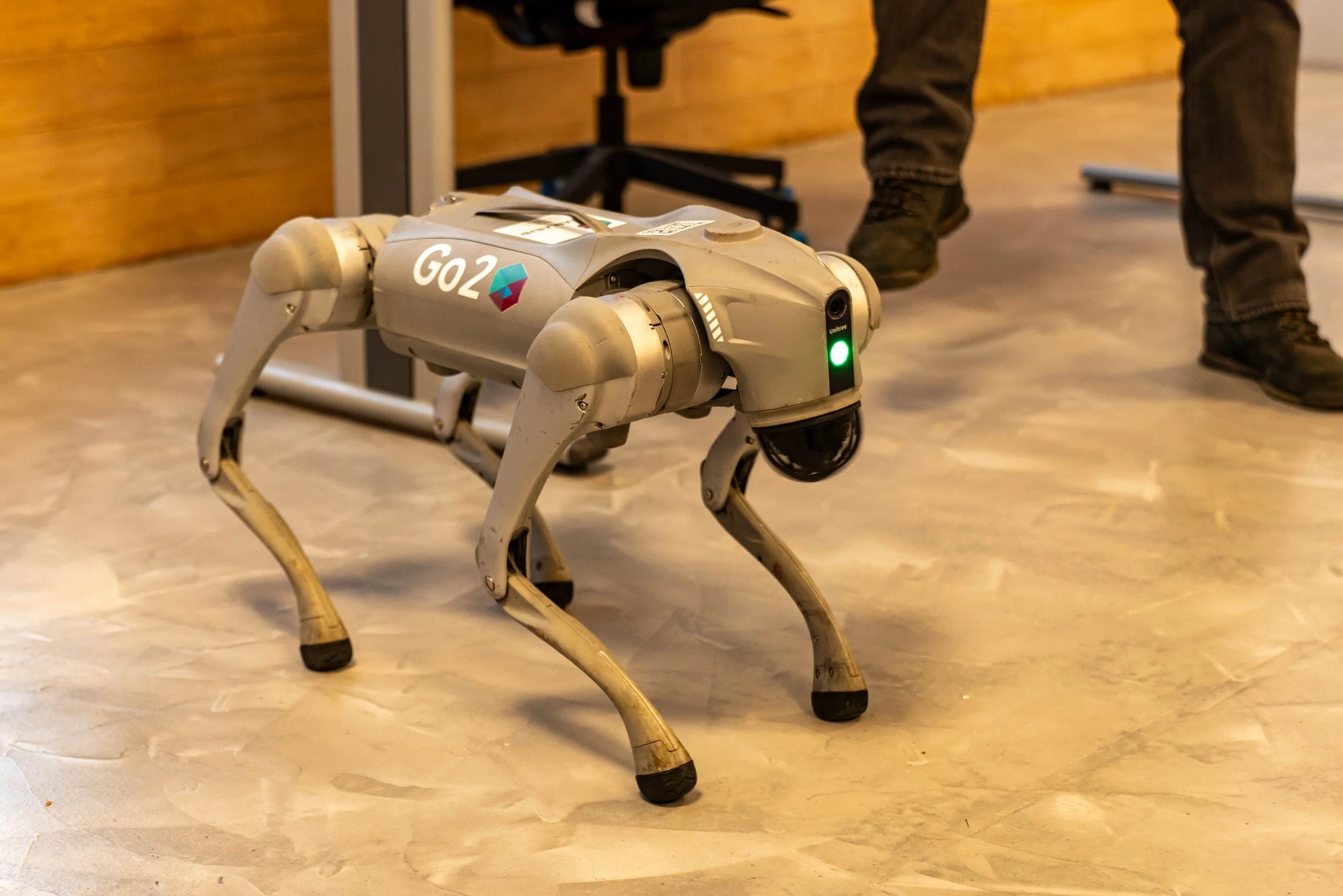
Photo by Vladimir Srajber
MUNDO
En un futuro no tan lejano, los robots autónomos pueden convertirse en un peligro y los fabricantes buscan maneras de cómo evitarlo
Por Miguel Velázquez
08 de octubre 2022
Boston Dynamics y otras cinco empresas de robótica firmaron una carta abierta en la se comprometen a lo que muchas personas ya esperaban con nerviosismo: No convertir en armas a los robots autónomos de uso general.
En total, las seis empresas tecnológicas más importantes -entre ellas Agility Robotics, ANYbotics, Clearpath Robotics, Open Robotics y Unitree- afirman que los robots avanzados podrían suponer enormes beneficios en nuestra vida laboral y doméstica, pero que también podrían utilizarse con fines nefastos.
“Existen personas no confiables que podrían utilizarlas para invadir los derechos civiles o para amenazar, dañar o intimidar a otros”, dijeron las empresas, quienes añadieron “Creemos que añadir armas a los robots que se manejan de forma remota o autónoma, que están ampliamente disponibles para el público y que son capaces de navegar a lugares previamente inaccesibles donde la gente vive y trabaja, plantea nuevos riesgos de daño y graves problemas éticos”.
“Conozco a muchos de los fundadores de estas empresas y trabajan en robots porque quieren que el mundo sea un lugar mejor”, explica a Publimetro Toby Walsh, profesor de Inteligencia Artificial (IA) en la Universidad de Nueva Gales del Sur (UNSW) de Sydney, Australia. Walsh es un firme defensor de los límites para garantizar que la IA se utilice para mejorar nuestras vidas, motivo que le ha llevado a ser “prohibido indefinidamente” en Rusia.
“Los robots pueden hacer lo sucio, lo aburrido, lo difícil y lo peligroso. Pero también pueden ser utilizados para otros resultados menos deseables: para transformar la guerra, y no para mejor, así como para quitar puestos de trabajo”, comenta Walsh.
Para el especialista, el uso de robots se ha descrito “con razón” como la tercera revolución en la guerra, después de la invención de la pólvora y de las armas nucleares. “Sería otro cambio en la forma de combatir la guerra. Las armas autónomas serían mortalmente precisas, no se cansarían ni dormirían nunca y matarían a la gente sin apenas supervisión o responsabilidad humana”, añade Walsh.
Preocupa mal uso de robots en el futuro
Walsh, quien ha sido incluido en la lista internacional de personas influyentes “Who’s Who in AI”, explica que actualmente los robots son todavía menos capaces que un niño de tres años. “Les falta nuestra capacidad de adaptación, nuestra flexibilidad y nuestro sentido común. Podemos ponerlos en situaciones normales para que hagan tareas repetitivas. Por eso los encontramos en fábricas y almacenes. Pero el último lugar para ponerlos es el campo de batalla, donde todo es mucho más imprevisible”, concluye.
La ingeniería basada en valores es un enfoque que ha sido adoptado por la serie de normas IEEE 7000 para sistemas autónomos e inteligentes, que detalla cómo abordar las preocupaciones éticas relacionadas con una serie de áreas que incluyen la parcialidad, el engaño, la opacidad, la supervisión, la privacidad, el empleo y más.
— Katina Michael, Universidad Estatal de Arizona.
Las empresas se comprometieron a no convertir en armas sus “robots de movilidad avanzada de uso general” ni el software que los hace funcionar. También dijeron que tratarían de asegurarse de que sus clientes no convirtieran sus productos en armas.
En todo el mundo se han hecho crecientes llamados para frenar el uso de sistemas de armas autónomas -que funcionan por sí solas y no implican a un operador humano- y la campaña Stop Killer Robots afirma que casi 100 países y una mayoría de personas se oponen a las armas autónomas.
Finalmente, el profesor Toby Walsh explicó que el Consejo de Derechos Humanos de la ONU acaba de aprobar una resolución para estudiar los preocupantes efectos de las nuevas tecnologías, como la robótica, en el ámbito militar.
3 PREGUNTAS
Katina Michael, investigadora de la Escuela para el Futuro de la Innovación en la Sociedad y Escuela de Computación e Inteligencia Aumentada en la Universidad Estatal de Arizona.
Entre sus publicaciones se encuentran “Michael Eldred sobre la era digital: Desafíos para el pensamiento actual” (Michael Eldred on the Digital Age: Challenges for Today’s Thinking) y Uberveillance y las implicaciones sociales de los implantes de microchips: Tecnologías emergentes (Uberveillance and the Social Implications of Microchip Implants: Emerging Technologies).
¿Qué lleva a las empresas a prometer que no convertirán sus robots en armas? ¿Qué garantía hay de que estas empresas cumplan su palabra?
La visión y la misión de una organización especializada en el desarrollo de la robótica pueden estar centradas en la aplicación de la “robótica para el bien”, por ejemplo, cuando las vidas humanas se verían en situaciones desproporcionadamente peligrosas.
Hay que creer a las empresas que dicen que no van a convertir sus robots en armas, ya que cualquier otra cosa afectaría a la marca y a la propuesta de valor principal de su empresa.
Para algunos sonará a ciencia ficción pero, ¿Qué pasará si un usuario adapta o modifica estos robots para convertirlos en armas?
Los usuarios llevan mucho tiempo adaptando la tecnología para aplicaciones para las que nunca fue concebida. En este contexto, convertir algo en un arma significa “adaptarlo para su uso como arma”. Un arma puede definirse como una “cosa diseñada o utilizada para infligir daños corporales o físicos”.
No cabe duda de que podemos prever un momento en el que los robots sean objetivos de violaciones de la seguridad. Así, las máquinas que funcionan mal pueden causar daños corporales o físicos importantes al no actuar de acuerdo con su software de a bordo.
Todavía nos queda mucho por aprender sobre los robots autónomos pero, ¿Cuáles cree que son los principales problemas que debemos resolver?
Como los robots autónomos son sistemas sociotécnicos, podemos considerar tres lotes de cuestiones que engloban la interacción entre humanos y robots, incluyendo factores sociales, técnicos y ambientales. Cómo se relacionarán fundamentalmente las personas con los sistemas semiautónomos; técnicamente, qué destacaremos como capacidades clave en un sistema totalmente autónomo y cómo abordaremos las cuestiones de seguridad, entre otros requisitos fundamentales de ingeniería; y, por último, cómo podríamos regular los sistemas autónomos en materia de seguridad, entre otras cuestiones.
WORLD
Robot makers vow not to weaponize them
In the not so distant future, autonomous robots may become a danger and manufacturers are looking for ways to avoid it
Boston Dynamics and five other robotics companies have signed an open letter committing to what many people have been nervously waiting for: Not to weaponize general-purpose autonomous robots.
In all, the top six tech companies - including Agility Robotics, ANYbotics, Clearpath Robotics, Open Robotics and Unitree - say advanced robots could bring huge benefits to our work and home lives, but could also be used for nefarious purposes.
“There are untrustworthy people who could use them to invade civil rights or to threaten, harm or intimidate others,” the companies said, adding “We believe that adding weapons to remotely or autonomously operated robots, which are widely available to the public and capable of navigating to previously inaccessible places where people live and work, poses new risks of harm and serious ethical issues.”
Toby Walsh is Professor of AI at UNSW Sydney. His most recent book on AI is "Machines Behaving Badly: the morality of AI." (Courtesy)
"I know many of the founders of these companies and they work on robots because they want the world to be a better place ," explains Toby Walsh, professor of Artificial Intelligence (AI) at the University of New South Wales (UNSW) in Metro. Sydney, Australia. Walsh is a strong advocate of limits to ensure that AI is used to improve our lives, which has led to it being "banned indefinitely" in Russia.
“ Robots can do the dirty, the boring, the difficult, and the dangerous . But they can also be used for other, less desirable results: to transform warfare, not for the better, as well as to take jobs away,” says Walsh.
For the specialist, the use of robots has been described "rightly" as the third revolution in warfare, after the invention of gunpowder and nuclear weapons. “It would be another change in the way of fighting the war. Autonomous weapons would be deadly accurate, never tire or sleep, and kill people with hardly any human oversight or accountability, ” adds Walsh.
Concerns about misuse of robots in the future
Walsh, who has been included in the international list of influential people “Who's Who in AI”, explains that robots today are even less capable than a three-year-old child. “ They lack our adaptability, our flexibility and our common sense. We can put them in normal situations to do repetitive tasks. That's why we find them in factories and warehouses. But the last place to put them is on the battlefield, where everything is much more unpredictable”, he concludes.
Values-based engineering is an approach that has been adopted by the IEEE 7000 series of standards for autonomous and intelligent systems, which details how to address ethical concerns related to a number of areas including bias, deception, opacity, supervision, privacy, employment and more.
— Katina Michael, Arizona State University.
The companies pledged not to weaponize their "general purpose advanced mobility robots" or the software that powers them. They also said they would try to ensure that their customers did not weaponize their products.
Concerns about misuse of robots in the future
Walsh, who has been included in the international list of influential people “Who's Who in AI”, explains that robots today are even less capable than a three-year-old child. “ They lack our adaptability, our flexibility and our common sense. We can put them in normal situations to do repetitive tasks. That's why we find them in factories and warehouses. But the last place to put them is on the battlefield, where everything is much more unpredictable”, he concludes.
Values-based engineering is an approach that has been adopted by the IEEE 7000 series of standards for autonomous and intelligent systems, which details how to address ethical concerns related to a number of areas including bias, deception, opacity, supervision, privacy, employment and more.
— Katina Michael, Arizona State University.
The companies pledged not to weaponize their "general purpose advanced mobility robots" or the software that powers them. They also said they would try to ensure that their customers did not weaponize their products.
There have been growing calls around the world to curb the use of autonomous weapons systems - which work on their own and do not involve a human operator - and the Stop Killer Robots campaign says nearly 100 countries and a majority of people are oppose autonomous weapons.
Finally, Professor Toby Walsh explained that the UN Human Rights Council has just approved a resolution to study the worrying effects of new technologies, such as robotics, in the military field.
3 QUESTIONS
In interview with. Katina Michael, a researcher at the School for the Future of Innovation in Society and the School of Computing and Augmented Intelligence at Arizona State University.
Katina Michael, a researcher at the School for the Future of Innovation in Society and the School of Computing and Augmented Intelligence at Arizona State University.
His publications include “Michael Eldred on the Digital Age: Challenges for Today's Thinking ” and Uberveillance and the Social Implications of Microchipping: Emerging Technologies ( Uberveillance and the Social Implications of Microchip Implants: Emerging Technologies ).
What drives companies to promise not to weaponize their robots? What guarantee is there that these companies keep their word?
The vision and mission of a specialized robotics development organization may be focused on the application of “robotics for good”, for example, when human lives would be placed in disproportionately dangerous situations.
Companies that say they are not going to weaponize their robots should be believed, as anything else would affect their company's brand and core value proposition.
For some it will sound like science fiction, but what will happen if a user adapts or modifies these robots to turn them into weapons?
Users have long been adapting the technology for applications for which it was never intended. In this context, turning something into a weapon means "adapting it for use as a weapon." A weapon can be defined as a “thing designed or used to inflict physical or bodily harm”.
There is no doubt that we can foresee a time when robots will be targets of security breaches. Thus, malfunctioning machines can cause significant physical or bodily harm by not acting in accordance with their on-board software.
We still have a lot to learn about autonomous robots, but what do you think are the main problems we need to solve?
Since autonomous robots are sociotechnical systems, we can consider three sets of issues that encompass human-robot interaction, including social, technical, and environmental factors. How people will fundamentally relate to semi-autonomous systems; technically, what will we highlight as key capabilities in a fully autonomous system and how will we address security issues, among other critical engineering requirements; and, finally, how we could regulate autonomous systems in terms of security, among other issues.
Citation: Miguel Velázquez, 8 October 2022, “Fabricantes de robots se comprometen a no convertirlos en armas”, publimetro, https://www.publimetro.com.mx/noticias/2022/10/08/por-que-los-principales-fabricantes-de-robots-se-comprometen-a-no-convertirlos-en-armas/