Co-Designing Consumer Technology With Society
Citation: R. Farthing, K. Michael and J. Pitt, "In This Special: Co-Designing Consumer Technology With Society," in IEEE Transactions on Technology and Society, vol. 5, no. 4, pp. 335-341, Dec. 2024, doi: 10.1109/TTS.2024.3454936.

Image by ROMBO
SECTION I.
Introduction
The aim of this editorial is to raise awareness and encourage a shift in the way we approach the design of consumer technologies. While companies generally build for the mass-market, there is a growing demand to create technology that serve the needs of specific communities; for example, designing and developing products that work for vulnerable or underrepresented people and groups. Embedded within this idea is the public interest, and the importance of creating public interest technology as a natural extension. This can only be achieved through a process of co-design, and the recognition that we cannot build for people but by partnering with people [1], [2]. Bearing other people in mind and being in the mind of other people is the cornerstone of the design justice approach heavily related to the socio-technical digital design of systems [3]. We postulate in this Special Section that by welcoming consumers (and in fact all stakeholders) to co-design complex socio-technical digital systems, that more products and services will succeed to market, leading to human thriving and flourishing.
SECTION II.
The Need for Change
Transnational companies generally design and develop products and or consumer technologies with increased shareholder dividends as their primary driver, either through sales, turnover, or profit-margin maximization, or through market saturation, domination or monopoly [4]. For corporate strategists and fund managers seeking an immediate and maximal return on investment, developing a product that can be sold to the mass-market is an attractive proposition for the pursuit of high revenues and economies of scale [5]. However, with digitalization, the emergence of the gig economy and the platform economy has more specifically focused on the service industry [6], where there is an emphasis on digital products and services, downloadable to a smartphone or another portable device, as opposed to reliance on physical inventory [7]. These digital products and services can readily be repurposed and repackaged to meet the demands of consumers in a timely manner. But the process of repurposing and repackaging identified here is neither semantically nor pragmatically equivalent to the deliberate design and configuration of technology directed towards the needs and requirements of vulnerable or underrepresented communities, with the intention of empowering individuals through a process of engagement, consultation and co-design [8], [9], [10], [11].
The mass-market approach to digital product/service delivery has led, perhaps paradoxically, to both “market segment of one” and “one size fits all” philosophies [12]. These somehow combine firstly to confine individuals to personas, categories, types of users, and any number of stereotypes that makes it easy to delineate between seemingly homogeneous user groups [13], and secondly to enable machine learning algorithms to segment customers and target the members of such groups “knowing them better than they know themselves” [14]. Digitalization has produced these seemingly opposing forces in sales, marketing and advertising, that a consumer can both be caught in every homogenous broadcast net (e.g., spam) and relentlessly targeted as a unique individual [15], [16].
A. Universal Marketing and Individual Targeting
This approach places less weight on the individual per se and more on the aggregate type of customer perceived by a business. Building for, and dominance of, a global marketplace means that both innovation and competition are restricted; limiting the ability to meaningfully design, customize, configure and repurpose digital products (i.e., generativity is suppressed [17]). It also disregards those elements that make individuals human and distinct and unique, and it makes it difficult, to the point of being impossible, to opt out [18]. Consequently, digitalization has also created an inversion of loyalty by reducing those who stick with a product (out of inertia or lock-in) to commodifiable and monetizable revenue streams [19]. The irony for some user groups, however, is that they are reluctant to switch products even if those upgrades are purportedly faster and lighter and have a longer battery life, because they lack interoperability, reliability and key features that have been relied upon.
These considerations of digitalization, enabling new economies with both universal marketing and individual targeting, which may also serve as constraints during the user and market modelling process, are thus contradictory. We are left with an idealism that building customizable and targeted consumer technologies and value-added products and services will fulfil the needs of users, will continually demonstrate their usefulness, will promote, or enhance congruent sets of shared values, and will have feature sets that appeal to diverse human functions, faculties, and aesthetics [20]. But the reality is rather different.
If the market is global then the margins can be, literally, marginalized. It is no longer necessary to design for the 95% range, as we were once taught in ergonomics classes; it is possible to assume the ability to see, hear, touch, and speak, disregarding those that do not possess these assumed abilities; it is possible to target a product at the 1.35 billion people globally who speak English, marginalizing the 300,000 Fijian speakers or 10 million who speak Haitian Creole and require a specialized language version. Therefore, our dilemma here is that we want all the benefits that digitalization brings, accessible to all people independent of their social, behavioural or economic circumstances; we just do not want it at the cost of our environment, well-being, collectivity, humanity, and souls. The way we consider innovation, technology adoption and diffusion should accommodate this reality, but first: we need to embrace variation by avoiding reliance on quantification-based methods.
SECTION III.
From Quantification to Embracing Variation
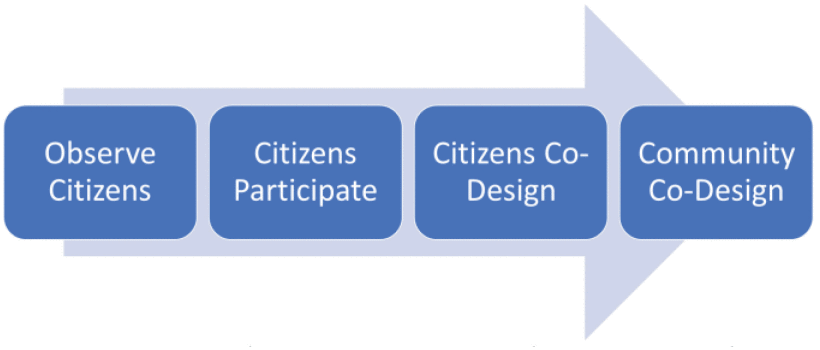
Fig. 1. Toward a community co-design approach: From observation, to participation, to co-design partnership.
Advances in social and behavioral science offer numerous techniques with which to analyze, quantify, and predict technology diffusion across a market [21]. For instance, in business the technology adoption curve (i.e., bell curve) is used to represent the adoption of new technologies (i.e., early adopters to laggards), and the S-curve is used to determine market saturation in the adoption of an innovation [22], [23]. Companies have deliberately shifted and even jumped S-curves to maintain market domination and ensure ongoing revenue streams through the design and implementation of incremental changes to existing products, resulting in something perceived as “new”. Here we can also describe internal churn to a given company as consumers moving between products versus external churn where new technologies of competitor brands offer a perceived value-added capability [24]. This kind of change does not necessarily have to be product oriented; it can also be a change in the business model or in the presentation or form factor of a given technology.
It can be argued that the industrial revolution pivoted the scientific method away from pure thought and the pursuit of enlightenment, and instead towards the pursuit of profit through the ability to quantify as opposed to qualify the design of a new product or process. But this may not be a suitable way to consider the design and development of our next generation technologies, particularly in view of accommodating variation. We argue for the introduction of collaborative and empowering design processes in the form of co-design, whereby users are actively involved as design partners (figure 1). This would entail user involvement in the definition of requirements of emerging technologies, and throughout the technology design process. During this process, human variations can be identified and considered as implicit qualitative inputs into the design of a new technology and not relegated to a percentage of a target population that may be overlooked if not regarded significant in size.
For example, we can talk about a market for individuals living without limbs or paralysis and quantify that market by using statistics, such as those published by the National Institute of Health in the USA, but what is more relevant and more appropriate is to understand the variations and avoid making assumptions about the requirements of these individuals. Certainly, in this scenario, we can determine requirements by conducting interviews and appropriate levels of market research, giving a voice to individuals who are typically not heard or provided with the opportunity to engage actively in the design process [25]. Another option is to define standards that show organizations how to employ value-sensitive design [26] and values-based engineering [27]. And yet another option is to encourage diversity within corporate design teams, complemented by the adoption of a socio-technical co-design approach as conceived by Dr Roba Abbas of the University of Wollongong [28], [29] to motivate and incentivize sustainable development and public interest technology [30], [31]. We believe that co-design is the most compelling approach to develop genuine public interest technology, potentially empowering individuals through deeper levels of engagement in design activities, moving beyond traditional requirements gathering techniques [32] (Figure 2). We also believe that an all-stakeholder approach is required as a socio-technical system is not merely made up of users but those operational and non-operational stakeholders that exist in a given ecosystem [33] and system innovation [34], [35]. It is also important to note the definitional distinctions between co-creation, co-design and co-production, as noted in [36].
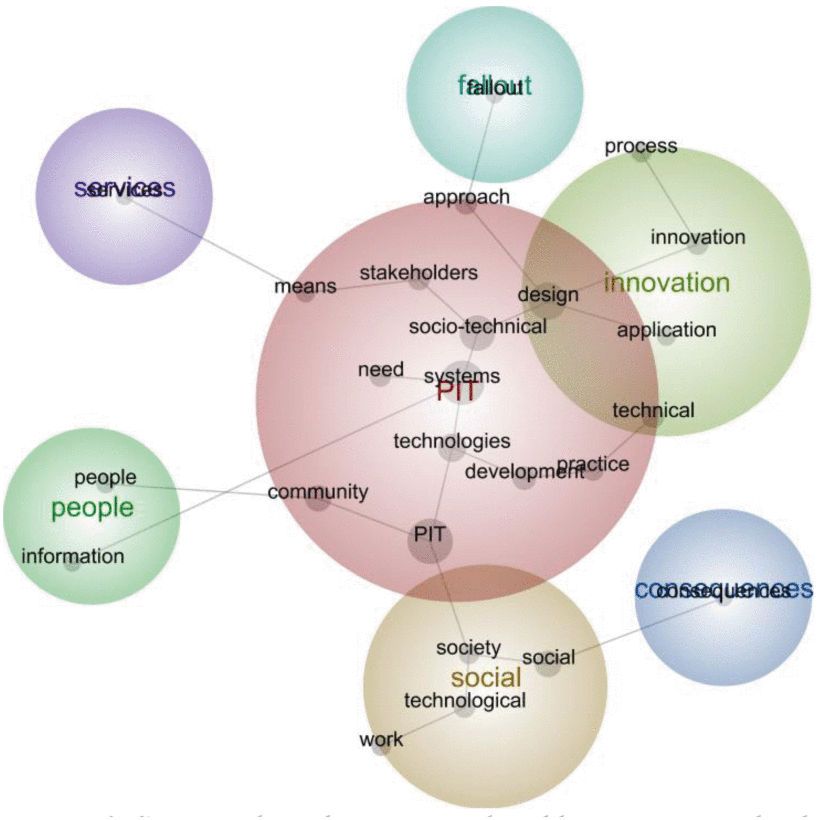
Fig. 2. Socio-Technical Design and Public Interest Technology Concept Map from the Published Works of Abbas, Michael and Pitt 2020–2024.
SECTION IV.
The Role of Public Interest Technology
Technology in the public interest seeks to provide access to technology for people and communities who are vulnerable or typically underrepresented in technology design processes, due to aspects relevant to human variation, including, disability, gender, race, ethnicity and age, among others [37], [38], [39], [40], [41]. In assuming the co-design approach in the public interest, we suggest that the entire process of design better integrate communities of interest, particularly when contemplating the socio-economic impact of consumer technologies, especially with respect to affordability [42].
We propose that our attention be redirected to public interest technology; operationalized through a contemporary socio-technical framework that would allow for the integration of human variation [43]. We encourage designers to be open and think about their place in the world [44], their immediate family and friendship groups, and the difference that truly exists within their own home. We require the commitment of designers to reevaluate their roles in the design process and in society in general [45], with respect to their contributions to the public interest in diverse contexts [46]. This may require us posing the following question “who is in fact the designer” [53, Appendix A]? Compare the answer to this question in Figures 3 and 4, the first which is governed by private interests, design thinkers, and manufacturers of technology; and the second which is inclusive of end-users as collaborative designers, embedding a public interest design justice ethos.
A. Designers Must Go Beyond User Models
Author Mindy Hartman who is totally blind, reported in 2015 that she was reluctant to give up her Apex assistive technology which provided a very powerful, portable notetaker with a built-in Braille display. She wrote [48, p. 16]: “[s]omeone could throw all the technology in the world at me, and it would not be useful if all they saw was my blindness. Sighted people more often than not make assumptions and decisions about the needs of the blind. Many believe they know our requirements and capabilities before they even ask us questions about how we do things or what adaptations might be made, if we cannot function optimally in a particular situation”.
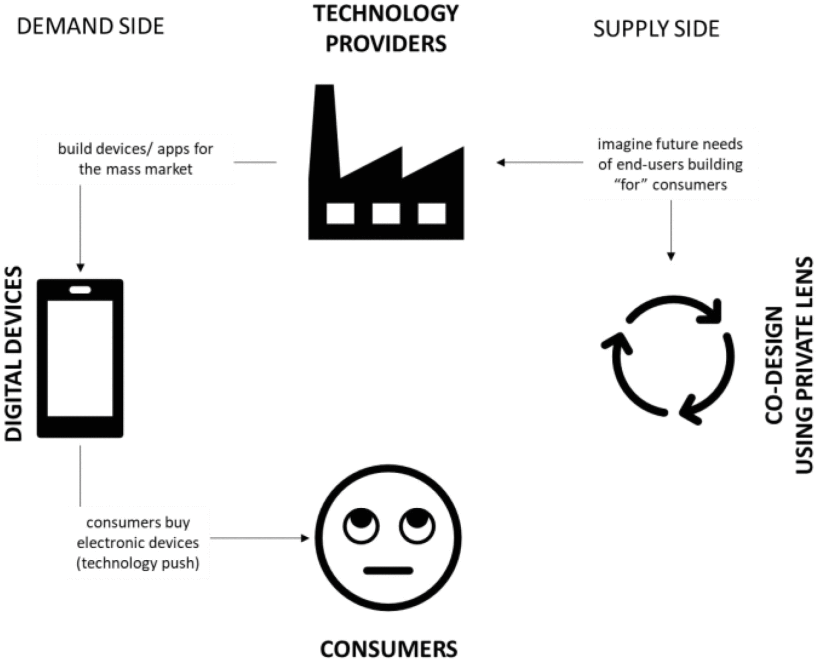
Fig. 3. How consumer technologies are built today.
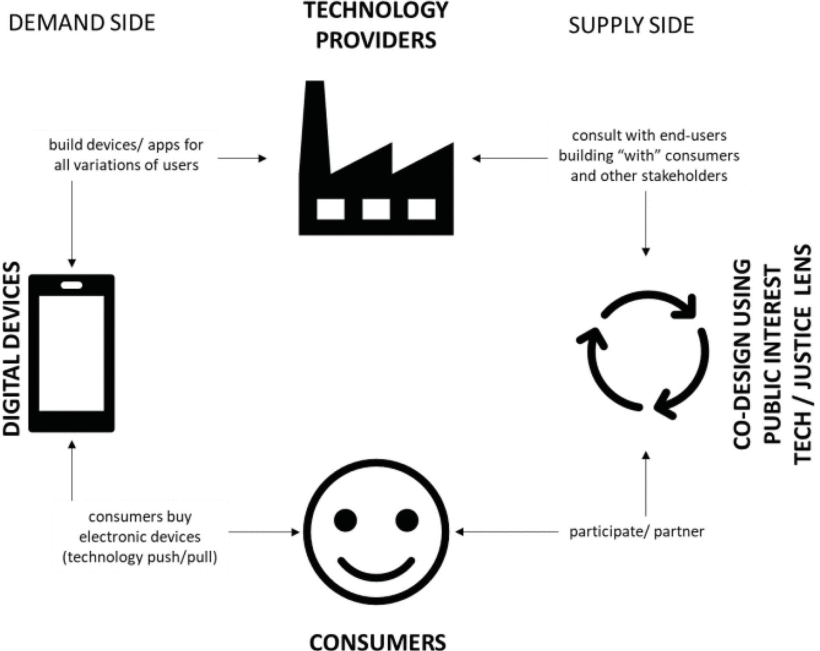
Fig. 4. How consumer technologies may be built in the future.
Hartman also noted that she only tolerated synthesized speech when forced to use it when the task could not be completed with her Apex. This clearly demonstrates the limitations of designing solely from a functional or behavioral perspective and not taking into account the subjective nature of experience and the mindset so produced. This obliges designers to go beyond user models and consider philosophical questions of consciousness, asking themselves: what is it like to be an X [49]?
SECTION V.
The Design Justice Approach
Design justice is a way forward in this regard [50]. Design justice, as an approach, extends existing design methodologies such as value sensitive and value-based design, to focus on addressing the “unequal benefits and burdens” of design [54, p. 64]. This is motivated by the need to design and develop systems that are accountable and inclusive. This is where socio-technical co-design and public interest technology and interdisciplinarity are relevant in their support of accessible design, taking into consideration human variation at the mental/cognitive and bodily/material levels [51]. For successful public interest technology initiatives, we need the humanities and social sciences, among other disciplines, including the scientific, injected into the process of design [52]. We are witnessing the nascent stages toward such an approach [43], [52], [53], [54], [55], [56], [57], [58], [59].
Here we seek to serve the user and the individuals affected by a given technology, granting them a voice, choice, our time, and a seat at the design table. Namely this means active listening; to stories, anecdotes, vignettes, oral traditions, and those things that are representative of and capture lived experience. Stories are individual truths [60]. They expose us to different ways of thinking and different perspectives, and we can learn from them like we learn from fiction novels, where there is a character, a plot, a setting, a time, and a place as a continuum. There are deep messages if we are willing to listen and engage throughout the design process, which will require the creation of mechanisms for translating lived experience into suitable technological specifications, as per the needs and requirements of individuals [61]. Alongside listening, this also requires actively opening the design space, allowing those affected by technology a real say in design decisions throughout the entire design process [62]. This involves respecting and integrating professional expertise, such as technical or design expertise, alongside lived experience and practical expertise [29, Fig. 1, p. 58].
A. An Emergent Perspective
In this proposed view of the design process, we advocate for increased connection between people toward the creation of purposeful socio-technical systems and innovation systems at large, not just products. This modality requires a mindset shift, away from the traditional economic models toward public interest business models that are comprised of an interdisciplinary/transdisciplinary design team, inclusive of the end user and other relevant individuals affected by a given technology [52]. While listening, sharing, deliberating are essential qualities in the co-design process, we stress the importance of interactive learning and feedback loops going beyond a uni-directional participative approach [55]. We are referring here to active listening on the part of the designer, and for the active inclusion of users, and for firms to be willing to unify using their positionality and power, and to allow others to design with them [63].
SECTION VI.
Conclusion
Critics of the proposed approach may point out that companies cannot exist under such fantasy models, given the cost of production, the propensity to pay, and perceived affordability by consumers. If this is the case, perhaps we are focusing on incompatible notions of the purpose of technology in our society. There is merit in reassessing what technology is and what it should be designed to achieve within a given context. The design justice approach underpins the fundamental tenets of responsible innovation [64]. It should be underscored that as designers, we do not seek to prevent the rollout of innovations that are intended to satisfy a social good and serve a real-world need or requirement, but we do believe that a more nuanced and deliberative process of design that serves the public interest is required. We furthermore suggest there is the opportunity to design and develop technology for coordination, connectedness, and care across a diverse range of scenarios that alleviate some existing individual and societal burdens and address existing injustice in design [65], [66].
SECTION VII.
In This Special Section
The main thrust of this special section is to emphasize the importance of community co-design in the development of public interest consumer technologies. Big Tech who is increasingly adopting the language of co-design, must remain true to this methodology, and consider what it means within the context of complex open socio-technical systems. True co-design, partnering with communities, takes adequate budget and time. We have reached a point in history, where the old business model of building for shareholder profit is being reconsidered because we no longer need more “stuff” but we need better cooperation toward the achievement of common goals, with the public interest at the heart of any incremental or radical innovation. Is it useful for people in society? Then we can and should proceed. Have we learnt how to mitigate risks of new innovations to ensure human flourishing? And if not, what is preventing us from taking the next step(s) in such a hope? The three papers that constitute this special section will now be presented.
The first paper [A1] was written by the working group chair of the IEEE 2089-2021 standard, Katina Michael of Arizona State University. Michael investigates the role that standards might play as catalysts toward co-design. In IEEE 2089 in particular, stakeholder consultation is a vital element of the design phase to identify risks periodically, and especially before a new digital innovation, service/app, or feature is deployed into the market. At the heart of the design process is an age appropriate risk (AAR) register that can aid organizations to keep track of issues that need to be addressed to remain compliant with soft law, technical guidelines and standards, and even regulation and law, to ensure compliance in a given nation state. The paper is useful in identifying child risk impact assessment (CRIA) approaches, as well as legislation that is relevant in protecting the rights of children as vulnerable members of society. The paper also contributes in describing the process of standards formation at IEEE.
The second paper [A2] is by Luca Turchet of the University of Trento, Italy. Turchet’s paper proposes a paradigm shift from the current wave of Internet of Musical Things (IoMusT) research focused mainly on technological developments, towards a new wave of the Internet of Musical Things and People (IoMusTP) focused on musical stakeholders’ values, needs, behaviors and diversity, but also on their mutual entanglement with networked musical devices, services and environment. This paper reminds us of the highly meshed interplay that is IoMusTP, and the human-centered approach required to create a successful socio-technical assemblage. Turchet explicitly states that in IoMusTP “technology is not only aware of the users and their surrounding context, but is also compliant to ethical and sustainable principles that will make it possible more inclusive, personalized, and socially acceptable experiences for the 21st-century musical stakeholders and beyond” [A2]. He reminds us of the importance of bringing all the needful elements together for a successful human-centered socio-technical solution by providing a framework that can guide designers of IoMusT technologies in considering the human and non-human factors relevant in the IoMusTP vision.
The third and final paper of the special section [A3] is co-authored by Vasilis Stavrou of the University of Economics and Business, Anastasia Griva of the University of Galway, Ireland, and Cleopatra Bardaki of Harokopio University of Athens in Greece [A3]. The research was supported by the Science Foundation Ireland Grant 13/RC/2094_2. In this piece we learn about the technical and business challenges in the deployment of location-based services in the context of a retail store, for coupon recommendation, indoor advertisement, smart targeting, and more. In a case study that demonstrates the importance of addressing user acceptance challenges for a variety of contexts, this paper demonstrates the need for technology providers to work closely with shoppers in understanding their threshold of desired use, presenting guidelines for future businesses and providers hoping to deploy similar solutions. While the case study depended on the consent of shoppers as “participants” in the pilot study, working closely with humans meant that Bluetooth Low Energy Beacons technology for customer tracking could be utilized and data gathered to provide realistic and more holistic guidelines to assist prospective researchers and designers of location-based services for retail stores and other contexts. Prototypes, pilots, testing and customer feedback loops are thus essential for building better services.
ACKNOWLEDGMENT
Katina Michael would like to acknowledge Elizabeth Langland, the late Gaymon Bennett, Erica O’Neil, and Liz Grumbach of the Lincoln Center for Applied Ethics for a Design Studio she participated in on April 8, 2021, titled, “Misfits: (Dis)Ability, Bodies, and Work” with guest host Rosemarie Garland-Thomson of Emory University that inspired the conceptualization of this piece.
The authors would also like to thank Prof. Kathleen M. Cumiskey of CUNY for her feedback and suggestions on improving the editorial as well as two anonymous reviewers, one of whom proposed the concept of “inclusive co-justice-design” which remains unused in this editorial. We appreciate the sources that were provided by both reviewers, that we believe were critical additions to the work.
Appendix: Related Articles
[A1] K. Michael, “Mitigating risk and ensuring human flourishing using design standards: IEEE 2089-2021 an age appropriate digital services framework for children,” IEEE Trans. Technol. Soc., early access, Jun. 2024, doi: 10.1109/TTS.2024.3453396.
[A2] L. Turchet, “Entangled Internet of Musical Things and people: A more-than-human design framework for networked musical ecosystems,” IEEE Trans. Technol. Soc., early access, Aug. 27, 2024, doi: 10.1109/TTS.2024.3443540.
[A3] V. Stavrou, A. Griva, and C. Bardaki, “Deploying a location-based coupon recommendation service in retail: Challenges and lessons learnt,” IEEE Trans. Technol. Soc., early access, Aug. 30, 2024, doi: 10.1109/TTS.2024.3448506.
References
1. M. Steen, "Co-design as a process of joint inquiry and imagination," Des. Issues, vol. 29, no. 2, pp. 16–28, 2013.
2. M. Steen, M. Manschot, and N. De Koning, "Benefits of co-design in service design projects," Int. J. Des., vol. 5, no. 2, pp. 53–60, 2011.
3. L. Chandra (Univ. Adger, Grimstad, Norway). CHERISH: Socio-Technical Digital Design for Human Flourishing. (Jun. 27, 2024). [Online]. Available: https://www.uia.no/english/research/researchgroups/social-sciences/CHERISH
4. M. C. Jensen, "Value maximization, stakeholder theory, and the corporate objective function," in U.S. Corporate Governance. New York, NY, USA: Columbia Univ. Press, 2009, pp. 3–25.
5. R. Farthing and J. Bessant, "Eating our young: Time for the state to rein in big tech," in Research Handbook on the Sociology of Youth. Cheltenham, U.K.: Edward Elgar Publ., 2024, pp. 240–253.
6. G. Avram, J. H. Jeong Choi, S. De Paoli, A. Light, P. Lyle, and M. Teli, "Repositioning CoDesign in the age of platform capitalism: From sharing to caring," CoDesign, vol. 15, no. 3, 2019, pp. 185–191, doi: 10.1080/15710882.2019.1638063.
7. D. Davlembayeva, R. Abbas, D. Laffey, K. Michael, and S. Papagiannidis, "The current state and future trajectory of the sharing economy: A multi-stakeholder perspective," Int. J. Bus. Sci. Appl. Manag., vol. 19, no. 1, pp. 1–29, 2024. [Online]. Available: https://www.business-and-management.org/papers/the-current-stateand-future-trajectory-of-the-sharing-economy-a-multi-stakeholderperspective/180/
8. V. M. Patrick and C. R. Hollenbeck, "Designing for all: Consumer response to inclusive design," J. Consum. Psychol., vol. 31, no. 2, pp. 360–381, 2021.
9. A. Chauhan, J. Leefe, É. N. Shé, and R. Harrison, "Optimising co-design with ethnic minority consumers," Int. J. Equity Health, vol. 20, pp. 1–6, Nov. 2021.
10. D. P. Goeman, "Partnering with people with dementia and their care partners, aged care service experts, policymakers and academics: A co-design process," Aust. J. Age., vol. 38, pp. 53–58, Sep. 2019.
11. R. Abbas and K. Michael, "Co-designing location-based services for individuals living with dementia: An overview of present and future modes of operation," IEEE Technol. Soc. Mag., vol. 41, no. 2, pp. 42–46, Jun. 2022.
12. M. W. Kreuter, V. J. Strecher, and B. Glassman, "One size does not fit all: The case for tailoring print materials," Ann. Behav. Med., vol. 21, no. 4, pp. 276–283, 1999.
13. M. Hurst and P. Terry, Customers Included. New York, NY, USA: Creat. Good Inc., 2013.
14. N. Thompson. "When tech knows you better than you know yourself." Wired. 2018. [Online]. Available: https://www.wired.com/story/artificial-intelligence-yuval-noah-harari-tristan-harris/
15. N. C. Smith and E. Cooper-Martin, "Ethics and target marketing: The role of product harm and consumer vulnerability," J. Market., vol. 61, no. 3, pp. 1–20, 1997.
16. R. Farthing, A. Anderson, and A. Dawkins, "Choice as the new, contested frontier: Personal data and targeted advertising," AQ Aust. Quart., vol. 94, no. 4, pp. 11–20, 2023.
17. J. Pitt, A. Rychwalska, M. Roszczynska-Kurasinska, and A. Nowak, "Democratizing platforms for social coordination," IEEE Technol. Soc. Mag., vol. 38, no. 1, pp. 43–50, Mar. 2019.
18. C. Perakslis, R. Abbas, K. Michael, M. G. Michael, and J. Pitt, "Safeguarding the guardians to safeguard the bio-economy and mitigate social injustices," in Cyberbiosecurity, D. Greenbaum Eds., Cham, Switzerland: Springer, 2023. [Online]. Available: https://doi.org/10.1007/978-3-031-26034-6_12
19. R. Abbas, K. Michael, M. G. Michael, C. Perakslis, and J. Pitt, "Machine learning, convergence digitalization, and the concentration of power: Enslavement by design using techno-biological behaviors," IEEE Trans. Technol. Soc., vol. 3, no. 2, pp. 76–88, Jun. 2022, doi: 10.1109/TTS.2022.3179756.
20. F. Turner, A. Merle, and D. Gotteland, "Enhancing consumer value of the co-design experience in mass customization," J. Bus. Res., vol. 117, pp. 473–483, Sep. 2020.
21. C. M. Christensen, "Exploring the limits of the technology S-curve. Part I: Component technologies," Prod. Oper. Manag., vol. 1, no. 4, pp. 334–357, 1992.
22. X. Li, Y. Yin, D. V. Manrique, and T. Bäck, "Lifecycle forecast for consumer technology products with limited sales data," Int. J. Prod. Econ., vol. 239, Sep. 2021, Art. no. 108206.
23. F. M. Bass, "A new product growth for model consumer durables," Manag. Sci., vol. 50, no. 12, pp. 1825–1832, 2004.
24. B. Huang, M. T. Kechadi, and B. Buckley, "Customer churn prediction in telecommunications," Expert Syst. Appl., vol. 39, no. 1, pp. 1414–1425, 2012.
25. S. Hamdoun, K. Michael, R. Monteleone, and T. Bookman, "Assistive technologies for greatly improved quality of life for people living with MND/ALS," IEEE Consum. Electron. Mag., vol. 10, no. 3, pp. 76–81, May 2021, doi: 10.1109/MCE.2020.3035523.
26. B. Friedman, "Value-sensitive design," Interactions, vol. 3, no. 6, pp. 16–23, 1996.
27. S. Spiekermann, "What to expect from IEEE 7000TM: The first standard for building ethical systems," IEEE Technol. Soc. Mag., vol. 40, no. 3, pp. 99–100, Sep. 2021.
28. R. Abbas and K. Michael, "Socio-technical theory: A review," in TheoryHub Book, S. Papagiannidis Ed., Tyne, U.K.: Newcastle Univ., 2023. [Online]. Available: https://open.ncl.ac.uk/theories/9/sociotechnical-theory/
29. R. Abbas, J. Pitt, and K. Michael, "Socio-technical design for public interest technology," IEEE Trans. Technol. Soc., vol. 2, no. 2, pp. 55–61, Jun. 2021.
30. R. Abbas, K. Michael, J. Pitt, and R. Nicholls, "Socio-technical systems design for public interest technologies," presented at Annu. Meeting Am. Assoc. Adv. Sci., 2022. [Online]. Available: https://meetings.aaas.org/
31. R. Abbas, S. Hamdoun, J. Abu-Ghazaleh, N. Chhetri, N. Chhetri, and K. Michael, "Co-designing the future with public interest technology," IEEE Technol. Soc. Mag., vol. 40, no. 3, pp. 10–15, Sep. 2021, doi: 10.1109/MTS.2021.3101825.
32. I. Burkett. "An introduction to co-design." Knode. 2016. [Online]. Available: https://www.yacwa.org.au/wp-content/uploads/2016/09/An-Introduction-to-Co-Design-by-Ingrid-Burkett.pdf
33. R. Abbas, K. Michael, and M. G. Michael, "The regulatory considerations and ethical dilemmas of location-based services (LBS): A literature review," Inf. Technol. People, vol. 27, no. 1, pp. 2–20, 2014. [Online]. Available: https://doi.org/10.1108/ITP-12-2012-0156
34. Griffith Centre for Systems Innovation. "Should we move beyond 'field building'?," Medium. Aug. 21, 2024. [Online]. Available: https://medium.com/good-shift/should-we-move-beyond-field-building-2986e7c50431
35. K. Michael and R. Abbas, "Evolutionary economic theory: A review," in TheoryHub Book, S. Papagiannidis Eds., Tyne, U.K.: Newcastle Univ., 2023. [Online]. Available: https://open.ncl.ac.uk/theories/12/evolutionary-economic-theory/
36. C. Vargas, J. Whelan, J. Brimblecombe, and S. Allender, "Co-creation, co-design and co-production for public health: A perspective on definitions and distinctions," Public Health Res Pract., vol. 32, no. 2, 2022, Art. no. e3222211.
37. S. Noble, Algorithms of Oppression. New York, NY, USA: New York Univ. Press, 2018.
38. R. Benjamin, Race After Technology: Abolitionist Tools for the New Jim Code. Cambridge, U.K.: Polity Books, 2019.
39. R. Garland-Thomson, Extraordinary Bodies: Figuring Physical Disability in American Culture and Literature. New York, NY, USA: Columbia Univ. Press, 2017.
40. R. Garland-Thomson, "Misfits: A feminist materialist disability concept," Hypatia, vol. 26, no. 3, pp. 591–609, 2011.
41. D. K. Sakaguchi-Tang, J. L. Cunningham, W. Roldan, J. Yip, and J. A. Kientz, "Co-design with older adults: Examining and reflecting on collaboration with aging communities," in Proc. ACM Hum.-Comput. Interact., vol. 5, pp. 1–28, Oct. 2021.
42. R. Abbas, K. Michael, J. Sargent, and E. Scornavacca, "Anticipating techno-economic fallout: Purpose-driven socio-technical innovation," IEEE Trans. Technol. Soci., vol. 2, no. 3, pp. 111–113, Sep. 2021, doi: 10.1109/TTS.2021.3098046.
43. K. Michael and R. Abbas, "Technology, information systems and sustainability: A public interest research agenda," in Y. Dwivedi, Nov. 2021. "Climate change and COP26: Are digital technologies and information management part of the problem or the solution? An editorial reflection and call to action," Int. J. Inf. Manag., vol. 63, Apr. 2022, Art. no. 102456. [Online]. Available: http://JJIM_102456PIIS0268-4012(21)00149-3
44. H. Persson, H. Åhman, A. A. Yngling, and J. Gulliksen, "Universal design, inclusive design, accessible design, design for all: Different concepts—One goal? On the concept of accessibility—Historical, methodological and philosophical aspects," Univ. Access Inf. Soc., vol. 14, no. 4, pp. 505–526, 2015.
45. A. Urvashi, M. Latonero, and D. Sangokoya (World Economic Forum, Cologny, Switzerland). Co-Designing Digital Interventions and Technology Projects with Civil Society. (2012). [Online]. Available: https://www3.weforum.org/docs/WEF_Co_designing_Tech_with_Civil_Society_2021.pdf
46. J. Caspermeyer. "Developing public interest technology by engaging with and empowering communities." EurekaAlert: AAAS. Feb. 19, 2022. [Online]. Available: https://www.eurekalert.org/news-releases/943897
47. K. Michael, R. Abbas, and J. Pitt, "Maintaining control over AI," Issues Sci. Technol. Forum, vol. 37, no. 3, May 2021. [Online]. Available: https://issues.org/debating-human-control-over-artificial-intelligenceforum-shneiderman/
48. M. Hartman, "Tools for the vision impaired," IEEE Technol. Soc. Mag., vol. 34, no. 2, pp. 16–17, Jun. 2015, doi: 10.1109/MTS.2015.2425812.
49. T. Nagel, "What is it like to be a bat?," Philos. Rev., vol. 83, no. 4, pp. 435–450, Oct. 1974.
50. S. Costanza-Chock, Design Justice: Community-Led Practices to Build the Worlds We Need. Boston, MA, USA: MIT Press, 2020.
51. C. Leach, "Design justice for design bioethics," Am. J. Bioeth., vol. 21, no. 6, pp. 63–66, 2021.
52. R. Abbas, K. Michael, D. Davlembayeva, S. Papagiannidis, and J. Pitt, "Public interest technology for innovation in global development: Recommendations for launching PIT projects," IEEE Trans. Technol. Soc., vol. 5, no. 1, pp. 14–23, Mar. 2024.
53. A. Mazzurco, S. A. Daniel, and J. Smith, "Development of sociotechnical and co-design expertise in engineering students," in Proc. 8th Res. Eng. Educ. Symp., 2019, pp. 339–348.
54. E. da Silva. Sociotechnical Architecture: Co-Designing Technical & Organizational Architecture to Maximize Impact. (2020). [Online Video]. Available: https://www.youtube.com/watch?v=ekMPm78KFj0
55. C. Papoutsi, J. Wherton, S. Shaw, C. Morrison, and T. Greenhalgh, "Putting the social back into sociotechnical: Case studies of co-design in digital health," J Am Med Inform Assoc., vol. 28, no. 2, pp. 284–293, Feb. 2021, doi: 10.1093/jamia/ocaa197.
56. A. Banerjee, I. Lamrani, K. Michael, D. Bowman, and S. K. S. Gupta, "Socio-technical co-design for accountable autonomous software," in Proc. CEUR Workshop, 2021, pp. 1–16.
57. J. D. Scheuer and J. Simonsen, "Learning, co-construction and socio-technical systems: Advancing classic individual learning and contemporary ventriloquism," in Current Practices in Workplace and Organizational Learning, B. Elkjaer, M. M. Lotz, and N. C. Mossfeldt Nickelsen, Eds., Cham, Switzerland: Springer, 2021. [Online]. Available: https://doi.org/10.1007/978-3-030-85060-9_6
58. A. S. Islind, "Co-design as a driver of change." Performance Paradigm. Nov. 17, 2022. [Online]. Available: https://www.performanceparadigm.net/index.php/journal/article/view/271/0
59. C. Collier, K. R. Fleischmann, T. Lassiter, S. R. Greenberg, R. G. Longoria, and S. Chinchali, "Co-designing socio-technical interventions with skilled trade workers," in Proc. IEEE Int. Symp. Technol. Soc. (ISTAS), Swansea, U.K., 2023, pp. 1–5, doi: 10.1109/ISTAS57930.2023.10306085.
60. P. Catapano and R. Garland-Thomson, Eds., About Us: Essays From the Disability Series of the New York Times, New York, NY, USA: Liveright Publ., 2019.
61. K. Michael, "Socio-Technical Systems Design for Public Interest Technologies: Leading with evidence: Operationalizing public interest technology in practice," presented at AAAS, 2022. [Online]. Available: https://aaas.confex.com/aaas/2022/meetingapp.cgi/Session/28795
62. A. Escobar, Designs for the Pluriverse: Radical Interdependence, Autonomy, and the Making of Worlds. Durham, NC, USA: Duke Univ. Press, 2018.
63. E. O'Neil, E. Grumbach, G. Bennett, and E. Langland, "The Human(e) technology design studios: An action-oriented, co-creative modality for centering the human in critical technology discussions," IEEE Trans. Technol. Soc., vol. 5, no. 1, pp. 24–35, Mar. 2024, doi: 10.1109/TTS.2024.3378057.
64. R. Heeks, C. Foster, and Y. Nugroho, "New models of inclusive innovation for development," Innov. Develop., vol. 4, no. 2, pp. 175–185, 2014.
65. M. J. Sandel, The Tyranny of Merit: What's Become of the Common Good?. London, U.K.: Penguin Press, 2021.
66. J. Pitt, K. Michael, and R. Abbas, "Public interest technology, citizen assemblies, and performative governance," IEEE Technol. Soc. Mag., vol. 40, no. 3, pp. 6–9, 2021.
Supplemental Items
Description
Appendix A includes additional statements from the authors.
DOI:10.1109/TTS.2024.3454936/mm1
Authors
Reset.Tech Australia, Sydney, NSW, Australia
Rys Farthing received the Ph.D. degree from the University of Oxford and is currently an Associate Investigator with the Center for the Digital Child. She is the Director of Research of Reset.Tech Australia, a not-for-profit that explores tech accountability and design. A self-described policy wonk, her work focuses on developing evidence to inform policy making and she is especially interested in tech policy and children’s rights. She has held policy roles at civil society organizations 5Rights Foundation, U.K., and Fairplay, U.S., and academic posts with the University of Oxford, U.K., and RMIT University, Australia.
School for the Future of Innovation in Society, Arizona State University, Tempe, AZ, USA
School of Computing and Augmented Intelligence, Arizona State University, Tempe, AZ, USA
Katina Michael (Senior Member, IEEE) received the bachelor’s degree in information technology from the Faculty of Mathematics and Computer Science, University of Technology Sydney, Australia, in 1997, the master’s degree in transnational crime prevention from the Faculty of Law, University of Wollongong in 2009, and the Ph.D. degree from the Faculty of Informatics, University of Wollongong in 2003. She is the Founding Editor-In-Chief of the IEEE Transactions on Technology and Society. She researches the social, legal, and ethical implications of emerging technologies. She has a joint professorial appointment with the School for the Future of Innovation in Society and the School of Computing and Augmented Intelligence, Arizona State University, where she is the Director of the Society Policy Engineering Collective. She has been funded by national research councils in Australia, USA, and Canada. She is also an Honorary Professor with the School of Business, University of Wollongong, where she was previously the Associate Dean International of the Faculty of Engineering and Information Sciences.
Department of Electrical and Electronic Engineering, Imperial College London, Kensington, U.K.
Jeremy Pitt is a Professor of Intelligent and Self-Organizing Systems with the Department of Electrical and Electronic Engineering, Imperial College London. He has been a Researcher and an Educator of Artificial Intelligence and Human-Computer Interaction for nearly 40 years, with particular research interests in the self-organization and self-determination of mutually-agreed social arrangements in cyber-physical and socio-technical systems. He is the author of Self-Organizing Multi-Agent Systems (World Scientific, 2021), which examines specific issues of sustainability, social justice and legitimate governance in such systems. From 2018 to 2023, he was Editor-in-Chief of IEEE Technology and Society Magazine, taking an editorial interest in societal impact and implications of new technology, especially Artificial Intelligence.
Citation: R. Farthing, K. Michael and J. Pitt, "In This Special: Co-Designing Consumer Technology With Society," in IEEE Transactions on Technology and Society, vol. 5, no. 4, pp. 335-341, Dec. 2024, doi: 10.1109/TTS.2024.3454936.