Algorithmic Bias—Australia’s Robodebt and Its Human Rights Aftermath
Citation: K. Michael, "Algorithmic Bias—Australia’s Robodebt and Its Human Rights Aftermath," in IEEE Transactions on Technology and Society, vol. 5, no. 3, pp. 254-263, Sept. 2024, doi: 10.1109/TTS.2024.3444248.

Photo by Manuel Palmeira on Unsplash
SECTION I.
AI and Business Transformation
Artificial intelligence (AI) is arguably one of the biggest hype terms of our age. It promises so much for even more advanced forms of automation. As business and governments seek to keep pace with digital transformation practices, both to facilitate better operational effectiveness within their own ranks, but also to support their customers and citizenry, the world is witnessing an explosion of AI-based applications. Government agencies in particular, have more recently turned to the Internet as a means to transact over a public cloud with their constituents and are looking at ways to improve their internal, manual or semi-automated processes. The yield from AI in terms of the latter might well mean: (1) hiring less staff in a given process and redirecting human resources where they are needed; (2) cutting unnecessary government expenditures, for example, in overpayments to citizens that would have otherwise gone undetected; and (3) ensuring government oversight in settings that require an additional audit for safety or compliance purposes. While these are some of the touted benefits of AI, there are just as many reported shortcomings. Issues to do with poorly written AI algorithms, the use of skewed data sets for training data that might further marginalize an already vulnerable community, an emphasis on race and ethnicity when visual images are incorporated into the AI, discrimination based on someone’s gender or predicted sexual orientation, and much more [1].
As we forge forward with various types of AI/machine learning approaches, we may be increasingly challenged to understand how a given AI might behave once it is unleashed in an open system using public data. This may be as a result of inadequate testing of the AI system with existing data sets, the kind of algorithm design being implemented that may not be suitable to achieve the designated goals, possible embedded biases in the data, and much more. What is evident is how machine learning can fail, and if it does fail, how much that failure is usually asymmetric for those that it directly affects. This is not to say AI is “all bad” or “all good”, but it certainly points to the care that must be taken when dealing with a statistical learning theory-based approach, where the algorithm may behave in an unpredictable manner to result in unforeseen biases and commensurate unintended consequences [2], [3].
SECTION II.
Automation Gone Wrong in a Government Agency
The Online Compliance Intervention (OCI) system, dubbed Robodebt was supposed to help the Australian Government better identify overpayments in social security to welfare recipients in order to save on unnecessary expenditure [4]. The system focused on automating the end-to-end process of welfare payment calculations, going beyond semi-automated data matching capabilities, to achieve better operational effectiveness. Unfortunately, what was to be one of the government’s greatest demonstrations of digital transformation within one of its largest agencies, became known as one of its most dismal failures. From the moment it was rolled out, the OCI system began to automatically send debt collection notices to already vulnerable and innocent Australian citizens, demanding immediate repayment, in some cases of up to tens of thousands of dollars. It is estimated 433,000 debt letters amounting to A$ 1.73 billion in repayments were wrongly sent out to Australians, and despite complaints from the citizenry, the OCI was allowed to continue for several years from its inception. The aftermath of the Robodebt scandal has played out in the courts, with the final settlement requiring the Australian Government to pay A$ 1.8 billion for those it wrongly pursued. This editorial investigates the three main algorithmic biases that were found to be at fault in the OCI system: model bias, data bias, and social bias. Each of these biases led to algorithmic fallout, and the unintended consequences were not only financial but social. Using qualitative data, from media reporting and the extant literature, this editorial investigates what went wrong, the fallout from the algorithmic bias, and the human rights impact Robodebt had on some Australian citizens.
SECTION III.
The Robodebt Case
While robodebt has become synonymous with AI failure, no AI was utilized in the Online Compliance Intervention system; it was merely the development and use of a flawed algorithm [5]. Chair of the Australian Computer Society’s AI Ethics Committee, Peter Leonard, reflected: “Robodebt offers a glimpse at what goes wrong when powerful institutions implement automated systems poorly. Robodebt illustrates how a calculation that is algorithmically correct … can be in error, unfair and illegal when applied more broadly, if it’s applied without due consideration of errors that can arise and without appropriate human intervention and consideration” [6]. Thus, Robodebt demonstrated that automated decision-making (ADM) processes can be illegal, unfair, bias, and cause reputational damage [7] to both government agencies who deploy them, and welfare recipients who are at their mercy. Murray et al., emphasize that “Robodebt reminds us that even simple ADM systems, that don’t harness big data, machine learning and or generative AI, can be responsible for large-scale harms, especially when deployed without adequate oversight by agencies lacking appropriate cultures of transparency and accountability” [8].
In this editorial, a single digital government transformation case study for a large federal level Australian Government agency, Services Australia, whose Online Compliance Intervention (OCI) system failed cataclysmically and had significant implications for the human rights of 1.7% of all Australian citizens. The implementation of the automated OCI system, dubbed Robodebt was supposed to help address operational effectiveness within Services Australia, in addition to detecting a greater number of social security overpayments to Australian citizens, and generating letters of debt recovery. The questions asked include: (1) What types of algorithmic biases was the OCI subject to in its development? (2) What was the human toll and the corresponding social implications of the automation failure? (3) How can government agencies guard against embedded biases in the design of automated decision-making systems that lead to algorithmic ethics failures?
SECTION IV.
Transformation in the Australian Government
A. Automation in the Australian Public Sector
In 1985 a national Tax Summit was convened by the Federal Labor government and plans to amalgamate several disparate identification systems within the government were identified. Each computer system had corresponding software at the time that had been specially created to serve a given purpose. The card that carried an ID number was to be used to identify tax avoidance and health and welfare fraud. By 1986 the government had introduced legislation but due to lack of support in the Senate, the scheme never went ahead. The debate however caused major political upheaval and a big response from the Australian public for being “un-Australian”. It was not until 1987 that the debate was put to rest and by May 1988 the Australian Tax File Number (TFN) was introduced. Many dubbed the TFN the “defacto” Australia Card [9]. The primary purpose for the TFN which had been in existence since the 1930s was to expand the system to allow the Australian Taxation Office (ATO) to collect income and other information for taxpayers. This information processing was known as “data matching.” Data matching is defined by Clarke [10] as a: “mass surveillance technique involving the comparison of data about many people, which has been acquired from multiple sources. Its use offers potential benefits, particularly financial savings. It is also error-prone, and its power results in threats to established patterns and values. The imperatives of efficiency and equity demand that computer matching be used⋯ (check that the … are the right type…).”
In April 2006, there was an Access Card proposal by the Federal Liberal Government that proposed a non-compulsory electronic identification card, but the project was put to rest by November 2007. The card would have incorporated welfare benefits administered by Centrelink for the unemployed, disabled, veterans, and study allowance, as well as the Medicare card and Seniors Health Card, and giving people access to subsidized medication on the Pharmaceutical Benefits Scheme (PBS), Child Support, and vocational rehabilitation [11]. Of course, the constant struggle to provide services to the citizenry is not just a federal problem in the Australian Government landscape. Countries with even greater numbers of people struggle with the bona fide identification of individuals and the management of services offered. Every Government wishes to ensure that welfare payments are going to the right people and that fraudulent activity is eradicated when individuals either accidentally claim more than they are owed or fraudsters deliberately try to penetrate large-scale information systems [12]. The constant struggle for governments will be to attempt to circumvent both information security breaches across government agencies and reducing the number of citizens who falsely make payment claims.
B. Australian Digital Transformation Agency
Given obvious indicators of how rapidly technology is changing the face of work and life, the Government introduced the Digital Transformation Agency (DTA) in October 2016 [13]. The DTA was tasked with assisting the delivery of digital capabilities to publics, providing citizens accessibility and availability to online Government services. The purpose of the DTA is: “To provide digital and ICT strategy and policy leadership, investment advice, strategic sourcing, and delivery oversight to drive the government’s digital transformation and deliver benefits to all Australians” [14]. The DTA was tasked with making Australia one of the leading e-Governments in the world by 2025 by creating a Digital Transformation strategy and seeing it rolled out. The Agency provides internal advice to government agencies and provides services to other official bodies. They have been responsible for rolling out Australia.gov.au, myGov, and even continually improve the COVIDSafe App in the fight against the transmission of COVID-19. Quite strangely, the services of the DTA were not called upon with respect to the creation and development of Centrelinks’s Online Compliance system. The DTA had 205 employees as of June 2020, with an annual budget at A$ 127.4 million in 2019. The DTA specializes in the service design and delivery process that has four stages: “discovery (research); alpha (testing hypotheses and building prototypes); beta (trialing prototypes); and live (making platforms available and continually improving)” [15]. And yet, it was not consulted on the OCI initiative [16].
C. Defining Algorithmic Bias in Systems
When it became apparent that the Online Compliance Intervention (OCI) system had failed, many observers considered who was to blame. Of course, the Australian Federal Government had put forward this new automated system as part of its initiative to lead with technologically advanced capabilities, but as with the warnings of electronic commerce and privacy researcher, Roger Clarke in the 1990s, the potential for exposure in “error-prone systems” was ever-present, especially when dealing with tens of millions of people’s data, and attempting to data match across agencies.
There are three types of algorithmic biases: model (M) bias, data (D) bias and social (S) bias [1] (table I). Algorithms may suffer from one or more of these biases if they are not designed in the right way. The possible combinations of biases include {0, M, D, S, MD, MS, DS, MDS}. It is difficult to determine which combination of biases are the most detrimental to an individual end-user, but where all three algorithmic biases are present, the greatest scope for negative impact on a person is possible. If any of the biases are present, indirect and direct “injury-in-fact” may eventuate against a person. The scale of the failure is based on the size of the customer data set, multiplied by the different types of biases that exist embedded in the algorithm.
TABLE I. Computational Complexity of the 2-D ARC Algorithm
SECTION V.
Methodology
A. Case Study Using Secondary Sources of Evidence
This article focuses on a single case study, the Online Compliance Intervention (OCI), an AI-based system, rolled out by Services Australia. In 2015 the OCI underwent a two-stage pilot, in July 2016 the previous government manual-based system slowly began to be replaced, and OCI went live in September 2016. It was not until the 29th May 2020 that the Australian Minister for Government Services announced that the scheme would be scrapped. Evidence for the single case was collected using multiple secondary sources, including (i) court case notes as related to OCI, (ii) online media articles that cite the term “Robodebt”/ “Robo-debt” and corresponding themes, and (iii) peer-reviewed papers until 2021 on the shortcomings of artificial intelligence in customer and citizen data management [17].
B. Narrative Inquiry
The write up of the case study is chronological as time plays a very important part in the retelling of events in the single case investigation. The case study is broken into four parts: (i) the background to the study pre-Robodebt, (ii) the introduction of Robodebt, (iii) a critical analysis identifying the different types of biases, and (iv) a final conclusion on the algorithmic fallout. The narrative inquiry critical analysis approach allows an anticipatory tone throughout, thick description in explanation, and also to delve deeper into some of the observed phenomena, in order to shed light on the events from the rollout of the OCI, its use, and finally its demise. The Robodebt story began with a very positive narrative of how the OCI application would assist the government to improve efficiencies. Not long into its rollout the narrative unraveled with complaints by Australian citizens about the government’s automated practices which led to errors. Pursuant, it became baffling to onlookers, how the algorithmic failure went unnoticed despite the complaints, and without individual accountability sooner [18]. Finally, the real human toll that was indirectly caused by insurmountable debt recovery notices to vulnerable Australians demonstrated the unintended consequences of automated decision-making [18], which was in some extreme instances, suicidal ideation and death itself.
SECTION VI.
Data Matching in Australian Government Agencies
A. Services Australia
According to Services Australia [19], Centrelink distributes electronic payments to eligible welfare recipients in relation, but not limited to, the following contexts: retirees; the unemployed; families, carers, parents; people with disabilities; Indigenous Australians; students and apprentices; rural and remote Australians; migrants and refugees; people from diverse cultural and linguistic backgrounds among other categories. Services Australia offer critical social security support to Australia’s most vulnerable population, particularly when they belong to one or more of the above-mentioned contexts. For example, an individual living with a mental health condition on disability pension who is also a single parent living in rural Australia where access to services may be limited.
B. Automating the Data Matching Process in Social Security
In 1990 legislation was passed allowing the Australian Taxation Office to share data with the Department of Social Security (now Services Australia). The process of data matching was to verify the reported income levels of welfare recipients against social security claims and to determine their level of accuracy. This process of data matching was semi-automated in 2011 when the Australian Taxation Office cross-checked the Centrelink system (belonging to Services Australia) to target individuals who should not have received welfare payments because their actual earnings went above the threshold of eligibility (Fig. 1).
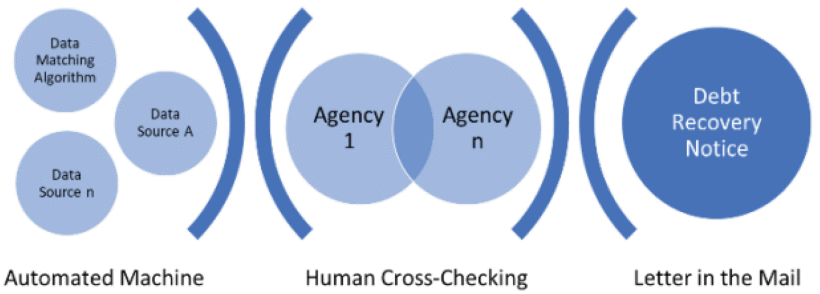
Fig. 1. Before Robodebt: Human Cross-Checking Employed.
This generated more than 20,000 debt notices annually. While all these notices were not considered “welfare fraud”, for the greater part the system was effective in the recovery of debts. In 2015 the Department of Human Services conducted a two-stage pilot to replace the more manual system that had been in operation since 2011, using data from 2011–2013, but there was limited actual stakeholder consultation [20]. This limited consultation, led to grave assumptions in the design and delivery of OCI (Fig. 2).
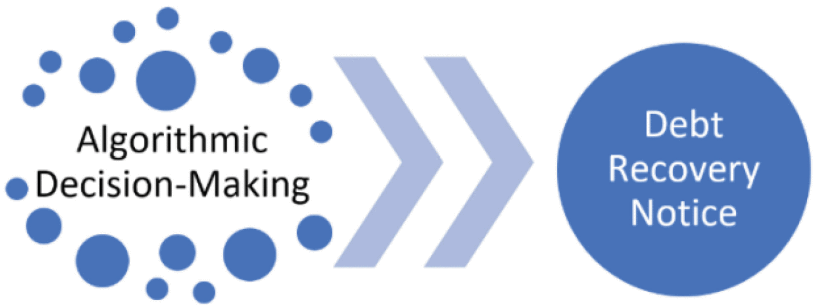
Fig. 2. After Robodebt: Automated Algorithmic Decision-Making.
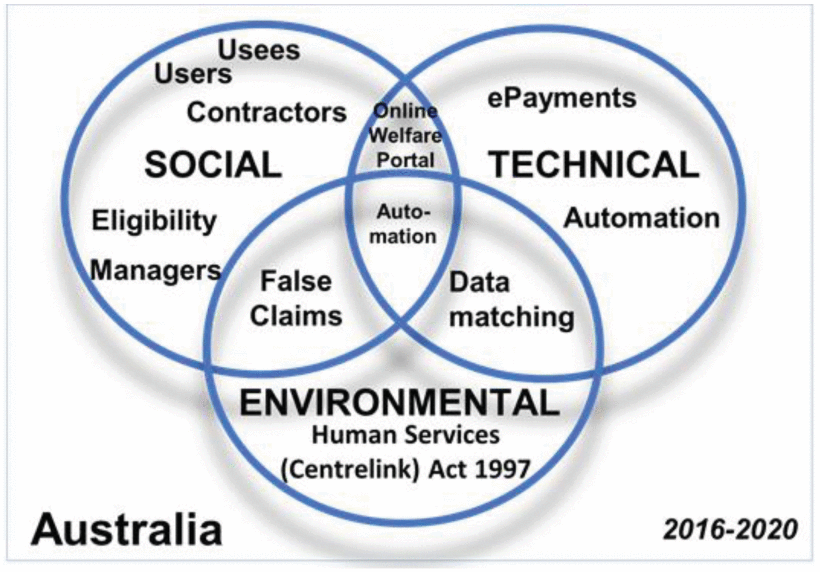
Fig. 3. OCI as a socio-technical system with ADM at its center.
Fig. 3 provides a pictorial representation of the OCI socio-technical system, inclusive of the social, technical and environmental subsystems. In each of the subsystems the main stakeholders are identified, as are the key processes that show the interaction between specific dimensions in the subsystems. While existing legislation governs the Human Services Act 1997, it is the interplay between the socio-technical, socio-legal and techno-legal that uniquely represents the failure of Robodebt. Predominantly we can observe that the focus was on the technology (i.e., algorithm) at the expense of the social and legal subsystems. Had techno-social factors been considered, then greater depths of testing might have been conducted to see the changes in state from a present mode of operation to a future mode of operation. Rather than assuming that members of society were making “false claims”, the question should have been raised sooner, of whether the automated decision-making algorithm was indeed getting things wrong for the vast majority of people.
SECTION VII.
Data-Driven Debt Recovery ADM System for Welfare Recipient Overpayments
A. Introducing the Online Compliance Intervention System
By September 2016, the new fully automated system, known as the Online Compliance Intervention system was operational with the ability to send computer-generated debt notices to welfare recipients who may have been overpaid, without the need for human intervention. The number of debt notices skyrocketed from 20,000 per annum to 20,000 per week [21]. This figure alone should have been reason for alarm but instead the Government heralded it a success in January 2017 when after just four months into the Scheme, 169,000 debt notices had been sent to some of Australia’s most vulnerable population, with A$ 300 million recovered [22]. It was announced at that time, that the Government had also considered expanding the Online Compliance Intervention to incorporate the Aged Pension and Disability Pension.
SECTION VIII.
Criticism of Robo-Debt: An Analysis
There are many criticisms that have been targeted at both the Australian Government and the actual OCI system. Visibility over who actually designed and rolled-out the system is still lacking. And this is a very obvious issue related to accountability of government systems. The fact that the system was also built to remove humans from being “in the loop” without any designated management capability is well noted in [1]. In this section the different types of algorithmic bias present in Robodebt are addressed.
A. Targeting the Already Vulnerable Population
The mailing of debt notices directly to those living with physical or mental health conditions was particularly considered very poor practice, especially for a system that was supposed to be “intelligent”. Additionally, the very basic requirement to cross-check address details with the physical address of the welfare recipient was not conducted before a debt notice was mailed out, and the Government interpreting a lack of response as a refusal to engage. The Online Compliance Intervention system did not target those who were on a stable salary but those who required social security payments for housing and basic necessities like food and paying energy bills. A salary is a fixed amount of money over an annual period, whereas many welfare recipients can only work casually, if at all, and are reliant on sporadic work in the form of wages, sourced often from one or more different employers with some level of unpredictability in earnings. The most significant problem identified with the Robodebt scheme was in the estimation of hours worked by welfare recipients. If the recipient did not enter specific details in a two-week period, then taxation income records were used to estimate a welfare recipient’s average income, even if they did not work any hours in that period. While this sounds rather simplistic, there are three biases that can be identified here, and each is briefly described below.
B. Model Bias
The algorithmic model estimated an average of hours worked in lieu of the actual hours worked. The model used in the Online Compliance Intervention system was flawed. The use of averaged income data to calculate welfare overpayments was not only bad design but “unlawful” [23].
C. Data Bias
The algorithm relied on data found in past taxation income records of the welfare recipient, assuming because a certain transactional pattern of historical waged employment had been prevalent, that the same pattern would continue [20]. The data bias was prevalent in the neglect to consider that welfare recipients might have needed to forego work hours, due to obstacles that may have prevented them from working their allotted hours. This was gross overgeneralization by the Government. For example, under the National Employment Standards [24] in Australia, casuals have very limited leave options with respect to sick leave, bereavement leave, domestic violence leave or other entitlements that would allow for longer than usual disruptions to individual work patterns due to unforeseen circumstances like temporary illness, instability or difficulty at home.
D. Social Bias
The algorithm targeted the marginalized based on their income level. Additionally, it required individuals to input their “hours worked” into the future, i.e., to predict and estimate their expected work hours to the best of their ability. Of course, individuals were not always offered the work that had been promised by their employers or were not always able to fulfil those commitments given other factors. On other occasions, when some welfare recipients did not enter an income figure because they had not earned any money in a two-week period given their personal circumstances, they assumed a value of “zero” would be recorded by default in the system but this was not the case. The algorithm also shifted the burden of proof onto the welfare recipient when a debt notice was sent, away from Centrelink staff and back onto the citizen. Instead of Centrelink needing to verify the information of debt collection was accurate, the welfare recipient, with already limited resources, had to present counter evidence to a vague debt collection notice [25]. Many citizens lacked the capacity to respond adequately, if at all. And some customers even pointed to online departmental advice at the Department of Human Services that had stipulated that there was a requirement to keep income records for only the preceding 6 months [20].
SECTION IX.
Humans in the Loop: When Automation Backfires
The fact that there was very limited human interaction in the dispatch of debt letters to Australia’s most “at risk” persons, demonstrates at least short-sightedness on the side of the Government, and too much faith in technology. A$ 751 million was wrongly recovered from 381,000 people which demonstrates the magnitude of the ADM failure. When people receive debt notices, their initial inclination is to pay back the recovery demand so they are not off side with the Government that they rely on for their safety and livelihood. The return on investment (ROI) of Robodebt was demonstrated even through its roll-out to be negligible costing an estimated A$ 600 million and recouping $ 785 million in debts by 2019. We now know that this figure of recovery was inaccurate due to the innocent people who were implicated [26].
It was not that the motivation to introduce a more improved Online Compliance Intervention system was wrong (although I suggest the Government should have begun its investigation with the rich and not the poor) but that the very algorithm used to automatically “find” fraudulent welfare recipients was flawed and demonstrated inherent bias. In addition, the lack of human intervention, and the complete absence of any form of management capability, let alone dynamic management capability, meant that decision making was left exclusively to a machine, rather than engaging with a human who belonged to a trained group specializing in such delicate cases pertaining to someone’s welfare. In short, there was no human-in-the-loop; there was no manager. In fact, in a Senate hearing in July 2020, the Head of Services Australia stated she did not know what Robodebt was [27].
The Online Compliance Intervention system should have been assistive in nature, and should have meant even more government staff were required to cross-check the increasing volume of auto-generated debt notices and validate their accuracy before reaching the customer, in this case the Australian citizen who is a welfare recipient [28]. Achieving adequate levels of operational effectiveness is one thing, and providing adequate care to those most in need in Australia’s population is another. There seems to have been a trade-off here in the quest to recover what the Government estimated to be $ 4B in overpayments, which was just an estimate, with the needs of the Australian people. If human resources had been involved in cross-checking notices, management could have immediately provided feedback to the design team of the initial problems experienced when the system became operational, and simply based on the volume of debt notices would have halted the scheme with a further investigation pending [29].
A. Inadequate Consultation
In Parliament of Australia [20] it was underscored that inadequate consultation was carried out with stakeholders about the potential impact of a compliance program on vulnerable Australians, and furthermore that the testing phase of the program’s front-end Web site, was not tested by a representative and diverse customer base, for example, customers who had a disability or for whom there were written communication barriers or barriers of interpretation based on education levels. There was also a failure to carry out a risk assessment which seems impossible given the number of Australians the Program would potentially affect. It is alleged the Government knew about this and still proceeded with the roll-out [30].
By April 2017, many Australian citizens had filed complaints with the Commonwealth Ombudsman, but this did not stop the Government from continuing to use the Robodebt scheme, which was alleged to have cost them A$ 606 million. At this point, one has to ask on why the scheme was not brought to a stand-still. Among the many suggested changes delivered to the Department of Human Services (DHS) by the Commonwealth Ombudsman [25], [31] were:
Better visibility and transparency to warn customers that if they did not enter income information, that Australian Taxation Office data would be used to estimate an average income;
The need to improve the clarity and readability of debt notices in order to give the customer better information with which to adequately respond to Services Australia’s Centrelink;
That when necessary, Services Australia should provide human resources to assist customers who needed help with gathering evidence for refuting their debt notice;
Improved communications to customers about debt notices, what a debt notice means, how it was derived and avenues for how customers could respond; and
That before further expansion to other services delivered by Service Australia, an evaluation of the Online Compliance Intervention system had to be completed.
Subsequently, there were an additional two Senate committee inquiries before 2021. The First Senate committee inquiry occurred in June 2017 [20], [32]. The Second Senate committee inquiry into Centrelink’s Compliance program was supposed to begin in August with a full report due in December 2019, but has been granted five separate extensions. The most recent extension has requested a full report by 24 November 2021 [20]. This demonstrates the enormity of the inquiry, pointing no doubt to very complex findings. For now, the gravity of what has happened has begun to gradually emerge, especially after Federal Justice Bernard Murphy’s judgment on 10 June 2021. He noted that the Compliance system was a: “massive failure in public administration”, that the program had “resulted in a huge waste of public money”, and that the Court had “exposed a shameful chapter in the administration of the Commonwealth social security system” [33]. In summary, the Commonwealth’s Online Compliance Intervention program had unlawfully raised A1.73 billion in debts against 433,000 people, and that of this, A$ 751 million was wrongly recovered from 381,000 people [33]. Furthermore, Justice Murphy approved a settlement worth at least 1.8 billion for the people who had been wrongly pursued, and an additional A8.4 million to Gordon Legal, which brought the class action against the Commonwealth [33].
SECTION X.
Discussion
A. Algorithmic Fallout
Fallout can be defined as the adverse results of a situation or act [34]. It therefore follows that algorithmic fallout are the adverse results that humans suffer at the hands of automated processes that are data driven leading to unjust or unfair rulings with financial repercussions (on individuals causing direct hardship or taxpayers at large), an increase in societal burden (undue feelings of anxiety and distress), distrust in the effectiveness and operationalization of ADM-based systems (e.g., automated surveillance-based welfare systems), asymmetric attacks on one’s character (causing personal shame, hurt and anguish), and even ultimately death (suicidal ideation or suicide). We cannot continue to create “algorithms of oppression” as noted by Safiya Noble [35]. When data driven ADM algorithms are used in public administration and are inextricably linked to people’s livelihoods, especially in the context of welfare payments, there has to be a clear management capability of real accountability [27]. According to the First Senate inquiry into the Compliance program, there was a “lack of procedural fairness” [20] that no doubt was exacerbated by automated processes. The Senate concluding chapter noted that the Compliance program “disempowered people, causing emotional trauma, stress and shame. This was intensified when the Government subsequently publicly released personal information about people who spoke out about the process” [20].
B. The Need for Better Socio-Technical Design
Monolithic government agency systems with broad reach, require commensurate socio-technical design, detailed piloting, rigorous testing, external risk assessment and evaluation. Automation might be considered for being “fast” but at what cost [36]? No doubt, in this case study, a human cost. While these systems are large in scale and seemingly impersonal (i.e., one algorithm for all), the fallout is personal, asymmetric and leads individual customers to feel polarized. In the class action against the Federal Government, witnesses presented evidence of the indirect and direct impact that they perceived the Robodebt scheme had on loved ones, including feelings of helplessness and injustice [37], suicidal ideation and in a number of cases, confirmed suicide. One ABC report cited 633 vulnerable people had died (i.e., those living with mental health conditions or victims of abuse) during the Robodebt program roll-out [38], among whom was Rhys Cauzzo, 28 years of age, who had battled with his mental health. Rhys’ mother Jennifer Miller told the Federal Court that she believed her son’s suicide was directly linked to a 17,000 Centrelink debt he received on Australia Day 2017 [39]. If this case study has acted to heighten awareness of the repercussions and unintended consequences of highly biased algorithms embedded in ADM systems that also remove the human from the process altogether, then it will have served its purpose. Managers are a necessity, so are their operational staff. Above all human rights count [40].
C. Preventing Mega-Scale ADM Ethical Disasters
If there is a story to tell in the Robodebt failure, it is that mega-scale public sector information systems can end up being perceived as an AI-based ethics disaster [7]. Calls for greater accountability have been flagged by many stakeholders who have declared that the system failed, and humans were at fault for causing hundreds of thousands of Australian citizens distress and anxiety. When we consider human rights abuses as a result of poorly designed technology systems, we are entering a new realm of inquiry. Yes, we can build systems without a human in the loop, to process things that previously were managed by humans, but is there any human in the loop, anywhere at all? Something hardly spoken about since the report was handed down by the Royal Commission into the Robodebt Scheme in July 2023, was the often unnoticed impact of the OCI rollout on public sector servants staff. That is still an area requiring further research. In addition, a question remains whether AI is the answer to digital transformation? Is the underlying ability of machine learning going to support or detract from our future vision of a more automated society where people experience convenience more than control? We are advocating here for an ethic of care. Where was the human factors side of this roll-out, right from the beginning? Who consulted the current vulnerable populations of Australia? The answer is no one. We seem to have repeated the same errors with the roll-out of the COVIDSafe app in Australia [41], [42]. We need clearer systems objectives about how a proposed system will positively impact people and not couched in dollar terms but an actual value proposition.
More needs to be done at the front end of the process. If we wish to empower people, then we need to build systems with them in mind, and ask them what their needs are. Citizens must be involved through direct participation in the testing of new government systems before they are rolled out. It could be said that co-design efforts are ideal, not just participation in testing emergent systems. We need to hire more people who sufficiently have the professional expertise to build these systems. And so, while we seek to automate, there is nothing “automatic” about building public sector information systems which come at a significant cost to the taxpayer, and deal with very sensitive data and contexts. In all of this failure we can say more than context was missing. Humans were missing. And the human rights impact was significant- unto death in some cases- though comorbid factors are openly acknowledged of vulnerable members of the community. Above all, as has been written about widely in the press, Robodebt was an abuse of government power [43], and the Australian Government will have to work very hard to turn things around. Since the Royal Commission, it has been very positive to hear so many public sector employees in leadership roles, take on the socio-technical lessons of Robodebt, and approach design and development advocating for human-centered approaches.
SECTION XI.
Conclusion
The outcomes of all of these algorithmic bias cases have led to a distrust in ADM systems with respect to government applications and services. Once citizenry lose faith in these kinds of monolithic systems, the ripple effect felt throughout society can last decades. What should have taken place was a better separation of which tasks to automate during the damaging process, and which parts of the process should have been allowed to remain as they were. We can say with hindsight it was overly ambitious to completely remove the human-from-the-loop, and it led to more ire than not [44]. The idea for the OCI went from conception to deployment in a record time, which is also a fundamental problem that we see with automated applications, as their programme leader attempts to show a return on investment sooner rather than later. Certainly, we can say to designers that more testing was required of the OCI, better prototyping and at least a pilot with a subset of information was needed, long before implementation. The other thing that is bewildering about this case study is the Australian Government knew there was a problem three months into its deployment, but it took much longer than that to cease sending letters to hundreds of thousands of people in Australia. There were obvious political undercurrents to the project failure, attempting to avoid a loss of face, but still persisting to allow the problem to remain unaddressed. This paper first drafted in 2021 and revised several times throughout the conclusion of Robodebt is a call to major reform and a warning to future large-scale ADM and AI/ML systems of the social implications on humans. We may wish to remove humans from the loop, but need to be cognizant in doing so we do not let the machines (that have been organized by the humans), tread on the values of care, accountability and safety.
SECTION XII.
In This Issue
This issue contains a special issue dedicated to Ethics in the Global Innovation Helix [A1] guest edited by Herkert et al. The special is a result of a closed call for papers, inviting targeted authors to submit extended papers from ETHICS 2023 for consideration. In addition to the four papers published by Herkert et al., there are three additional peer-reviewed papers that have been accepted in the September 2024 issue that form a Special Section dedicated to: “The Impact of AI on Academia, Industry and Government”.
Award winning creative writer Shiv Ramdas born in Lucknow, India, presents a stimulating response to the classic moral dilemma of The Trolley Problem, with his aptly titled short story titled, “The Trolley Solution”. In a piece that is sure to be used in classrooms across the globe, Ramdas presents the tension between humans and AI on the grounds of operational efficiency, ethical judgement, justice and rights. The protagonist in the story is set against the artificial intelligence/machine rather than the AI being an assistive mechanism, an aid to the human. The stakes are high and have major operational implications on the hiring of labor. Who or what will be victorious? Read this piece carefully as it is full of surprises. Use the piece in your classrooms and workplaces as a discussion starter to deliberate and debate the possibilities of humans being replaced by AI, and also using AI as an aid for learning [A2].
The Ramdas piece is the first accepted invited peer reviewed piece under the new category in IEEE TTS “Other Original Works”. Watch out for it on the submission portal as the category is fully peer reviewed. Other original works include a variety of stylistic paper formats, inclusive but not limited to significantly impactful white papers developed by large institutes or think tanks; government and/or legal policy recommendations that affect society either nationally or internationally; position statements approved for circulation on given topical thematic areas of interest to a large population; standards-related work at a local, national or international level; technology impact assessments, other assessments (privacy impact, risk, child rights, fundamental rights impact); practice notes and industry and government perspectives; foresight and futures studies; succinct critical reviews of literature with an original contribution, etc. If in doubt, about whether your paper is a good fit for this new submission type, feel free to contact the EIC at ttseic@ieee.org.
Michael et al. [A3] utilize the Ramdas piece as inspiration for their contribution. In this work primarily written during COVID-19 and since rewritten several times based on feedback from numerous external and internal reviewers, the spectrum of how much or how little organizational processes should be automated is debated. The paper is not unrelated to the special issue as it hones in on the frenetic deployment of digital transformation in learning and teaching environments, and the corresponding impacts on students. Indeed, little consultation seems to have taken place with the necessary stakeholders, such as academics, students and pedagogical experts, during the COVID-19 pandemic, and thereafter. Rather, discussions and decisions appear to have been reactive regarding which modalities of teaching delivery might be the best in a given context without commensurate training. The paper seeks to present the possibilities that AI-based systems may bring to higher education, but in so doing, point to the harmonization required to offer the most appropriate solutions to the needs of both students and teachers, as meeting the goals of university administration.
The third and final paper of the Special Section is by Kevin R. McKee of DeepMind [A4]. McKee’s paper revolves around the collection of original human data in AI/ML algorithms, or the lack thereof, and what that means for modern ethical review boards when an estimated less than one in four peer-reviewed papers stipulate explicit approval. McKee uses the fields of psychology, human-computer interaction, and other adjacent fields to provide historic lessons and helpful insights on how AI research presents several distinct considerations. Specifically, McKee focuses on (1) participatory design, (2) crowdsourced dataset development, and (3) an expansive role of corporations necessitating a contextual ethics framework. The industry researcher finally provides a set of guidelines for ethical and transparent practice with human participants in AI and ML research.
While Ramdas and Michael et al., emphasize the need for human-AI mediation, McKee’s paper focuses on that which underpins AI/ML algorithms, that being the data that is used to drive the capability, and the necessary underlying ethics that must be applied in practice. While DeepMind, a subsidiary of Google, has been embroiled in major controversies over the uses of particular types of datasets (e.g., 1.6 million records of health data provided by Royal Free London NHS Foundation Trust data to train DeepMind algorithms [45]), McKee’s paper provides excellent examples of the collision course we are on with respect to breakthroughs in AI/ML and the fundamental rights that are impacted by the very technologies we are unleashing into the market. McKee makes the case that many peer-reviewed articles that utilize datasets for AI/ML do not provide human research ethics or internal review board applications for research conducted with human subjects. Perhaps McKee who provides some interesting data-driven statistics for their position is questioning the increasing complexity of navigating this AI/ML space with respect to data in this new generation of capabilities. In essence, the question is being asked- if academics are struggling to apply for and receive ethics approval for human-related data for use in AI/ML, then what chance does industry have where there are generally no internal review boards, and no oversight of pending data-centric projects. What mechanisms do we use to address the gap? While this discussion is not new, the paper does add to the discourse in a variety of ways.
SECTION XIII.
Conclusion
A journal’s editors-in-chief are accountable for what they publish, as are the associate editors and reviewers, but they are not solely responsible for what needs to change. Organizations and institutions need to stipulate what is acceptable practice and what is not. Furthermore, commercial organizations cannot turn a blind eye because they are not covered by human research ethics boards of universities. Rather, organizations and government agencies for that matter must acknowledge that human research ethics is not a new thing. Where once it was accepted that an organization or agency could utilize the data they had amassed internally from consumers/ citizens to build models related to forecasts or production plans, the use of this data within the context of AI/ML creates new social implications and socio-technical risks, related to different types of biases. It is important we adhere to the principles identified in well-known reports, but also acknowledge that human research ethics training in the context of data science is not absent. For example, CITI [46] has been providing excellent training for its constituents since 2000. Some of their directly relevant modules to the AI/ML questions addressed in this Special Section include:
Essentials of Responsible AI
Big Data and Data Science Research Ethics
Social Media Research
Data Monitoring Committees
Data Management for Biomedical Research
Community-Engaged and Community-Based Participatory Research
Technology, Ethics and Regulation
Within the last 15 years especially, editors-in-chief at the SSIT publications have had to consider refusing to proceed with papers that (1) had no human research ethics/internal review board approval number; (2) have used social media data without the consent of the organization and end user; (3) have scraped data from the Web without permission; (4) have masqueraded as civilians when in fact they were researchers or otherwise (e.g., law enforcement entities; Facebook private sites); (5) have written multi-authored papers where the guidelines for human research ethics have been unclear or conflict in each member’s institution; (6) the use of fully disclosed facial images in biometrics studies that rely on public datasets, allowing for the full identification of individuals. These are just some of the ethical considerations that we have had to work through with authors.
Clearly something is shifting, and though we emphasize the need for privacy and informed consent, the discussion must include a greater number of stakeholders. As these standards emerge, ongoing training is required, to ensure appropriate application of the problem being studied, how the data will be collected from human participants, how the data will be used in AI/ML algorithms, and the need for ongoing reporting till the conclusion of the project’s lifetime. This is why the field of critical data sciences is required, reflecting on how data has been obtained, what use it will be put to, the internal biases in the data being used and how these can be overcome, all the while with an intention to gather data that we need and not default data that will be collected by a given asset [47]. This emergent discussion is beginning to occur as multi- and inter- disciplinary teams begin to form in earnest. Not social + technical but in the integration of the socio-technical using an inter- or even trans-disciplinary lens.
SECTION XIV.
Afterword
In no way does the publication of the paper by Kevin R. McKee, remove responsibility of how data is (mis)used by any organization. The point is well made by McKee that academia should step up to the mark in the AI/ML data ethics space, as should academic publications regarding the mandatory need of human research ethics where primary evidence has been collected, or there are obvious secondary uses of collected data, retrospectively. I commend McKee on continuing this vital discussion and welcome dialogue from future papers that may add further value to the discourse. Importantly, the acceptance of this paper in IEEE TTS should not be used in legal proceedings as evidence of any organization seeking to justify their data practices and governance, or lack thereof. However, we need to be open to positionalities of various stakeholder types, as we all share a common ecosystem. This paper, and others in this Special Section are a step in the right direction, learning to critique the current status quo in the field, in the hope of progressing to a more harmonious future.
ACKNOWLEDGMENT
An earlier version of this work in small part was incorporated into a non-peer reviewed editorial for International Journal of Information Management[1]. I would like to personally thank the guest editors of this special issue for their attention to detail, multiple review cycles, and adherence to the IEEE production schedule.
Appendix:
Related Articles
J. Herkert, B. Jesiek, J. Hess, and M. Cheong, “Ethics in the global innovation helix,” IEEE Trans. Technol. Soc., to be published. doi: 10.1109/TTS.2024.3437588.
S. Ramdas, “The trolley solution: A fiction case addressing the trolley problem in the context of AI in education,” IEEE Trans. Technol. Soc., 2024.
K. Michael, J. Pitt, J. Sargent, and E. Scornavacca, “Automating higher education through artificial intelligence?” IEEE Trans. Technol. Soc., to be published.
K. R. McKee, “Human participants in AI research: Ethics and transparency in practice,” IEEE Trans. Technol. Soc., vol. 5, no. 3, pp. 1–15, Sep. 2024, doi: 10.1109/TTS.2024.3446183.
References
1. S. Akter, “Algorithmic bias in data-driven innovation in the age of AI,” Int. J. Inf. Manage., vol. 60, Oct. 2021, Art. no. 102387. [Online]. Available: https://doi.org/10.1016/j.ijinfomgt.2021.102387
2. J. R. Schoenherr, R. Abbas, K. Michael, P. Rivas, and T. D. Anderson, “Designing AI using a human-centered approach: Explainability and accuracy toward trustworthiness,” IEEE Trans. Technol. Soc., vol. 4, no. 1, pp. 9–23, Mar. 2023, doi: 10.1109/TTS.2023.3257627.
3. K. Michael, J. R. Schoenherr, and K. M. Vogel, “Failures in the loop: Human leadership in AI-based decision-making,” IEEE Trans. Technol. Soc., vol. 5, no. 1, pp. 2–13, Mar. 2024. [Online]. Available: https://doi.org/10.1109/TTS.2024.3378587
4. R. Clarke, K. Michael, and R. Abbas, “Robodebt: A socio-technical case study of public sector information systems failure,” Australas. J. Inf. Syst., vol. 28, pp. 1–35, 2024, doi: 10.3127/ajis.v28.4681.
5. D. Bushell-Embling, “AI not to blame for Robodebt failures.” GovTech Review. Jul. 24, 2023. [Online]. Available: https://www.govtechreview.com.au/content/gov-digital/news/ai-not-to-blame-forrobodebt-failures-34488480
6. ACS Ethics Committee, “The ethics and risks of AI decision-making; Australian Computer Society,” 2021. [Online]. Available: https://www.acs.org.au/insightsandpublications/reports-publications/the-ethics-andrisks-of-ai-decision-making.html
7. C. Tonkin, “Robodebt was an AI ethics disaster: Automated systems need greater accountability; ACS: Information age,” Jun. 29, 2021. [Online]. Available: https://ia.acs.org.au/article/2021/robodebt-was-anai-ethics-disaster.html
8. T. Murray, M. Cheong, and J. Paterson, “The flawed algorithm at the heart of the problem,” Jul. 2023. [Online]. Available: https://pursuit.unimelb.edu.au/articles/the-flawed-algorithm-at-the-heartof-robodebt
9. R. Clarke, “The tax file number scheme: Political assurances versus function creep,” Policy, vol. 7, no. 4, pp. 2–6, 1991. [Online]. Available: http://www.cis.org.au/images/stories/policy-magazine/1991-summer/1991-7-4-roger-clarke.pdf
10. R. Clarke, “Dataveillance by governments: The technique of computer matching,” Inf. Technol. People, vol. 7, no. 2, pp. 46–85, Dec. 1994. [Online]. Available: http://www.rogerclarke.com/DV/MatchIntro.html
11. G. Greenleaf, “‘Access all areas’: Function creep guaranteed in Australia’s ID Card Bill (No. 1),” Comput. Law Security Rev., vol. 23, no. 4, pp. 332–341, 2007.
12. K. Michael, “‘Section 4.3 the evolution of the citizen ID number’ in The technological trajectory of the automatic identification industry: the application of the systems of innovation (SI) framework for the characterization and prediction of the auto-ID industry,” Ph.D. dissertation, School Inf. Technol. Comput. Sci., Univ. Wollongong, Wollongong, NSW, Australia, 2003. [Online]. Available: http://ro.uow.edu/theses/309
13. “Digital transformation agency,” Australian Government Directory, Jul. 2021. [Online]. Available: https://www.directory.gov.au/portfolios/prime-minister-and-cabinet/digital-transformation-agency
14. “Digital transformation agency: Corporate Plan 2023–24,” 2024. [Online]. Available: https://www.dta.gov.au/about/reporting-and-plans/corporate-plans/corporate-plan-2023-24#purpose
15. “Digital transformation agency: Annual report 2017–18: 1. Agency overview,” Australian Government, Jul. 18, 2021. [Online]. Available: https://www.dta.gov.au/about-us/reporting-and-plans/annual-reports/annual-report-2017-18/annual-report-2017-18-1-agency-overview
16. C. Knaus, “Centrelink scandal: Labor says digital agency ‘missing in action’ over debt system,” The Guardian. Feb. 2, 2017. [Online]. Available: https://www.theguardian.com/australia-news/2017/feb/02/centrelink-scandal-labor-says-digital-agency-missing-in-action-overdebt-system
17. O. Marjanovic, D. Cecez-Kecmanovic, and R. Vidgen, “Theorising algorithmic justice,” Eur. J. Inf. Syst., vol. 31, no. 3, pp. 269–287, 2021. [Online]. Available: https://doi.org/10.1080/0960085X.2021.1934130
18. T. Rinta-Kahila, I. Someh, N. Gillespie, M. Indulska, and S. Gregor, “Algorithmic decision-making and system destructiveness: A case of automatic debt recovery,” Eur. J. Inf. Syst., vol. 31, no. 3, pp. 313–338, 2021. [Online]. Available: https://doi.org/10.1080/0960085X.2021.1960905
19. “Services Australia; Individuals,” Centrelink, Jun. 24, 2021. [Online]. Available: https://www.servicesaustralia.gov.au/individuals/centrelink
20. “Parliament of Australia, Report: Design, scope, cost-benefit analysis, contracts awarded and implementation associated with the better management of the social welfare system initiative, commonwealth of Australia,” Jun. 21, 2017. [Online]. Available: https://www.aph.gov.au/Parliamentary_Business/Committees/Senate/Community_Affairs/SocialWelfareSystem/Report/c06
21. S. Martin. “Welfare debt squad hunts for \$4bn.” The Australian. Dec. 5, 2016. [Online]. Available: http://www.theaustralian.com.au/national-affairs/welfare-debt-squad-hunts-for-4bn-in-overpayments/news-story/e19c5b0d4a39aa07364a41269fdc11c9
22. J. Redden. “The harm that data do.” Scientific American. Nov. 1, 2018. [Online]. Available: https://www.scientificamerican.com/article/theharm-that-data-do/
23. “Government concedes flaws but refuses to apologize for its unlawful robo-debt program,” ABC News, May 30, 2020. [Online]. Available: https://www.abc.net.au/news/2020-05-31/robodebt-federal-governmentchristian-porter-no-apology/12304672
24. “National employment standards,” Fair Work Commission, 2021. [Online]. Available: https://www.fwc.gov.au/agreements-awards/minimum-wages-and-conditions/national-employment-standard
25. R. Glenn, “Centrelink’s automated debt raising and recovery system: A report about the department of human services’ Online compliance intervention system for debt raising and recovery,” Commonwealth Ombudsman, Canberra, ACT, Australia, Rep. 2/2017, Apr. 2017.
26. K. Burgess. “Robodebt Centrelink compliance program cost
27. L. Henriques-Gomes, “Judge criticizes government for allegedly refusing to tell grieving mother about son’s robodebt.” The Guardian. May 6, 2021. [Online]. Available: https://www.theguardian.com/australia-news/2021/may/06/judge-criticises-government-for-allegedlyrefusing-to-tell-grieving-mother-about-sons-robodebt
28. P. Whiteford. “Robodebt was a fiasco with a cost we have yet to fully appreciate.” The Conversation. Nov. 16, 2020. [Online]. Available: https://theconversation.com/robodebt-was-a-fiasco-with-a-cost-we-haveyet-to-fully-appreciate-150169
29. C. Knaus. “Expert attacks centrelink robo-debt and ‘moral bankruptcy’ that allows it.” The Guardian. Dec. 18, 2018. [Online]. Available: https://www.theguardian.com/australia-news/2018/dec/18/expert-attackscentrelink-robo-debt-and-moral-bankruptcy-that-allows-it
30. H. Belot, “Centrelink debt recovery: Government knew of potential problems with automated program,” ABC News, Jan. 11, 2017. [Online]. Available: https://www.abc.net.au/news/2017-01-12/government-knewof-potential-problems-with-centrelink-system/8177988
31. A. Meers, S. Durvasula, T. Newton, L. Macleod, “Lessons learnt about digital transformation and public administration: Centrelink’s online compliance intervention,” Commonwealth Ombudsman Office, Jul. 2017. [Online]. Available: https://www.ombudsman.gov.au/__data/assets/pdf_file/0024/48813/AIAL-OCI-Speech-and-Paper.pdf
32. M. Doran, “Centrelink debt recovery program to be investigated at Senate committee today,” ABC News, Mar. 7, 2017. [Online]. Available: https://www.abc.net.au/news/2017-03-08/centrelink-debtrecovery-program-to-be-investigated/8334072
33. R. Turner, “Robodebt condemned as a ‘shameful chapter’ in withering assessment by federal court judge,” ABC News, Jun. 10, 2021. [Online]. Available: https://www.abc.net.au/news/2021-06-11/robodebtcondemned-by-federal-court-judge-as-shameful-chapter/100207674
34. R. Abbas, K. Michael, J. P. Sargent, and E. Scornavacca, “Anticipating techno-economic fallout: Purpose-driven socio-technical innovation,” IEEE Trans. Technol. Soc., vol. 2, no. 3, pp. 111–113, Sep. 2021.
35. S. U. Noble, In Algorithms of Oppression: How Search Engines Reinforce Racism, New York Univ. Press, New York, NY, USA, 2018.
36. D. Hill, Not So Fast: Thinking Twice About Technology, Univ. Georgia Press, Athens, GA, USA, 2016.
37. M. D’Rosario and J. Falzon, “Distress amplification: Robodebt notices and the intensification of distress in the unemployed,” Analysis&Policy Observatory, Dec. 7, 2023. [Online]. Available: https://apo.org.au/node/325281
38. S. Medhora, “Over 2000 people died after receiving Centrelink robo-debt notice, figures reveal,” Feb. 18, 2019. [Online]. Available: https://www.abc.net.au/triplej/programs/hack/2030-people-have-diedafter-receiving-centrelink-robodebt-notice/10821272
39. L. Henriques-Gomes. “Robodebt: Court approves \$1.8bn settlement for victims of government’s ‘shameful’ failure.” The Guardian. Jun. 11, 2021. [Online]. Available: https://www. theguardian.com/australianews/2021/jun/11/robodebt-court-approves-18bn-settlement-for-victimsof-governments-shameful-failure
40. “Human rights and technology: Discussion paper,” Australian Human Right Commission, Dec. 2019. [Online]. Available: https://humanrights. gov.au/our-work/rights-and-freedoms/publications/human-rights-andtechnology-discussion-paper-2019
41. R. Abbas and K. Michael, “COVID-19 contact trace app deployments: Learnings from Australia and Singapore,” IEEE Consum. Electron. Mag., vol. 9, no. 5, pp. 65–70, Sep. 2020. [Online]. Available: https://doi.org/10.1109/MCE.2020.3002490
42. K. Michael and R. Abbas, “What happens to COVID-19 data after the pandemic? Socio-technical lessons,” I EEE Trans. Technol. Soc., vol. 3, no. 4, pp. 242–247, Dec. 2022. [Online]. Available: https://doi.org/10.1109/TTS.2022.3226119
43. J. Phillips. “Robodebt was a flagrant abuse of government power. It should never have seen the light of day.” The Guardian. May 19, 2020. [Online]. Available: https://www.theguardian.com/commentisfree/2020/may/29/robodebt-was-a-flagrant-abuse-of-government-power-it-shouldnever-have-seen-the-light-of-day
44. K. Michael, R. Abbas, R. A. Calvo, G. Roussos, E. Scornavacca, and S. F. Wamba, “Humans in the loop: Learning to trust in AI but to what extent? ” IEEE Trans. Technol. Soc., vol. 1, no. 4, p. 174, Dec. 2020. [Online]. Available: https://doi.org/10.1109/TTS.2020.3044344
45. J. Powles and H. Hodson, “Google DeepMind and healthcare in an age of algorithms,” Health Technol., vol. 7, pp. 351–367, Mar. 2017. [Online]. Available: https://doi.org/10.1007/s12553-017-0179-1
46. “The trusted standard in research, ethics, compliance, and safety training,” CITI Program, Aug. 11, 2024. [Online]. Available: https://about.citiprogram.org/course/
47. J. Berengueres, “How to regulate large language models for responsible AI,” IEEE Trans. Technol. Soc., vol. 5, no. 2, pp. 191–197, Jun. 2024. [Online]. Available: https://doi.org/10.1109/TTS.2024.3403681v
Author
School for the Future of Innovation in Society, Arizona State University, Tempe, AZ, USA
School of Computing and Augmented Intelligence, Arizona State University, Tempe, AZ, USA
Katina Michael (Senior Member, IEEE) has a joint professorial appointment with the School for the Future of Innovation in Society and the School of Computing and Augmented Intelligence, Arizona State University, where she is the Director of the Society Policy Engineering Collective. She researches the social, legal, and ethical implications of emerging technologies. She is the Founding Editor-in-Chief of IEEE Transactions on Technology and Society.
Citation: K. Michael, "Algorithmic Bias—Australia’s Robodebt and Its Human Rights Aftermath," in IEEE Transactions on Technology and Society, vol. 5, no. 3, pp. 254-263, Sept. 2024, doi: 10.1109/TTS.2024.3444248.